

We may earn a commission when you buy through links on this page, at no extra cost to you. Learn more.
The best wine vacuum sealer reviews sort into three groups: hand pumps that remove air from a stopper, electric pumps that do the work for you, and gas-based systems that fill the space above the wine. Each one aims to slow oxidation, which happens when oxygen reaches the wine after opening. Compare the method, how well the stopper seals, and how easy the device is to clean and store.
Vacuum sealers for wine promise to keep an opened bottle fresher for longer, but the methods differ in how they work and how much effort they take. Some remove air from the bottle, some fill the headspace with gas, and some use a stopper that seals tight without any pump. This guide groups the main types by use, so you can decide which approach fits your habits before comparing individual products.
Quick Comparison
Wine preservation tools fall into three broad groups. Pump-style sealers draw air out of a bottle through a stopper. Electric versions automate that step. Gas-based systems add an inert gas, often nitrogen or argon, to the space above the wine before the bottle is closed. Each approach trades effort, cost, and convenience against how thoroughly it limits air contact.
| Method | Best use | Effort | Cleaning and storage |
|---|---|---|---|
| Hand pump stopper | Occasional use and small budgets | Moderate, manual pumping | Simple, few parts |
| Electric vacuum pump | Frequent use and daily wine | Low, press a button | Simple, but the pump needs a dry spot |
| Gas-based system | Expensive bottles and occasional pours | Low to moderate | Cartridges need replacing |
Best for Hand Pump Stoppers on Occasional Bottles
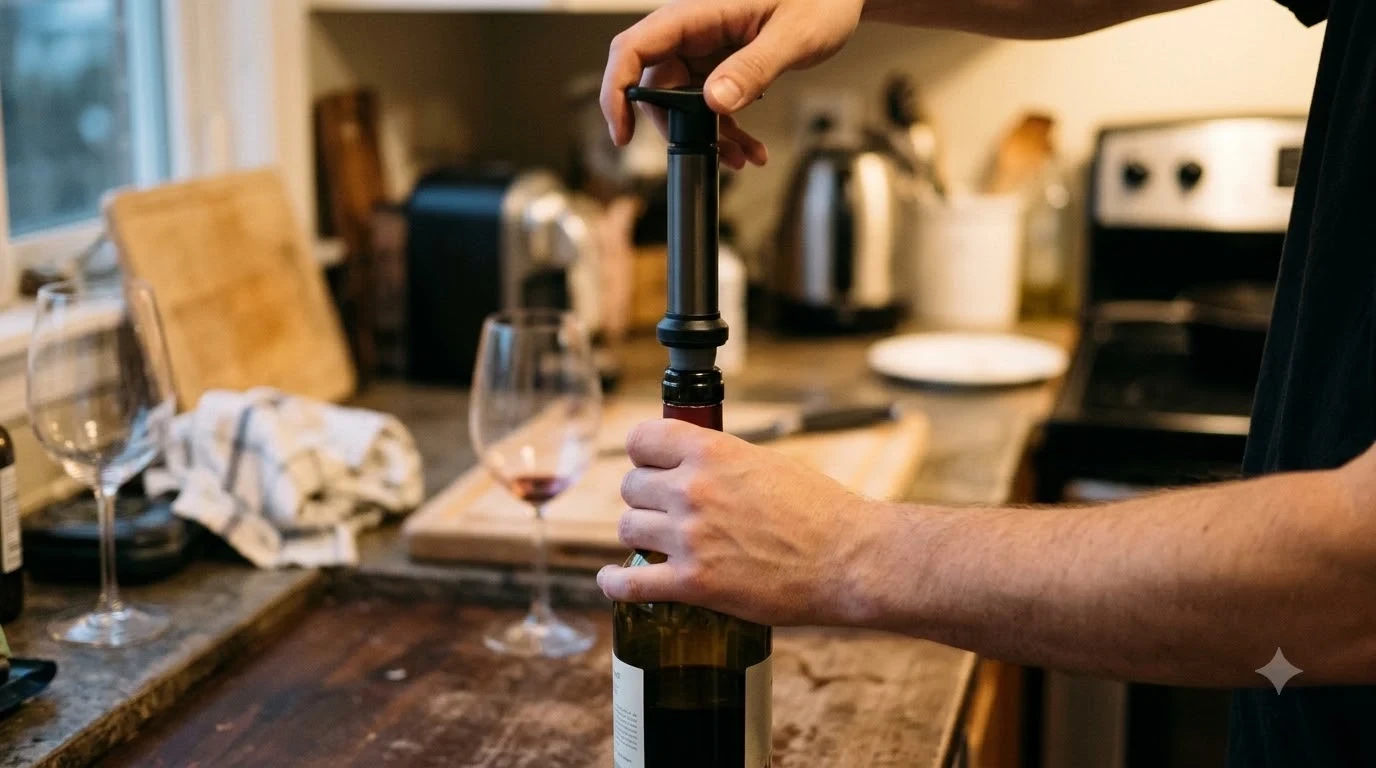
A hand pump stopper is the simplest option. You seat a rubber stopper in the bottle and pump a lever or handle to draw air out. It suits someone who opens a bottle now and then and does not want a device that plugs in. The effort is manual, so you will need a few seconds each time, and the seal depends on how well the stopper fits the bottle mouth.
Check the stopper material and the fit before you buy. A stopper that fits loosely lets air back in, and a stopper that is too tight can be hard to remove. Some models use a valve so the pump stays in place, which makes the process quicker.
Why it stands out: it needs no power and few parts. Keep in mind: the seal depends on your technique and the stopper fit. Best for: weekend drinkers who open a bottle once in a while.
Best for Electric Vacuum Pumps for Daily Wine
An electric pump automates the air removal step. You place a stopper, press a button, and the device pulls air from the bottle. It suits people who open wine most evenings and want the process to take seconds. The pump needs a dry spot on the counter and a power source, so it takes a little more room than a hand stopper.
Electric models differ in how long they hold the vacuum and whether they show an indicator when the bottle is sealed. A clear sign that the pump has finished helps you know the bottle is ready to store. Check whether the stoppers are sold separately and how easy they are to replace.
Why it stands out: it is quick and needs little effort. Keep in mind: stoppers and pump parts may need replacing over time. Best for: everyday wine drinkers and small households.
Best for Gas-Based Systems on Expensive Bottles
Gas-based systems add an inert gas, typically argon or nitrogen, to the space above the wine before you close the bottle. The idea is to replace air with a gas that does not react with the wine. Oxygen is the concern once a bottle is open, and inert gas is one way to limit its contact with the wine. The gas-based approach suits an expensive or aged bottle that you want to pour slowly over several days.
These systems usually need cartridges, and the gas supply is an ongoing cost. Check how many uses a cartridge provides and whether the system works with the stopper style you prefer. A gas system does not stop wine from changing over time, but it can slow the process if used correctly.
Why it stands out: it targets the air above the wine directly. Keep in mind: cartridges are a recurring cost, and results depend on sealing the bottle properly. Best for: collectors and drinkers with bottles worth protecting.
Best for Stopper-Only Options for Short Storage
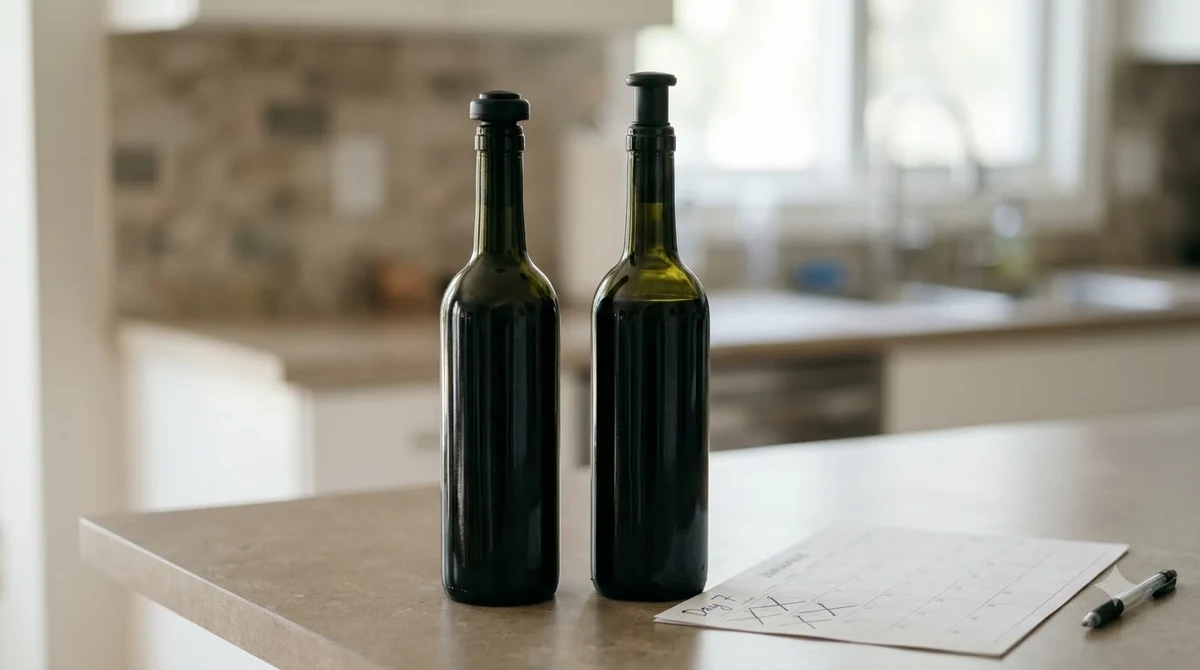
A stopper-only option uses a tight, reusable closure without any pump or gas. It suits wine you plan to finish within a day or two, where a reliable seal matters more than removing every trace of air. It is the lowest-cost route, but it removes the least air, so it is not the best choice for a bottle you want to keep for many days.
Look for a stopper with a firm grip and a rubber or silicone seal. A stopper that fits the mouth well is the most important feature here, and a loose one will let air in quickly.
Why it stands out: it costs little and needs no device. Keep in mind: it does not remove much air, so use it for short storage only. Best for: casual drinkers who finish most bottles in one or two evenings.
Best for Compact Sealers for Small Kitchens
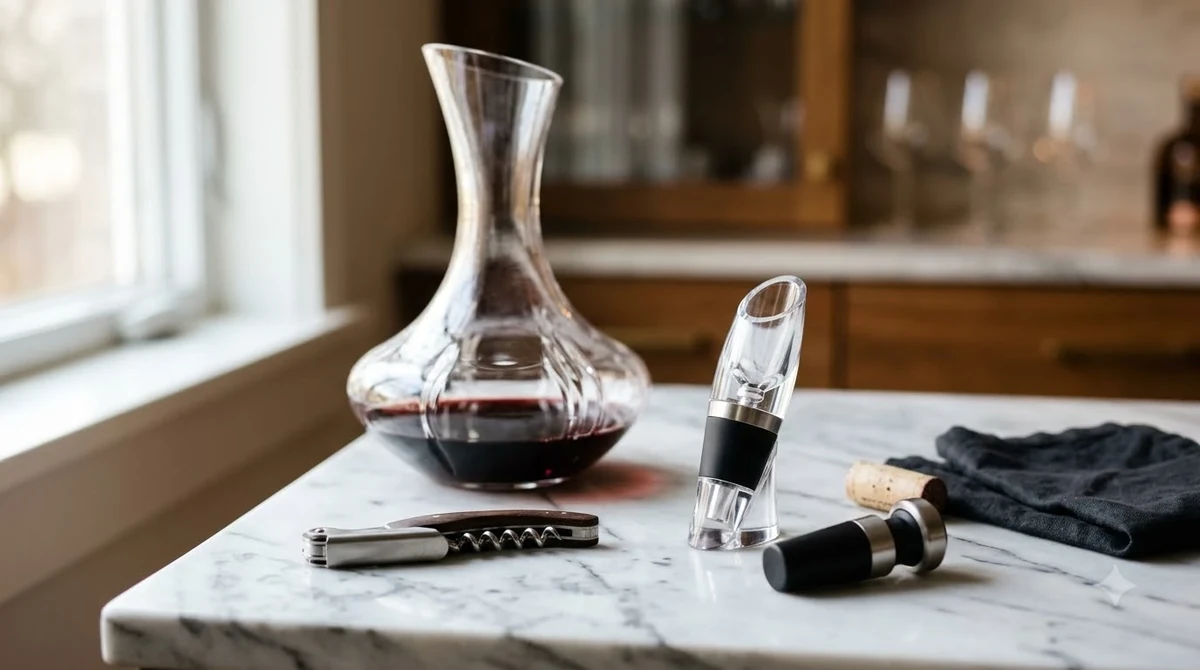
Compact sealers are small enough to sit on a shelf or in a drawer. They suit a kitchen with little space, a rented apartment, or a bar cart where the device needs to stay out of sight. The trade-off is that a small device may need more frequent cleaning of the stopper area, since it handles the same parts in a smaller footprint.
Check the stopper design and how easy it is to remove and wash. A stopper with fewer crevices is simpler to keep clean, and clean parts matter for every bottle you open.
Why it stands out: it fits where space is limited. Keep in mind: small parts can be harder to clean. Best for: people with limited counter space.
How to Choose
Start with how often you open wine. If you open a bottle once a week, a hand pump or stopper may be enough. If you open wine most evenings, an electric pump saves effort. If you keep expensive bottles for several days, a gas-based system may be worth the extra cost.
Next, look at the seal. The stopper is the part that does most of the work, so check its fit and material. A stopper that does not match your bottle mouth will leak air no matter how strong the pump is.
Finally, consider the total cost. Replacement stoppers and gas cartridges add up over a year, so compare the ongoing cost as well as the purchase price.
| How you drink | Lean toward |
|---|---|
| Once in a while, short storage | Hand pump or stopper-only |
| Most evenings, daily wine | Electric vacuum pump |
| Expensive bottles over several days | Gas-based system |
| Small kitchen or limited space | Compact sealer |
Tip: store a sealed bottle upright or on its side in a cool, dark place, and keep it away from heat. Temperature speeds oxidation, so cool storage helps any sealing method.
Frequently Asked Questions
Does a vacuum sealer keep wine fresh forever?
No. A sealer slows oxidation but does not stop it. How long an opened bottle keeps depends on the wine style, the seal, and the storage temperature, so plan to finish opened wine within a reasonable time.
Is a vacuum pump better than gas for wine?
They work differently. A pump removes air from the bottle, while gas replaces air above the wine. Gas systems often cost more over time because of cartridges, and results depend on sealing the bottle properly.
Why does temperature matter for opened wine?
The Wikipedia article on wine preservation notes that oxidation occurs faster at higher temperatures. Keeping an opened bottle cool and out of direct light helps any sealing method work better.
Do wine stoppers need to be replaced?
Stoppers wear over time and can lose their seal. Check the manufacturer’s guidance and replace a stopper that no longer fits the bottle snugly or shows damage.
For background on how oxygen and temperature affect stored wine, see the Wikipedia article on wine preservation.
A vacuum sealer is most useful when it matches how you drink. Start with how often you open a bottle, then compare the method and its ongoing costs. For more on how much a bottle holds when you plan your pours, read how many glasses in a bottle of wine, and browse the Accessories Library for other wine gear.
More in Wine Accessories
 Coravin Vs Vacu Vin: Choose the Right Wine Saver for Your BottlesUpdated Nov 21, 2026
 Zwilling Wine Stopper Review: Preserve Open Bottles LongerUpdated Nov 21, 2026
 Wine Enthusiast Wine Preserver Review: Features, Benefits and LimitationsUpdated Nov 21, 2026
 Wine Enthusiast Wine Stopper: An Easier Way to Reseal Open BottlesUpdated Nov 21, 2026
 Vintorio Wine Opener: Two-Step Cork RemovalUpdated Nov 21, 2026
 Zwilling Wine Aerator Review: Aerate, Pour, and Seal With One ToolUpdated Nov 21, 2026