

We may earn a commission when you buy through links on this page, at no extra cost to you. Learn more.
The best wine thermometer reviews depend on what you need to measure: a quick reading of a bottle’s surface, a probe that sits in the liquid, or a cellar sensor that tracks storage over days. Wine Folly lists serving ranges from about 38 to 68 degrees Fahrenheit, so a thermometer helps you match a bottle to its style. Compare the probe type, the reading speed, and whether the device can record temperature over time.
A wine thermometer is a small tool with a narrow job, but the options differ in ways that matter at the table and in storage. Some read only the outside of the bottle, some sit in the glass, and some hang in a cellar and log changes. This guide groups the main types by use so you can see which one fits your habits before comparing individual models.
Quick Comparison
Thermometers for wine fall into three broad groups. Infrared models read the surface of a bottle in a second or two. Probe thermometers put a sensor into the wine or the glass and give a steadier reading. Cellar and fridge sensors monitor air temperature over a longer period. Each type answers a different question, from “is this bottle ready?” to “has my storage stayed stable this week?”
| Thermometer type | Best use | Reading | Tracks change over time |
|---|---|---|---|
| Infrared surface reader | Quick checks before pouring | Bottle surface only | No |
| Probe thermometer | Measuring the wine itself | Liquid temperature | Limited |
| Cellar or fridge sensor | Storage stability | Air temperature | Yes |
Best for Quick Infrared Checks Before Pouring
An infrared thermometer is the fastest option. You point it at the side of the bottle, press a button, and read the number in a second or two. It suits someone who wants to check a bottle before serving without taking the cork out or dipping anything in the wine. The reading reflects the glass surface, so it is an estimate of the liquid inside rather than an exact measure.
The main limit is that the surface can be cooler or warmer than the wine, especially after a bottle has sat in an ice bucket or a warm room. Take the reading from the middle of the bottle, away from the base and the neck, and wait a moment after moving the bottle before you point the device.
Why it stands out: it gives a reading in seconds with no setup. Keep in mind: it measures the surface, so treat the number as a guide. Best for: hosts who want a quick check before each pour.
Best for Probe Thermometers That Measure the Wine
A probe thermometer puts a sensor directly into the liquid or clips to the bottle neck, so it reads closer to the actual temperature of the wine. It suits a tasting where you want to match each bottle to its ideal range, or a host who serves several styles in one evening. Some probes stay in the glass for a few minutes so you can watch the number settle.
Probes need more care. The sensor should be clean and dry before it goes into a bottle, and you should avoid letting it touch the glass wall, which can give a warmer or cooler reading. The probe also takes longer than an infrared check, so it works best when you have a minute to spare.
Why it stands out: it reads the wine rather than the bottle. Keep in mind: wipe and dry the probe between bottles, and wait for the number to settle. Best for: tasters and hosts who serve more than one style per evening.
Best for Cellar and Fridge Sensors Over Time
A cellar or fridge sensor measures the air in a storage space and often records a history. It answers a different question than the bottle thermometers. Storage matters because wine that sits in a warm room can age faster than intended, and a sensor that logs changes helps you see when a cabinet runs too warm during a heat wave or a cold snap.
Look for a sensor with a clear display and a way to see recent readings, such as a minimum and maximum. Place it away from direct sun, heat sources, and the cooling vent, since those spots give misleading numbers. A sensor that reads the middle of the space gives the most useful picture.
Why it stands out: it shows whether storage stays steady. Keep in mind: it measures air, not the wine, so it does not replace a bottle reading before serving. Best for: collectors and anyone storing bottles at home.
Best for Dual-Probe Models for Storage and Serving
A dual-probe unit tries to cover both needs with a single device. One sensor stays in the storage space while a second probe checks the bottle. These devices suit someone who wants both views without buying two tools, though the compromise is that each function may be less refined than a dedicated tool.
Check how the two probes connect, how long the cable is, and whether the display shows both readings at once. A cable that is too short can make the probe awkward to use at the table, and a display that cycles between readings can slow you down.
Why it stands out: one device covers storage and serving. Keep in mind: dedicated tools may be more accurate for a single job. Best for: home cellars with a small serving routine.
Best for Budget-Minded Buyers Who Want a Basic Read
A simple, low-cost thermometer makes sense if you mainly want a rough check on serving temperature. These tools have fewer functions, so the setup is easy and the number appears quickly. They rarely track history or offer detailed probes, so the trade-off is limited data.
Keep your expectations realistic. A basic reading helps you spot a bottle that is far too warm or too cold, which is the most common problem. It will not give you a precise measurement of a fine wine, so use it as a guide rather than a lab reading.
Why it stands out: it catches the most common temperature errors. Keep in mind: basic models may drift or lack a steady probe. Best for: casual drinkers who want a quick sanity check.
How to Choose
Start with the question you need answered. If you want a quick check before pouring, an infrared reader is the simplest tool. If you want to match the liquid itself, choose a probe. If you store bottles for months or years, a sensor that tracks air temperature gives you the most useful information.
Use the serving ranges as a reference. Wine Folly’s chart lists sparkling and light-bodied white at about 38 to 45 degrees Fahrenheit, rosé and full-bodied white at 44 to 55 degrees, light and medium-bodied red at 55 to 60 degrees, and bold red at 60 to 68 degrees. The same page notes that these are guides rather than rules, and that a wine that smells strongly of alcohol is often served too warm. You can read the full chart in Wine Folly’s serving temperature guide.
Finally, consider how you will use the device. A thermometer that lives in a drawer is less useful than one you can reach on the way to the table. Choose a size and style you will actually keep close.
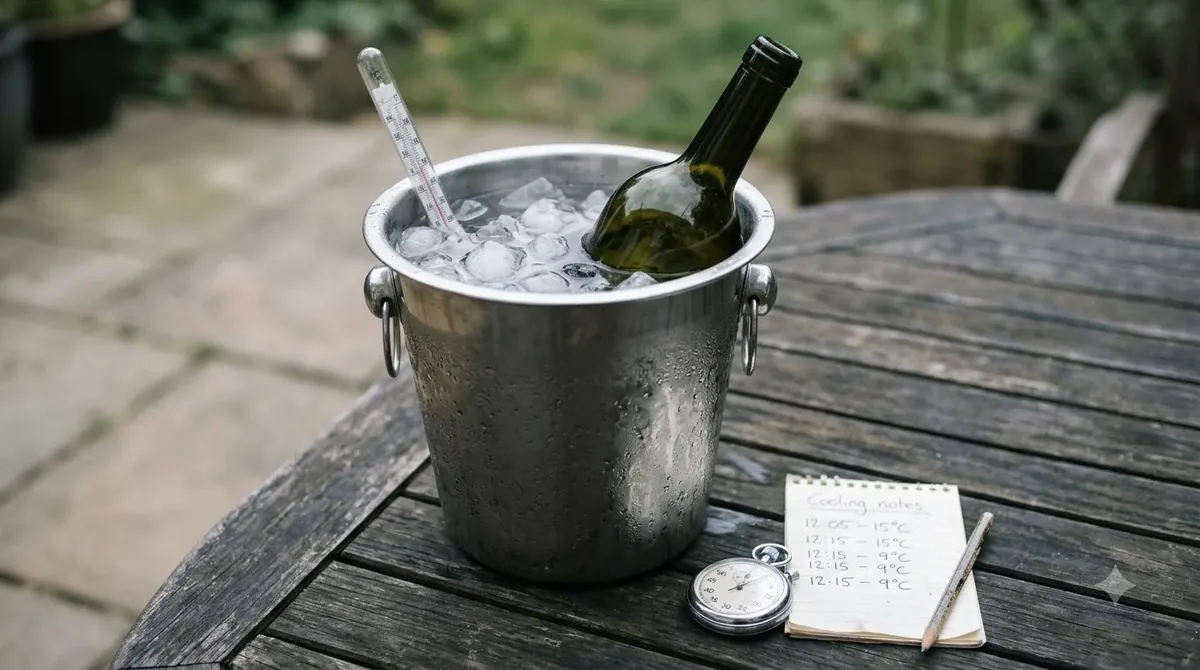
Tip: chill a bottle slowly in the fridge and check it a few minutes before serving. Bottles chilled in an ice bucket can cool the outside faster than the liquid inside.
Frequently Asked Questions
What is the right temperature to serve red wine?
Wine Folly gives light and medium-bodied reds about 55 to 60 degrees Fahrenheit and bold reds about 60 to 68 degrees. Many reds are served a little cooler than room temperature, especially in a warm home.
Can an infrared thermometer read wine accurately?
It reads the bottle surface, which is an estimate of the liquid inside. For a closer reading, a probe that sits in the wine gives a more direct measure.
Where should I put a cellar thermometer?
Place it away from direct sun, heat sources, and cooling vents. A spot in the middle of the storage space gives the most representative reading of the air around the bottles.
Does wine need to be exactly at a set temperature?
No. Serving ranges are guides, and a few degrees rarely changes a wine dramatically. The goal is to avoid wine that is far too warm or too cold, which can mask flavor or throw off aroma.
A thermometer is most useful when it fits your routine, whether that means a quick check at the table or a steady view of storage. Start with the question you need answered, then compare the device type. For more on pouring and how far a bottle goes, read how many glasses in a bottle of wine, and browse the Accessories Library for other wine tools.
More in Wine Accessories
 Coravin Vs Vacu Vin: Choose the Right Wine Saver for Your BottlesUpdated Nov 21, 2026
 Zwilling Wine Stopper Review: Preserve Open Bottles LongerUpdated Nov 21, 2026
 Wine Enthusiast Wine Preserver Review: Features, Benefits and LimitationsUpdated Nov 21, 2026
 Wine Enthusiast Wine Stopper: An Easier Way to Reseal Open BottlesUpdated Nov 21, 2026
 Vintorio Wine Opener: Two-Step Cork RemovalUpdated Nov 21, 2026
 Zwilling Wine Aerator Review: Aerate, Pour, and Seal With One ToolUpdated Nov 21, 2026