

We may earn a commission when you buy through links on this page, at no extra cost to you. Learn more.
The best wine rack with glass holder combines bottle storage with a place to hang stemware, so the bottles and glasses stay within reach. Units with a rail or underside hooks suit kitchens and home bars where glasses are used often, while combined stands fit dining rooms and small apartments. Before you buy, check how many bottles the rack holds, how many glasses the holder takes, and whether the glasses sit upright or hang by the stem.
A wine rack with a glass holder solves a simple problem: bottles need a shelf, and glasses need to dry and stay out of the cupboard. Many people buy a bottle rack first and then look for a second piece to hold stemware, which takes up more counter space than a single unit would. This guide covers the main styles of combined racks, how the glass holders work, and the points to check before you choose one.
Quick Comparison of Wine Rack and Glass Holder Styles
Combined racks come in a few layouts, and the right one depends on whether you want glasses hanging overhead, stored on a shelf beside the bottles, or kept in a separate tray. The table below compares the main styles on the points buyers ask about most often. Capacity is described in general terms because it differs from one design to another.
| Style | Bottle storage | Glass holding | Footprint | Best use |
|---|---|---|---|---|
| Overhead rail with bottle shelf | Medium | Hanging by the stem | Compact | Kitchen counter |
| Freestanding stand with side hooks | Medium | Hanging on hooks | Medium | Dining room or bar |
| Stacked two-tier unit | High | Top tier or tray | Larger | Home bar |
| Slim combined shelf | Low | Hanging underneath | Very small | Small apartment |
Best for Kitchen Counters with Hanging Glasses
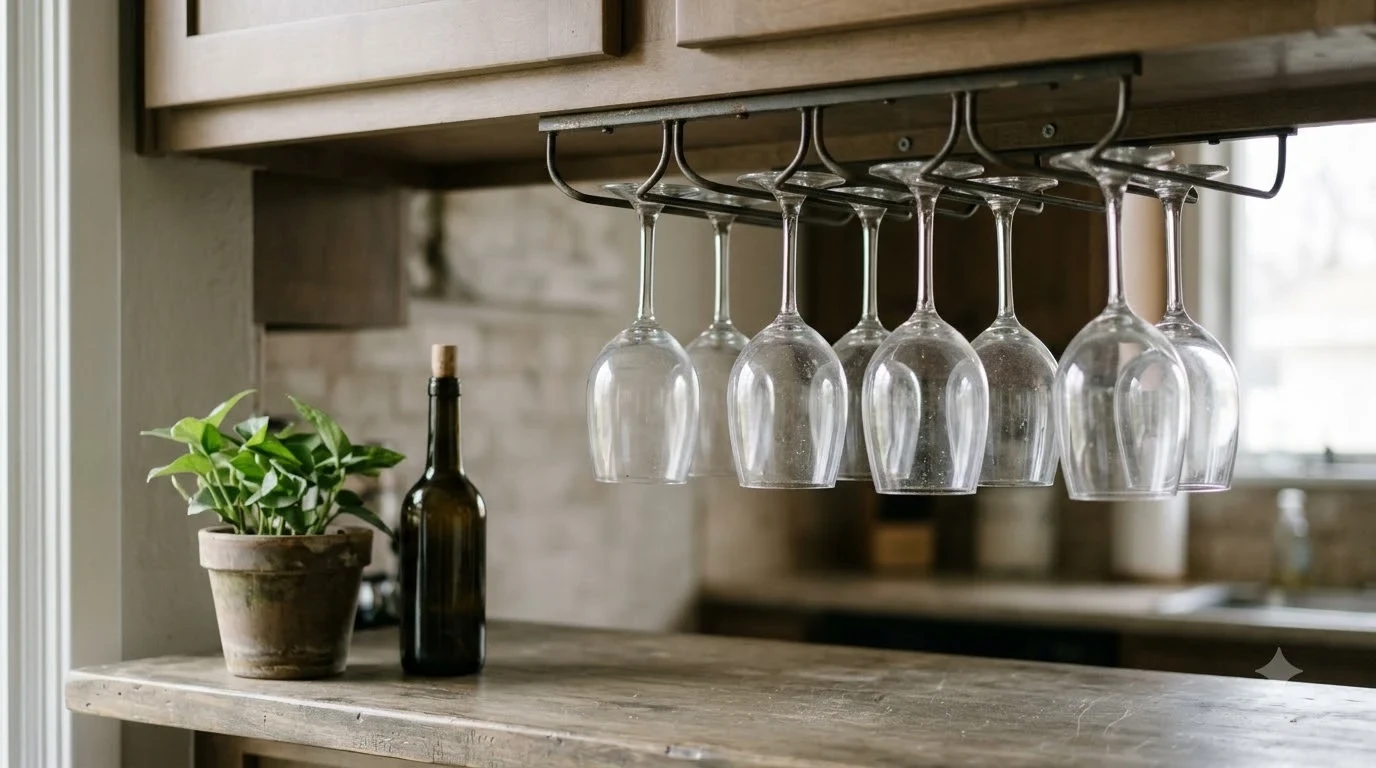
A kitchen unit with a glass rail suits people who use stemware every day and want it dry and out of the cupboard. The glasses hang from the rail, so they do not take up shelf space, and the bottle shelf sits beside them at counter height.
Why it stands out: hanging stemware keeps the bowls off the countertop and lets air reach the glass after washing. The bottle shelf stays within reach while you cook, which helps when a recipe calls for a splash of wine.
Keep in mind: hanging glasses by the stem puts weight on the hooks or rail, so check the stated load before you hang a full set. Wine glasses also knock against each other when the rail is too short, so leave a gap between hooks. According to the Wikipedia entry on wine glasses, some authors recommend holding the glass by the stem so the warmth of the hand does not reach the wine, which makes a rail that grips the stem a practical fit for everyday use.
Best for: households that wash and reuse stemware daily and have a small kitchen counter.
Best for Home Bars and Wine Cabinets
A freestanding stand with side hooks works well in a home bar or beside a wine cabinet, where the bottles and glasses should look like part of the room. The hooks let you show the glasses while the bottles rest on the lower shelves.
Why it stands out: the glass holder becomes a display feature rather than a utility, and the hooks can be reached from either side. Pairing the rack with a cabinet keeps the bottles stored in one place for both everyday use and entertaining.
Keep in mind: open hooks leave glasses exposed to dust and to splashes from nearby bottles, so the stand should sit away from the sink and the bar sink’s splash zone. Check that the base stays level when it is fully loaded, since a bar top with uneven flooring can make the stand tilt.
Best for: people who host often and want the bar to look finished.
Best for Small Apartments and Tight Spaces
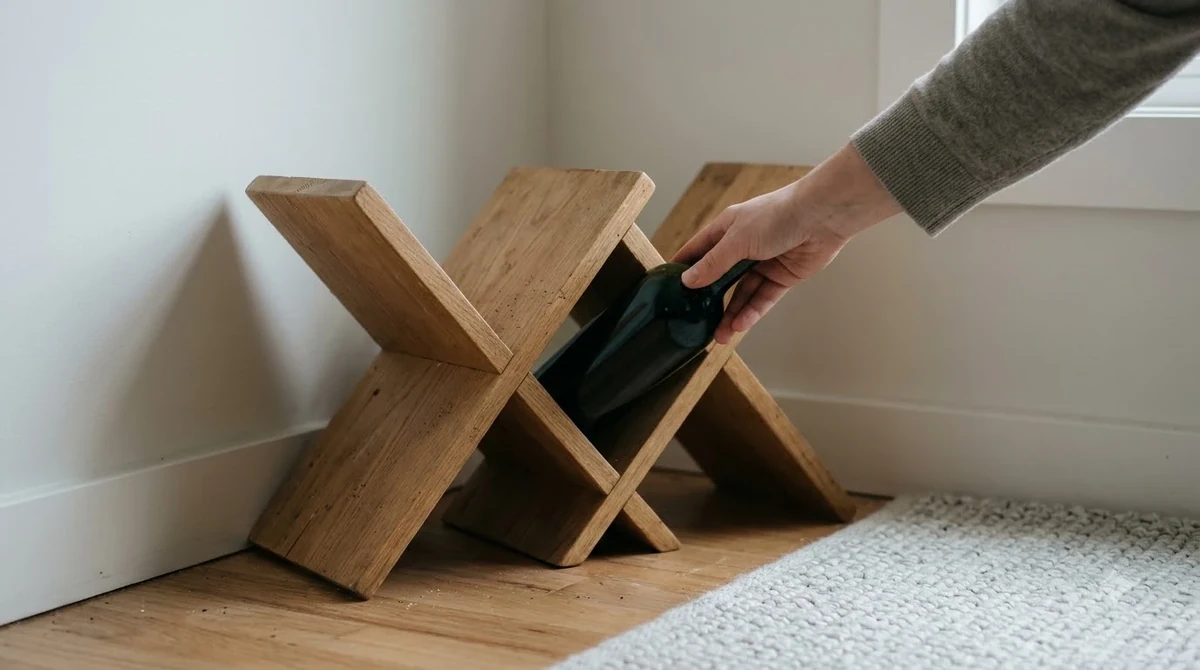
When the space is limited, a slim combined shelf lets one piece cover both jobs. The bottles rest on the shelf and the glasses hang underneath, so the footprint stays close to that of a single bottle rack.
Why it stands out: the unit fits a narrow wall or the space above a counter, and it can be mounted or set down without much preparation. Keeping both bottles and glasses together also means one spot for everything when guests arrive.
Keep in mind: slim designs hold fewer bottles, so they suit a small collection rather than a stocked cellar. Hanging glasses underneath a shelf can knock against the bottles above when the glasses are long-stemmed, so check the clearance before you buy. A tight layout also makes it harder to add more bottles later.
Best for: renters and people with one or two bottles open at a time.
Best for Large Collections of Bottles and Glasses
A stacked two-tier unit gives the most room for both bottles and stemware. The top tier can hold glasses on a rail or a tray, and the lower tier holds the bottles. This layout suits collectors who need more storage than a single shelf can provide.
Why it stands out: the separate tiers keep glasses and bottles apart, so the glasses are not stacked against the bottle necks. Heavier bottles sit on the lower tier, which keeps the centre of gravity low.
Keep in mind: a tall stacked unit takes up more floor or counter space, and it can be harder to move once it is loaded. Check the height of the top tier against your ceiling or cabinet clearance. Larger units also cost more to fill, since each added tier needs its own bottles and glasses.
Best for: collectors with a full set of stemware and a growing bottle collection.
Best for Dinner Parties and Entertaining
For dinner parties, a combined rack that can be moved to the table or sideboard helps keep the glasses and bottles together. Guests can pick up a glass and pour without walking to the kitchen, which keeps the evening moving.
Why it stands out: a portable unit lets the host set up a serving spot in any room, and glasses stay dry and ready between courses. The bottles can be arranged by colour or by wine type so guests can find what they want quickly.
Keep in mind: a unit that moves needs a stable base, since a light stand can tip when a guest reaches for a bottle. Keep the stand away from the edge of the table, and avoid overloading the hooks when the glasses are full.
Best for: hosts who serve wine at dinners and want a single station for both bottles and glasses.
How to Choose a Wine Rack with Glass Holder
Start with the number of bottles you keep at one time and the number of glasses you use in a typical week. Then compare the glass holder style, the footprint, and the stability of the base. These four checks cover most of the decisions buyers face.
| Factor | What to check |
|---|---|
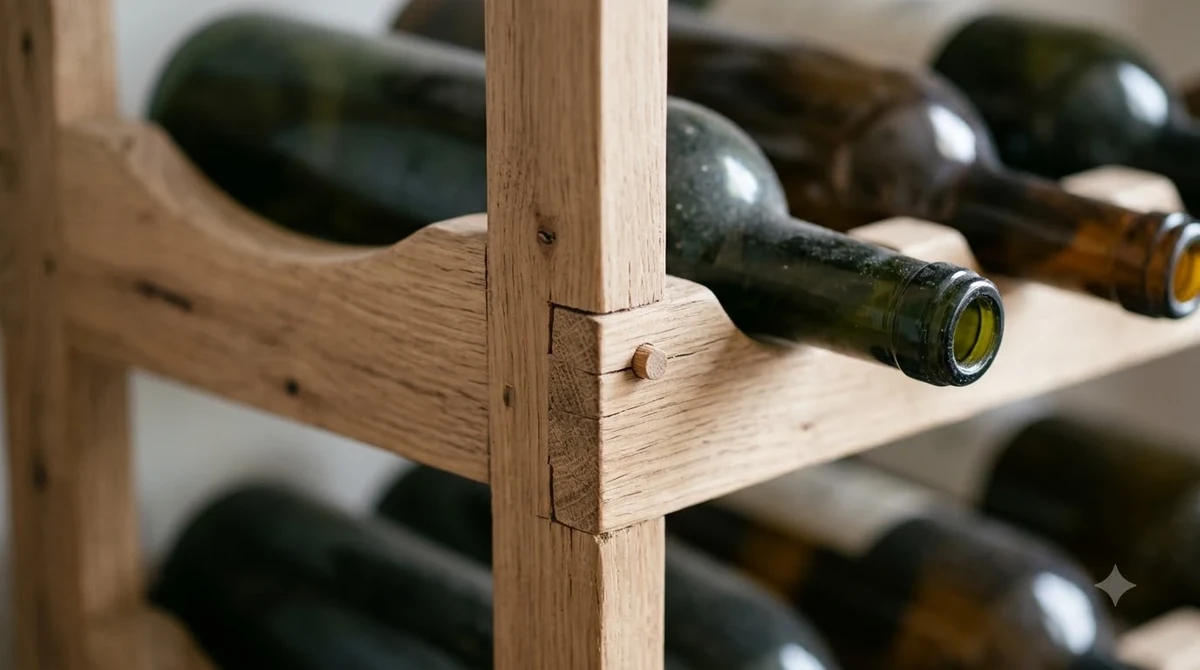
| Bottle capacity | Count the bottles you keep now and leave room for two or three more. A guide to how many bottles are in a case can help you size the shelf. |
| Glass holder | Confirm whether the glasses hang by the stem, sit on a tray, or rest on hooks, and check the stated load. |
| Footprint | Measure the counter, shelf, or floor space, including the clearance needed for hanging glasses. |
| Stability | Look for a base that stays level when fully loaded, especially on a table or bar top. |
Wikipedia’s article on wine racks describes racks as shelves for organised storage of wine and notes that they are made from wood, metal, and plastic. A combined unit uses one of these materials for both the bottle shelf and the glass holder, so the same checks for weight and stability apply. For a broader look at racks without glass holders, the guide to the best wine racks covers the main styles.
Tip: hang the glasses with space between each one, and keep the heaviest bottles on the lowest shelf. Both steps reduce knocks and keep the unit steady.
Frequently Asked Questions
Can a wine rack with a glass holder store both bottles and glasses safely?
Yes, if the unit is stable and the glass holder is rated for the weight of the stems you use. Check the stated load, keep heavy bottles low, and leave space between hanging glasses so they do not knock together.
Should wine glasses be hung by the stem or the base?
Hanging by the stem keeps the bowl clear of dust and avoids touching the bowl. Wikipedia’s article on wine glasses notes that some authors recommend holding the glass by the stem so hand warmth does not reach the wine.
How many glasses should a combined rack hold?
Choose a holder that fits the number of glasses you use in a typical week, plus a few spares. If you host often, a larger holder saves you from washing and drying in the middle of a party.
Is a combined rack better than separate bottle and glass storage?
A combined rack saves space and keeps everything in one spot, which suits a kitchen or home bar. Separate storage gives more room for a large collection, so the choice depends on how many bottles and glasses you keep.
A wine rack with a glass holder works best when the bottle capacity and the glass holder match how you use wine at home. Compare the layouts above, check the stability and the clearance, and then pick the style that fits the room. To see the full range of racks and storage options, browse the wine racks section before you decide.
More in Racks & Storage
 Best Wine Barrel Racks for Distinctive Bottle StorageUpdated Nov 20, 2026
 Best Wine Storage Tower: Sizing, Protection and Room LayoutUpdated Nov 18, 2026
 Best Pyramid Wine Rack: Materials, Sizes and Where It FitsUpdated Nov 18, 2026
 Best Kitchen Cabinet Wine Rack Insert for Built-In Bottle StorageUpdated Nov 18, 2026
 Best 16 Bottle Wine Rack Options for Kitchens, Bars and CellarsUpdated Nov 18, 2026
 Best 48 Bottle Wine Rack Options for Cellars, Kitchens, and Tight SpacesUpdated Nov 18, 2026