

We may earn a commission when you buy through links on this page, at no extra cost to you. Learn more.
The best wine making kit reviews help beginners choose a complete equipment set with correctly sized fermenters, a hydrometer, an airlock, siphoning equipment, and essential cleaning supplies. The right setup depends on whether you plan to make one gallon, three gallons, or a standard six-gallon batch. Complete starter kits are convenient for first-time winemakers, while specialized equipment bundles suit people who already own some brewing supplies. The most useful purchase is the one that covers your actual fermentation and bottling needs without leaving essential accessories out.
Making wine at home can start with a relatively small collection of equipment, but choosing the right combination matters. A fermenter that is too small, a poorly matched airlock, or a missing hydrometer can complicate a process that should be enjoyable and manageable. This roundup compares five practical types of wine making kits and accessories, from compact beginner bundles to larger setups for repeated batches. Rather than focusing on invented product models or unsupported performance claims, the recommendations explain what each type should contain, what to look for, and which home winemaker will benefit most.
Quick Comparison of Home Wine Making Kit Types
The best starting point is matching equipment capacity to the amount of wine you intend to produce. A one-gallon setup needs less storage space and fewer bottles, while a six-gallon arrangement requires a larger primary fermenter, a compatible secondary carboy, and more bottling equipment.
| Kit type | Typical batch capacity | Approximate 750 ml bottles | Best suited to | Essential equipment |
|---|---|---|---|---|
| Small-batch starter kit | 1 gallon | 5 | First-time experiments | Fermenter, jug, airlock, hydrometer |
| Intermediate equipment kit | 3 gallons | 15 | Occasional home production | Fermenter, carboy, siphon, testing tools |
| Standard complete starter kit | 6 gallons | 30 | Most home winemakers | Large fermenter, carboy, airlock, hydrometer, racking tools |
| Fresh-fruit winemaking kit | 1–6 gallons | 5–30 | Garden and orchard fruit | Fermenter, straining bag, siphon, testing tools |
| Bottling and finishing kit | 3–6 gallons | 15–30 | Existing winemakers | Bottle filler, corker, bottles, closures |
Bottle estimates use approximately 30 standard 750 ml bottles for a six-gallon batch, with smaller quantities scaled proportionally. Actual yields vary with sediment losses, transfers, and the amount retained during sampling. A six-gallon kit is a useful reference point because many conventional home wine ingredient kits are designed around this capacity.
One important distinction is that an equipment starter kit is not necessarily a wine ingredient kit. The former supplies reusable vessels and accessories; the latter generally supplies grape concentrate or juice, yeast, and other ingredients required by a particular recipe. Before buying, determine which category is being offered so the first fermentation does not stall because essential ingredients are missing.
Best for Beginners: Complete Small-Batch Starter Kits
A complete small-batch starter kit is a sensible choice for someone making wine for the first time. A one-gallon batch produces approximately five standard bottles, making it easier to learn sanitation, fermentation monitoring, transferring, and bottling without committing to a large quantity.

The most useful beginner bundles include a food-grade primary fermenter, a glass or plastic secondary jug, a bung, an airlock, a hydrometer, a test cylinder, and siphoning equipment. A mixing spoon and an appropriate cleaning and sanitizing product are also important. These components cover the major stages of a basic fermentation workflow rather than concentrating on decorative extras.
Capacity deserves particular attention. Virginia Cooperative Extension describes a one-gallon wine setup using a primary vessel with at least two gallons of capacity, allowing room for foaming during the initial fermentation. A narrow-necked one-gallon jug can then serve as the secondary fermenter. Buying a primary container that holds exactly one gallon would leave inadequate working space for many recipes.
What to look for in the package
- A food-grade primary bucket with a lid and adequate headspace.
- A secondary glass or PET jug sized for the intended finished batch.
- An airlock and correctly fitted bung.
- A hydrometer and matching test jar.
- A siphon hose or auto-siphon for transferring wine.
- Cleaner and sanitizer compatible with winemaking equipment.
Small-batch kits are especially useful for people interested in trying different fruit recipes or learning how yeast behaves under different conditions. A first batch might use grape juice, while later projects could involve apples, strawberries, cherries, or other suitable fruit. Each recipe has different ingredient requirements, so a basic equipment bundle should not be mistaken for a complete fruit-wine ingredient package.
The main limitation is that small vessels do not automatically scale to larger recipes. A one-gallon carboy cannot accommodate a six-gallon batch, and narrow-necked containers can make cleaning more involved. Someone who already knows that regular six-gallon production is the goal may save time by purchasing appropriately sized equipment from the beginning.
Tip: Choose the primary fermenter according to the volume of the active fermentation, not just the amount of wine you expect to bottle. Extra headspace is particularly useful during vigorous early fermentation.
Best for Regular Production: Six-Gallon Complete Equipment Kits
A six-gallon complete equipment kit is the strongest all-around option for home winemakers who intend to make full-sized batches. It provides enough capacity for approximately 30 standard 750 ml bottles and generally includes the vessels and accessories needed for primary fermentation, secondary fermentation, and bottling.
A useful example of this equipment category is the glass-carboy configuration offered by Home Fermenter. Its published package contents include an eight-gallon fermenter with an airlock, mixing spoon, two thermometer strips, hydrometer and test jar, racking assembly, six-gallon glass carboy, stopper, bottle filler, bottle brush, and equipment cleanser. The package is designed for batches up to six gallons.
This combination is appealing because it brings together several items that otherwise require separate purchases. The larger primary fermenter provides room for active fermentation, while the narrower secondary vessel is suited to subsequent settling and storage. The hydrometer supports measurement rather than relying solely on airlock activity, and the racking assembly helps move wine without unnecessarily disturbing sediment.
Essential capacity and compatibility checks
Before selecting a complete six-gallon kit, compare the following details:
- Primary capacity: An eight-gallon fermenter is a useful configuration for a six-gallon batch because it provides additional working room.
- Secondary capacity: A six-gallon carboy is a conventional match for many six-gallon wine ingredient kits.
- Airlock fit: The bung must match the opening of the secondary vessel.
- Transfer equipment: The racking cane, tubing, and fittings should work together.
- Bottling accessories: Confirm whether a bottle filler and corker are included or require separate purchases.
A complete kit is not necessarily completely ready to produce bottled wine. Approximately 30 bottles, suitable closures, and the actual wine ingredients may still need to be purchased separately. Some kits include a bottle filler but not a corker, while others include additional finishing equipment. Reading the contents list is more useful than relying on a broad claim that everything is included.
Glass carboys are familiar to many traditional home winemakers, but they are heavier and require careful handling. A full six-gallon glass vessel is particularly difficult to lift safely, so a suitable carrier and a stable storage position are important considerations. Anyone who prefers lighter equipment should compare the PET configuration before choosing.
Best for Fresh Fruit: Fruit-Winemaking Equipment Kits
Fruit-winemaking equipment kits are appropriate for people who want to work with fresh produce rather than relying exclusively on prepared grape concentrate. They require a few additional tools because fruit must often be crushed, strained, or separated from the fermenting liquid before the wine is transferred.
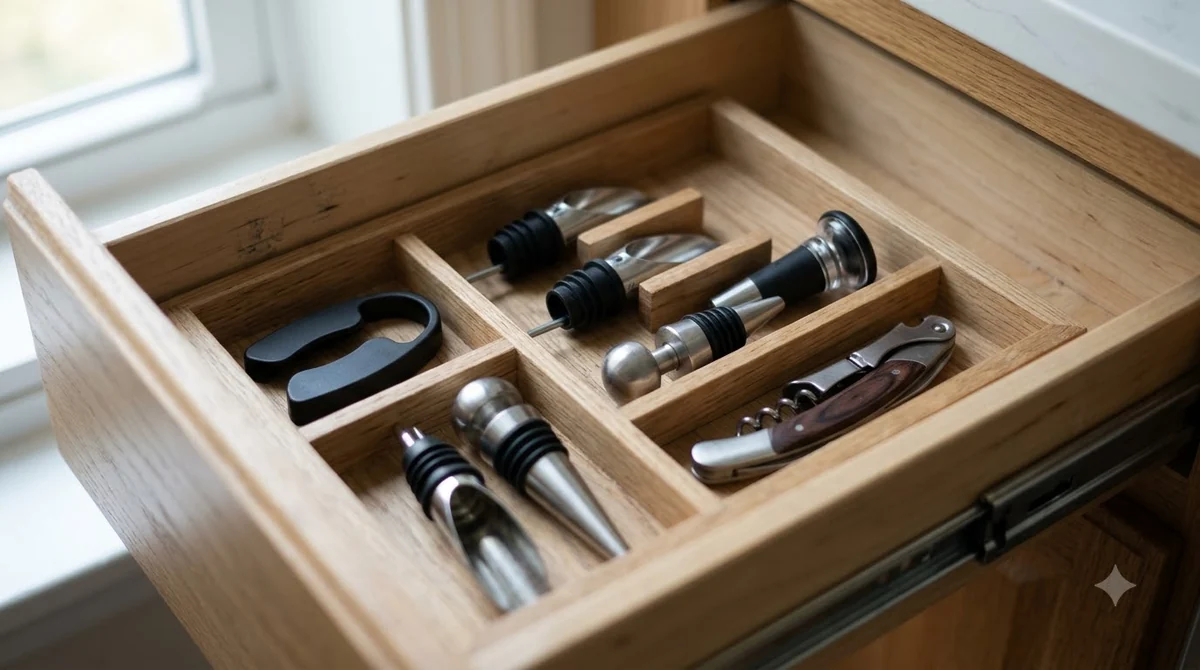
North Dakota State University Extension identifies equipment such as a fruit press, nylon straining bag, graduated measuring cup, food-grade plastic pail, long-handled spoon, siphon hose, carboy, hydrometer, and thermometer in its home winemaking guidance. These tools support the practical differences between processing fresh fruit and preparing a commercial grape concentrate kit.
A nylon straining bag is particularly useful when a recipe calls for crushed fruit, berries, or other solids to remain contained during extraction or fermentation. It makes removing pulp and seeds more manageable than pouring an entire mixture through an improvised household strainer. A fruit press can be useful for larger quantities of apples or grapes, although beginners making small batches may not need to purchase one immediately.
Which accessories matter most?
Start with the primary fermenter, a secondary carboy, an airlock, a hydrometer, and a siphon system. Add a straining bag and graduated measuring equipment when the selected recipe requires them. A thermometer is also useful because fermentation conditions influence yeast activity and the progress of the batch.
Fresh-fruit recipes may require more ingredient preparation than concentrate-based wine kits. Apples, strawberries, cherries, and currants have different juice yields and natural acidity. Depending on the fruit and recipe, additional ingredients such as sugar, yeast nutrient, acid blend, pectic enzyme, or tannin may be needed. These ingredients should be selected according to a tested recipe rather than added indiscriminately.
For example, NDSU Extension explains that acid blend commonly combines malic, tartaric, and citric acids. It also describes pectic enzyme as an aid for breaking down pectin and reducing the possibility of pectin-related cloudiness. These are recipe-dependent additions, not universal requirements for every batch. Its home winemaking equipment and preparation guidance provides further information about these ingredients and the equipment used in small-scale wine production.
The main disadvantage of a fruit-focused setup is the additional preparation and cleanup. A fruit press takes storage space, while straining bags need thorough cleaning after use. For someone making occasional one-gallon experiments, purchasing every possible fruit-processing accessory at once is unnecessary. Begin with the equipment required by the first recipe and expand as production increases.
Best for Better Fermentation Control: Hydrometer and Testing Kits
A hydrometer and testing accessory kit is one of the most useful additions to an existing wine making setup. It helps determine whether fermentation is progressing and whether the wine has reached the specific-gravity endpoint specified by the recipe.
The essential combination is a wine hydrometer, test jar, and wine thief or sampling pipette. The hydrometer measures specific gravity, which reflects the density of the liquid in relation to water. During fermentation, yeast consumes sugar and produces alcohol and carbon dioxide, causing the liquid’s specific gravity to change.
North Dakota State University Extension explains that pure water has a specific gravity of 1.000 and that finished dry wine can reach approximately 0.990. Its guidance also identifies a starting must reading of 1.080 or higher as a common reference, although the correct starting value depends on the recipe.
What a useful testing kit should contain
- A hydrometer with a scale suitable for winemaking measurements.
- A test jar tall enough for the instrument to float freely.
- A sampling tool for collecting wine from the fermenter or carboy.
- A thermometer for checking fermentation temperature.
- Clear instructions for taking and recording readings.
Sampling matters because taking a reading directly from a large fermentation vessel can be inconvenient. A wine thief allows a small quantity to be transferred into the test jar. This reduces unnecessary handling of the main batch and makes repeated measurements easier to organize.
Winexpert’s small-batch instructions provide a practical illustration of measurement-based fermentation management. The specified 4.5-liter kit calls for a Day 1 specific-gravity reading and another check on Day 14. Its instructions identify a Day 1 range of 1.080 to 1.097 and a Day 14 target below 0.996. These figures belong to that particular kit and should not be applied automatically to other recipes.
A testing kit is especially worthwhile for anyone who has experienced uncertainty about whether fermentation has finished. Airlock bubbling is not a reliable substitute for specific-gravity measurements. Changes in room temperature, leaks around a bung, or other conditions can affect visible airlock activity without accurately describing fermentation progress.
Keep a simple written record of each reading, including the date, batch identification, and temperature. That record makes it easier to compare batches and follow the manufacturer’s or recipe’s fermentation schedule. A hydrometer is a relatively simple instrument, but using it consistently provides much better information than guessing based on appearance.
Best for Finishing and Bottling: Wine Bottling Accessory Kits
A bottling accessory kit is the most practical upgrade for someone who already owns fermentation equipment. It focuses on transferring finished wine into bottles with less spillage, reduced sediment disturbance, and more consistent filling levels.
The main items to look for are a bottling bucket, bottle filler, siphon tubing, corker, bottles, and suitable closures. A bottle brush and compatible cleaning products are also useful. A standard six-gallon batch may require approximately 30 empty 750 ml bottles, although actual output depends on losses during fermentation and transfers.
Automatic bottle fillers and siphoning equipment
A bottle filler typically uses a valve at the end of a tube to control the flow of wine. When placed against the bottom of a bottle, it opens to allow filling and stops when lifted. This makes the filling process more manageable than pouring wine directly from a carboy or siphon hose.
An auto-siphon is another useful accessory. It helps start a transfer without requiring the user to manually initiate a siphon with the mouth. The tubing and racking cane should be compatible with the vessels being used, and all equipment that contacts the wine needs to be cleaned and sanitized before use.
A corker is important if the chosen bottles use cork closures. Hand-operated corkers may be sufficient for occasional small batches, while more substantial equipment can be useful for people who bottle regularly. The correct cork size and bottle opening also matter, so buying closures before checking bottle compatibility is a poor approach.
What is not included in every bottling package?
Some bottling bundles include a corker but omit bottles. Others provide a bottle filler and tubing without corking equipment. Labels, corks, and bottle brushes may also be sold separately. For this reason, compare the actual package inventory against the complete bottling process rather than assuming a bottling kit includes every finishing accessory.
Another consideration is sediment management. Wine should be sufficiently clear before bottling, and transfers should avoid drawing sediment into the finished bottles. If sediment becomes disturbed, allowing the wine to settle again before proceeding is preferable to bottling a cloudy batch unnecessarily.
People who make only one small batch may not need a large bottling station. A compatible siphon, a bottle filler, and an appropriate closure tool may be enough. Those who regularly produce six-gallon batches will generally benefit from having dedicated bottling equipment that remains clean and organized between projects.
How to Choose the Right Wine Making Kit
The best purchase depends on the wine style, batch size, available storage area, and equipment already owned. A useful selection process starts with production capacity and works through the fermentation, testing, sanitation, and bottling requirements.
-
Decide on batch size.
Choose one gallon for small experiments, three gallons for moderate production, or six gallons for a conventional full-sized home wine batch. Remember that a six-gallon batch can require approximately 30 standard bottles. -
Check the primary fermenter capacity.
Allow room for foaming and active fermentation. An eight-gallon primary fermenter is a useful configuration for a six-gallon batch. -
Match the secondary vessel.
Choose a carboy or jug that suits the volume of wine being transferred. Check the neck opening and the bung size before purchasing an airlock. -
Confirm that testing equipment is included.
A hydrometer and test jar are fundamental tools for monitoring specific gravity. A thermometer and wine thief make the process easier to manage. -
Evaluate the transfer system.
Look for compatible siphon tubing, a racking cane or auto-siphon, and equipment that can transfer wine without unnecessary splashing. -
Check cleaning and sanitation supplies.
A complete setup should account for cleaning fermenters, carboys, hoses, spoons, and bottling accessories. Confirm that the products are suitable for wine equipment. -
Review the bottling inventory.
Determine whether the kit includes a bottle filler, corker, corks, and bottles. For a six-gallon batch, plan for approximately 30 standard 750 ml bottles. -
Compare material and storage requirements.
Consider the weight of glass carboys, the handling convenience of PET vessels, and the space needed for buckets, bottles, and accessories.
Glass versus PET carboys
Glass and PET are both used for secondary fermentation and wine storage. Glass is familiar, rigid, and does not scratch as easily as many plastic alternatives, but it is heavy and can break if dropped. PET is lighter and easier to handle, making it attractive for people who regularly move equipment or have limited storage arrangements.
Home Fermenter’s six-gallon starter equipment is available in both glass-carboy and PET-carboy configurations. The listed supporting accessories are similar, so the main distinction is the material of the secondary vessel. This makes the choice a question of handling preference and practical storage rather than an assumption that one material automatically produces better wine.
Check whether you are buying ingredients or equipment
A wine ingredient kit generally contains a grape juice or concentrate base and the ingredients required by its recipe. An equipment kit supplies reusable tools. Some sellers offer both categories together, while others list them separately. A beginner should verify this distinction before placing an order.
For additional equipment comparisons, the site’s wine making supplies resource can help identify individual accessories that may be missing from a starter package. Someone setting up a dedicated storage area can also review a wine cellar kit to distinguish wine-storage equipment from fermentation equipment.
It is also useful to think about the equipment needed after the wine is finished. A sommelier kit serves a different purpose, providing wine-opening and serving tools rather than the vessels and measuring instruments required for fermentation. For other useful wine-related accessories, the Accessories Library provides another starting point.
Frequently Asked Questions
Can homemade wine be made without a hydrometer?
It is possible to ferment juice without measuring specific gravity, but doing so makes it harder to establish whether fermentation has reached its intended endpoint. A hydrometer provides numerical readings that can be compared over time. It is particularly useful when working with unfamiliar fruit or recipes that require careful sugar adjustments.
Can the same wine making kit be used for white and red wine?
Most basic fermentation equipment can be used for both styles, provided the vessels have sufficient capacity and all equipment is cleaned between batches. Red wine made with grape skins may require more room during primary fermentation than a juice-only white wine recipe. The recipe also determines whether additional tools, such as a straining bag, are needed.
Does a wine making kit include a recipe book?
Some equipment packages include a printed instruction or recipe book, while others supply only the physical accessories. Ingredient kits generally have their own production instructions, which may specify different measurements and fermentation schedules. A recipe book is useful, but it should not replace the instructions supplied for a particular wine ingredient kit.
How long can winemaking equipment remain unused?
Clean, dry equipment can generally be stored between batches, provided it is protected from dust, pests, and contamination. Rubber bungs, seals, and flexible tubing should be inspected before reuse because materials can deteriorate or develop cracks during storage. Replace damaged components rather than relying on a questionable seal.
Can equipment from a beer brewing kit be reused for wine?
Many basic brewing accessories are suitable for wine production, including food-grade fermenters, hydrometers, airlocks, siphons, and cleaning tools. However, their capacity and fittings must match the wine recipe. Equipment that has retained strong flavors or residues from another fermentation should receive appropriate cleaning before being used for wine.
The best wine making kit is the one that fits the batch size and provides the equipment needed for fermentation, testing, transferring, and bottling. For most beginners planning regular production, a complete six-gallon setup is a practical starting point, while a one-gallon bundle makes sense for smaller experiments. Compare the actual contents, vessel materials, and compatibility of accessories before buying, and build out the equipment collection as your winemaking experience grows.
More in Wine Accessories
 Coravin Vs Vacu Vin: Choose the Right Wine Saver for Your BottlesUpdated Nov 21, 2026
 Zwilling Wine Stopper Review: Preserve Open Bottles LongerUpdated Nov 21, 2026
 Wine Enthusiast Wine Preserver Review: Features, Benefits and LimitationsUpdated Nov 21, 2026
 Wine Enthusiast Wine Stopper: An Easier Way to Reseal Open BottlesUpdated Nov 21, 2026
 Vintorio Wine Opener: Two-Step Cork RemovalUpdated Nov 21, 2026
 Zwilling Wine Aerator Review: Aerate, Pour, and Seal With One ToolUpdated Nov 21, 2026