

We may earn a commission when you buy through links on this page, at no extra cost to you. Learn more.
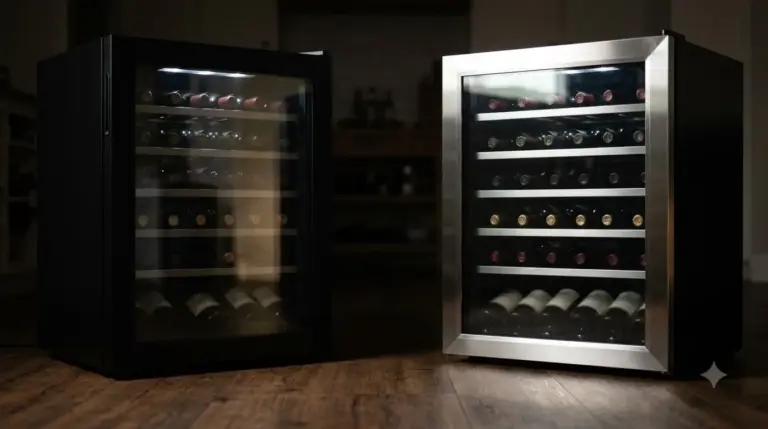
Wine fridge vs regular fridge: a wine fridge is better for storing unopened wine because it maintains more suitable temperatures, higher humidity, and more stable storage conditions. A regular refrigerator is useful for chilling wine before serving and keeping opened bottles fresh for a few days. However, its colder, drier environment is not designed for long-term wine storage. The right choice depends on how many bottles you own, how long you plan to keep them, and whether you want to age wine or simply serve it at the right temperature.
Both appliances keep wine cool, but they serve different purposes. A kitchen refrigerator prioritizes food safety and rapid cooling, while a dedicated wine refrigerator prioritizes consistent storage conditions. Understanding the differences in temperature, humidity, vibration, and everyday convenience makes it easier to decide whether a separate wine cooler deserves space in your home.
Wine Fridge Vs Regular Fridge: Side-by-Side Comparison
A wine refrigerator is designed around the requirements of bottled wine, whereas a regular refrigerator is designed for perishable food. The biggest practical differences involve operating temperature, moisture retention, bottle positioning, and storage stability.
| Feature | Wine refrigerator | Regular refrigerator |
|---|---|---|
| Typical temperature range | 40°F–65°F | 33°F–40°F |
| Primary purpose | Wine storage and serving | Food preservation |
| Humidity | Designed to maintain higher humidity | Generally removes moisture |
| Bottle positioning | Horizontal wine racks | General-purpose shelves |
| Temperature zones | Single-zone or dual-zone options | Usually one main refrigerator compartment |
| Vibration management | Some models include vibration reduction | Not specifically designed for wine storage |
| Light protection | Some models feature UV-protected glass | Typically opaque doors |
| Food odors | Dedicated storage limits exposure | Shared space with food and beverages |
| Best use | Unopened bottles and longer storage | Short-term chilling and opened bottles |
The temperature figures in the comparison reflect the general operating ranges described by Whirlpool, rather than guaranteed settings for every appliance. Its wine refrigerator buying guide explains why wine appliances offer warmer settings than conventional refrigerators. Individual models can differ in their minimum and maximum temperatures, humidity controls, and cooling systems.
Neither appliance automatically guarantees excellent wine storage. A poorly ventilated wine cooler in a hot room can struggle to maintain its target temperature, while a regular refrigerator can still be perfectly useful for bottles that will be consumed shortly. The important distinction is whether the appliance can maintain appropriate conditions consistently for the length of time you intend to store the wine.
Temperature Control and Wine Preservation
Temperature is the most important reason to choose a dedicated wine refrigerator for long-term storage. A regular kitchen refrigerator operates at temperatures intended for keeping food fresh, while wine storage calls for a different range and greater stability.
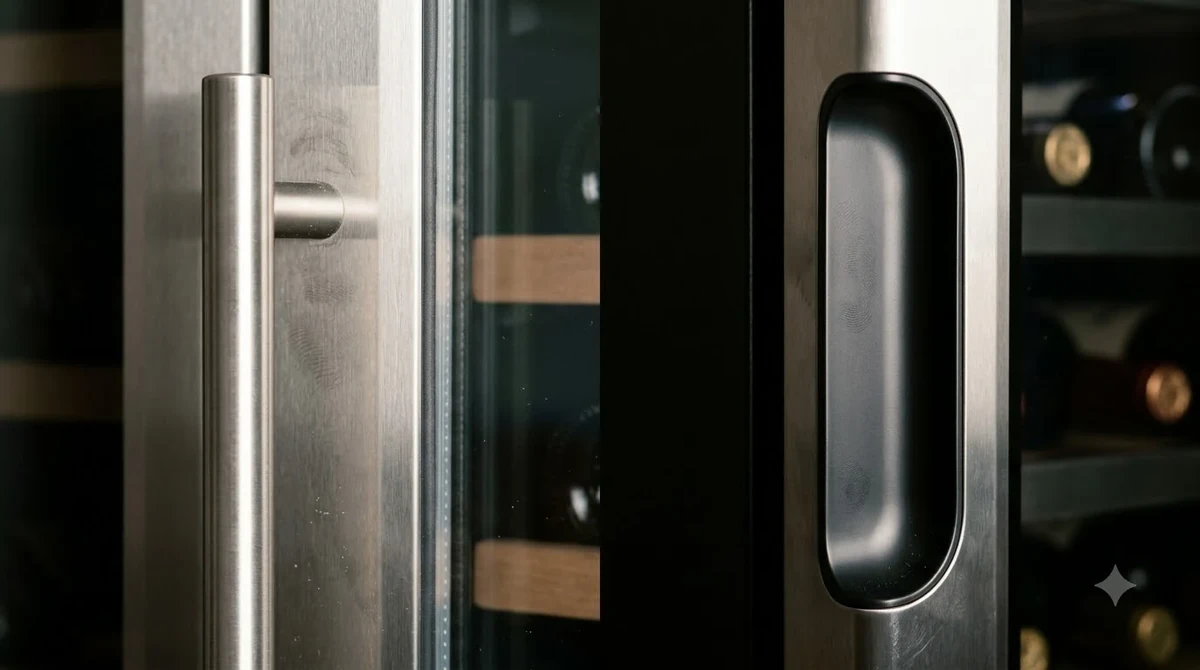
Whirlpool describes conventional refrigerator temperatures as approximately 33°F to 40°F, compared with a typical wine refrigerator range of 40°F to 65°F. The difference matters because wine storage is not simply about making a bottle as cold as possible. Excessively cold storage can slow wine development, while excessive warmth can accelerate aging and compromise the wine over time.
Miele’s wine storage manual provides a useful example of how a dedicated appliance handles temperature. Its documented wine storage unit supports temperatures between 41°F and 64°F, with independently adjustable zones for different storage purposes. Miele also identifies temperatures above 72°F as conditions that can cause wine to mature too quickly. These specifications illustrate the advantages of purpose-built equipment, although they should not be treated as universal specifications for every wine refrigerator.
Storage temperature versus serving temperature
It is important to distinguish the temperature at which wine is stored from the temperature at which it should be served. A bottle kept in a wine refrigerator does not necessarily need to be ready to pour immediately. Some wines benefit from a short chilling period or a little time outside the appliance before serving.
These are useful serving-temperature ranges:
- Sparkling wine: 40°F to 50°F.
- Light whites and rosé: 45°F to 50°F.
- Full-bodied whites: 50°F to 55°F.
- Light-bodied reds: 55°F to 60°F.
- Full-bodied reds: 60°F to 65°F.
- Sweet whites: 43°F to 50°F.
For longer-term storage, a consistent setting around 55°F is a useful general target for a mixed collection. Miele recommends 50°F to 54°F for storing red and white wines together in its documented appliance. This is a practical compromise, although it is not the ideal serving temperature for every bottle.
Why temperature fluctuations matter
A bottle stored in a refrigerator door may experience repeated temperature changes as the door opens and closes. The same issue can occur when bottles are frequently moved between a warm countertop and a cold refrigerator. Although brief fluctuations are not automatically disastrous, maintaining a relatively stable environment is preferable for wine that will remain unopened for months or years.
Miele specifically warns that temperature fluctuations put wine under stress and interrupt its maturation process. Its manual also recommends allowing several hours after adjusting a temperature setting before checking the new reading. This is a useful reminder not to judge an appliance immediately after changing its controls.
For someone buying a bottle of Sauvignon Blanc on Friday and serving it Saturday, a kitchen refrigerator is generally sufficient. For someone keeping a collection of Cabernet Sauvignon, Burgundy, or vintage Champagne for future occasions, stable wine-specific temperature control becomes considerably more valuable.
Humidity, Corks, and Bottle Positioning
Humidity is another important difference between wine storage appliances and ordinary refrigerators. A wine refrigerator is designed to provide a more suitable moisture environment for natural corks, while a conventional refrigerator generally maintains a comparatively dry interior.
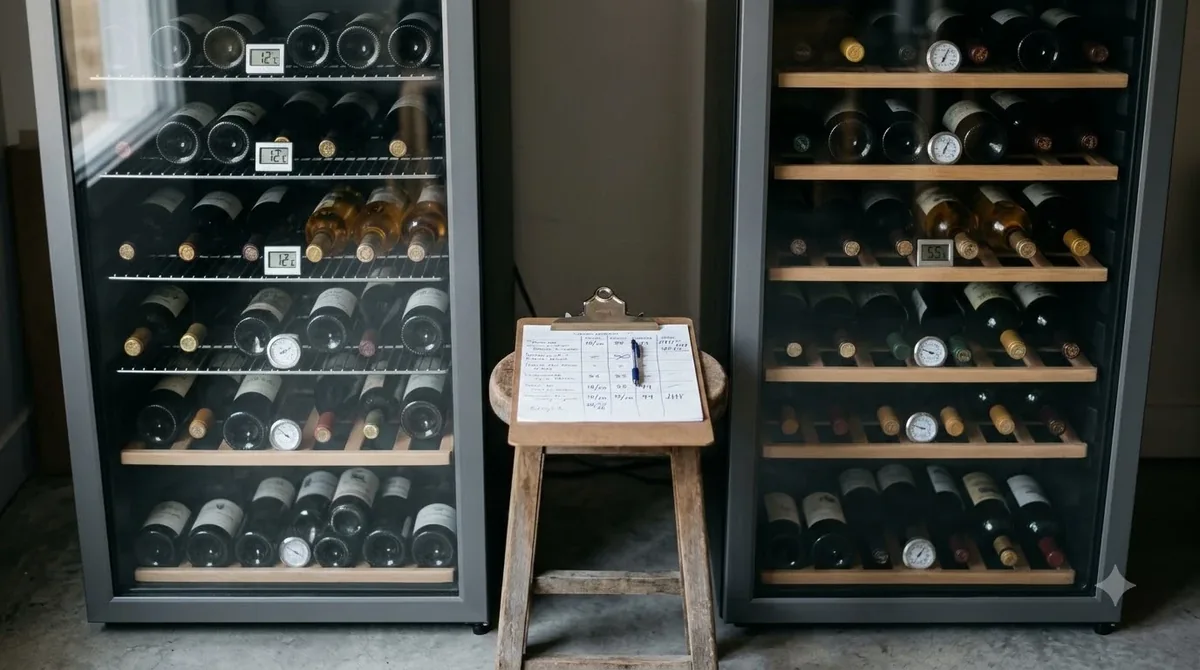
Miele recommends relative humidity between 60% and 70% for its wine storage unit. The purpose is to help keep natural corks from drying out and losing their ability to seal the bottle. If a cork becomes compromised, unwanted air can enter and affect the wine. This is particularly relevant for bottles intended for extended storage.
Why conventional refrigerators are relatively dry
Regular refrigerators remove moisture as part of their normal cooling operation. This is useful for food storage because controlling excess moisture helps maintain a suitable environment for a wide range of perishable ingredients. However, the same conditions are not necessarily ideal for bottles sealed with natural cork.
Wine Enthusiast identifies humidity as one of the principal differences between standard refrigerators and dedicated wine storage appliances. Its explanation focuses on the importance of maintaining cork moisture and avoiding an environment that encourages corks to become dry and porous.
There is an important qualification: not every wine bottle uses a natural cork. Screw-cap wines and some alternative closures do not have the same cork-moisture requirements. Consequently, humidity control is particularly relevant to collectors storing natural-cork bottles over extended periods rather than people buying wines for immediate consumption.
Horizontal storage versus upright storage
Wine bottles with natural cork closures are traditionally stored horizontally. This allows the wine to remain in contact with the inside of the cork, helping prevent it from drying out. A dedicated wine refrigerator typically includes racks that hold bottles on their sides and keep them organized.
A regular refrigerator usually has flat shelves and door compartments designed for food containers, cartons, and beverage bottles. Storing wine horizontally can be awkward, especially when the refrigerator is full of groceries. Bottles may also get moved repeatedly as other items are added or removed.
Miele explicitly recommends laying wine bottles on their sides during storage. Its manual also advises standing bottles upright before serving so sediment can settle. This is particularly useful for older red wines that have developed sediment during bottle aging.
Tip: If you are keeping natural-cork bottles for several months, prioritize horizontal storage in a stable, relatively humid environment. For screw-cap wines that you plan to drink soon, humidity control is much less important than maintaining a suitable temperature.
Humidity should not be confused with condensation or excessive dampness. A wine refrigerator does not need a wet interior to preserve bottles. The goal is a controlled environment that supports cork integrity without creating unnecessary moisture problems for labels, shelves, or the appliance itself.
Vibration, Light, and Food Odors
Wine storage involves more than temperature and humidity. Vibration, direct light, and surrounding odors are additional considerations, particularly for bottles that will remain undisturbed for extended periods.
A regular refrigerator uses a compressor and other mechanical components to cool its interior. Its shelves and compartments are not specifically designed around wine storage. A wine refrigerator, by comparison, may include specialized shelving, vibration-reduction features, and a dedicated environment separated from food storage.
Vibration and mechanical movement
Vibration is often discussed as a potential problem for wine that is being aged. Standard refrigerators can transmit mechanical vibration through their shelves and cabinet structure. Dedicated wine refrigerators may use different compressor mounting arrangements, insulation, or other vibration-management features.
Wine Enthusiast explains that some compressor-based wine storage appliances incorporate vibration-absorption systems. It also distinguishes these appliances from ordinary compressor refrigerators, which are not necessarily designed to isolate stored bottles from mechanical movement.
However, vibration should not be exaggerated into a reason to reject every regular refrigerator. Consumer Reports questions whether ordinary appliance vibration is necessarily significant enough to damage wine, noting that measured vibration in its previous testing was extremely low. The practical takeaway is that temperature stability and appropriate storage conditions deserve priority, while vibration reduction is a useful additional feature rather than a guarantee of better wine.
Light exposure and UV protection
Light is another consideration for wine storage. Prolonged exposure to ultraviolet light can contribute to unwanted changes in wine, affecting its aromas and overall quality. This is one reason wine is traditionally stored in dark cellars rather than on bright kitchen counters or open shelves beside windows.
Some wine refrigerators feature tinted or UV-protected glass doors. Whirlpool identifies UV-protected glass as a useful feature for reducing exposure in locations that receive significant sunlight. This can be particularly helpful when the appliance is installed in a kitchen or dining area where an opaque door would be less visually appealing.
A regular refrigerator already provides darkness when its door is closed. Therefore, a wine refrigerator with a glass door is not automatically better at protecting wine from light. The quality of its UV protection and its placement in the room both matter.
Food odors and dedicated storage
A kitchen refrigerator contains a variety of ingredients with distinctive aromas. Garlic, onions, leftover sauces, cheese, and prepared foods can all contribute to the surrounding smell. A dedicated wine refrigerator separates bottles from this environment and may include filtration designed to reduce odor contamination.
Miele’s documented wine storage unit includes an active charcoal filter that helps provide clean, odor-free incoming air. This is a specialized feature that an ordinary refrigerator may not offer in its wine storage area.
Wine Enthusiast also identifies surrounding food odors as a potential concern with conventional refrigeration. The practical benefit of dedicated storage is not that every bottle in a kitchen refrigerator will absorb food smells, but that a separate compartment provides better control over the storage environment.
Everyday Convenience, Capacity, and Operating Costs
A wine refrigerator is not necessary for every household, even if it provides better storage conditions. The value of a dedicated appliance depends on collection size, available space, how frequently bottles are opened, and whether long-term storage is part of your wine routine.
Whirlpool divides wine refrigerators into small, medium, and large capacity categories. Its buying guide describes small units as holding approximately 2 to 40 bottles, medium units as holding 40 to 100 bottles, and large units as accommodating 100 to 200 bottles.
When a regular refrigerator is more convenient
A standard refrigerator is usually the simpler option for occasional wine drinkers. It is already installed, does not require a separate appliance, and can chill a bottle without any additional equipment. If you normally purchase wine shortly before dinner, there may be little practical reason to dedicate an entire cabinet to bottles.
It is also useful for opened wine. Refrigeration slows oxidation and helps preserve the remaining wine after a bottle has been opened. A practical general guideline is to keep opened still wines refrigerated and consume them within approximately three to five days, depending on the wine, closure, and storage conditions. Sparkling wines generally retain their best character for approximately one to three days when properly resealed and refrigerated.
For instance, a bottle of Chardonnay left over after a meal can go straight into the kitchen refrigerator. The same applies to a partially finished bottle of Pinot Noir. The lower temperature is useful for slowing deterioration after opening, even though it is not the preferred environment for aging unopened bottles over long periods.
When a wine refrigerator makes more sense
A separate wine refrigerator becomes more useful when you regularly keep several bottles available for different occasions. It allows you to organize reds, whites, sparkling wines, and rosé without competing with grocery storage.
A single-zone appliance is generally suitable for someone storing one main category of wine or keeping an entire collection at a consistent storage temperature. A dual-zone model is more convenient when you want separate settings for reds and whites or want some bottles closer to their serving temperatures.
Whirlpool explains that dual-zone models provide independently controlled compartments. This can be useful for households that regularly serve different wine styles. However, dual-zone functionality should not be confused with a requirement for long-term aging. A single stable storage temperature is perfectly reasonable for a mixed collection.
Capacity also deserves attention. A nominal 24-bottle wine refrigerator may not hold 24 bottles if the collection includes wide Champagne bottles, larger Burgundy shapes, or unusually shaped sparkling wine bottles. Adjustable racks can help, but the actual capacity depends on bottle dimensions and shelf configuration.
Installation and ventilation
Freestanding and built-in wine refrigerators have different installation requirements. Whirlpool explains that freestanding units commonly release heat through the rear or sides, meaning they need adequate clearance around those areas. Built-in models generally use front ventilation so they can fit beneath a counter or within cabinetry.
Installing a freestanding appliance inside a tightly enclosed cabinet can restrict airflow and interfere with cooling performance. Before buying a unit, confirm its installation instructions, ventilation clearances, electrical requirements, and intended installation type.
Placement also matters. Whirlpool recommends keeping wine refrigerators away from direct sunlight and heat-generating appliances such as ovens and dishwashers. A cool, shaded location with sufficient ventilation is generally more suitable than a cramped cabinet beside a hot cooking appliance.
Which Should You Pick?
The better choice depends on how you buy, store, and serve wine. A regular refrigerator is adequate for short-term chilling and opened bottles, while a dedicated wine refrigerator is the stronger choice for preserving an unopened collection over longer periods.
Choose a wine refrigerator if:
- You regularly keep unopened bottles for several months or longer.
- You own natural-cork wines that benefit from controlled humidity.
- You collect different wine styles and want organized horizontal storage.
- Your home does not have a consistently cool, dark storage location.
- You want separate temperature zones for different wines.
- You regularly purchase bottles that you intend to save for future occasions.
For example, someone collecting Cabernet Sauvignon from Napa Valley, Pinot Noir from Oregon, and traditional-method sparkling wine may benefit from a dedicated appliance. The bottles can remain organized, protected from grocery odors, and stored at a more appropriate temperature than a typical kitchen refrigerator provides.
Choose a regular refrigerator if:
- You usually buy wine shortly before drinking it.
- You mainly need to chill white wine, rosé, or sparkling wine before serving.
- You rarely keep unopened bottles for extended periods.
- You want convenient refrigeration for partially finished bottles.
- You have limited kitchen space and do not want another appliance.
- Your collection consists primarily of inexpensive everyday wines intended for near-term consumption.
For example, someone who buys a Sauvignon Blanc for a weekend meal or a bottle of Prosecco for a celebration can comfortably use a regular refrigerator for short-term chilling. There is no need to purchase specialized equipment simply to cool a bottle before dinner.
The best compromise for many households
Some wine drinkers benefit from using both appliances for different purposes. A wine refrigerator can handle unopened bottles that are being kept for future occasions, while the regular refrigerator can chill bottles before serving and preserve opened wine afterward.
This approach is particularly practical for households that entertain regularly. A wine refrigerator keeps the collection organized and accessible, while the kitchen refrigerator remains available for food, beverages, and bottles that need temporary chilling.
There is also no need to buy the largest wine refrigerator available. A smaller single-zone appliance can be sufficient for a modest collection. If your storage needs grow, you can reassess capacity and consider a dual-zone model later.
For a broader look at other head-to-head comparisons, visit our Versus collection. If you are planning drinks for a gathering, our Aperol Spritz recipe and Hugo Spritz recipe offer two additional options to serve alongside your wine selection.
Frequently Asked Questions
Can a regular refrigerator damage unopened wine?
Keeping an unopened bottle in a regular refrigerator for a short period does not automatically damage it. However, conventional refrigerators are colder and drier than ideal long-term wine storage environments. The greater concern is extended storage, especially for natural-cork bottles that benefit from controlled humidity and consistent temperatures.
How long can unopened wine stay in a regular refrigerator?
There is no universal expiration date determined by refrigeration alone. A bottle intended for near-term consumption can generally remain refrigerated for several days or longer without an immediate problem, depending on the wine. However, keeping wine refrigerated for weeks or months is not a substitute for proper long-term storage, particularly if the bottle is intended to mature.
Can you put beer and soda in a wine refrigerator?
Yes, many wine refrigerators can also accommodate other beverages, provided their operating temperatures are suitable. Whirlpool describes combination wine-and-beverage refrigerators with separate compartments for bottles and upright drinks. A dedicated beverage refrigerator may be more appropriate if you prefer beer and soda significantly colder than wine storage temperatures allow.
Does a wine refrigerator need to run continuously?
Yes, a wine refrigerator generally needs to remain powered on to maintain its selected storage temperature. Its compressor or cooling system cycles as needed rather than necessarily running continuously at full power. Extended power interruptions can affect storage conditions, so a temperature alarm is a useful feature for protecting a valuable collection.
Can a wine refrigerator replace a traditional wine cellar?
A suitable wine refrigerator can provide controlled conditions for a home collection without requiring a dedicated cellar room. However, its capacity, insulation, temperature stability, and humidity management determine how suitable it is for extended aging. Larger collections or valuable bottles intended for many years of storage may require a purpose-built wine cabinet or cellar with appropriate capacity and environmental controls.
A wine fridge is the better investment for people who regularly store unopened bottles, particularly natural-cork wines and collections intended for longer-term aging. A regular refrigerator remains a practical choice for chilling bottles before dinner and keeping opened wine fresh for a few days. If your collection is growing, a dedicated wine refrigerator offers a more suitable and organized storage environment without requiring a full wine cellar.
More in Versus
 Edgestar Vs Kalamera: Choose the Right Wine CoolerUpdated Nov 21, 2026
 Frigidaire Vs Magic Chef: Compare Wine Cooler Features and FitUpdated Nov 21, 2026
 EdgeStar Vs Whynter Wine Coolers for Smarter StorageUpdated Nov 21, 2026
 Newair Vs Whynter: Choose the Right 46-Bottle Wine CoolerUpdated Nov 21, 2026
 Kalamera Vs Newair: Choose the Right Wine Cooler for Your HomeUpdated Nov 21, 2026
 Danby Vs Vinotemp: Choose the Right Wine Cooler for Your SpaceUpdated Nov 21, 2026