

We may earn a commission when you buy through links on this page, at no extra cost to you. Learn more.
Wine fridge power consumption commonly falls around 100–200 kWh per year for many modern household models, although larger cabinets, hot rooms, and inefficient cooling systems can use more. A current U.S. listing of 156 certified wine and beverage coolers shows a median of 152 kWh annually, with 80% of listed models between 99 and 199 kWh. That is a useful starting point, not a guarantee for every wine refrigerator.
A wine fridge runs throughout the year to protect bottles from large temperature swings, so even a modest appliance contributes to household electricity use. The practical way to estimate its impact is to look at annual kilowatt-hours (kWh), understand what the rating includes, and keep the unit properly installed and maintained.
How Much Electricity Does a Wine Fridge Use?
For many home wine coolers, a reasonable planning range is about 100–200 kWh per year, or roughly 0.27–0.55 kWh per day. FridgeCompare’s U.S. listing of 156 ENERGY STAR-certified wine and beverage cooler models reports a median of 152 kWh per year and an 80% range of 99–199 kWh.
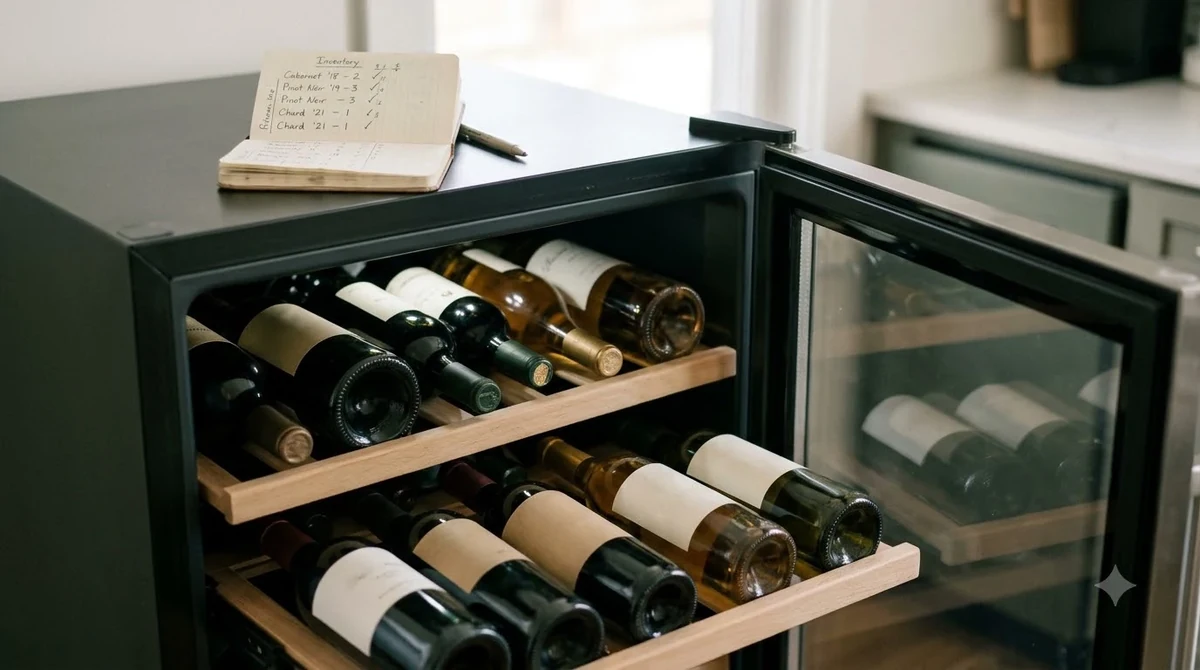
The sample gives a practical reference, but it combines wine coolers and beverage centers because the ENERGY STAR data groups them under the cooler category. It also includes different capacities and installation styles. A compact single-zone unit and a tall, multi-zone wine column are not directly comparable just because both hold bottles. Use the sample to judge the order of magnitude, then use the annual kWh figure for the exact model you own or plan to buy.
Manufacturer specifications provide useful examples of the variation. Bertazzoni lists 158 kWh per year for a 52-bottle, two-zone wine column and 164 kWh per year for a 68-bottle, three-zone model. The manufacturer’s 52-bottle wine column specifications provide one example of the figures to compare.
| Reference point | Annual use | Daily average | Average draw across a year |
|---|---|---|---|
| Lower end of the listed 80% range | 99 kWh | 0.27 kWh | 11.3 W |
| Median of 156 listed cooler models | 152 kWh | 0.42 kWh | 17.4 W |
| Bertazzoni 52-bottle, two-zone model | 158 kWh | 0.43 kWh | 18.0 W |
| Bertazzoni 68-bottle, three-zone model | 164 kWh | 0.45 kWh | 18.7 W |
| Upper end of the listed 80% range | 199 kWh | 0.55 kWh | 22.7 W |
The daily and average-watt figures are conversions from annual kWh, not separate measurements of each appliance. Average draw across a year smooths out periods when the cooling system is on and off; it should not be mistaken for the compressor’s operating wattage. Your actual use can move above or below a published figure as room temperature, settings, door openings, and maintenance change.
What Makes One Wine Fridge Use More Power Than Another?
Capacity is one important factor, but bottle count alone does not predict electricity use. Cooling zones, insulation, door construction, ventilation, controls, and the temperature difference between the room and the cabinet all affect how often the appliance must remove heat.
A larger cabinet generally has more interior air and surface area to cool, and it may hold more bottles that need to be brought to the set temperature. Yet size is not a direct energy score: a well-insulated larger model can use less electricity than a poorly insulated smaller model. Compare annual kWh figures across models rather than assuming that the smallest bottle capacity always wins.
Temperature zones also add design complexity. Bertazzoni’s 52-bottle model has two zones that can be set between 40°F and 65°F, while its 68-bottle model has three zones and a rated annual use of 164 kWh. Separate zones are useful when red and white wines need different serving temperatures, but the extra zone should be judged by its energy rating and storage benefit, not assumed to double consumption.
Door and cabinet construction matter as well. A glass door can help display a collection, while insulation and an effective gasket limit heat entering the cabinet. Interior lights, fans, displays, and anti-condensation features also require electricity, although cooling usually accounts for most of the load. The most useful comparison is the annual energy figure for each complete appliance, because it reflects more than the compressor label alone.
How Room Conditions and Installation Affect Energy Use
A wine refrigerator uses more electricity when it must remove more heat from its cabinet. A hot kitchen, direct sun, poor air circulation, or a door that does not seal properly can make the cooling system run longer than it would in a stable, ventilated location.
The ENERGY STAR cooler guidance recommends placing a cooler away from heat sources, leaving a few inches between the appliance and the wall where the design calls for rear clearance, and keeping older condenser coils clean. Follow the installation manual for the exact clearance: some built-in units vent through a front grille and are designed for a cabinet opening, while freestanding models may need open space around the sides or back.
Installation style matters because ventilation paths differ. Do not push a freestanding cooler tightly into cabinetry unless its manual permits that arrangement. A blocked intake or exhaust can trap heat around the cooling system, lengthen run time, and raise the temperature of the compressor compartment. A built-in model should have the specified opening dimensions and an unobstructed front grille if the manufacturer designs it to vent forward.
Ambient temperature also affects the workload. A cooler operating in a warm room must reject heat into that same warm room, so it has a harder job than one in a stable, moderate-temperature space. Avoid placing the cabinet in an unconditioned garage or sunroom unless the model’s climate rating allows the expected seasonal temperatures. Temperature ratings are not just comfort details; they define the environment in which the unit is intended to operate.
How to Calculate Your Wine Fridge’s Electricity Use
The clearest estimate comes from the appliance’s annual kWh rating or a plug-in energy meter. Annual kWh is already an energy total; watts describe the rate of electricity draw at a particular moment, so the two numbers answer different questions.
To convert an annual rating into a daily average, divide it by 365. A model rated at 152 kWh per year averages about 0.42 kWh per day. To estimate average continuous wattage, divide annual kWh by 8,760 hours and multiply by 1,000; the same 152 kWh rating works out to about 17.4 watts averaged over the year.
That 17.4-watt average does not mean the appliance always draws 17.4 watts. The compressor may draw substantially more while running, then switch off while the cabinet coasts at its set temperature. Fans, lights, and electronic controls can continue using some power in between cooling cycles. A momentary reading from a basic watt meter can therefore be misleading.
Use a plug-in meter for a real-world check
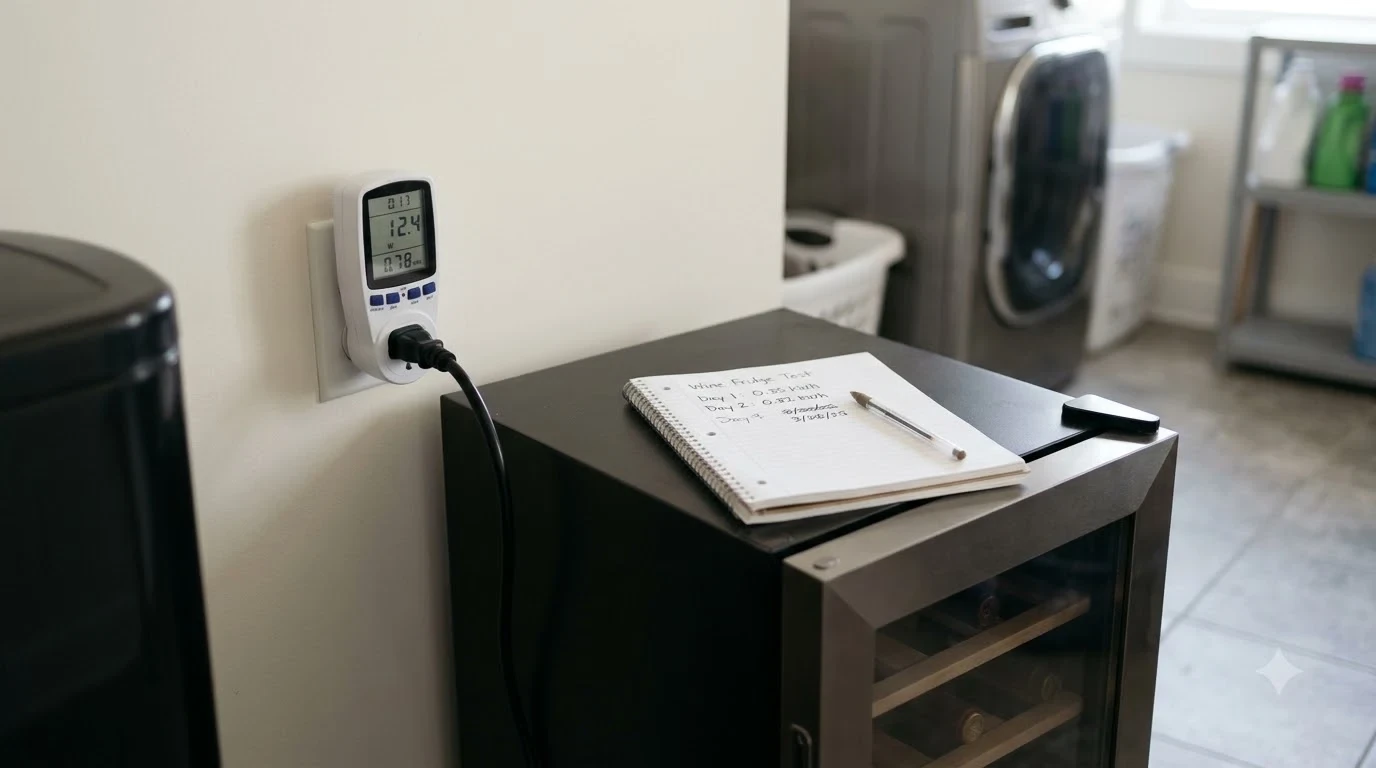
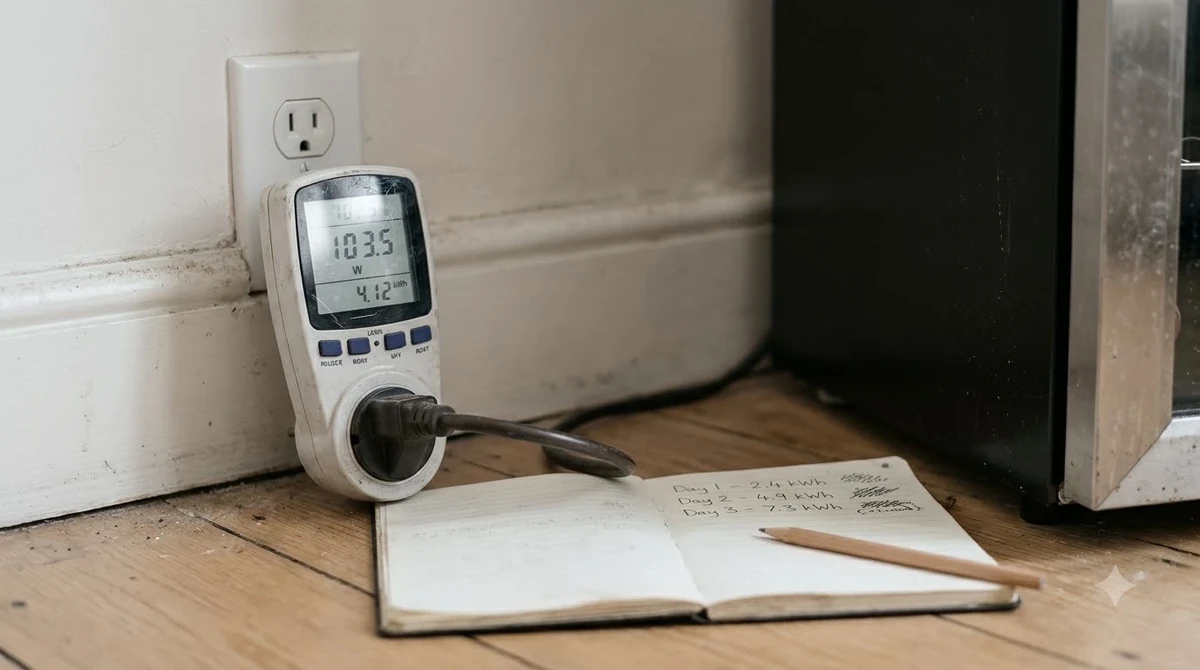
For a measured estimate, use a plug-in energy meter that records cumulative kWh. Connect the cooler directly to a properly rated meter and follow both devices’ instructions. Record the reading after at least several days of ordinary use; a full week is more informative than a brief spot check because it includes normal cooling cycles and household door openings.
Multiply the measured kWh by the number of days in a year, then divide by the number of days measured. For example, if a meter records 2.9 kWh over seven days, the simple annualized estimate is about 151 kWh (2.9 ÷ 7 × 365). This is an estimate, not a laboratory rating: a hot week, a newly loaded cabinet, or unusually frequent access can shift the result.
To translate energy into the amount on your utility bill, multiply annual kWh by your electricity rate per kWh. Use the rate that applies to your household, including any time-of-use variation if relevant. Do not compare bills from different homes without accounting for rate differences, billing periods, and other appliances.
Ways to Reduce Energy Use Without Risking Wine Storage
The best savings come from removing avoidable heat load while keeping a stable storage temperature. A properly located wine fridge with a sound door seal and clear ventilation path is usually a better choice than repeatedly changing the thermostat or switching the cabinet off and on.
Set the cabinet for the storage job rather than making it colder than necessary. Many wine cabinets offer settings across roughly 40°F to 65°F, and a stable cellar-style setting near 55°F suits long-term storage for many wines. If your model has separate zones, choose sensible targets for each zone and avoid extreme settings that force the unit to work harder than your collection requires. The manufacturer’s operating range takes priority over a generic temperature suggestion.
Limit unnecessary door openings and close the door fully after selecting a bottle. Before opening it, decide what you need so the door is not left open while you browse. Check the gasket for dirt, deformation, or gaps; clean it with a method approved by the manufacturer. A poor seal lets warm room air enter and can cause condensation or frost around the opening.
Keep the condenser intake and exhaust unobstructed, and clean accessible coils or vents at the interval specified in the manual. Dust can restrict heat transfer and airflow. Do not remove service panels or reach into electrical components to clean them. For more general setup advice, the site’s Installation & Care guidance can help you build a routine around placement, cleaning, and temperature checks.
Load bottles thoughtfully. Avoid placing a large batch of warm bottles into the cabinet immediately before a period of heavy use, since the cooler must remove the added heat. Leave space where the manual requires airflow, and do not pack bottles so tightly that shelves or the door fail to close properly. Once the cabinet has stabilized, try to keep the collection at a relatively steady temperature rather than making frequent thermostat changes.
Tip: Check the annual kWh rating before purchase, then recheck the door seal and ventilation after installation. Those two simple steps help you keep the appliance close to the conditions behind its published rating.
When High Electricity Use Signals a Problem
A higher-than-expected reading does not automatically mean the wine fridge is failing. First compare the measured period with the model’s annual rating and consider seasonal heat, bottle loading, door openings, and the amount of clearance around the appliance.
If the cooler runs almost continuously, struggles to hold its set temperature, or shows a persistent gap between the display and an independent thermometer, inspect the basic conditions before assuming an electrical fault. Check that the door closes evenly, the gasket is intact, ventilation openings are clear, and the room is within the appliance’s stated climate range. A layer of frost, repeated condensation, or unusual compressor noise can also justify a closer inspection.
Do not ignore a cabinet that runs for long periods while the bottles remain warmer than the target. A cooling problem can increase energy use and put the collection at risk. For model-specific troubleshooting, see the guidance on an Allavino wine fridge not cooling or a Magic Chef wine fridge not cooling. If the symptoms point to a service issue rather than a blocked vent or dirty seal, the Allavino wine fridge repair information can help you identify the next diagnostic step.
When checking a possible fault, change one variable at a time. Clear the ventilation path, verify the door seal, and monitor the internal temperature over a full day before making another adjustment. If the appliance still cannot maintain its target, or if you notice a burning smell, damaged cord, repeated breaker trips, or liquid around electrical parts, stop using it and contact a qualified service professional. Do not open sealed refrigeration components or attempt refrigerant work yourself.
Frequently Asked Questions
These answers clarify how to interpret a 152 kWh annual benchmark, compare door designs, and understand the rules that apply to built-in and freestanding wine cabinets.
Does an empty wine fridge use much less electricity?
Not necessarily. The cabinet still has to offset heat entering through its walls, door, and ventilation openings, even when there are no bottles inside. Bottle mass can affect recovery after a door opening, but an empty appliance does not stop using energy or consume a fixed fraction of its rated amount.
Does a glass door always make a wine fridge less efficient?
No. Door performance depends on the glazing, frame, and seal rather than the word “glass” alone. Some cabinets use triple-glazed, UV-protected doors; Bertazzoni describes that construction on certain wine-cellar models, but annual kWh remains the better way to compare complete appliances.
What does the climate class on a wine fridge mean?
Climate class describes the room-temperature conditions in which the appliance is designed to operate. It is not the target temperature for the bottles. A cabinet installed outside its stated ambient range may struggle to maintain its set point, even if the thermostat setting itself is correct.
Does the ENERGY STAR label apply to every wine cooler from a brand?
No. Certification applies to qualifying product models or listed model families, not automatically to every appliance sold under the same brand. Compare the exact model identifier in the product listing rather than assuming that one certified cooler makes the brand’s entire range certified.
Are wine refrigerators covered by the same rules as household refrigerators?
Not under every program. The Department of Energy’s Federal Energy Management Program excludes wine refrigerators from its standard residential-refrigerator purchasing criteria, while ENERGY STAR groups wine and beverage coolers in a separate cooler category. Those are distinct product categories, so the standard household-refrigerator list is not the right place to check a wine cooler model.
For many households, a wine fridge is a relatively modest but continuous electrical load: a 152 kWh annual rating is a useful benchmark, while the exact model and installation determine the result. Choose a unit that fits the collection, follow its ventilation and temperature instructions, and use an energy meter when you need a measurement rather than a guess.
More in Storage & Fridge Care
 How Long Can You Store Wine in a Wine Fridge? Protect Bottle QualityUpdated Nov 20, 2026
 Can You Store Beer in a Wine Fridge? Keep Both Drinks FreshUpdated Nov 20, 2026
 Is It Worth Repairing a Wine Fridge? Spot the Cheap Fixes Before You ReplaceUpdated Nov 20, 2026
 Wine Fridge Condensation: Identify Causes and Fix Moisture ProblemsUpdated Nov 20, 2026
 Wine Fridge Too Cold: Protect Your Wine and Fix the TemperatureUpdated Nov 20, 2026
 How to Reset Wine Fridge: Restore Cooling and SettingsUpdated Nov 20, 2026