

We may earn a commission when you buy through links on this page, at no extra cost to you. Learn more.
The best wine fridge island is a unit that fits the island’s cabinet opening, vents at the front, runs quietly enough for conversation, and holds two temperature zones if you keep both reds and whites. Choose between a built-in model and a freestanding one based on how the island is built, then match the capacity to how many bottles you open in a typical month. The options below are sorted by the kitchen situations they suit best.
A wine fridge island keeps bottles where you cook, pour and talk, and the cabinet hides the cooling hardware. That convenience comes with trade-offs. A unit at counter height has to share space with stools, a sink or a cooktop, and it has to be quiet enough that nobody notices it running. This guide sorts the main unit types by the situations where each works best.
Quick Comparison of Wine Fridge Island Types
The table below compares the common unit types on the points that matter most when a fridge sits inside or beside an island. Capacity is shown as a rough size band rather than a bottle count, because listed capacities vary by manufacturer and by bottle shape.
| Unit type | Typical size | Cooling zones | Best fit | Main drawback |
|---|---|---|---|---|
| Built-in under-counter, front-venting | Medium to large | Single or dual | Cabinet run or island end with a fixed opening | Needs a cutout and clear ventilation space |
| Freestanding slim unit | Small to medium | Single or dual | Open-sided island with room on one side | Vents heat, so it needs air around it |
| Integrated panel-ready unit | Medium to large | Usually dual | Custom cabinetry with matching door panels | Higher install cost and careful fitting work |
| Compact countertop cooler | Small | Single | Narrow islands and bar-height corners | Limited shelf space for a full collection |
| Combined wine and beer cooler | Medium to large | Dual | Entertaining areas with mixed drinks | The beer side runs colder than the wine side |
A quick reading of the table: built-in units give the cleanest look but demand the most planning, while freestanding units are easier to move and swap out. Dual-zone designs are the safest choice if you serve both red and white on a regular basis.
Best for Built-In Islands and Cabinet Runs
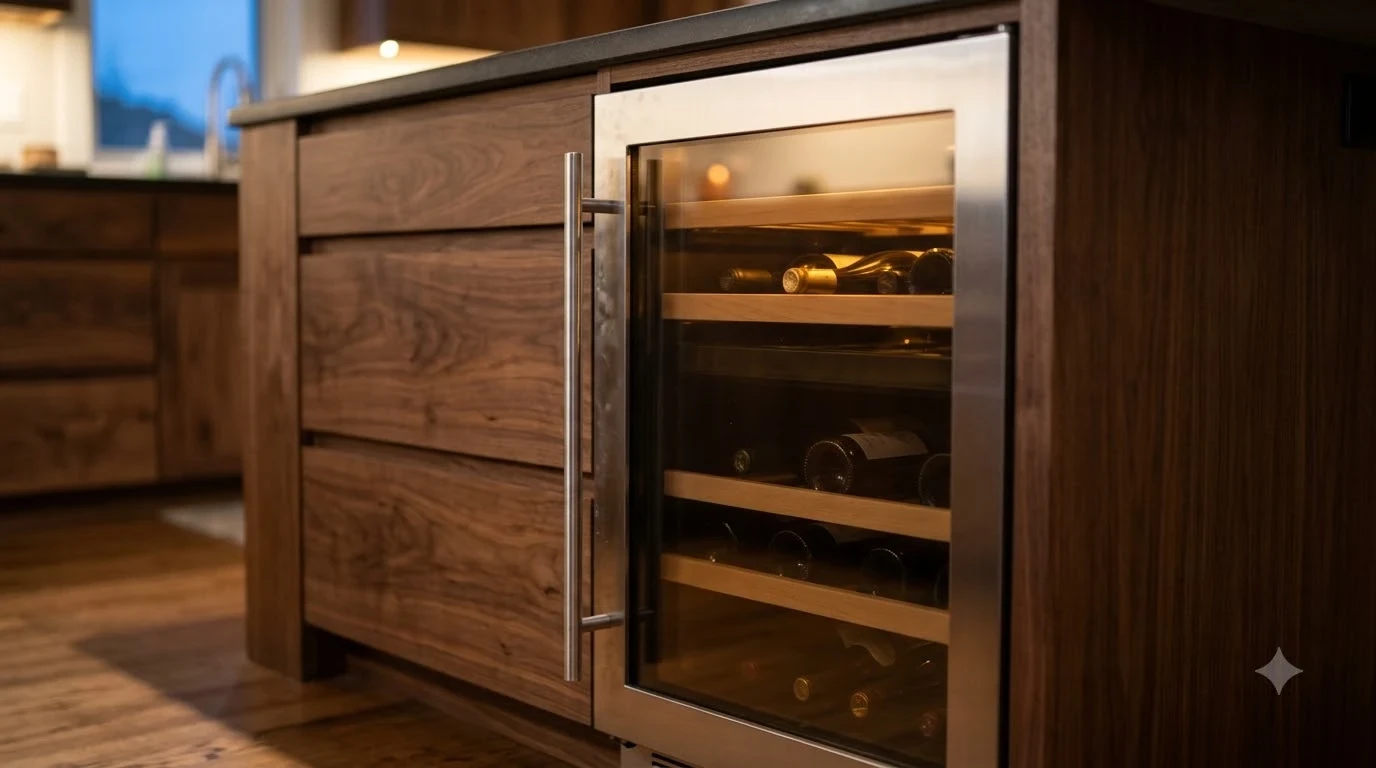
A built-in unit suits an island that has a fixed opening, usually at one end or along a run of base cabinets. The unit slots into the cabinetry, and the door panel can match the rest of the kitchen, which keeps the island looking like one piece of furniture.
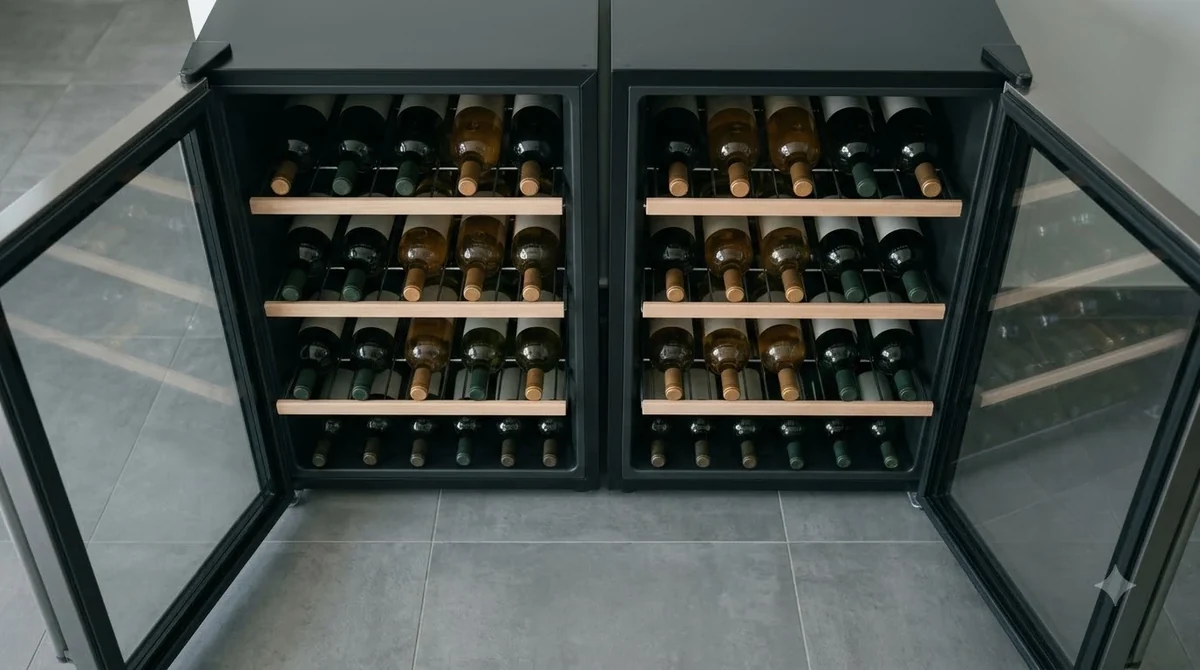
Why it stands out: Front venting lets the unit sit flush with the cabinets without blocking airflow, and the finished look is clean. Most designs in this category are built to be serviced from the front, which means you do not need to pull the island apart for routine maintenance.
Keep in mind: The cabinet cutout has to match the unit’s dimensions exactly, and the manufacturer’s clearance rules must be followed. Check the spec sheet before you order a custom panel, because a wrong measurement costs more to fix than the unit itself.
Best for: homeowners who plan the island from the start, or who are renovating and can add the unit during cabinet installation.
Best for Open-Sided Islands and Freestanding Placement
When an island is open on one or both sides, a freestanding slim unit is often the simplest choice. It can be placed at the end of the island, slid into a gap between cabinets, or moved later if the layout changes.
Why it stands out: A freestanding unit needs no cabinetry changes, so it is the quickest way to add bottle storage to an existing kitchen. Many models use a small footprint, which suits islands that already hold a sink or a bar stool run.
Keep in mind: Compressor units release heat from the back or sides, so the spot needs open air around it. Placing the unit against a wall with no gap, or beside a dishwasher that runs hot, can shorten its working life and make it run longer than it should.
Best for: renters, open-plan kitchens, and anyone who wants flexibility to move the unit later.
Best for Entertaining with Both Reds and Whites
If you host often and pour both red and white wine, a dual-zone unit lets each bottle sit at its own temperature. The division also keeps sparkling wine in its own cool space, away from bottles that are opened less often.
Why it stands out: Serving temperatures differ a lot by style. Wine Folly’s serving temperature guide gives a range of about 62 to 68 degrees Fahrenheit for general reds and about 49 to 55 degrees Fahrenheit for most whites. A single zone set for one style usually leaves the other style off target.
Keep in mind: Dual-zone units cost more and take up more of the cabinet, so they make the most sense when you actually serve both colours. A simple way to test your habits is to count how many red and white bottles you open in a typical month.
Best for: people who entertain regularly, and households that rotate between a light white and a bold red.
If you also keep beer or soft drinks in the same space, a combined wine and beer design is worth a look. Read more about how that split works in our guide to wine and beer fridges, where the zones are compared in more detail.
Best for Small Islands and Bar-Height Corners
A compact countertop cooler or a narrow slim unit fits a small island or a corner where a full-height cabinet would be too much. The priority is a small footprint and a low profile that does not crowd the bar stools.

Why it stands out: A compact unit gives a few bottles of everyday wine a home at the point of use, without taking over the kitchen.
Keep in mind: Shelf space is limited, so a compact cooler suits a small rotation rather than a serious collection. Check the depth against the island’s overhang before buying, since a unit that protrudes can catch elbows and bags.
Best for: small homes, apartments, and bar corners where the wine is for daily drinking.
For ideas on sizing a cabinet next to a fridge, see our page on the wine fridge sideboard, which covers similar space trade-offs.
Best for Quiet Living Spaces and Open-Plan Kitchens
In an open-plan kitchen the fridge is part of the living area, so noise and vibration matter as much as cooling. A quiet unit keeps conversation easy and does not disturb a room that doubles as a dining or media space.
Why it stands out: Models that run with low compressor noise and steady temperature are easier to live with when the island sits next to a sofa or dining table. Steady temperature also protects the wine from the swings that come with frequent door openings.
Keep in mind: Noise levels are usually given as a rough figure and depend on the room and the installation. Read owner comments about running sound at night, and keep the unit away from bedroom walls where possible.
Best for: open-plan homes and households that want a fridge that feels like part of the furniture.
How to Choose the Right Wine Fridge Island
Start with the island’s layout, then work through the features that affect daily use. Measure the opening first, because that single number rules out half of the options. Next, decide how many bottles you keep at once and whether you need one zone or two. Finally, check the front vent, noise and door design against the way you use the space.
- Fit: measure the cabinet opening, depth and height, and leave the clearance the manufacturer lists.
- Zones: choose dual zones if you regularly serve both reds and whites at different temperatures.
- Ventilation: front venting suits built-in islands; freestanding units need air on the sides or back.
- Noise: look for a quiet running sound and test the placement before the unit goes against a wall.
- Finish: match the door panel or handle to the island so the unit reads as part of the cabinetry.
Tip: Compare the spec sheet’s clearance figures with the actual gap in the island before you buy. A unit that fits on paper but has no airflow will work harder and last less time.
For a wider set of specifications and sizing advice, see the Specs and Features section.
Frequently Asked Questions
Can a wine fridge go inside a kitchen island?
Yes, as long as the island has a cabinet opening sized for the unit and the unit can vent. Built-in models usually vent at the front, so the opening must leave the grille free. Freestanding slim models can sit at the end of an island if there is air space around the sides or back.
Does a wine fridge island need special ventilation?
Most compressor units need open air to release heat. Built-in front-venting designs are made for enclosed cabinetry, but they still need the clearance the maker lists. Follow the manufacturer’s install instructions closely, because a blocked vent is the most common cause of poor cooling.
What serving temperature should each zone hold?
For general use, Wine Folly suggests reds around 62 to 68 degrees Fahrenheit, with lighter reds closer to 55 to 60 degrees, and whites around 49 to 55 degrees Fahrenheit. Sparkling wine is best at about 38 to 45 degrees Fahrenheit. A dual-zone unit lets you set each style closer to its own range.
Is a wine fridge island worth it in a small kitchen?
It can be, if the wine you drink is mostly for daily use and the island has room for a compact or slim unit. A small kitchen benefits most from a unit that does not block the walkway or the bar stools. If the island is tight, a countertop cooler or a slim freestanding unit may be the better fit.
A wine fridge island works best when the unit, the island and the way you entertain all agree. Measure first, decide how many zones you need, and leave the airflow the maker asks for.
More in Wine Fridge Features
 Best Wine Fridge Bar Cabinet Setups for a Better Home BarUpdated Nov 20, 2026
 Wine Fridge for Champagne Bottles: Sizes and Storage GuideUpdated Nov 18, 2026
 Best Wine Fridge for Champagne Bottles: Shelf and Bottle FitUpdated Nov 18, 2026
 Best Wine Fridge with Display Shelf: Glass Doors and Open RacksUpdated Nov 18, 2026
 Best Wine Fridge With Drawers for Easy Access to Every BottleUpdated Nov 18, 2026
 Best Wine Fridge With Freezer: Combo Styles for Kitchens and BasementsUpdated Nov 18, 2026