

We may earn a commission when you buy through links on this page, at no extra cost to you. Learn more.
The best wine flask for most outdoor outings is a 750-milliliter double-wall vacuum-insulated stainless steel bottle with integrated tumblers, which holds a full standard bottle at serving temperature without extra glassware. If you hike or fly light, a collapsible BPA-free pouch saves pack weight and flattens once empty. For full-bodied reds that benefit from oxygen, a ceramic-lined insulated vessel with a built-in aerator preserves flavor purity and softens tannins on the pour.
Glass wine bottles are heavy, fragile, and banned at many beaches, pools, campgrounds, and concert venues. Decanting your favorite bottle into a purpose-built travel vessel solves all three problems while protecting delicate aromatics from temperature swings and sunlight. Because different outings call for different capacities, materials, and serving setups, matching the vessel style to your itinerary matters far more than picking a trendy color.
Quick Comparison
Each wine flask design balances insulation, portability, flavor neutrality, and serving convenience differently depending on how and where you plan to pour.
| Flask Type | Typical Capacity | Insulation | Included Drinkware | Best Setting |
|---|---|---|---|---|
| All-in-One Insulated Set | 750 ml (25.4 oz) | Up to 24 hours (vacuum) | Two integrated stemless tumblers | Picnics, beaches, and parks |
| Standalone Vacuum Bottle | 750 ml (25 oz) | Up to 24 hours (vacuum) | None (bottle only) | Day packs, boats, and tailgates |
| Aerating Ceramic-Lined Flask | 750 ml to 1.5 L | Double-wall vacuum + copper | Optional magnetic or nested cups | Dinner parties and bold reds |
| Collapsible Soft Pouch | 750 ml (25 oz) | None (uninsulated) | None (spout or screw cap) | Backpacking, flights, and festivals |
| Pocket Hip or Half-Bottle Flask | 180 ml to 375 ml | Single-wall or light vacuum | Optional miniature shot cup | Solo hikes, ski days, and concerts |
Best for Picnics and Group Outings: All-in-One Insulated Sets
An all-in-one insulated wine flask pairs a full-bottle vacuum cylinder with two matching stemless tumblers that lock onto the body, giving you a complete, rattle-free serving kit in a single hand.
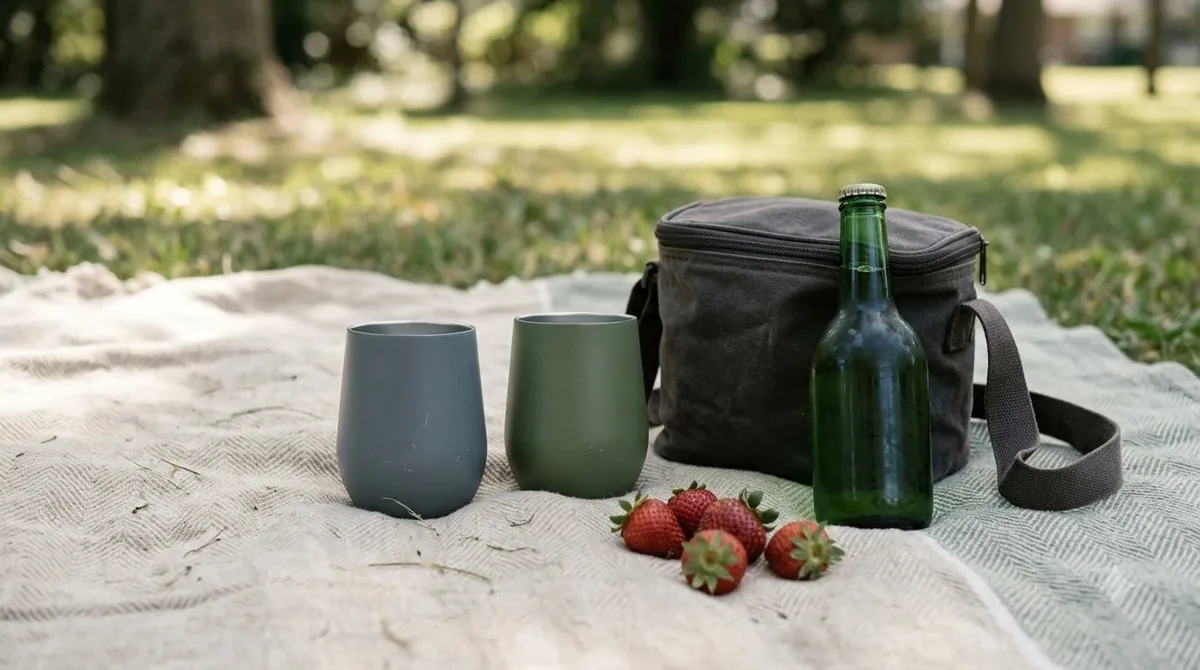
This category stands out because it eliminates the need to pack separate cups or worry about broken stems on uneven grass or sand. According to specifications from High Camp Flasks, purpose-built three-piece wine sets hold a full 750 milliliters of liquid while using magnetic retention to keep two 10.5-ounce stainless steel tumblers attached to the ends during transit. Double-wall vacuum insulation keeps chilled whites and rosés crisp for up to 24 hours, and a wide-mouth opening lets you pour straight from the glass bottle without a funnel.
Keep in mind that integrated tumbler systems are taller and slightly heavier than bare bottles, often measuring just over a foot high and weighing around 25 ounces empty. Many manufacturers also recommend hand-washing magnetic assemblies to protect finish coatings and seal rings. Choose this style if you regularly share a bottle with a partner at parks, beaches, outdoor concerts, or patio gatherings where packing separate glassware feels like a chore.

- Capacity
- 8 oz (0.23 L)
- Material
- 18/8 stainless steel
- Cap
- Hinged, wide-mouth opening
- Warranty
- Lifetime
A pocket-sized option for picnics and group outings where everyone brings one small pour to share. The flat back slides into a jacket or back pocket, and the hinge-connected cap stays attached so it cannot get lost on the blanket. A wide mouth makes filling and cleaning easy, and the 18/8 stainless steel body is BPA-free, rust-proof and backed by a lifetime warranty.
Pros & ConsView
- Flat back slips into a pocket
- Cap stays attached through a hinge
- Rust-proof 18/8 stainless steel body
- Eight ounces is a single small pour
- Not described as vacuum insulated
Best for Everyday Portability: Standalone Vacuum-Insulated Wine Bottles
A slim, double-wall stainless steel wine bottle without attached cups offers maximum temperature retention and leakproof security in a profile that slides easily into standard backpack side pockets.
Why it stands out is pure thermal efficiency and versatility across every style of still wine. Constructed from food-grade 18/8 electropolished stainless steel, a standalone 750-milliliter vacuum bottle prevents heat transfer from warm hands or direct afternoon sun while avoiding the metallic aftertaste associated with low-grade camping canteens. A threaded, silicone-gasketed cap creates a watertight seal so you can toss the flask sideways into a beach tote or boat dry bag without worrying about red wine staining your gear, and a non-slip silicone base keeps it steady on slick picnic tables.
Keep in mind that you will still need to bring your own cups unless you plan to sip directly from the narrow neck, which restricts aroma perception. You also cannot see how much wine remains inside without tilting the bottle or peering down the opening. This format is best for travelers, boaters, and day-trippers who already own shatterproof tumblers or want a sleek, durable vessel that doubles as a water bottle between wine outings.
Best for Full-Bodied Reds: Ceramic-Lined Aerating Flasks
A ceramic-lined insulated flask with a built-in aerator combines pure, non-reactive flavor preservation with instant oxygenation as you pour, making it the strongest choice for structured red wines.
Why it stands out is its attention to wine chemistry and aromatics rather than mere liquid transport. Even high-grade steel can occasionally draw skepticism from purists, whereas an interior ceramic coating guarantees zero interaction with wine acids and tannins. As detailed in product listings from Wine Enthusiast, specialized transportable wine systems integrate a pouring aerator directly into the neck alongside double-wall vacuum insulation and a copper lining to hold cellar temperatures steady. Some models even scale up to a 1.5-liter magnum capacity or tuck shatterproof stemmed tumblers into a removable base.
Keep in mind that ceramic-lined interiors require gentler handling than bare metal, since hard drops onto concrete or rocks can chip the inner glaze. Integrated aerator vents also introduce extra crevices that need thorough rinsing with warm water immediately after use so dried sediment does not clog the air intake. Pick this design if you favor Cabernet Sauvignon, Syrah, or Nebbiolo and want restaurant-level flavor expression at dinner parties, BYOB restaurants, or weekend cabin rentals.

- Capacity
- 1 liter (0.26 gal)
- Exterior
- Leather
- Lining
- BPA-free PEVA
- Strap
- Braided, adjustable
The traditional route for red wine on the trail, modeled after classic Spanish wineskins. A leather exterior takes the rigors of camping and hiking, while a BPA-free PEVA lining keeps the contents clean. The braided shoulder strap adjusts for long walks, and at one liter and about 3.7 ounces empty it packs light. It has a plastic lining, not a ceramic one.
Pros & ConsView
- Rugged leather exterior for outdoor use
- BPA-free PEVA lining
- Adjustable braided shoulder strap
- No insulation is listed
- One liter is bulky for pocket carry
Best for Backpacking and Air Travel: Collapsible Soft Wine Pouches
A flexible, BPA-free plastic or multi-layer film wine pouch weighs almost nothing when empty and rolls up flat in your pocket once the last glass is poured.
Why it stands out is unmatched packability for weight-conscious hikers and travelers navigating strict luggage limits. Unlike rigid metal cylinders that occupy the same volume whether full or empty, a collapsible wine flask shrinks as you drink, squeezing out excess air at the same time to slow oxidation during multi-day trail trips. Most designs feature a wide gusseted bottom so the pouch stands upright on a camp table, a tethered screw cap that cannot get lost in the dirt, and a carabiner clip for hanging from a pack strap.
Keep in mind that soft pouches offer zero thermal insulation, meaning chilled white wine will quickly warm up to ambient air temperature unless stored inside a cooler. Thin plastic walls are also vulnerable to punctures from sharp rocks or camp stoves, and reusable pouches require careful drying on a rack to prevent trapped moisture or lingering aromas. This option works best for ultralight backpackers, festival-goers, and flyers packing an empty flask in carry-on luggage to fill at their destination.
Best for Solo Hikes and Pocket Carry: Half-Bottle and Hip Wine Flasks
Compact 180- to 375-milliliter flasks made from titanium or slim stainless steel slip into a jacket pocket or small crossbody bag when carrying a full 750-milliliter bottle is overkill.
Why it stands out is effortless single-serve convenience and discreet portability. Knowing how many glasses in a bottle of wine helps put sizing into perspective: a standard 750-milliliter bottle yields five 5-ounce pours, whereas a 375-milliliter half-bottle flask delivers two generous glasses without leftover wine sloshing around. Pure titanium versions are remarkably light, completely corrosion-resistant against acidic wines, and virtually indestructible on rocky trails, while curved stainless steel hip flasks hug the body comfortably under a ski shell or blazer.
Keep in mind that traditional narrow-necked hip flasks are difficult to fill without a small funnel and nearly impossible to scrub inside with a standard bottle brush. Uninsulated pocket flasks will also warm up quickly from body heat if carried in an inner coat pocket, making them far better suited to reds or fortified wines than crisp Sauvignon Blanc. Choose a compact flask for solo summit toasts, cold-weather tailgates, or casual evenings when you only want a glass or two.

- Capacity
- 6.7 oz
- Insulation
- Hot 7 h, cold 20 h
- Cap
- Leakproof, removable strap
- Material
- Stainless steel, BPA-free
A hip-flask-sized pick for solo hikes and pocket carry when a full bottle is too much. Double-wall vacuum insulation holds drinks hot for 7 hours or cold for 20, and the mini cap is leakproof when closed with a removable strap for clipping to a bag. It is sized for small shots, short walks and concerts, and the stainless steel keeps flavors from lingering.
Pros & ConsView
- Insulated for up to 20 hours cold
- Leakproof cap with clip-on strap
- Small enough for pocket or purse
- 6.7 oz holds only a few small pours
- Marketed for water, not wine
How to Choose
Selecting the right wine vessel comes down to matching material purity, capacity, and opening geometry to the specific wines you drink most often.
- Interior Material: Look for electropolished 18/8 (304) food-grade stainless steel, pure titanium, or a non-porous ceramic interior. Lower-grade metals can react with wine’s natural acidity and leave a metallic taste, while unlined aluminum should be avoided altogether.
- Capacity and Headspace: A 750-milliliter capacity fits an entire standard bottle with minimal headspace, limiting oxygen exposure during transport. If you rarely finish a full bottle in one sitting, opt for a 375-milliliter half-bottle flask so air does not flatten the remaining wine.
- Neck Width and Pour Lip: A wide mouth allows funnel-free filling from a standard wine bottle and lets a sponge or bottle brush reach the bottom for cleaning. A tapered or rolled pour lip prevents sticky red wine drips from running down the outside of the flask.
- Insulation Rating: Double-wall vacuum insulation keeps chilled whites and rosés cold for 12 to 24 hours and protects reds from baking in hot cars or direct sunlight. Uninsulated pouches and single-wall pocket flasks prioritize low weight over temperature stability.
- Seal Integrity and Carbonation Limits: Choose a threaded lid with a food-grade silicone gasket for leakproof bag storage. Never pour Champagne, Prosecco, or sparkling wine into a standard screw-top flask unless the manufacturer explicitly rates the cap for internal pressure.
Tip: Pre-chill or pre-warm your insulated flask before filling it by swirling cold tap water inside for two minutes and dumping it out; this primes the inner steel wall so your wine stays at ideal serving temperature hours longer.
Once you settle on a primary travel flask, you can round out your portable setup by browsing shatterproof stemware and compact corkscrews in our Accessories Library, or keep your flask organized right alongside your decanters and openers on a well-stocked bar cart between trips.
Frequently Asked Questions
Does a stainless steel wine flask change the taste of wine?
High-quality 18/8 electropolished stainless steel is chemically inert and will not impart a metallic flavor to wine during a day trip or picnic. Metallic off-notes typically come from low-grade steel alloys, scratched interiors, or leaving acidic wine sitting in a metal container for several days. If you are especially sensitive to subtle aromatics, a ceramic-lined interior eliminates any contact between wine and metal.
Can you put sparkling wine or Champagne in a wine flask?
You should not put sparkling wine, Champagne, or Prosecco into a standard threaded wine flask. Dissolved carbon dioxide builds pressure inside a sealed vessel, which can deform cap threads, cause leaks, or force the lid off unexpectedly when opened. Only use vessels specifically engineered and pressure-rated for carbonated beverages.
How do you clean red wine stains and odors out of a wine flask?
Rinse the flask with warm water immediately after emptying it so tannins and pigments do not dry onto the walls. For deeper cleaning, wash with mild dish soap and a soft bottle brush, or soak the interior with a paste of baking soda and warm water for 30 minutes before rinsing thoroughly. Always store the flask with the cap off so the interior dries completely.
How long can wine stay in an insulated flask?
Wine stays fresh and at serving temperature in a sealed, full vacuum-insulated flask for up to 24 hours. Because decanting wine into a flask exposes it to oxygen during transfer, flavor and aromatics are best within the same day. Transfer any leftover wine back into a smaller glass bottle with a tight stopper if you plan to save it for the next evening.
The right travel flask turns almost any trailhead, beach blanket, or concert lawn into an effortless wine bar without the risk of shattered glass. Decide whether full-bottle insulation, integrated tumblers, built-in aeration, or featherweight packability fits your next outing, then pick the design that matches how you love to pour.
More in Wine Accessories
 Coravin Vs Vacu Vin: Choose the Right Wine Saver for Your BottlesUpdated Nov 21, 2026
 Zwilling Wine Stopper Review: Preserve Open Bottles LongerUpdated Nov 21, 2026
 Wine Enthusiast Wine Preserver Review: Features, Benefits and LimitationsUpdated Nov 21, 2026
 Wine Enthusiast Wine Stopper: An Easier Way to Reseal Open BottlesUpdated Nov 21, 2026
 Vintorio Wine Opener: Two-Step Cork RemovalUpdated Nov 21, 2026
 Zwilling Wine Aerator Review: Aerate, Pour, and Seal With One ToolUpdated Nov 21, 2026