

We may earn a commission when you buy through links on this page, at no extra cost to you. Learn more.
The Wine Enthusiast wine chiller—specifically the popular Double-Walled Iceless Wine Bottle Chiller—is a reliable, mess-free tabletop insulator for pre-chilled 750 ml bottles, though it cannot actively cool a warm bottle on its own. Built from clear BPA-free acrylic with a stainless steel accent rim, it keeps fridge-cold whites, rosés, and sparkling wines near serving temperature for up to three hours without ice, electricity, or table condensation. Buyers who want hands-off convenience and label visibility will find it practical, while anyone needing to chill room-temperature wine quickly or fit wide-hipped sparkling bottles should look at active ice buckets or wider stainless steel vessels.
Tabletop wine chillers solve a common hosting problem: a bottle of Sauvignon Blanc or Brut Champagne pulled from a 40°F refrigerator warms up quickly once it sits on a 72°F dining room table. Traditional ice buckets work well for temperature control, yet they drip water onto tablecloths, soak paper wine labels until they peel off, and require constant trips to the freezer. The Wine Enthusiast Double-Walled Iceless Wine Bottle Chiller takes a passive thermal approach by trapping an insulating air barrier between two clear acrylic walls, trading active chilling speed for clean, dry table service.
Specs and Key Features
The Wine Enthusiast Double-Walled Iceless Wine Bottle Chiller is a single-bottle, passive thermal vessel measuring 9 inches tall with a 4.75-inch outer diameter and a 3.75-inch inner diameter. Its transparent BPA-free acrylic body weighs roughly 1.55 pounds and holds one pre-chilled 750 ml bottle cold for up to three hours without ice or freezer preparation.
According to manufacturer product documentation from Wine Enthusiast, the cylinder relies on sealed double-wall insulation rather than frozen gel inserts or power cords. Air trapped between the inner and outer acrylic shells slows heat transfer from the room into the glass bottle. Because the outer wall stays close to ambient room temperature, moisture from humid indoor air does not condense on the exterior surface, protecting wood tables, linen runners, and paper coasters from water rings.
Visual clarity is one of the defining design choices of this model compared with opaque metal or stone cylinders. Because both layers are clear acrylic finished with a narrow stainless steel top rim, hosts and guests can read vintage dates, producer names, and grape varieties right through the side wall without lifting a wet bottle out of a bucket. That transparency also makes it easy to monitor how much wine remains in the bottle during dinner service.
| Specification | Wine Enthusiast Double-Walled Iceless Chiller | Notes and Operational Impact |
|---|---|---|
| Cooling Mechanism | Passive double-wall air insulation | Requires pre-chilled wine; no ice, water, or electricity needed |
| Stated Cold Retention | Up to 3 hours | Maintains fridge-chilled serving temperature during typical meals |
| Exterior Dimensions | 9 in. H x 4.75 in. outer diameter | Compact footprint suited for crowded dining tables and bar carts |
| Interior Chamber Width | 3.75 in. inner diameter | Fits standard 750 ml Bordeaux and Burgundy bottles; tight on wide Champagne |
| Primary Materials | Clear BPA-free acrylic with stainless steel trim | Transparent for label visibility; lightweight and shatter-resistant |
| Listed Weight | 1.55 lbs (per The Spruce Eats) | Lighter and easier to pass around the table than solid stone or marble |
| Bottle Capacity | One 750 ml bottle | Not designed for 1.5 L magnums or multi-bottle service |
While the double-walled acrylic bucket is the flagship tabletop model under the Wine Enthusiast name, the brand also catalogs specialized variations for different service setups. For example, Wine Enthusiast offers a Table-Mounted Wine Bottle Chiller measuring 9.45 inches long by 7.87 inches wide by 13.19 inches high that clamps an aluminum bucket onto a table edge to accommodate Bordeaux, Champagne, and Magnum bottles, alongside a Stainless Steel Ice Mold Bottle Chiller that freezes a custom ice shell around the bottle. Reviewing the exact dimensions before ordering ensures the cylinder matches both the table setup and the bottle shapes kept at home.
What Owners Like
Owners consistently praise the Wine Enthusiast chiller for eliminating melted ice messes, preventing exterior sweating, and keeping pre-chilled wine cool across a two-to-three-hour meal. Verified buyers across Wine Enthusiast and major home retailers also highlight its clear acrylic construction, which showcases bottle labels while staying light enough to pass easily around a dinner table.
Zero Condensation and Clean Table Service
Across owner feedback on Wine Enthusiast and Wayfair, freedom from drips ranks as the top practical benefit. Standard single-wall metal or glass buckets sweat heavily within 15 minutes in a warm room, leaving puddles that stain oak dining tables or soak cloth napkins. Because the double-wall air gap insulates the outer shell from the 42°F to 48°F bottle inside, the exterior stays dry throughout a multi-course dinner. Owners also appreciate that bottle labels stay completely dry and intact, which matters when serving collectible wines or saving labels from a special occasion.
Reliable Temperature Hold for Whites and Cellar Reds
In verified buyer reviews on Wine Enthusiast, hosts report that white wines pulled from the refrigerator around 45°F to 50°F remain crisp and refreshing for well over two hours inside the cylinder. Several owners also use the vessel for red wines, noting that a bottle of Pinot Noir or Cabernet Sauvignon cooled to 57°F to 62°F holds steady in that cellar-cool sweet spot during a long Italian meal rather than climbing into the mid-70s where alcohol tastes harsh and fruit flavors flatten.
Clear Label Visibility and Everyday Durability
Unlike opaque stainless steel sleeves or heavy stone cylinders that hide the bottle once it drops inside, the clear acrylic body lets guests see what is being poured. Reviewers note that this feature works particularly well at dinner parties when two or three bottles—such as a crisp Chablis alongside an oaked California Chardonnay—sit on the table at once. Owners also point out that the thick acrylic resists chipping if bumped against stemware or plates, and at 1.55 pounds it feels far less cumbersome than a 5-pound marble cylinder.
Tip: Chill the empty acrylic cylinder in the refrigerator for 20 to 30 minutes alongside your bottle before dinner. Starting with a cool inner wall prevents the room-temperature plastic from absorbing cold energy from the glass during the first 10 minutes at the table.
Common Complaints
The most frequent owner complaints center on three practical limits: the cylinder cannot cool a warm bottle down, its 3.75-inch inner diameter excludes wider Champagne and sparkling bottles, and the decorative metal trim can arrive dented or loosen over time. Buyers who expect active refrigeration or universal magnum clearance are the most likely to feel disappointed.
No Active Cooling Power for Warm Bottles
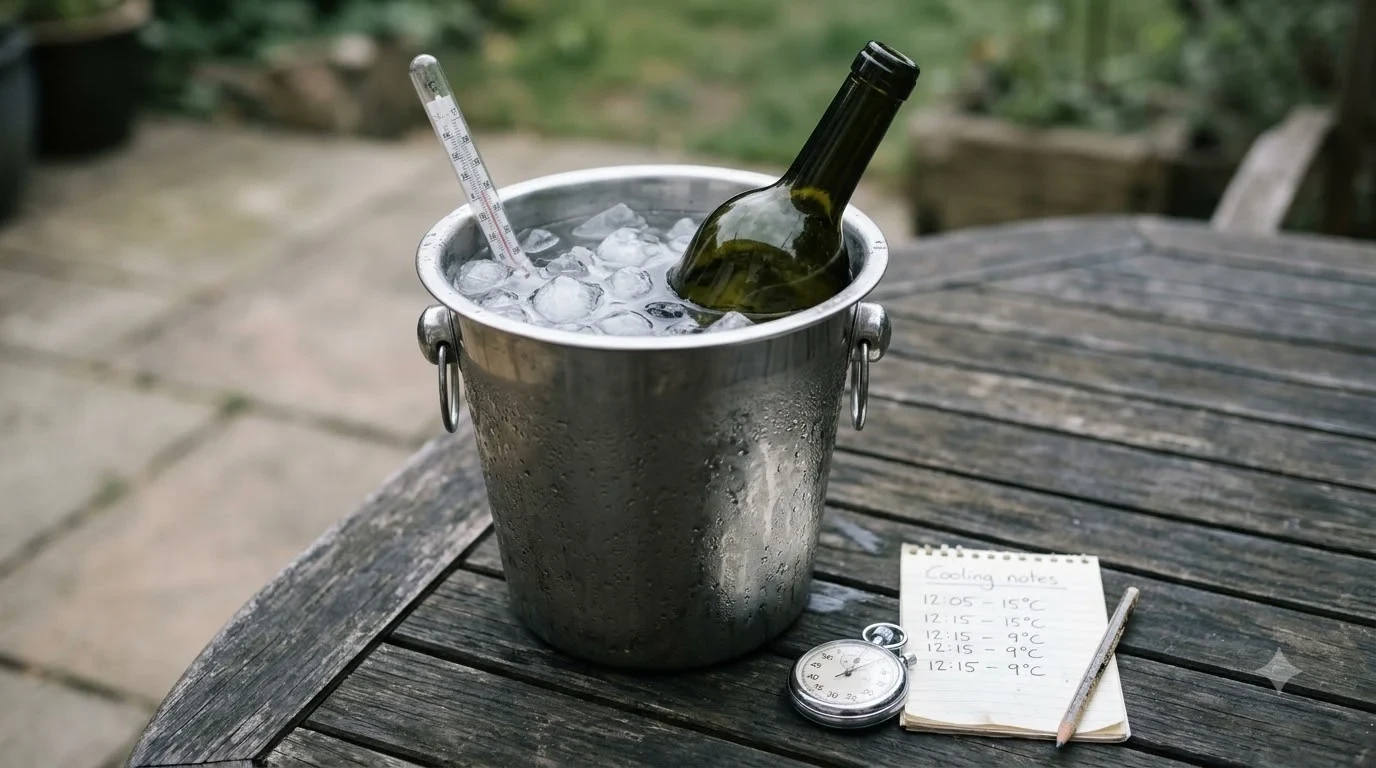
In mixed reviews on Wayfair and retail Q&A threads, nearly every dissatisfaction report traces back to misunderstanding how passive insulation works. If a bottle of Pinot Grigio starts at 70°F on a kitchen counter, placing it inside the dry acrylic chiller will keep it at 70°F rather than cooling it down. As Serious Eats testing on chilling wine fast demonstrates, bringing a warm bottle down to serving temperature requires direct thermal conduction—such as submerging the glass in an ice-and-water bath for 15 minutes—whereas air-insulated sleeves only slow down warming after the bottle is already cold.
Tight Clearance on Wide Sparkling and Burgundy Bottles
While product descriptions state compatibility with standard wine and Champagne bottles, verified buyers note that bottle geometry varies widely across wine regions. Standard straight-sided 750 ml Bordeaux bottles (typically around 3 inches in diameter) slide into the 3.75-inch inner chamber with room to spare. However, broad-shouldered Burgundy bottles, sloped Rhône bottles, and heavy-walled Champagne or Prosecco bottles—many of which measure 3.5 to 3.7 inches across the base—either fit so tightly that lifting the bottle pulls the chiller up with it, or fail to drop all the way to the bottom.
Trim Durability and Hand-Wash Care
A smaller group of reviewers mention cosmetic quality-control issues out of the box, including minor scuffs on the clear plastic or small dents on the thin metallic accent ring around the rim. Furthermore, because the unit relies on a sealed air chamber between two acrylic walls, putting it in a high-heat dishwasher cycle can warp the plastic or break the perimeter seal, allowing cloudy condensation to become trapped inside the double wall where it cannot be wiped dry.
Who Should Buy and Who Should Skip
How It Compares to Alternatives
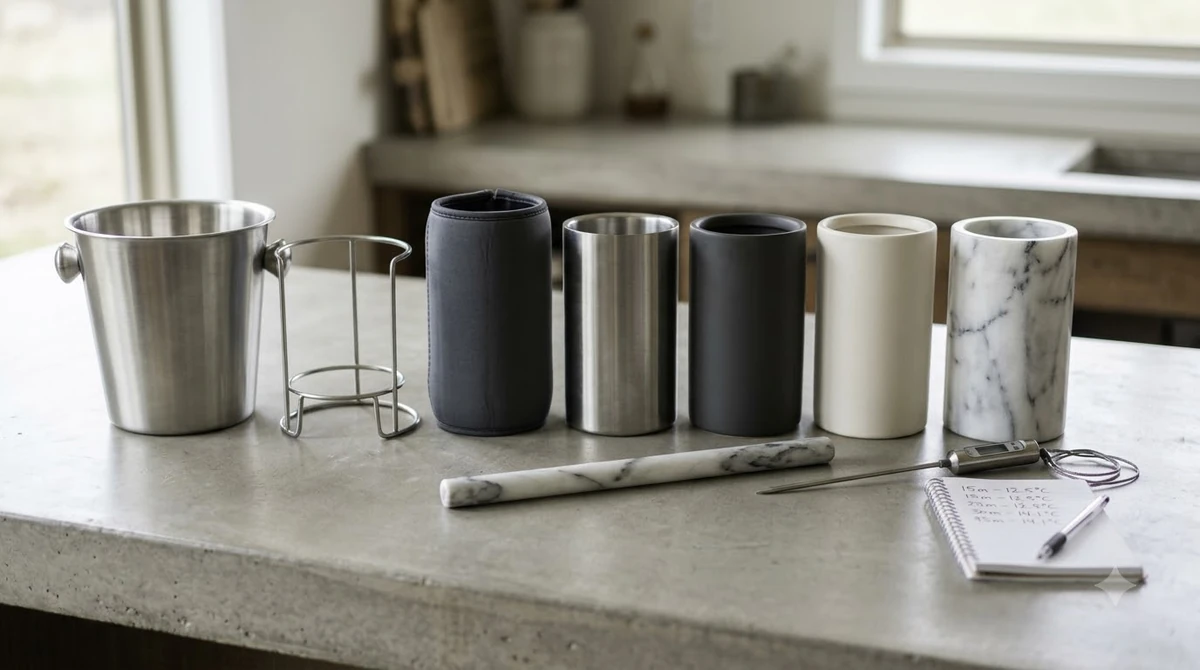
Compared with competing tabletop chillers tested by The Spruce Eats and The Strategist, the Wine Enthusiast acrylic model offers the best label visibility and lowest preparation effort, while trading away active temperature reduction and extreme outdoor insulation. Selecting between acrylic, stainless steel, frozen gel sleeves, and marble comes down to whether the bottle starts cold or warm.
The Spruce Eats names the Wine Enthusiast Double-Walled Iceless Wine Bottle Chiller its top acrylic pick while highlighting several distinct competitors across materials. For hosts who frequently need to chill a warm bottle fast, the Vacu Vin Rapid Ice Elegant Wine Cooler uses a flexible, freezer-stored cooling sleeve that drops room-temperature wine to serving temperature in roughly 6 to 15 minutes according to The Spruce Eats, though the opaque sleeve completely hides the bottle label and requires hours in the freezer beforehand.
Double-wall stainless steel vessels—such as the Oggi Stainless Steel Wine Cooler cited by The Spruce Eats and the YETI Rambler Wine Chiller highlighted by The Strategist—use vacuum-sealed metal walls that resist denting and hold cold longer in hot outdoor environments than acrylic air-gap models. However, stainless steel cylinders are opaque and heavier, whereas the 1.55-pound Wine Enthusiast chiller (per retail specifications) lets guests inspect the bottle label from across the table.
Stone vessels like the Crate and Barrel French Kitchen Marble Wine Cooler and the Tablecraft White Marble chiller noted by The Strategist provide substantial thermal mass once chilled in a freezer for several hours. While marble looks striking on a formal buffet, solid stone cylinders are substantially heavier, risk chipping countertops if dropped, and require dedicated freezer space before every dinner party—prep work that the Wine Enthusiast double-walled acrylic unit avoids completely.
Best Practices for Chilling, Serving, and Care
To get the full three-hour thermal hold reported by Wine Enthusiast from the Double-Walled Iceless Wine Bottle Chiller, pair proper pre-chilling temperatures with gentle hand-washing. Matching the bottle’s starting refrigerator time to the grape style ensures the wine lands in its ideal serving window before entering the insulating cylinder.
Pre-Chilling Timing by Wine Style
Because the acrylic cylinder only maintains existing cold, starting at the right baseline temperature is essential. Standard kitchen refrigerators typically run between 37°F and 40°F, which is colder than ideal for most still wines. Placing a bottle of Sauvignon Blanc, Pinot Grigio, or dry rosé in a 40°F fridge for two to three hours brings it near the 45°F to 50°F target range; sliding it into the Wine Enthusiast chiller at that point keeps it crisp through appetizers and entrées without over-chilling the aromatics.
Sparkling wines such as Champagne, Cava, and Prosecco benefit from three to four hours in the refrigerator so they start around 40°F to 45°F, keeping carbonation lively and fine inside the 3.75-inch chamber listed by Wine Enthusiast. Full-bodied whites like oaked Chardonnay taste best around 50°F to 55°F (about 90 minutes in the fridge), while lighter reds like Pinot Noir or Beaujolais need only 30 to 45 minutes of refrigerator time to reach 55°F to 60°F before resting inside the chiller during dinner.
Cleaning and Storage Maintenance
Clean the cylinder by hand using lukewarm water, mild dish soap, and a soft microfiber cloth rather than an abrasive sponge that could scratch the clear acrylic. Avoid dishwashers, boiling water, and harsh alcohol-based glass cleaners, as high heat can stress the joint where the inner and outer acrylic shells meet the stainless steel trim. Dry the interior thoroughly with a lint-free towel before storing the unit upright in a cabinet so trapped moisture does not leave mineral spots on the clear plastic.
Shoppers comparing tabletop chillers alongside decanters, corkscrews, and preservation stoppers can explore broader Accessory Brands to build a cohesive home bar setup. Pairing a passive tabletop insulator with a vacuum wine pump allows hosts to keep unfinished bottles fresh in the refrigerator after dinner concludes.
Frequently Asked Questions
Can you put ice cubes and water inside the Wine Enthusiast double-walled chiller?
No, the 3.75-inch inner diameter specified by Wine Enthusiast leaves less than three-quarters of an inch of clearance around a standard 3-inch Bordeaux bottle, leaving no practical room for ice cubes or water. Adding ice and water can also overflow when inserting the bottle and introduce moisture around the top stainless steel rim seam.
How do marble wine chillers differ from the Wine Enthusiast acrylic model?
A marble wine chiller relies on dense natural stone that must be stored in a freezer or refrigerator beforehand so the stone absorbs heat from the bottle at the table. By contrast, the Wine Enthusiast acrylic chiller requires zero pre-freezing and uses trapped air between two plastic walls to insulate an already-cold bottle.
Will a 1.5-liter magnum bottle fit inside the Wine Enthusiast Double-Walled Iceless Chiller?
No, standard 1.5-liter magnum bottles exceed both the 3.75-inch inner width and 9-inch height listed by Wine Enthusiast for the cylinder. For magnums, Wine Enthusiast makes a separate Table-Mounted Wine Bottle Chiller with a wider aluminum bucket designed specifically for large-format bottles.
Why does condensation sometimes appear inside the double wall over time?
Internal fogging occurs if the perimeter seal between the inner and outer acrylic layers is compromised by dishwasher heat, dropping the unit on a hard floor, or submerging it in hot dishwater. Once humid air enters the sealed cavity, temperature differences between the cold bottle and warm room cause moisture to condense where a towel cannot reach.
Is the Wine Enthusiast acrylic chiller safe for outdoor patio use?
The BPA-free acrylic body is shatter-resistant and safe to carry onto patios, decks, or poolside tables where glass buckets pose a breakage hazard. However, direct sunlight and high summer temperatures will shorten its cold-retention window compared with the three-hour benchmark Wine Enthusiast reports for indoor room temperature.
The Wine Enthusiast Double-Walled Iceless Wine Bottle Chiller remains a smart, low-maintenance tabletop staple for hosts who pre-chill standard 750 ml bottles and want clear label visibility without wet table rings. Matching the 3.75-inch interior width reported by Wine Enthusiast to slim Bordeaux, Riesling, and standard white wine bottles ensures smooth table service across multi-course meals.
More in Wine Accessories
 Coravin Vs Vacu Vin: Choose the Right Wine Saver for Your BottlesUpdated Nov 21, 2026
 Zwilling Wine Stopper Review: Preserve Open Bottles LongerUpdated Nov 21, 2026
 Wine Enthusiast Wine Preserver Review: Features, Benefits and LimitationsUpdated Nov 21, 2026
 Wine Enthusiast Wine Stopper: An Easier Way to Reseal Open BottlesUpdated Nov 21, 2026
 Vintorio Wine Opener: Two-Step Cork RemovalUpdated Nov 21, 2026
 Zwilling Wine Aerator Review: Aerate, Pour, and Seal With One ToolUpdated Nov 21, 2026