

We may earn a commission when you buy through links on this page, at no extra cost to you. Learn more.
The Wine Enthusiast wine and beverage center is a useful choice for households that want dedicated wine storage and a separate compartment for chilled drinks in one appliance. The Vinothèque Wine & Beverage Center offers room for up to 60 Bordeaux-size wine bottles and 140 standard beverage cans, with independent temperature controls for its two compartments. Its attractive shelving, front ventilation, and flexible installation options are appealing, but its discontinued status and limited warranty make availability and long-term service important considerations.
A combination wine refrigerator and beverage cooler can simplify a home bar, kitchen, or entertaining area. Instead of dedicating separate appliances to wine bottles and everyday drinks, homeowners can organize both collections in one tall cabinet. Wine Enthusiast has offered several wine and beverage center configurations, including the Vinothèque, a substantial dual-zone model designed to balance display-worthy wine storage with practical beverage capacity. This review examines the Vinothèque’s published specifications, ownership considerations, installation requirements, and the features that matter most before choosing a comparable appliance.
Specs and Key Features of the Vinothèque
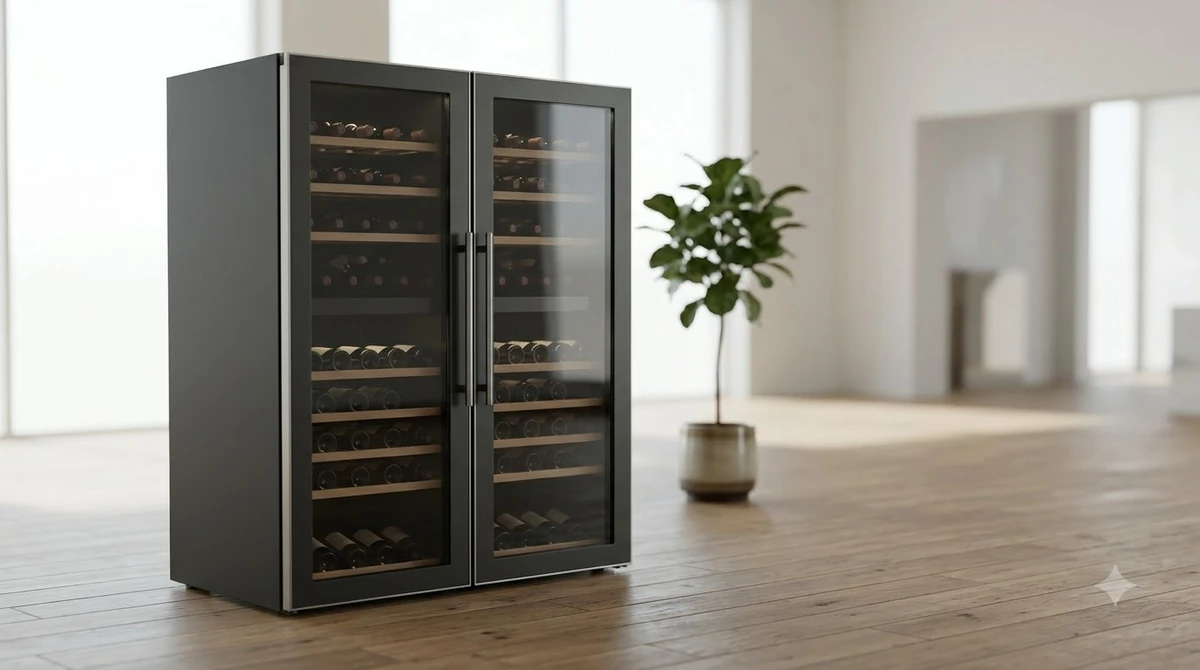
The Vinothèque is a full-height, dual-zone refrigerator designed to store wine separately from cans and other beverages. Its defining advantage is the combination of a 60-bottle upper compartment and a lower compartment that accommodates as many as 140 standard cans.
Wine Enthusiast lists the model under SKU 261 02 64 001. Its product specifications describe a compressor-cooled cabinet with electronic temperature controls, separate temperature ranges, and a front-venting design. The upper compartment adjusts between 41°F and 68°F, while the lower compartment adjusts between 34°F and 50°F. That separation makes it possible to keep a collection of red and white wines in the upper section while chilling beer, soda, mixers, and sparkling wine below. The Wine Enthusiast Vinothèque product specifications provide the manufacturer’s detailed capacity, dimensions, and feature information.
The capacity figures are useful, but they should be treated as maximum manufacturer specifications rather than guaranteed everyday loading figures. The 60-bottle rating is based on Bordeaux-size bottles. Wider Champagne bottles, Burgundy bottles, and unusual shapes can occupy more shelf space. Similarly, the 140-can rating assumes standard 12-ounce cans rather than larger specialty containers. The lower compartment can alternatively accommodate up to 50 bottles measuring 9 inches.
| Specification | Wine Enthusiast Vinothèque |
|---|---|
| Model number | 261 02 64 001 |
| Wine capacity | Up to 60 Bordeaux-size bottles |
| Beverage capacity | Up to 140 standard 12-ounce cans |
| Alternative beverage capacity | Up to 50 bottles measuring 9 inches |
| Upper temperature range | 41°F–68°F |
| Lower temperature range | 34°F–50°F |
| Overall dimensions | 67.75 × 23.5 × 28.25 inches |
| Interior gross volume | 13.4 cubic feet |
| Net weight | 216 pounds |
| Cooling system | Compressor, R600a refrigerant |
| Listed noise rating | 39 dBA |
| Temperature variance | ±4°F |
| Installation | Built-in or freestanding |
| Ventilation | Front |
| Warranty | 1 year parts and labor; 3 years sealed-system parts |
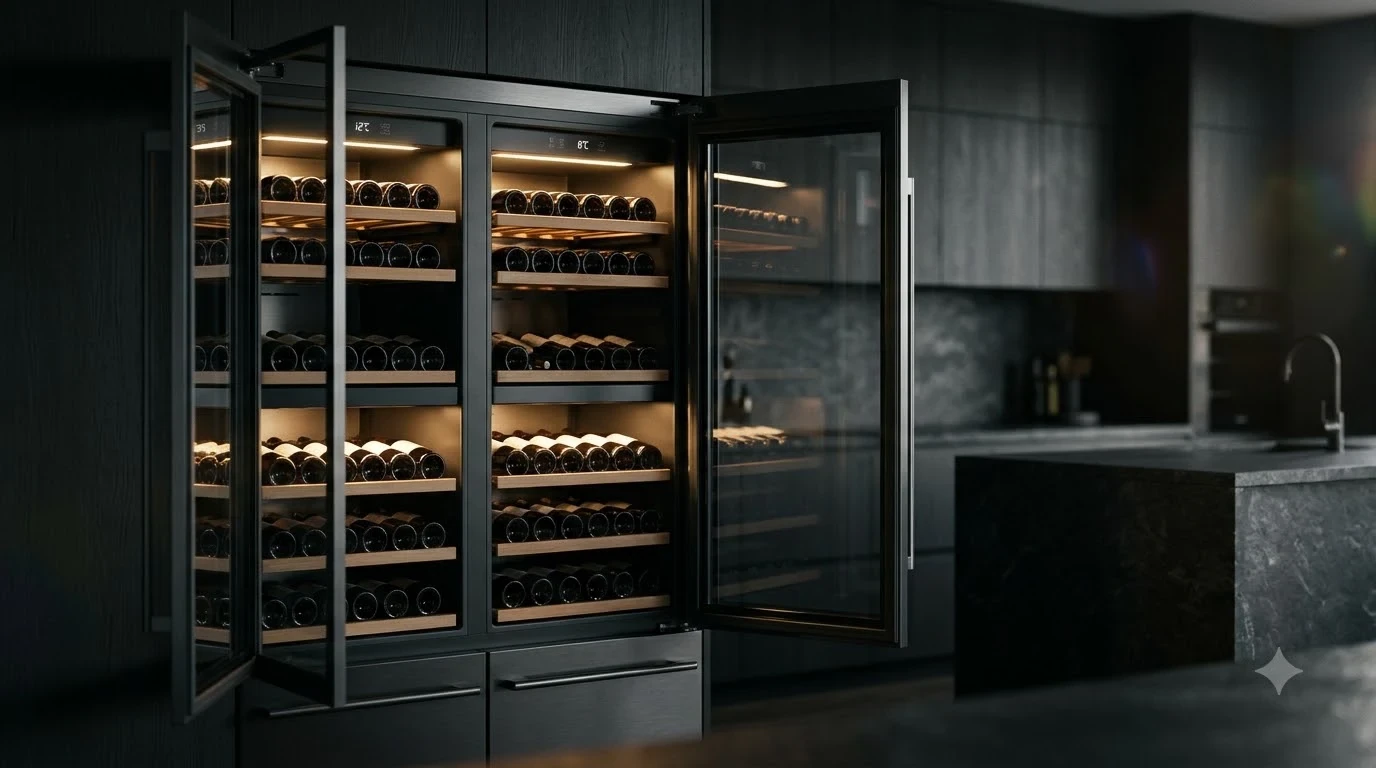
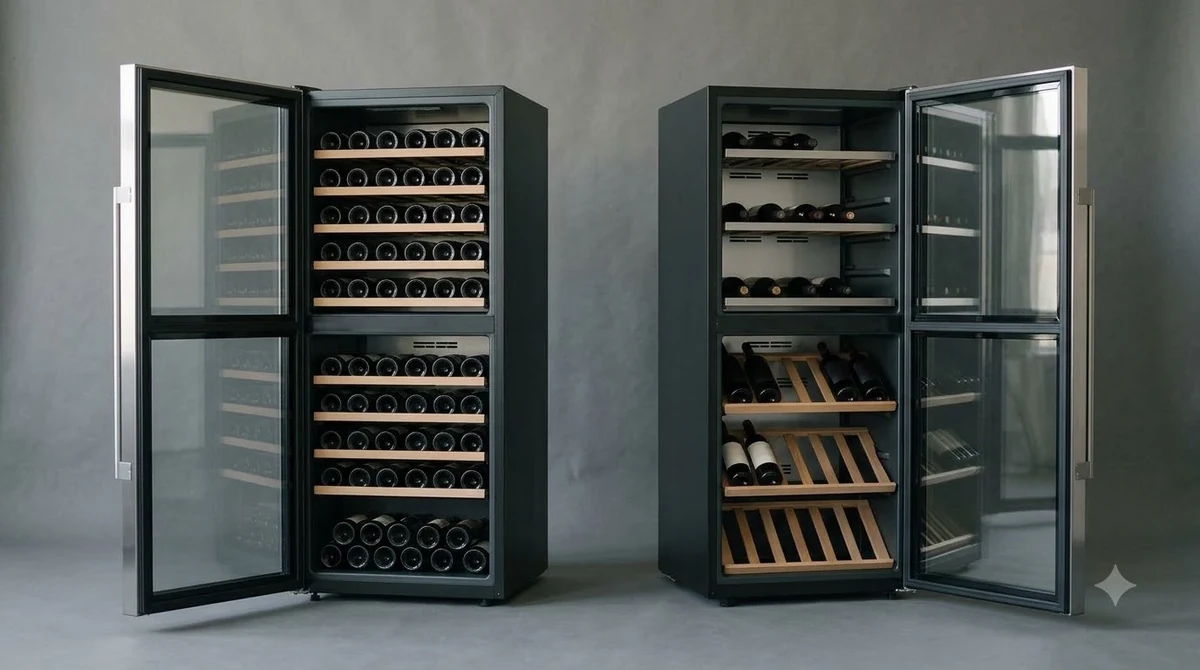
Storage organization is another important part of the design. The upper wine section has three VinoView beechwood display shelves, which allow selected bottles to face forward, plus four additional rolling beechwood shelves. The lower beverage compartment has three adjustable flat-wire shelves and a flat-wire bottom shelf. Stainless-steel accents give the wine shelves a more furniture-like appearance than the basic wire racks found in many beverage refrigerators.
Additional features include UV-protected glass doors, reversible door hinges, a lock and key, and LED interior lighting. The charcoal filter is intended to reduce unwanted odors inside the cabinet. These details make the appliance more suitable for a visible home entertaining space than a basic utility refrigerator, although the overall appearance and actual performance should be evaluated separately.
What Owners and Buyers May Appreciate
The most attractive aspect of the Wine Enthusiast Vinothèque is its ability to serve two different storage needs without requiring two separate refrigerators. Its 60-bottle wine compartment and 140-can beverage compartment offer a practical combination for households that entertain regularly or maintain both a wine collection and an assortment of chilled drinks.
The independent temperature controls are particularly useful. Wine storage and beverage service do not always require the same conditions. A household can keep the upper compartment at approximately 55°F for general wine storage while setting the lower compartment around 38°F for beer, soda, and other cold drinks. Alternatively, a lower setting near 45°F can work for bottles of sparkling wine that need to be ready for serving.
The upper compartment also offers more than basic bottle storage. Its VinoView shelves are designed to display selected bottles with their labels facing forward, making it easier to identify a particular wine without repeatedly pulling bottles out. The additional rolling shelves provide space for the remainder of the collection. For someone who organizes bottles by producer, grape variety, or drinking occasion, this arrangement can be more convenient than stacking bottles in a standard refrigerator.
The lower compartment’s adjustable shelves provide another advantage. Cans, small bottles, and beverage containers do not all have identical dimensions. Being able to adjust shelf positions makes it easier to arrange drinks without wasting as much vertical space. A household that regularly serves sparkling water, craft beer, mixers, and soft drinks can use the lower section for a varied selection.
Its exterior features also deserve consideration. UV-protected glass helps limit exposure to light, while the reversible doors provide some flexibility when planning the appliance’s position. The LED interior lighting makes it easier to see the contents, and the lock provides an additional level of access control. These features are useful in a home bar or shared entertaining space where the appliance may be visible throughout the day.
The manufacturer’s published 39 dBA noise rating is another attractive specification. That rating suggests an appliance designed with relatively restrained operating noise in mind. However, actual sound levels can depend on the installation surface, ventilation, compressor operation, and the surrounding room. Buyers should not interpret the published figure as a guarantee that the refrigerator will be inaudible.
There is also value in the front-venting configuration. Properly designed front ventilation can make a refrigeration appliance suitable for placement within cabinetry without relying on open side or rear ventilation in the same way as many freestanding refrigerators. This creates more options for a planned kitchen or bar installation.
Common Complaints and Potential Ownership Problems
The biggest concern with the Vinothèque is not a single documented design defect but the uncertainty surrounding availability, service, and long-term ownership. Wine Enthusiast’s product page identifies model 261 02 64 001 as no longer available, so prospective buyers should not assume that a new unit can be ordered directly from the manufacturer.
Discontinued status matters because refrigeration appliances are not simple decorative purchases. A failed cooling system can affect an entire collection of wine and beverages. Buyers considering an existing unit through a resale listing should investigate its operating history, maintenance records, and remaining warranty coverage before making a commitment. A visually attractive cabinet does not establish that its compressor, temperature sensors, fans, or seals are functioning correctly.
Another consideration is the manufacturer’s listed temperature variance of ±4°F. That figure is important because the displayed setting should not be confused with an assurance that every shelf remains at exactly the same temperature throughout the day. Air circulation, bottle placement, door openings, and the amount of stored product can influence actual conditions. Someone maintaining valuable bottles for extended aging may prefer to use an independent thermometer to verify the cabinet’s performance.
The 39 dBA noise specification should also be interpreted realistically. A compressor refrigerator operates through cooling cycles, so the sound level can change during operation. An appliance placed beside a quiet living room, bedroom, or home office may be more noticeable than the same refrigerator installed in a dedicated utility area. Installation leveling and sufficient airflow also affect how the cabinet sounds.
Brand-level customer feedback raises additional questions. The Better Business Bureau’s published Wine Enthusiast customer reviews include reports of cooling failures, noise complaints, and difficulties arranging service. Some complaints concern other Wine Enthusiast products rather than the Vinothèque, so they cannot establish a specific failure rate for this model. Nevertheless, they are a reason to examine the service arrangements carefully rather than assuming that a refrigeration purchase will be straightforward to maintain.
Warranty coverage is relatively limited compared with what some buyers may expect from a substantial home appliance. The Vinothèque product specification lists one year of parts-and-labor coverage and three years of sealed-system parts coverage. The longer sealed-system period does not mean that all components receive three years of comprehensive labor and parts protection.
Installation expenses and physical handling are further potential drawbacks. The appliance weighs 216 pounds before bottles are added, and a fully stocked cabinet becomes considerably heavier. Delivery access, floor strength, door clearance, electrical access, and the final installation position all deserve attention. These are meaningful practical considerations, especially in homes with narrow hallways or complicated kitchen layouts.
For anyone considering a secondhand unit, a documented cooling test is more valuable than an attractive photograph or an assurance that the refrigerator was recently switched on. Both compartments should reach and maintain their intended temperatures, the doors should close evenly, and the compressor should operate without persistent unusual noises. If the seller cannot demonstrate normal operation, the uncertainty should be reflected in the buying decision.
Who Should Buy the Wine Enthusiast Wine and Beverage Center?
The Vinothèque makes the most sense for households that genuinely need separate wine and beverage storage in one large cabinet. Its upper 60-bottle compartment and lower 140-can capacity are substantial enough to support regular entertaining without requiring a separate appliance for every type of drink.
Wine enthusiasts with a mixed collection may appreciate the independent temperature settings. A general storage setting around 55°F is appropriate for many wines, while the lower section can be configured for colder serving temperatures. For example, sparkling wines are commonly served around 40°F to 50°F, and many light white wines are best served around 45°F to 50°F. Having a separate beverage compartment means those drinks do not need to occupy the same temperature environment as the main wine collection.
The design also suits homeowners who want wine bottles to be visible and organized. The label-forward VinoView shelves can make it easier to identify bottles for dinner parties, while the additional rolling shelves provide room for less frequently accessed bottles. A homeowner who serves different wines alongside dishes such as chicken Marsala may appreciate having the appropriate bottles stored and ready rather than searching through a crowded kitchen refrigerator.
However, the appliance is not an ideal purchase for every wine drinker. Someone who owns fewer than 20 bottles may not need a cabinet with this much capacity. A dedicated compact wine refrigerator could use less floor space and provide a more sensible storage arrangement. Likewise, someone who primarily wants cold soda and beer may be better served by a beverage-only refrigerator rather than paying for a substantial wine-storage section.
Buyers seeking a brand-new unit should also reconsider their options because the manufacturer marks this particular Vinothèque model as unavailable. An existing secondhand unit may still appeal to someone who values its layout, but a used refrigerator should come with convincing evidence of proper cooling and an understanding of who will handle future repairs.
Long-term wine collectors should think carefully about temperature stability, service access, and the value of the bottles being stored. A dual-zone cabinet is convenient, but the manufacturer’s ±4°F variance and limited warranty mean that buyers should not assume it provides the same level of assurance as a dedicated high-end wine cellar. For particularly valuable collections, verified operating conditions and accessible technical support deserve priority over appearance alone.
Tip: Before purchasing a used Vinothèque, request separate temperature readings from both compartments after the appliance has operated long enough to stabilize. Also measure the installation opening, inspect the door seals, and confirm that the compressor and fans operate normally.
It is also useful to consider how the appliance will fit into an entertaining routine. A household that regularly serves cocktails may use the lower section for chilled mixers and sparkling wine, while the upper section remains dedicated to bottles intended for dinner. For example, ingredients for an Aperol Spritz recipe can be organized alongside other chilled drinks, leaving the wine compartment available for bottles that need different storage conditions.
How It Compares to Alternatives
The Vinothèque’s main competitive advantage is its combination of a relatively large wine compartment, a separate beverage compartment, and a tall cabinet design. However, the right alternative depends on whether wine capacity, beverage capacity, installation flexibility, or long-term service matters most.
A dedicated wine refrigerator is a more focused option for collectors who rarely store cans or soft drinks. It can devote its entire interior to bottle storage, often with shelves designed around different bottle shapes. This can be especially useful for people who maintain a collection of Pinot Noir, Chardonnay, Champagne, and other wines with wider-than-standard bottles. A dedicated wine cabinet also avoids sacrificing wine storage space to beverage shelving.
A dedicated beverage center is the opposite choice. It prioritizes cans, bottles, and everyday drinks rather than horizontal wine storage. Someone who primarily serves beer, sparkling water, soda, and cocktail mixers may find this arrangement more practical. A beverage-only model can also make it easier to organize tall containers and cans without adjusting around wine-bottle shelves.
A dual-zone wine refrigerator is another alternative, although its two compartments may both be designed primarily for wine. Such an appliance is useful when a collector wants to store red and white wines separately or maintain different serving temperatures. It is less useful for someone who needs dedicated space for cans and bottled drinks.
The best alternative is therefore not necessarily another appliance with the same overall dimensions. Buyers should begin with the number of wine bottles and beverage containers they actually expect to store. A household that needs 50 wine bottles and 100 cans has different requirements from a collector who needs 100 wine bottles and only a handful of mixers.
Installation is another important comparison point. The Vinothèque is specified for both built-in and freestanding use, with front ventilation. However, the listed built-in cutout is 24.5 inches wide, 68.25 inches high, and 31.75 inches deep. A replacement appliance should be evaluated against those measurements rather than assumed to fit simply because it is marketed as a similar 24-inch or undercounter refrigerator.
Buyers researching other refrigeration categories can also explore the broader model reviews section to compare different appliance types and their intended uses. A useful comparison should include capacity, temperature range, shelf construction, noise rating, electrical requirements, warranty coverage, and service availability.
For a household that wants to preserve the Vinothèque’s combination of wine and beverage storage, a replacement dual-purpose refrigerator with two independently controlled compartments is the closest functional match. However, the exact capacity and temperature range matter more than the product category name. A replacement that holds 40 wine bottles and 100 cans may look similar while offering considerably less usable storage.
Another practical issue is whether the alternative has a clearly documented service network. A refrigerator with slightly fewer shelves but better-established repair support may be a more sensible long-term purchase. Buyers should examine warranty terms, replacement-part availability, and the process for arranging service before committing to a large appliance.
Frequently Asked Questions
Can the Vinothèque store Champagne bottles?
Yes, Champagne can be stored in a wine refrigerator, although its wider bottle shape may reduce the practical capacity compared with standard Bordeaux bottles. The advertised 60-bottle figure should therefore not be treated as a guaranteed capacity for a collection dominated by Champagne.
Does the appliance require a dedicated electrical circuit?
The published specifications identify a 115V, 60Hz electrical requirement. They do not establish that every installation requires a dedicated circuit, so the electrical load and local installation requirements should be assessed before connecting the appliance.
Can the wine compartment be used to store food?
A wine cellar is designed for wine storage rather than general food refrigeration. Wine Enthusiast’s appliance manuals caution against storing food in wine cellars because the internal temperatures may not be appropriate for food safety or spoilage prevention.
How long should the refrigerator stand upright before startup?
Wine Enthusiast’s beverage-center operating guidance recommends allowing certain transported models to stand upright for approximately 24 hours before connecting them to power. This allows the refrigeration system to settle after transportation, although the exact instructions for the specific model being installed should take priority.
Does the Vinothèque have an automatic defrost system?
The published Vinothèque product specifications do not establish a specific automatic-defrost feature. Buyers should obtain confirmation from the manufacturer or the appliance’s model-specific documentation rather than assuming that every Wine Enthusiast refrigerator uses the same defrost arrangement.
The Wine Enthusiast Vinothèque offers an appealing combination of wine presentation, substantial beverage capacity, and independent temperature control. Its discontinued status and warranty limitations mean that buyers should give serviceability and verified operating condition as much attention as capacity and appearance. For households that need both wine and everyday beverage storage, its overall configuration remains a useful benchmark when comparing replacement dual-zone refrigerators.
More in Model Reviews
 NewAir AWC 330E Review for Home Wine StorageUpdated Nov 21, 2026
 Ivation 18 Bottle Wine Cooler Review for Compact Home StorageUpdated Nov 21, 2026
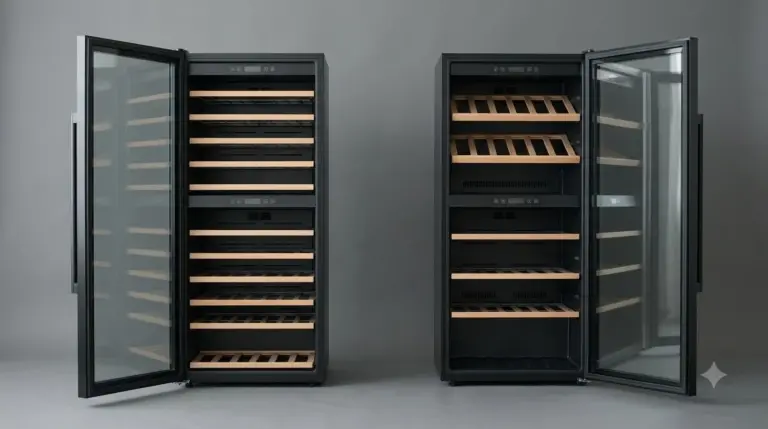 Kalamera 24 Inch Dual Zone Review for Flexible Wine StorageUpdated Nov 21, 2026
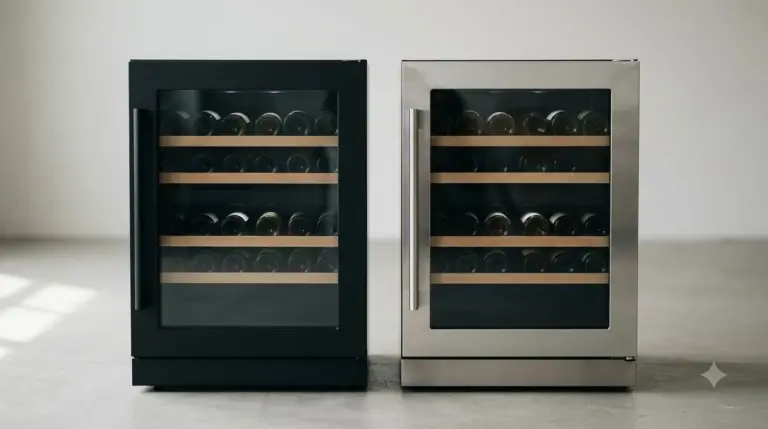 Marvel Wine and Beverage Center Review: A Flexible 24-Inch PickUpdated Nov 21, 2026
 Cuisinart Evolutionx Wine Opener Review for Easier Cork RemovalUpdated Nov 21, 2026
 Wine Enthusiast Wine Fridge Parts: Find the Right ReplacementUpdated Nov 21, 2026