

We may earn a commission when you buy through links on this page, at no extra cost to you. Learn more.
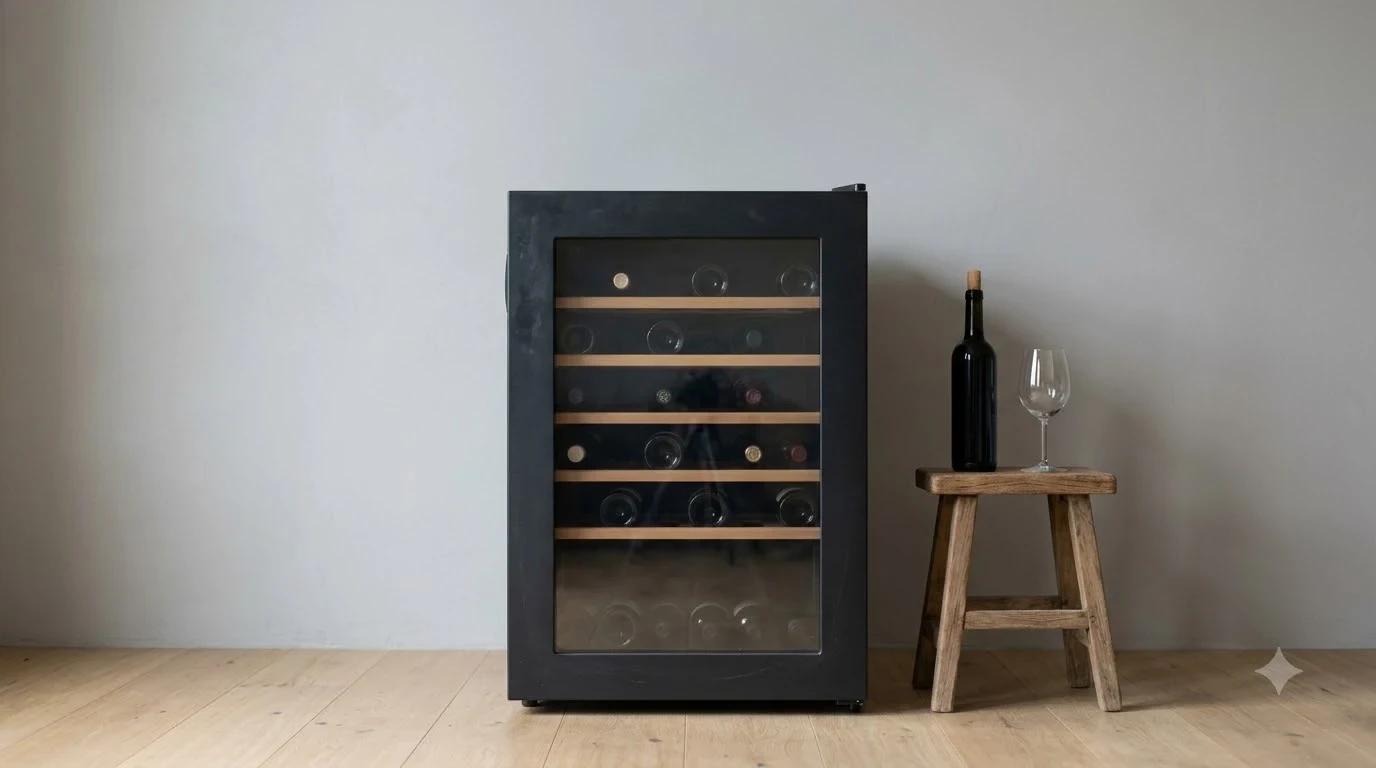
The Wine Enthusiast 20 bottle wine fridge is a compact, freestanding compressor cooler designed to store up to 20 standard Bordeaux-size bottles while maintaining adjustable temperatures between 41°F and 64°F. Model 288 03 20 01 combines a touchscreen control panel, removable chrome-wire shelving, a glass door, and a dedicated lower storage bin. Its biggest advantages are its compact footprint and practical temperature range, while its single-zone design, ventilation requirements, and limited capacity for larger bottles are important considerations before purchasing.
A dedicated wine refrigerator can make a noticeable difference in how conveniently a small collection is organized and served. Instead of filling a kitchen refrigerator with wine bottles or leaving a growing collection exposed to changing room temperatures, a compact wine cooler provides a designated storage environment. The Wine Enthusiast 20-bottle compressor model targets households that want this convenience without committing to a large wine cabinet. This review examines its specifications, storage arrangement, cooling performance, owner-feedback limitations, installation requirements, and suitability for different collections.
Specs and Key Features
The Wine Enthusiast 20-Bottle Compressor Cooler is a compact, single-zone appliance with a 20-bottle advertised capacity and an adjustable 41°F to 64°F temperature range. Its combination of compressor cooling, touchscreen controls, and removable shelving makes it suitable for everyday wine storage and short-term serving preparation.
| Specification | Wine Enthusiast 20-Bottle Compressor Cooler |
|---|---|
| Model number | 288 03 20 01 |
| Maximum capacity | 20 standard Bordeaux bottles |
| Temperature range | 41°F–64°F |
| Cooling technology | Compressor |
| Temperature zones | 1 |
| Interior volume | 1.8 cubic feet |
| Height | 25.2 inches |
| Width | 16.9 inches |
| Depth | 17.7 inches |
| Empty weight | 47 pounds |
| Shelving | 4 chrome wavy-wire shelves and 1 bin |
| Door | Full glass with black trim |
| Lighting | White LED |
| Controls | Electronic touchscreen |
| Installation | Freestanding only |
| Refrigerant | R600a |
| Warranty | 1-year parts and labor; 3-year sealed system |
The physical dimensions are among the most appealing aspects of this model. At approximately 25.2 inches high, 16.9 inches wide, and 17.7 inches deep, it occupies considerably less floor space than a full-size wine cabinet. The 47-pound empty weight also makes initial positioning more manageable than moving a substantially larger cellar, although two people can make placement easier.
The compressor is another important feature. Unlike thermoelectric cooling systems, compressor technology uses a refrigeration cycle to remove heat from the cabinet. Wine Enthusiast describes this approach as providing more consistent cooling across changing ambient temperatures and longer-lasting performance than thermoelectric alternatives. That distinction matters for households where room conditions vary throughout the day.
The touchscreen provides straightforward temperature adjustments, while the glass door makes it possible to see the collection without opening the cabinet. Four chrome wavy-wire shelves and a lower storage bin create several storage positions. The bin is particularly useful for bottles that do not sit comfortably in conventional horizontal shelf positions.
There are also limitations worth understanding. This is a single-zone refrigerator, not a dual-zone model with separate temperature settings for reds and whites. It does not have a reversible door or a built-in installation rating. Its advertised 20-bottle capacity also assumes standard Bordeaux-shaped bottles rather than a collection dominated by wider or unusually tall formats.
What Owners Like About the Storage and Design
The most attractive aspects of the refrigerator are its compact proportions, organized bottle storage, and uncomplicated appearance. Its glass door, black trim, chrome shelves, and white interior lighting create a presentation that works in a dining area, home bar, or dedicated wine corner.
The 20-bottle capacity provides enough room for a modest collection of everyday wines without requiring a large appliance. For example, a household might reserve several positions for Cabernet Sauvignon and Merlot, keep a few bottles of Pinot Noir available for lighter meals, and use the remaining space for Sauvignon Blanc, Chardonnay, or sparkling wine. A collection of this size can provide useful variety without turning wine storage into a major household project.
The lower storage bin is an especially practical design element. Traditional wine shelves are optimized for familiar bottle shapes, but real collections are not always uniform. Burgundy bottles, some sparkling wines, and certain specialty packaging can take up more horizontal space than standard Bordeaux bottles. A separate bin offers another placement option, although it does not guarantee that every oversized bottle will fit.
The glass door also improves visibility. A quick glance can reveal which bottles are available, making it easier to select a wine for dinner or an upcoming gathering. White interior lighting helps display the contents, while the touchscreen keeps temperature adjustments accessible without opening the door.
Owner feedback needs some careful interpretation. The available Best Buy review summary for Wine Enthusiast’s older Evolution Series 20-bottle model, number 268 68 20 01, highlights bottle storage, compact size, and energy efficiency as positive themes. However, that refrigerator is a different model from the 288 03 20 01 compressor cooler reviewed here. Its feedback can provide limited background about a related product category, but it should not be presented as direct owner testimony about this particular appliance.
For the exact 288 03 20 01 model, the manufacturer and retailer product descriptions establish the storage arrangement and construction more clearly than the available independent owner-review material. Buyers should distinguish verified specifications from assumptions based on similarly sized refrigerators.
Common Complaints and Practical Limitations
The main limitations are the single cooling zone, bottle-size restrictions, freestanding installation requirements, and the need for adequate ventilation. These characteristics do not make the refrigerator unsuitable, but they narrow the types of collections and locations it can accommodate.
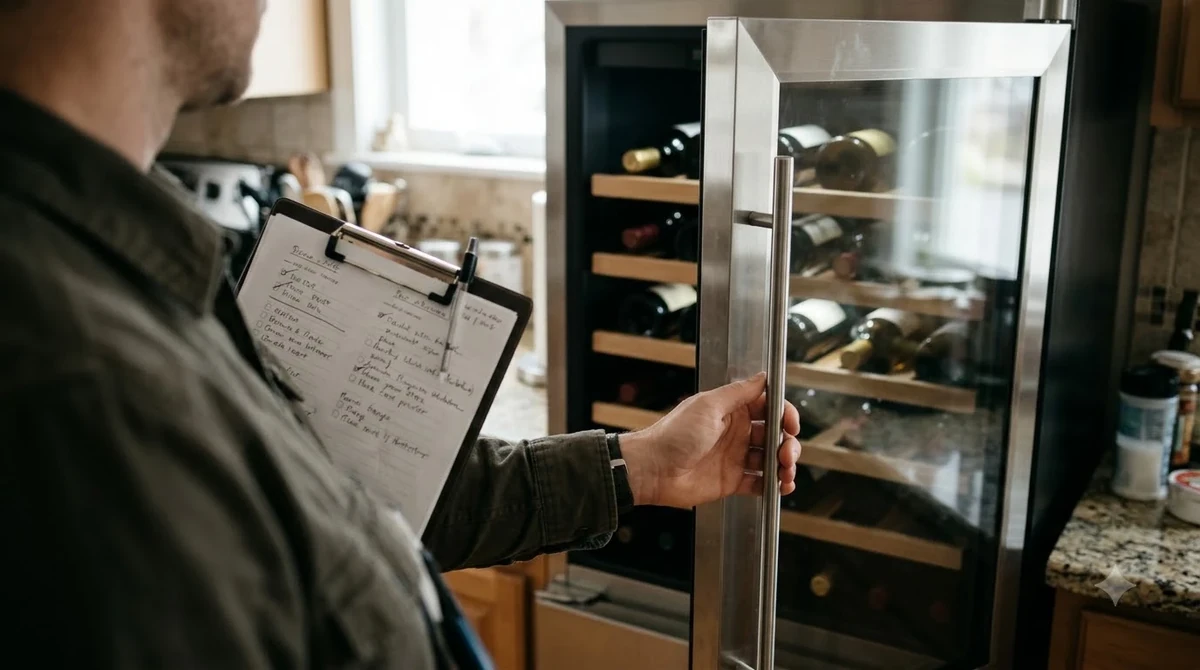
The first consideration is the 20-bottle capacity. This number describes a maximum based on standard Bordeaux-size bottles. It should not be interpreted as a guaranteed count for every wine collection. Wider Burgundy bottles, Champagne bottles, and some specialty formats can reduce the available space significantly.
Wine Enthusiast’s manual provides useful figures for understanding this limitation. If up to half of a collection consists of nonstandard Bordeaux-size bottles, maximum capacity may decrease by approximately 20% to 25%. If most bottles are larger formats, capacity can decrease by as much as 40%. In practical terms, a refrigerator advertised for 20 bottles could accommodate only 12 to 16 bottles in a collection dominated by wider bottles.
The second limitation is its single-zone arrangement. A single temperature setting is convenient for a collection stored at one general temperature, but it cannot simultaneously maintain separate settings for red and white wines. Someone who regularly wants chilled Sauvignon Blanc alongside red wines prepared for serving will need to make a compromise or use another cooling arrangement.
Noise is another consideration for placement. The manufacturer promotes its compressor technology as quiet, but compressor refrigerators still produce operating sounds. The system can cycle on and off as it maintains the cabinet temperature. Wine Enthusiast’s manual also identifies refrigerant movement, thermostat clicks, and occasional popping sounds associated with automatic defrosting as normal operating noises.
There is a distinction between expected operating sounds and a persistent mechanical problem. A refrigerator that produces occasional clicking or refrigerant gurgling is not necessarily defective. However, repeated rattling, unusual vibration, or cooling problems deserve further investigation. Keeping the unit level and ensuring that bottles do not touch the cabinet walls can help eliminate avoidable noises.
Installation flexibility is also limited. The manufacturer identifies the appliance as freestanding only. It should not be treated as an undercounter refrigerator simply because its height is relatively compact. Its ventilation requirements make placing it inside a tightly enclosed cabinet inappropriate.
Who Should Buy and Who Should Skip
This refrigerator is most suitable for wine drinkers with a small collection who want dedicated cooling, accessible controls, and a compact freestanding design. It is less appropriate for collectors who need two independent temperature zones, extensive bottle capacity, or built-in cabinetry integration.
Who should consider it
Casual wine collectors: Households that regularly keep approximately 10 to 20 standard wine bottles can benefit from a dedicated storage space. The refrigerator is particularly useful for people who purchase a few bottles at a time and want to maintain a consistent storage arrangement.
Small households and apartments: The dimensions make the unit easier to accommodate than a full-height wine cabinet. A dining room, home bar, or suitable corner in a climate-controlled living area can provide a practical location, provided the required ventilation clearances are maintained.
People who serve both red and white wines: Although it cannot provide two separate temperature zones, the adjustable range gives owners flexibility when choosing a compromise storage temperature. Bottles can also be brought to their preferred serving temperatures shortly before opening.
Home entertainers: Keeping wine organized and accessible can simplify preparation for dinner parties. The glass door and interior lighting make the collection easy to inspect, while the lower storage bin offers additional flexibility for unusual bottle shapes.
Who should look elsewhere
Large wine collectors: Twenty standard bottles represent a relatively modest collection. People who regularly purchase cases, collect multiple vintages, or intend to age wine for many years may quickly need additional capacity.
Dual-zone shoppers: Anyone who wants to store reds at approximately 60°F to 65°F and whites at approximately 45°F to 50°F simultaneously should consider a dual-zone refrigerator instead.
Built-in installation buyers: The model is not designed for installation inside enclosed cabinetry. Its freestanding configuration requires space around the appliance for heat dissipation.
Collectors with unusual bottles: If a large portion of the collection consists of Champagne, Burgundy, or other oversized formats, the advertised capacity may be misleading for everyday planning.
Wine storage needs also depend on how bottles are used. Someone who mainly drinks young wines shortly after purchasing them may value serving convenience more than long-term cellar features. A collector building a selection of age-worthy Cabernet Sauvignon, Bordeaux blends, or vintage wines should consider a more specialized storage solution with greater capacity and carefully evaluated temperature stability.
How It Compares to Alternative Wine Storage Options
The Wine Enthusiast 20-bottle compressor cooler occupies the compact end of the dedicated wine-refrigerator category. Its main advantage is the combination of compressor cooling and a relatively small footprint, while its most important trade-off is the lack of separate temperature zones.
A thermoelectric wine cooler is one alternative. These appliances use a different cooling approach and are often designed for small collections. Their suitability depends heavily on room temperature and the individual model’s operating limitations. The Wine Enthusiast compressor refrigerator is the more relevant option for households that prefer compressor-based refrigeration and a broader stated ambient operating range.
A larger single-zone compressor refrigerator is another alternative. A 24-bottle or 28-bottle unit provides additional room for collections that have started to outgrow a 20-bottle cabinet. However, a larger exterior footprint may make placement more difficult in smaller rooms. Capacity should also be evaluated against actual bottle shapes rather than advertised counts alone.
A dual-zone wine refrigerator provides a different advantage. Separate cooling compartments make it possible to maintain different settings for reds and whites. For example, a collection might use one zone near 47°F for light whites and sparkling wines and another near 62°F for fuller-bodied reds. That flexibility is useful for people who frequently serve different styles without waiting for bottles to warm or cool.
Traditional wine racks are the simplest alternative for bottles that do not require immediate serving-temperature preparation. They are inexpensive in terms of appliance requirements and can organize a larger number of bottles, but they do not actively regulate temperature. A room with substantial temperature changes is not an ideal environment for a collection intended for extended aging.
For readers comparing different capacities and configurations, the wine refrigerator model reviews section offers a useful starting point for evaluating other appliance categories. The right comparison should consider usable capacity, temperature range, installation type, cooling zones, and ventilation rather than focusing on bottle count alone.
For the specific Wine Enthusiast model, its compact dimensions and compressor system make it a sensible middle ground between a simple wine rack and a substantially larger refrigerator. Its suitability depends on whether one temperature zone and a standard-bottle capacity match the collection.
Installation, Temperature Settings, and Everyday Performance
Correct installation is essential for this refrigerator to operate as intended. Wine Enthusiast specifies freestanding use, an ambient operating range of 61°F to 90°F, and clearance of at least 2 inches on both sides and 4 inches at the rear and top.
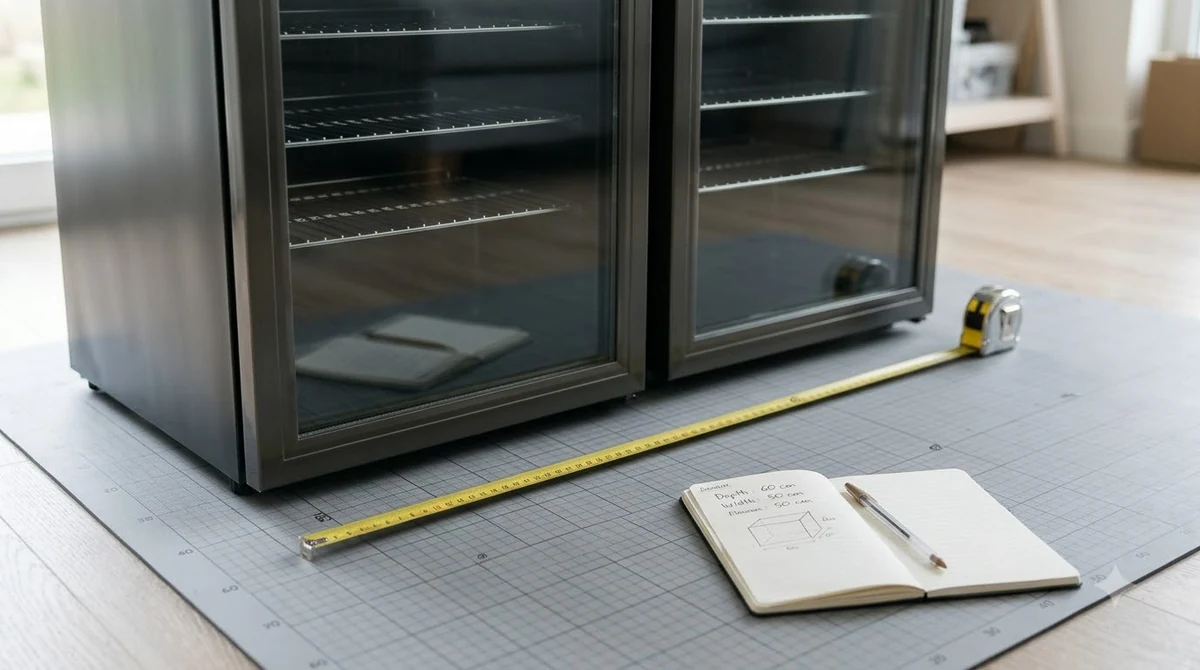
Before choosing a location, measure the available floor area and account for ventilation. A space measuring approximately 20 inches wide and 23 inches deep may appear sufficient for the cabinet itself, but it does not provide the complete clearance required for proper operation. The appliance needs open space around its sides, back, and top.
Keep it away from direct sunlight, ovens, radiators, and other heat sources. A stable, level floor is preferable, particularly because an uneven surface can contribute to vibration and door-sealing problems. A properly grounded 115-volt electrical outlet is specified in the user manual.
The manual also gives a specific startup procedure. After transportation, allow the refrigerator to stand upright for approximately 24 hours before connecting it to electricity. Once powered, let it run for at least 30 minutes before adjusting the temperature. These steps help prepare the refrigeration system for normal operation.
Choosing a temperature
The 41°F to 64°F adjustment range provides several practical settings. However, the best setting depends on whether the main purpose is general storage or serving preparation.
For everyday white wine storage, a setting around 45°F to 50°F is a reasonable starting point. Sparkling wine also benefits from colder storage, while fuller-bodied Chardonnay can be served slightly warmer. For lighter reds such as Pinot Noir, a cooler serving temperature can preserve freshness without making the wine seem excessively cold.
Full-bodied red wines generally benefit from serving temperatures around 60°F to 65°F. The refrigerator’s upper setting reaches 64°F, which makes it useful for preparing many red wines for service. However, the appliance is not a substitute for a dual-zone unit if the collection regularly requires two different storage temperatures.
The touchscreen allows temperature changes in 1°F increments according to the manual. The displayed reading also has an important distinction: it shows the actual cabinet temperature under normal operation and temporarily displays the selected temperature during adjustment before returning to the actual reading.
Tip: Choose a temperature based on the wines you store most frequently rather than changing the setting every time you open a bottle. For mixed collections, a moderate setting around 52°F to 55°F can provide a useful storage compromise, while individual bottles can be adjusted to their preferred serving temperatures before drinking.
Temperature recovery also deserves attention. Adding several bottles that have been sitting at room temperature introduces additional heat into the cabinet. The refrigerator needs time to bring those bottles toward the selected temperature. Frequent door openings can extend that process, so loading a collection in one organized session is preferable to repeatedly opening the door throughout the day.
For dinner planning, the refrigerator can be part of a simple preparation routine. A chilled white wine can accompany chicken dishes, including a chicken Marsala recipe, while a bottle of sparkling wine can be reserved for a refreshing Aperol Spritz recipe occasion. The refrigerator provides storage convenience, but the final serving temperature should still suit the individual wine.
Warranty, Cleaning, and Long-Term Maintenance
The Wine Enthusiast 20-bottle compressor cooler includes one year of parts and labor coverage and three years of sealed-system coverage. Routine cleaning, correct ventilation, and careful movement can help preserve the appliance’s operating condition throughout its service life.
The sealed system generally refers to major refrigeration components such as the compressor, condenser, and evaporator. Coverage is not identical to a full appliance replacement warranty, so buyers should understand which components are included and what exclusions apply before purchase.
The manufacturer provides operating and maintenance instructions in the Wine Enthusiast 20-bottle wine cooler owner’s manual. Keeping this document and the original purchase receipt is useful if troubleshooting or warranty service becomes necessary.
Cleaning the interior
Disconnect the appliance from its electrical supply before cleaning. The manual recommends a solution of approximately 3 to 4 tablespoons of baking soda mixed with warm water. Use a soft cloth or sponge to wipe the interior, rinse with clean warm water, and dry with a soft cloth.
Abrasive pads, harsh chemicals, ammonia, chlorine bleach, solvents, and concentrated detergents should be avoided. These products can damage or discolor the cabinet surfaces. The exterior glass and black trim should also be cleaned with suitable gentle materials rather than abrasive household scrubbers.
Maintaining the door seal
The door gasket helps maintain the cabinet’s cooling environment. Wine Enthusiast recommends cleaning the gasket every three months so that it remains clean and flexible. A dirty or poorly sealing gasket can allow warm air to enter, making the compressor work harder.
Inspect the door area whenever bottles are rearranged. A shelf or bottle that prevents the door from closing completely can interfere with cooling performance. Keeping the refrigerator level also helps the door close properly.
Handling power interruptions and moving
The manual recommends unplugging the appliance during a power interruption and waiting approximately 3 to 5 minutes after electricity returns before reconnecting it. If the refrigerator is moved, keep it upright rather than transporting it horizontally. After relocation, wait approximately 24 hours before plugging it back in.
For extended absences, the manufacturer recommends unplugging and cleaning the appliance, including the door gaskets, and leaving the door open to allow air circulation. These measures help prevent unwanted moisture and odors from accumulating inside an unused cabinet.
Finally, remember that normal compressor cycling is different from a persistent cooling fault. If bottles remain warmer than expected, inspect the door seal, reduce unnecessary openings, clean the condenser coils as directed, and verify the temperature setting. If cooling remains inconsistent, consult the manufacturer’s support documentation rather than attempting repairs to the refrigeration system without appropriate expertise.
Frequently Asked Questions
Does the Wine Enthusiast 20-bottle refrigerator have a digital temperature memory?
The manual describes an electronic temperature control system but does not establish a guaranteed memory-retention feature after every power interruption. After reconnecting the refrigerator, check the displayed temperature and confirm that the selected setting is appropriate. This is a useful precaution after electrical outages.
Can the Wine Enthusiast 20-bottle cooler store beer and soda?
The appliance is marketed primarily as a wine refrigerator, and its shelves are designed around wine-bottle storage. Although some beverages may physically fit, the manufacturer does not specify a dedicated can-storage capacity for this model. A beverage refrigerator is a more appropriate choice for households that primarily store cans.
Does the refrigerator have a lock or reversible door?
The manufacturer’s specification listing identifies this model as having neither a lock and key nor a reversible door. The door orientation should therefore be considered before installation. Check the direction of the opening against nearby walls, furniture, and walkways.
Can the Wine Enthusiast 20-bottle refrigerator be used in a garage?
The manufacturer’s specified ambient operating range is 61°F to 90°F. An uninsulated garage can experience temperatures outside that range, especially during seasonal weather changes. The manual specifically advises against installation in locations that are not properly insulated or heated.
Does the refrigerator protect wine from ultraviolet light?
The specification listing identifies a full-glass door with black trim but does not establish a UV-protection rating for this model. Buyers who prioritize long-term protection from light exposure should avoid assuming that every glass wine refrigerator provides UV filtering. Keeping the appliance away from direct sunlight is a sensible additional precaution.
The Wine Enthusiast 20-Bottle Compressor Cooler is a practical option for small collections that need dedicated storage, straightforward temperature adjustment, and a compact freestanding design. Its 20-bottle rating, removable shelving, and compressor cooling are useful strengths, but its single-zone configuration and restrictions on bottle size and installation deserve careful consideration. For households whose collections fit those limitations, it offers a convenient way to organize wine without committing to a full-size cellar.
More in Model Reviews
 Magic Chef 44 Bottle Wine Cooler Review for Flexible StorageUpdated Nov 21, 2026
 Whynter 164 Bottle Wine Cooler Review: Capacity, Features, and FitUpdated Nov 21, 2026
 Insignia NS WC16BK6 Review: Compact 16-Bottle Wine StorageUpdated Nov 21, 2026
 Wine Enthusiast Electric Blue Omega Review: Opening, Pouring, and Preserving Made EasierUpdated Nov 21, 2026
 Koolatron 20 Bottle Wine Cooler Review: Features, Fit, and PerformanceUpdated Nov 21, 2026
 NewAir AWC 330E Review for Home Wine StorageUpdated Nov 21, 2026