

We may earn a commission when you buy through links on this page, at no extra cost to you. Learn more.
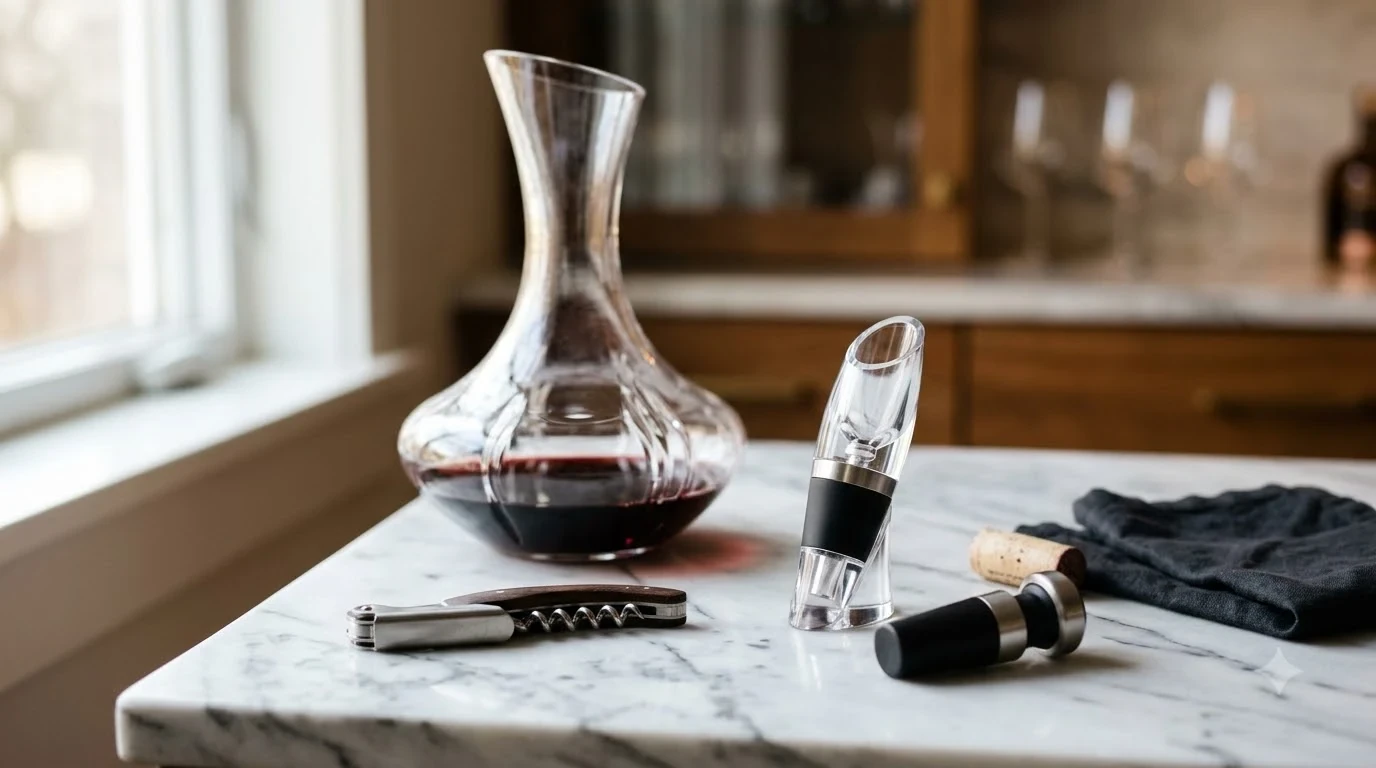
The best wine decanter set with glasses pairs a wide-bellied lead-free crystal vessel with four matched stemmed or stemless glasses so an entire 750 ml bottle breathes evenly and pours cleanly at the table. Buyers who drink bold young reds benefit most from broad-base crystal sets that maximize oxygen contact, while hosts who entertain outdoors or save counter space will prefer stemless or compact carafe-style bundles.
Buying a coordinated set eliminates the guesswork of matching glass clarity, rim thickness, and capacity across separate pieces. Whether you are stocking a home bar, replacing mismatched stemware, or shopping for a wedding gift, the right pairing balances surface area for aeration with glasses shaped to concentrate aromas.
Quick Comparison
Different decanter-and-glass configurations solve different serving problems, from softening tannic Cabernet Sauvignon to fitting easily on a crowded dinner table.
| Set Type | Best Wine Styles | Glassware Included | Cleaning Ease | Storage Footprint |
|---|---|---|---|---|
| Wide-Base Crystal Set | Full-bodied reds (Cabernet, Syrah, Barolo) | 4 large-bowl stemmed glasses | Moderate (requires bottle brush) | Large |
| Stemless Everyday Set | Medium reds, casual weeknight pours | 4 stemless tumblers | High (wide openings, dishwasher-safe) | Compact |
| Built-In Aerator Set | Young, tight reds needing fast service | 2 to 4 stemmed or stemless glasses | Moderate (extra filter parts) | Medium |
| Slender Carafe & Glass Set | Aged reds with sediment, light reds, whites | 2 to 4 universal glasses | High (straight or gently tapered sides) | Compact |
| Gift-Boxed Tasting Set | Dinner parties, weddings, milestone gifts | 4 to 6 matched crystal glasses | Low to Moderate (delicate rims) | Large |
Best for Full-Bodied Red Wines
A wide-base lead-free crystal decanter paired with four generous Bordeaux-style stemmed glasses gives tannic red wines the broad surface area they need to open up before dinner.
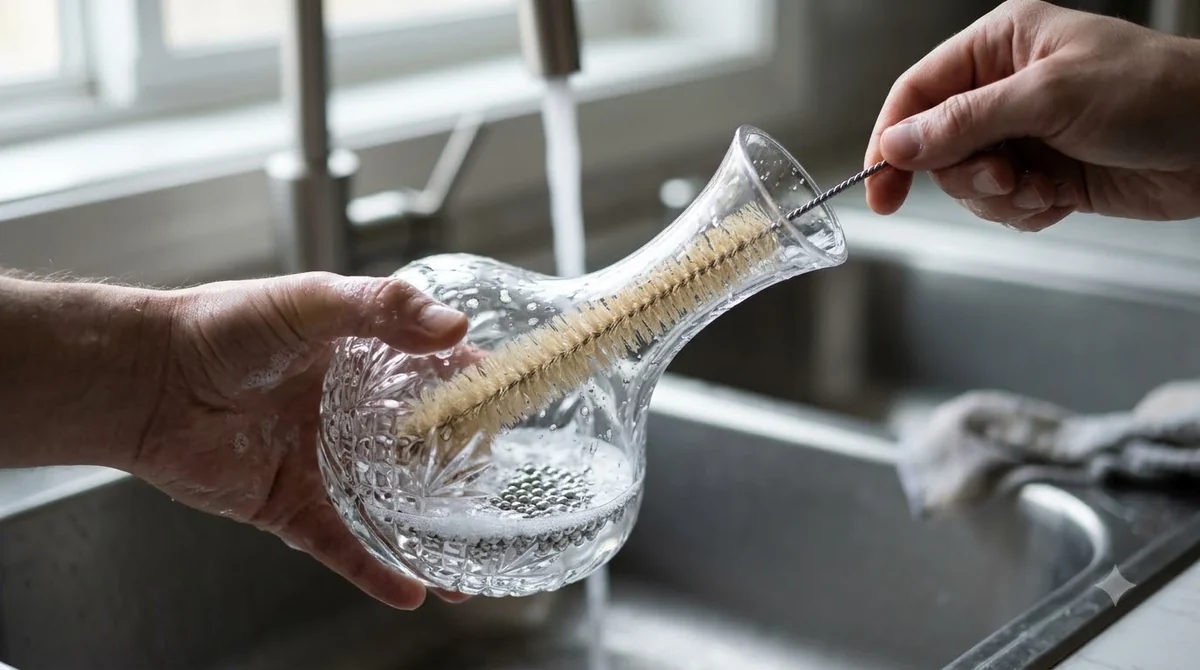
Why it stands out: As Wine Folly’s decanter buying guide notes, exposing wine to oxygen softens astringent tannins and brings out muted fruit and floral aromatics. A wide lower bowl lets a standard 750 ml bottle spread out in a shallow layer, accelerating oxidation over 45 to 90 minutes, while matching tall-bowled glasses preserve those released aromas at the rim.
Keep in mind: Broad-bellied vessels take up substantial cabinet space and trap moisture at the bottom after washing, so you will want a flexible decanter brush and a drying stand. Best for: Drinkers who regularly open young Cabernet Sauvignon, Syrah, Malbec, or Nebbiolo and want restaurant-level presentation at home.
Best for Casual Weeknight Pours and Small Spaces
A mid-sized carafe bundled with four stemless wine glasses delivers practical aeration without fragile stems or awkward vertical height.
Why it stands out: Stemless tumblers nest easily in standard kitchen cabinets, survive dishwasher cycles better than tall crystal stems, and resist tipping on coffee tables or outdoor patios. According to reviewers at VinePair, modern compact sets with balanced bases also reduce the risk of spills during lively gatherings while still giving everyday reds room to breathe.
Keep in mind: Holding a stemless glass by the bowl warms chilled whites and Pinot Noir faster than holding a stem, so these sets shine brightest with room-temperature reds. Best for: Apartment dwellers, weeknight wine drinkers, and hosts who want durable glassware that transitions from kitchen counter to patio.
Best for Fast Weeknight Aeration
A decanter set equipped with an integrated stainless-steel aerator lid or shower funnel oxygenates wine in seconds rather than hours, pairing instant readiness with matched tasting glasses.
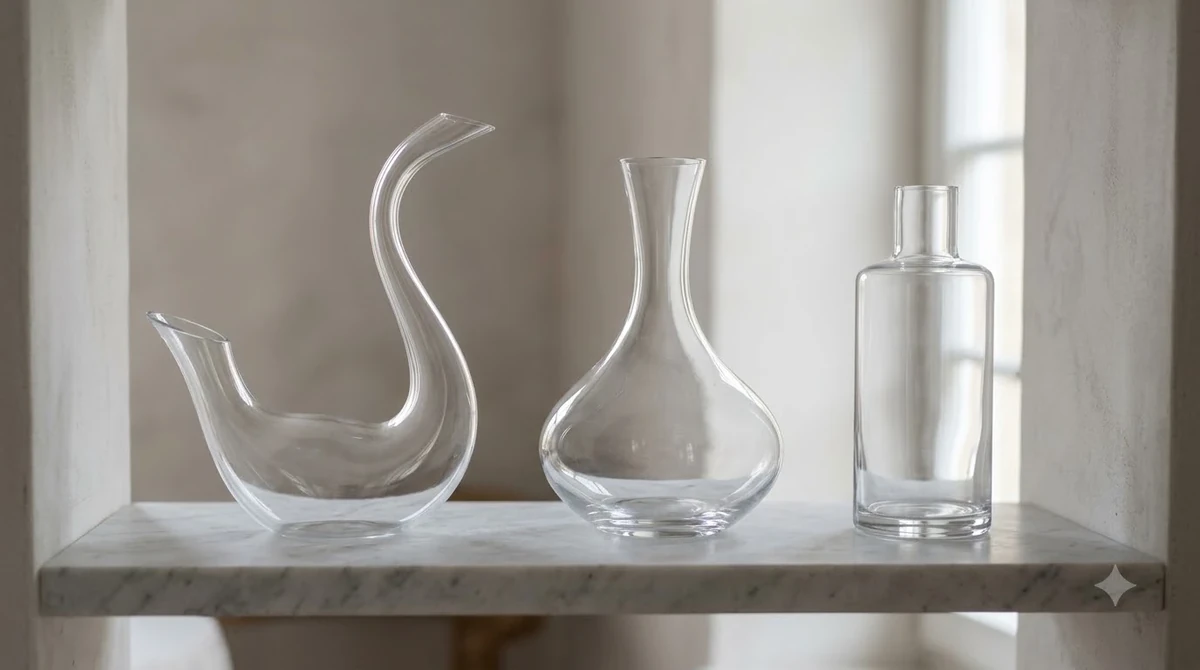
Why it stands out: When you open a bottle right as guests arrive, a built-in aerator splits the pour into thin streams that cascade down the interior glass walls, maximizing air contact on the way in. Many of these decanter with aerator bundles also incorporate a fine mesh screen that catches cork fragments and tartrate crystals before they reach the bowl.
Keep in mind: Multi-piece aerator tops add extra crevices that require immediate rinsing after service so red wine stains do not set in silicone gaskets. Best for: Busy hosts who want smoother pours immediately after uncorking without waiting an hour for passive breathing.
Best for Aged Reds and Delicate Wines
A tall, slender, narrow-base decanter paired with universal tulip glasses separates sediment cleanly without over-exposing fragile older vintages to air.
Why it stands out: Older bottles of Bordeaux, Rioja, or Barolo often throw heavy sediment during cellar aging, yet their delicate tertiary aromas can fade if spread across a massive wide-bottomed vessel. A narrower column gives the wine gentle air contact during a slow, controlled pour while letting you watch the shoulder of the bottle and stop before deposits slip past the neck.
Keep in mind: Slim necks make hand-washing impossible, so look for sets made from sturdy borosilicate or lead-free crystal that accept cleaning beads or a long bendable brush. Best for: Collectors opening mature vintages as well as drinkers who favor Pinot Noir, Beaujolais, or textured white wines.
Best for Gifting and Formal Entertaining
A presentation-boxed crystal decanter set with six matching glasses gives hosts everything needed to serve a full dinner table in one cohesive package.
Why it stands out: Coordinated six-glass bundles match the standard pour yield of a 750 ml bottle, making them immediately useful for dinner parties without forcing hosts to mix stemware styles. Cold-cut, laser-polished rims and weighty, balanced decanter bases create an unmistakable visual centerpiece on a formal dining table, while foam-lined storage boxes protect the pieces between holidays.
Keep in mind: Ultra-thin crystal rims feel wonderful on the palate but require careful hand-washing and gentle towel polishing to prevent chips and water spots. Best for: Wedding registries, housewarming gifts, and hosts who regularly seat four to six guests for multi-course meals.
How to Choose
Start with capacity and bottle yield. A standard 750 ml wine bottle holds roughly 25 ounces, and understanding how many glasses in a bottle of wine helps you size your set properly: a decanter should hold at least 35 to 50 ounces so a full bottle sits at the widest point of the bowl with plenty of headspace for swirling. Sets with four 14- to 18-ounce glasses handle a single bottle comfortably without overfilling.
Next, evaluate glass composition and rim finish. Lead-free crystal offers superior brilliance, acoustic ring, and thin, laser-cut rims compared to thick soda-lime glass, while still standing up well to regular use. Pay attention to the pouring lip on the decanter itself—a slanted or gently flared spout prevents red wine drips down the neck onto your tablecloth. If you already own specialized bowls from our guide to the best wine glasses for red wine, choose a four-glass set with universal tulip shapes that can double for crisp whites and sparkling wines.
Finally, check ergonomics and maintenance before buying. Pick up or inspect the weight distribution: a deep punt (indentation) in the base gives your thumb a secure grip when pouring a full vessel one-handed. Make sure the neck diameter fits your cleaning tools, and browse our Accessories Library if you need drying stands, stainless cleaning beads, or drip collars to keep crystal spotless.
Tip: Rinse your decanter and glasses with warm water immediately after dinner—even if you wait until morning to wash them—so tannins and pigments never dry onto the interior glass.
Frequently Asked Questions
Should a wine decanter set have four or six glasses?
Four glasses is the most practical standard because one 750 ml bottle yields four generous five-to-six-ounce pours. Six-glass sets work well for dinner parties where you plan to open two bottles, or when you want two spare glasses on hand in case of accidental breakage.
Is lead-free crystal better than regular glass for a decanter set?
Lead-free crystal is generally preferred because manufacturers can spin or blow it thinner while keeping high tensile strength and optical clarity. Regular soda-lime glass is thicker and often more budget-friendly, but its heavier rims feel less refined when tasting aromatic wines.
Can you put a wine decanter and matching glasses in the dishwasher?
Many modern machine-made crystal and borosilicate sets are top-rack dishwasher safe on a gentle cycle with fragrance-free detergent. However, tall decanters rarely get adequate water pressure inside the bowl from a dishwasher spray arm, so hand-rinsing with warm water and a soft brush remains more effective.
Do you need a stopper for a wine decanter?
A stopper is optional for serving because the goal of decanting young red wine is to let oxygen interact with the liquid. A snug glass or silicone stopper is useful mainly for keeping dust or fruit flies out during a long meal, or for short-term storage in the refrigerator overnight.
Choosing the right decanter and glass bundle comes down to matching vessel geometry to the wines you actually open each week. Prioritize a stable base, drip-free pouring lip, and glasses you feel confident washing, and every bottle at your table will show better balance and aroma from the first pour to the last.
More in Wine Accessories
 Coravin Vs Vacu Vin: Choose the Right Wine Saver for Your BottlesUpdated Nov 21, 2026
 Zwilling Wine Stopper Review: Preserve Open Bottles LongerUpdated Nov 21, 2026
 Wine Enthusiast Wine Preserver Review: Features, Benefits and LimitationsUpdated Nov 21, 2026
 Wine Enthusiast Wine Stopper: An Easier Way to Reseal Open BottlesUpdated Nov 21, 2026
 Vintorio Wine Opener: Two-Step Cork RemovalUpdated Nov 21, 2026
 Zwilling Wine Aerator Review: Aerate, Pour, and Seal With One ToolUpdated Nov 21, 2026