

We may earn a commission when you buy through links on this page, at no extra cost to you. Learn more.
The best wine box depends on whether you need to store bottles, transport a collection, ship wine, or present a bottle as a gift. For everyday collection storage, a corrugated six- or twelve-bottle box with individual dividers is a practical choice. Molded pulp inserts offer additional cushioning, while wooden wine crates provide a more decorative option. The right choice comes down to bottle capacity, construction, protection, and how frequently you plan to use it.
A wine box is more than a container. It can organize a growing collection, protect bottles during a household move, make a bottle gift look more considered, or provide suitable packaging for commercial transportation. However, these jobs require different designs. A decorative wooden crate is not automatically a suitable shipping carton, and an ordinary cardboard storage box is not necessarily designed for parcel delivery.
This roundup compares five useful wine box types, explains their strengths, and identifies the features worth checking before buying. Whether you keep six bottles for weekend dinners or manage a larger collection, understanding the differences will help you choose a box that suits your actual requirements.
Quick Comparison of the Best Wine Box Types
The most useful wine box styles serve five distinct purposes: general collection storage, additional bottle cushioning, organized moving, gift presentation, and shipping protection. Start by identifying the job rather than choosing a box based on appearance alone.
| Wine box type | Typical capacity | Main advantage | Best application |
|---|---|---|---|
| Corrugated storage box | 6 or 12 bottles | Practical organization | Home collections and cellar organization |
| Molded pulp insert box | 6 or 12 bottles | Individual cushioning | Fragile bottles and careful moves |
| Cardboard divider box | 6 or 12 bottles | Separate bottle compartments | Collection transport and storage |
| Wooden wine crate | 1, 3, 6 or 12 bottles | Appearance and reusable construction | Gifting, display and keepsakes |
| Dedicated shipping box | 1, 2, 3, 4, 6, 9 or 12 bottles | Purpose-designed transport packaging | Commercial wine shipments |
These capacities reflect configurations listed by packaging suppliers and wooden-crate references; they are not universal dimensions for every manufacturer. A standard six-bottle carton and an extra-large six-bottle carton can have different internal measurements. Bottle shape also matters, particularly when packing Burgundy-style bottles, Champagne bottles, or heavier sparkling wine formats.
For most household buyers, a six-bottle corrugated box is a sensible starting point. It provides enough room for a small collection without requiring the space of a full twelve-bottle case. Buyers moving wine frequently or handling fragile bottles should consider the insert design before deciding on capacity.
Best for Everyday Storage: Corrugated Wine Boxes
A corrugated wine storage box is the strongest general-purpose choice for organizing a home collection. Six-bottle and twelve-bottle configurations offer manageable capacities, while folding cardboard partitions keep bottles separated inside the carton.

Corrugated cardboard is useful because it combines relatively low weight with a structured outer shell. A suitable box can keep bottles grouped by producer, grape variety, vintage, or drinking occasion. This is particularly helpful when a collection includes different styles, such as Cabernet Sauvignon, Pinot Noir, Chardonnay, and sparkling wine.
WineShippingBoxes.com’s wine storage box range includes storage cartons with folding partitions as well as kits using molded pulp inserts. Its range includes standard and XL configurations, giving buyers additional flexibility when bottle dimensions differ. The supplier describes these products as suitable for storage and carefully handled moves, rather than ordinary small-parcel shipping.
For a home collection, six-bottle boxes are convenient when you want to separate wines by category. For example, one carton might hold everyday reds, another might contain whites, and a third could organize bottles reserved for celebrations. Twelve-bottle cartons make more sense when you regularly purchase full cases or want fewer separate containers.
What to check before buying
Look for a properly fitted divider system, a reinforced base, and an outer carton that does not flex excessively under its intended load. The dividers should create individual spaces rather than allowing bottles to touch. Check the internal height as well as the width of each compartment, especially if your collection includes bottles with unusually long necks.
Flat-packed construction is another useful feature. Boxes that arrive flat take up less room before assembly, which matters if you purchase several cartons for seasonal organization or a cellar move. Also consider whether replacement partitions are available separately. Being able to replace a damaged insert can make a storage system more useful over time.
One limitation is appearance. Plain corrugated boxes generally look functional rather than decorative. If the box will sit in a visible living area or serve as part of a presentation, a wooden crate or finished gift box may be more suitable.
Tip: Keep storage boxes in a cool, stable environment. A wine carton helps organize bottles, but it does not replace appropriate cellar conditions. For long-term wine storage, aim for a consistent temperature near 55 F and avoid locations exposed to direct sunlight or frequent temperature changes.
Choose corrugated storage cartons when practicality matters more than appearance. They are especially useful for collectors who want a repeatable system for grouping bottles without investing in permanent shelving for every category.
Best for Fragile Bottles: Wine Boxes With Molded Pulp Inserts
Molded pulp insert boxes are a strong option when individual bottle cushioning is more important than keeping packaging as simple as possible. Their shaped compartments hold bottles separately and provide a protective layer between the glass and the outer carton.
Molded pulp is formed from paper-based fibers into shapes designed to hold particular objects. In wine packaging, these inserts create individual bottle positions and help limit unwanted movement. Wine & Beer Supply describes its molded pulp inserts as recyclable and biodegradable, making them an option for buyers who prefer fiber-based packaging.
These boxes are particularly useful for bottles that will be handled during a move or organized for controlled transportation. The insert should fit the bottle securely, with sufficient space for the neck and body. A loose fit can allow movement, while an unsuitable compartment may not accommodate a larger bottle shape.
Molded pulp versus foam
Molded pulp and foam both provide cushioning, but their material characteristics differ. Molded pulp is a paper-based option that can offer shaped support and is described by its supplier as recyclable and biodegradable. Foam provides a different cushioning structure and may appeal to buyers prioritizing a more substantial synthetic protective insert.
Neither material should be judged independently of the outer carton. A well-shaped insert inside a weak or damaged box will not provide the same overall protection as a properly matched packaging system. The box, insert, closure, and fit all contribute to the result.
Wine & Beer Supply lists configurations for one, two, three, four, six, nine, and twelve bottles. Its listed insert requirements vary with capacity. For example, the six-bottle configuration uses three inserts, while the twelve-bottle configuration uses five. Those details demonstrate why buyers should check the complete kit rather than assume every box requires one insert per bottle.
When this style makes sense
Choose molded pulp when you have bottles that need more individual support or when you want a paper-based insert. It is also a practical option for wineries and retailers packing multiple bottles in standardized formats.
There are some limitations. A molded insert is generally designed around particular bottle dimensions, so it may not fit every oversized or unusually shaped bottle. A magnum, for example, needs packaging specifically designed for its larger format. Do not assume that an insert made for a standard 750 ml bottle will accommodate it.
For a small collection, a six-bottle kit is usually easier to manage. A twelve-bottle option is more appropriate when you need to move or organize a full case and have sufficient room to handle the larger carton.
Best for Moving a Collection: Wine Boxes With Cardboard Dividers
Cardboard divider boxes are a practical choice for moving wine collections because they create separate compartments without requiring a permanent storage system. They are especially useful when bottles need to be packed, labeled, relocated, and unpacked in an organized sequence.
A divider separates each bottle from its neighbors, reducing direct glass-to-glass contact. This is important because bottles can collide when a carton is tilted, carried, or placed down abruptly. A well-fitted partition system also makes it easier to identify individual bottle positions when packing and unpacking.
Six-bottle and twelve-bottle cartons are common configurations. The smaller size is useful for grouping wines by type or destination, while the larger option can reduce the total number of cartons required for a bigger collection.
Single-wall and double-wall construction
Corrugated boxes are available in different wall constructions. Single-wall cardboard uses one corrugated layer between paper liners, while double-wall construction uses two corrugated layers. Double-wall cartons generally offer a more substantial structure, although actual performance depends on board specifications, design, and handling.
Rapp’s Packaging lists six- and twelve-bottle wine shipping cartons with padded corrugated dividers. Its six-bottle carton measures 12.88 × 8.63 × 15.56 inches, while its twelve-bottle version measures 17.25 × 12.88 × 15.56 inches. These measurements illustrate why capacity alone does not tell you whether a carton will fit your available storage area.
For household moves, a divider carton should be assembled properly, with the base secured and each bottle placed in its own compartment. Do not leave empty spaces where bottles can shift. If the carton is not completely filled, use suitable additional packing material to prevent movement.
Organizing bottles before packing
A little planning makes a wine move considerably easier. Group bottles by destination, category, or storage location before placing them in cartons. For example, keep sparkling wines together, separate whites from reds, and place bottles intended for immediate consumption in an easily accessible box.
Use a clear labeling system that identifies the contents without requiring you to open every carton. A simple notation such as red wine, white wine, sparkling wine, or cellar collection is often sufficient. You can also record the number of bottles and their intended shelf or room.
Pay particular attention to bottle shape. Bordeaux bottles tend to have relatively straight sides and defined shoulders, while Burgundy bottles have more rounded shoulders and a wider body. Champagne bottles are also generally heavier and thicker than many still-wine bottles. Internal compartment dimensions should accommodate the actual bottles being moved.
Cardboard divider cartons are excellent for controlled handling, but they should not automatically be treated as parcel shipping boxes. If a collection is being sent through a courier network, select packaging specifically designed and approved for that shipping purpose.
Best for Gifting and Display: Wooden Wine Boxes
Wooden wine boxes are the most attractive choice for presentation, keepsakes, and decorative storage. They can transform an ordinary bottle into a more substantial gift, particularly when the box carries winery markings, a vintage inscription, or a distinctive wood finish.
An original wooden case, commonly called an OWC, is a wooden shipping case associated with a winery. Big Hammer Wines’ wooden wine crate guide explains that these crates can feature an estate name, crest, vintage, and other identifying marks. Once empty, they can become display pieces, storage containers, or decorative accessories.
Wooden wine boxes come in several useful formats. A single-bottle box suits a special gift, while a three-bottle crate works well for a small selection. Six-bottle and twelve-bottle crates offer more capacity for larger presentations or decorative storage.
Understanding wooden crate sizes
Typical dimensions provide a useful starting point, although individual wineries use different designs. A tall six-bottle crate measures approximately 13.5 × 11 × 7 inches. A flat six-bottle version is approximately 20 × 13 × 4 inches, while a twelve-bottle crate is approximately 20 × 13 × 7 inches.
These formats serve different purposes. A tall crate can fit more naturally into certain shelves or storage spaces, while a flat crate can work as a display tray or decorative centerpiece. A twelve-bottle crate provides more room but also requires a larger footprint.
Before purchasing a wooden box, inspect the construction. Look for securely joined panels, smooth internal surfaces, and a lid that closes properly. Sliding lids are common on some decorative and estate crates, but other designs use loose or removable lids. The fit and dimensions can vary considerably between wineries.
Choosing a wooden box as a gift
Presentation is the main advantage of wood. A crate with a recognizable winery name or a vintage associated with an anniversary can make a thoughtful gift for a wine enthusiast. A simple unfinished wooden box, meanwhile, provides a neutral surface for a personalized message or decorative arrangement.
For one bottle, consider a slim wooden presentation box with an appropriate internal support. For three bottles, check that the compartments accommodate the intended bottle styles. If the gift includes Champagne or unusually shaped bottles, a standard still-wine crate may not be suitable.
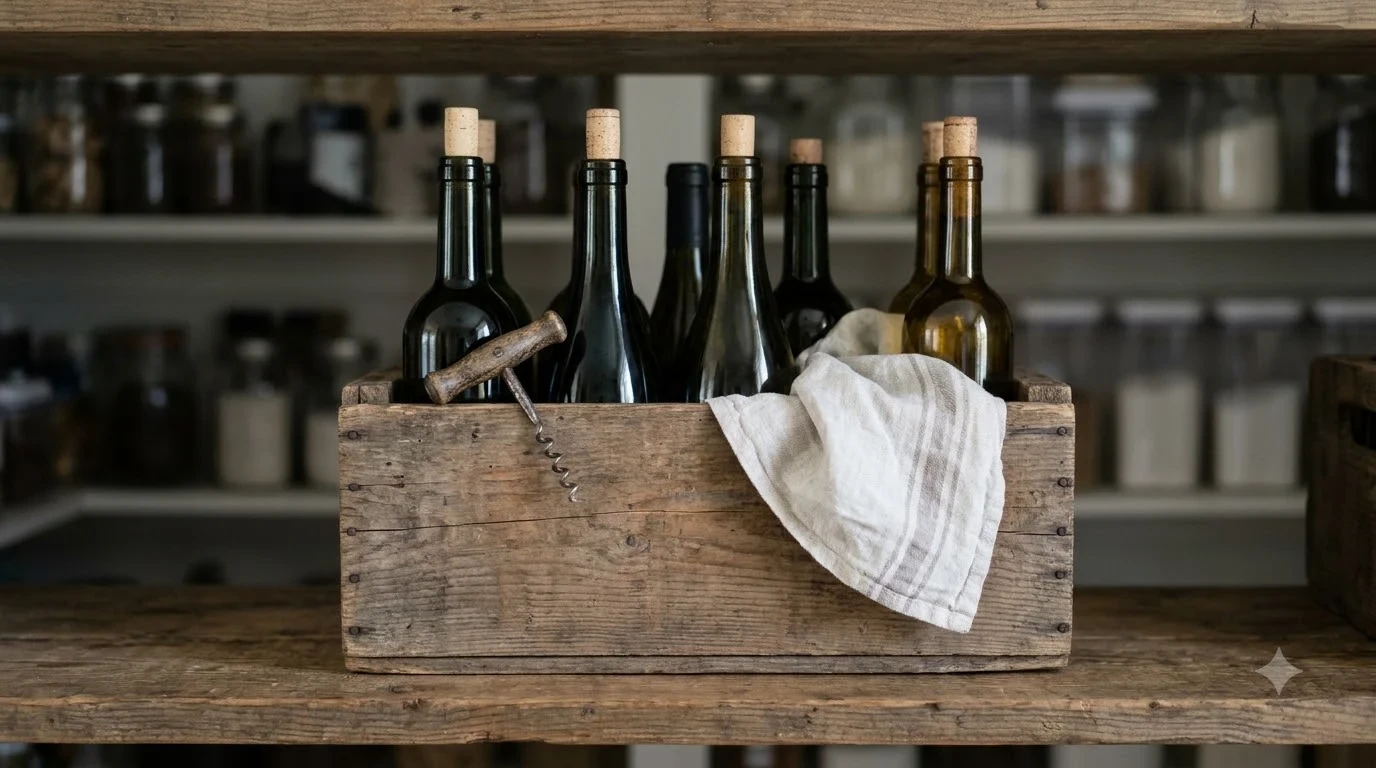
Wooden crates also work as reusable home accessories. They can hold wine-related books, tasting accessories, corkscrews, or unopened bottles awaiting an occasion. However, an attractive empty crate should not automatically be considered a safe long-term wine cellar. Temperature, humidity, light, and bottle positioning remain separate considerations.
Buy a wooden wine box for presentation and character rather than assuming it offers the same protection as purpose-designed transport packaging.
Best for Shipping: Dedicated Wine Shipping Boxes
Dedicated wine shipping boxes are the appropriate choice when bottles need packaging designed specifically for transportation through a shipping or distribution system. These cartons combine an outer box with internal protective components intended to keep bottles separated and cushioned.
Shipping packaging differs from ordinary storage packaging because parcels can experience repeated handling, vibration, impacts, and changes in orientation. A carton designed for organizing a home cellar does not necessarily provide the construction or protection required for these conditions.
Wine & Beer Supply lists bottle shippers with corrugated cardboard exteriors and either molded pulp or foam inserts. Its range covers one-, two-, three-, four-, six-, nine-, and twelve-bottle configurations. The supplier also identifies compatibility with standard 750 ml bottles.
Choosing the right shipping capacity
A one-bottle shipper is useful for an individual order or a special gift shipment. Two- and three-bottle formats suit small selections, while four- and six-bottle options provide more capacity for mixed cases. Nine- and twelve-bottle formats are better suited to larger orders and commercial packing requirements.
Rapp’s Packaging provides another example of capacity-specific packaging. Its listed formats include two, four, six, eight, and twelve bottles, each with corrugated cardboard padded dividers. The company specifies a 100-piece minimum per size, making that particular range more relevant to business buyers than someone seeking a single box for personal use.
These examples show why a buyer should distinguish between a retail-ready single shipping kit and packaging intended for wholesale or bulk purchasing. A manufacturer or supplier may have minimum order quantities that make an otherwise suitable design impractical for an individual collector.
Protection and shipping requirements
Check that the shipping box is intended for the bottle dimensions involved and that the insert system is complete. The outer carton should close securely, the base should be properly supported, and bottles should not move freely inside their compartments.
Also consider the shipping provider’s requirements. Alcohol transportation is subject to legal and carrier restrictions, which vary according to location, sender status, recipient status, and service. Having a suitable box does not automatically authorize someone to ship wine through a particular carrier.
For a household move, a dedicated shipping kit may provide useful protection, but the packaging must still be appropriate for the actual journey. For routine cellar organization, a less specialized storage box is often sufficient.
For more information about the distinction between packaging types, see our wine shipping box guide. The key difference is intended use: storage cartons organize bottles, while shipping cartons are designed around transportation requirements.
Choose dedicated shippers when packaging performance and transport compatibility matter more than decorative appearance or simple cellar organization.
How to Choose the Right Wine Box
The best purchase starts with a clear idea of how many bottles you need to accommodate, what shapes they have, and where the box will be used. Comparing these practical details is more useful than choosing the largest or most attractive container available.
1. Decide how many bottles you need to hold
Start with capacity. A one-bottle box is appropriate for an individual present, while a three-bottle option works for a small tasting selection. Six bottles offer a manageable format for home storage and moving, and twelve bottles suit full-case organization.
Do not buy a twelve-bottle box simply because it appears to offer better value or fewer cartons. A larger container can be heavier and more difficult to handle once filled. Consider the person who will lift it and the space where it will be stored.
2. Match the internal dimensions to your bottles
Standard 750 ml bottles are common, but their shapes are not identical. Bordeaux, Burgundy, and Champagne bottles have different proportions. Some bottles also have wider shoulders, thicker glass, or longer necks.
Compare the internal dimensions of the compartments with your actual bottles. This is particularly important for sparkling wines and larger formats. A box advertised for six bottles may still be unsuitable if its compartments are too narrow or short.
3. Choose an appropriate insert
Molded pulp inserts provide shaped cushioning and are a practical choice when you want individual bottle support. Folding cardboard dividers are useful for organization and controlled handling. Foam inserts offer another cushioning option, particularly in dedicated shipping kits.
The right option depends on the journey and packaging design. For ordinary storage, cardboard partitions may be sufficient. For a more demanding transport application, look for a complete protective system rather than relying on dividers alone.
4. Consider the outer construction
Corrugated cardboard is convenient because it is relatively light and can be supplied flat. Single-wall construction is suitable for many ordinary packaging applications, while double-wall construction offers an additional structural layer.
Wooden crates are different. They provide a more substantial decorative appearance and can be reused, but their quality varies by manufacturer and winery. Inspect joints, edges, internal surfaces, and lid construction before buying a used crate.
5. Think about storage conditions
A wine box should be kept in an appropriate environment if it contains bottles intended for long-term aging. A cardboard carton does not provide temperature control. Avoid placing valuable wine in a hot garage, near a heating appliance, or beside a window exposed to direct sunlight.
For long-term storage, a consistent temperature around 55 F is a useful target. Humidity should also be reasonably stable, particularly for bottles sealed with natural cork. Store bottles on their sides where appropriate to keep the cork in contact with the wine.
6. Separate storage, gifting, and shipping purchases
One box rarely performs every job equally well. A wooden presentation box may look excellent but lack the protective insert required for a long journey. A corrugated storage carton may organize bottles efficiently but look too plain for a formal gift.
If the goal is presentation, explore our wine gift box ideas. If you are keeping empty crates as decorative memorabilia, a wine cork shadow box can provide another way to display wine-related keepsakes.
For additional accessories, our Accessories Library offers a broader starting point for building a useful home wine setup.
7. Check whether the packaging is reusable
Reusable packaging can be helpful if you regularly move bottles or reorganize a collection. Check whether the partitions can be removed and reinstalled, whether replacement inserts are available, and whether the outer carton can retain its shape after use.
Wooden crates are naturally attractive for repeated decorative use, although their dimensions and construction should be inspected. Corrugated boxes are more practical for routine organization, but worn, damp, crushed, or weakened cartons should be replaced rather than reused for valuable bottles.
Finally, compare the complete package rather than the outer box alone. An inexpensive carton without compatible dividers may not provide the same practical value as a complete kit. The insert, closure, dimensions, and intended use all matter.
Frequently Asked Questions
How much does a standard 750 ml bottle weigh when packed?
A filled 750 ml wine bottle commonly weighs around 2.5 to 3.5 pounds, depending on the bottle glass and wine. A six-bottle carton can therefore exceed 15 pounds before accounting for packaging. Heavier glass bottles and sparkling wine formats can increase the total carrying weight.
Can wine boxes be stored in a basement?
Yes, provided the basement has suitable temperature and humidity conditions and is free from persistent dampness. Keep cartons away from standing water, leaking pipes, and strong odors. A damp environment can weaken cardboard and damage wooden packaging over time.
What does OWC mean on a wine collection?
OWC stands for Original Wooden Case. In the wine trade, it identifies the original wooden packaging associated with a winery’s case of bottles. Collectors may value the original packaging because it helps establish the provenance and storage history of a complete case.
Are flat-packed wine boxes difficult to assemble?
Most standard corrugated cartons are designed to be assembled by folding the panels into position and securing the base and top. The exact method varies by construction. Some designs use separate partitions, while others have integrated dividers that form the bottle compartments during assembly.
Can a wine box accommodate a magnum bottle?
Only if its internal dimensions and insert are specifically designed for that larger format. A standard 750 ml bottle compartment should not be assumed to fit a magnum, which commonly holds 1.5 liters. Check the packaging manufacturer’s stated compatibility and internal measurements before purchasing.
For most home collections, a six- or twelve-bottle corrugated wine box with properly fitted dividers is the most practical starting point. Choose molded pulp or foam inserts when additional cushioning is important, a wooden crate when presentation matters, and dedicated shipping packaging when bottles must travel through a shipping network. Matching the box to its purpose will help protect your bottles and make your wine collection easier to manage.
More in Wine Accessories
 Coravin Vs Vacu Vin: Choose the Right Wine Saver for Your BottlesUpdated Nov 21, 2026
 Zwilling Wine Stopper Review: Preserve Open Bottles LongerUpdated Nov 21, 2026
 Wine Enthusiast Wine Preserver Review: Features, Benefits and LimitationsUpdated Nov 21, 2026
 Wine Enthusiast Wine Stopper: An Easier Way to Reseal Open BottlesUpdated Nov 21, 2026
 Vintorio Wine Opener: Two-Step Cork RemovalUpdated Nov 21, 2026
 Zwilling Wine Aerator Review: Aerate, Pour, and Seal With One ToolUpdated Nov 21, 2026