


We may earn a commission when you buy through links on this page, at no extra cost to you. Learn more.
The winc wine price typically ranges from about $16.80 to $23.20 per bottle for the current member-priced examples, while average membership orders cost approximately $115 for six bottles or $220 for twelve bottles, according to Winc. Membership includes 20% off wines and packs, free shipping on member orders, and the flexibility to skip shipments. The amount you spend depends on your selected bottles, order size, and membership arrangement, so comparing the per-bottle cost with the full delivery total gives you the clearest picture of value.
Winc operates as a wine membership and online wine shop rather than a traditional club with one fixed price for every shipment. Customers can choose suggested bottles, build their own selections, or purchase specially assembled wine packs without joining a membership. Understanding the difference between regular bottle prices, member discounts, and recurring delivery schedules makes it easier to decide whether Winc fits your wine budget. This guide breaks down the available pricing, compares membership options, and explains what to consider before ordering.
Who Should Consider Winc Wine Prices?
Winc is particularly suitable for people who enjoy trying different wines but want some control over their selections and spending. Its membership model combines personalized recommendations with the option to choose individual bottles, making it useful for both wine newcomers and regular drinkers.
The service can appeal to households that regularly purchase several bottles at once. Winc’s 6-Bottle Membership provides a monthly delivery, while its 12-Bottle Membership offers a larger shipment every twelve weeks. These arrangements give customers a predictable ordering structure without requiring them to select the same wines every time.
Winc is also worth considering for people who are still learning their wine preferences. Its six-question Palate Profile Quiz generates recommendations based on personal preferences. Customers can then accept those suggestions or exchange them for other selections. The ability to choose between Cabernet Sauvignon, Pinot Noir, Chardonnay, Sauvignon Blanc, and other varieties provides room to experiment.
However, the membership may not suit someone who drinks wine only occasionally. Even with the ability to skip shipments, a recurring membership requires attention to scheduled billing and delivery dates. Someone who wants only two bottles for a particular dinner may find a non-membership wine pack or another retailer more convenient.
Winc is also not necessarily the right choice for someone who wants every wine selected by an independent sommelier. Its recommendations are designed around a personalized shopping experience, and customers who prefer complete control can simply choose their own bottles instead.
Tip: Decide how many bottles your household realistically drinks in a month before choosing a membership. A larger shipment can provide better overall convenience, but only when you have room to store the wine and expect to use it.
Key Factors That Determine Winc Wine Price
The most important pricing factors are the individual wines, membership discount, number of bottles, and shipping arrangements. Looking at these elements separately helps explain why two customers can receive different Winc orders without paying the same amount.
Individual bottle selection: Winc sells wines across different price categories. Its current membership listings include examples such as NV Déclassé Red Wine Blend at a member price of $16.80 and 2023 Guest Check Cabernet Sauvignon at $23.20. According to Winc’s membership page, these examples have regular listed prices of $21 and $29, respectively. These figures illustrate how the choice of wine affects the final order.
Membership discount: Winc advertises an automatic 20% discount on wines and packs for members. It also advertises an additional 10% discount for purchases of twelve or more bottles. The discounts make a difference when comparing a membership order with the regular prices of the same products.
Shipping: Winc promotes free shipping for member orders. This is an important part of the membership’s overall value because delivery charges can otherwise increase the effective cost of each bottle. Customers should still review the checkout summary for their particular order, since applicable taxes and shipping conditions can vary.
Order size: A six-bottle order and a twelve-bottle order represent different spending commitments. The larger option provides more wine in one shipment, but its total cost is higher. It is important to compare the amount paid with the number of bottles actually received rather than focusing only on the total.
Wine style and origin: Winc’s catalog includes wines from California, France, Italy, Argentina, and Spain. The selection also includes several grape varieties and styles, so a bottle of Cabernet Sauvignon should not automatically be expected to cost the same as a Sauvignon Blanc or a sparkling rosé.
| Pricing factor | Published detail | Why it matters |
|---|---|---|
| Six-bottle membership | 6 bottles monthly | Regular smaller shipment |
| Twelve-bottle membership | 12 bottles every 12 weeks | Larger, less frequent delivery |
| Six-bottle average order | About $115 | Approximately $19.17 per bottle |
| Twelve-bottle average order | About $220 | Approximately $18.33 per bottle |
| Standard member discount | 20% | Reduces eligible bottle and pack prices |
| Additional volume discount | 10% for 12+ bottles | Extra advertised savings on qualifying orders |
| Member shipping | Free | Reduces delivery expenses |
The average order figures and membership benefits in this table come from Winc’s published membership information. The per-bottle averages are calculated by dividing the advertised order averages by their respective bottle quantities. They are estimates, not guaranteed prices for every selection.
For a more complete picture of the selection behind these costs, the Winc wine overview provides a useful starting point for understanding the brand and its offerings.
Step-by-Step: How to Calculate Your Winc Wine Cost
The simplest way to compare Winc membership options is to calculate the average cost per bottle and then consider how frequently you receive deliveries. A few straightforward checks can prevent confusion between advertised average spending and the amount charged for a specific selection.
-
Choose your ordering arrangement. Start by deciding whether you want the 6-Bottle Membership, the 12-Bottle Membership, or a wine pack without membership. Winc advertises six bottles every month for the smaller membership and twelve bottles every twelve weeks for the larger option.
-
Check the individual bottle prices. Browse the available selections and identify the wines you would actually like to receive. For example, Winc lists member-priced examples at $16.80 and $23.20. These represent different levels within the same catalog, so your selection can affect the final total.
-
Apply the advertised membership discount. Winc advertises 20% off eligible wines and packs for members. Look at the displayed member price rather than assuming that the regular price is what you will pay. Also review the additional 10% offer for orders containing twelve or more bottles.
-
Calculate the per-bottle average. Divide the full order amount by the number of bottles. Winc’s average six-bottle order of $115 works out to approximately $19.17 per bottle. Its average twelve-bottle order of $220 works out to approximately $18.33 per bottle.
-
Include delivery and taxes. Member shipping is advertised as free, but applicable taxes can still affect the final checkout amount. Confirm that the shipping benefit applies to your selected membership and destination before completing the purchase.
-
Review the delivery schedule. Make sure the shipment frequency matches your consumption. Six bottles every month is different from twelve bottles every twelve weeks, even though both options may appear attractive when comparing individual bottle costs.
-
Check your recurring billing arrangements. Before confirming membership, review the scheduled payment and understand how to skip or cancel future shipments. Winc’s terms request that customers make changes at least three days before the scheduled shipment.
This process is useful because the lowest advertised bottle price does not necessarily represent the most economical purchase for every customer. A six-bottle selection at a slightly higher average cost can be more practical than receiving twelve bottles that remain unopened for several months.
For example, a household that opens one bottle every weekend may find a monthly six-bottle delivery easier to manage. Someone who frequently hosts dinners or shares wine with friends may have a better reason to consider the larger membership.
Winc Membership Options and Wine Styles Explained
Winc’s pricing structure is connected to its membership options and the type of wine customers select. The catalog covers several familiar grape varieties, different sweetness levels, and wines from multiple countries.
Six-Bottle Membership
The six-bottle option provides six wines every month. Winc reports an average order value of approximately $115, which works out to about $19.17 per bottle when divided evenly across the shipment.
This option makes sense for customers who enjoy regular variety without building up a large collection. Six bottles can accommodate several different wine styles, such as a Cabernet Sauvignon for a dinner with beef, a Pinot Noir for poultry, and a Chardonnay for a meal featuring roasted chicken.
It also offers an opportunity to learn which varieties suit your preferences. Customers can use the Palate Profile Quiz to receive recommendations and then make adjustments to their selections.
Twelve-Bottle Membership
The larger membership provides twelve bottles every twelve weeks. Winc reports an average order value of approximately $220, which translates to around $18.33 per bottle.
This arrangement is more suitable for households that consume wine regularly, have sufficient storage space, or frequently entertain guests. It also reduces the frequency of deliveries compared with the monthly six-bottle arrangement.
The larger option advertises an additional 10% discount for orders of twelve or more bottles, alongside the standard membership benefits. Customers should compare the final checkout calculation with their preferred bottle selection rather than assume every combination will produce an identical per-bottle amount.
Red Wine Selections
Winc’s red wine selection includes familiar varieties such as Cabernet Sauvignon, Merlot, Pinot Noir, Zinfandel, and Grenache. These wines offer different levels of body, acidity, and tannin, which can make a mixed selection more interesting than ordering several bottles of the same variety.
Cabernet Sauvignon is generally a fuller-bodied red with higher tannin, making it a natural option for grilled beef and other substantial dishes. Merlot is usually softer, while Pinot Noir generally offers lighter tannin and higher acidity. These differences can help customers select bottles for different meals and occasions.
Customers who primarily enjoy reds can explore the Winc red wine selection to compare the available varieties and styles before building an order.
White Wine and Rosé Selections
Winc also offers Chardonnay, Sauvignon Blanc, Riesling, Pinot Grigio, and rosé wines. These options provide alternatives for customers who prefer refreshing, lighter wines or want bottles suitable for seafood, salads, and casual gatherings.
Sauvignon Blanc and Riesling generally have higher acidity, making them useful choices for dishes with citrus, herbs, or vinaigrette. Chardonnay usually has medium acidity and can suit richer preparations, depending on its style.
Rosé provides another flexible option, particularly for outdoor meals and mixed menus. Winc’s catalog also includes sparkling wine selections, allowing customers to add something different to a collection dominated by still wines.
Those who prefer white varieties can explore Winc white wine to compare its available selections.
Sweetness, Body, and Region
Winc makes it easier to narrow down selections through filters for dry, semi-sweet, and sweet wines. It also categorizes bottles by light, medium, and full body. These distinctions are useful because grape variety alone does not tell the whole story about how a wine will taste.
The regional selection includes California, France, Italy, Argentina, and Spain. Different regions offer different grape-growing traditions and wine styles, so customers interested in exploring beyond familiar California wines have several directions to consider.
The Guardian’s review of Winc also describes a six-bottle selection that included wines from California, France, Italy, and New Zealand. Its wine subscription comparison provides additional context on the customizable selection and delivery experience.
Common Winc Pricing and Membership Mistakes
Most confusion about Winc pricing comes from comparing different membership arrangements or overlooking recurring billing. Understanding the difference between a bottle price, an average order, and a scheduled shipment helps customers make more informed purchasing decisions.
Confusing Average Order Cost With a Fixed Subscription Fee
Winc’s advertised average order amounts are approximately $115 for six bottles and $220 for twelve bottles. These are average spending figures, not fixed prices that guarantee every customer will receive precisely the same selection or pay precisely the same amount.
Individual bottles have different prices, and the final amount depends on the products chosen. A shipment containing several higher-priced wines can cost more than one containing primarily lower-priced selections.
Ignoring the Difference Between Membership and Non-Membership Orders
Winc allows customers to purchase wine packs without joining a membership. This is useful for people who want to sample the selection before committing to a recurring delivery arrangement.
However, non-members do not automatically receive all the benefits advertised for membership customers. Compare the regular prices, applicable shipping charges, and membership savings before deciding which purchasing route offers better value.
Assuming Every Bottle Has the Same Price
The Winc catalog includes different grape varieties, regions, and wine styles. A Cabernet Sauvignon, a Pinot Noir, and a sparkling rosé may have different listed prices, even when they are purchased as part of the same membership.
Customers should compare the actual bottles in their proposed order rather than treating the average price as a universal rate. This is particularly important when building a mixed selection with wines from different countries.
Forgetting the Recurring Payment Schedule
A membership is not simply a one-time purchase of six or twelve bottles. Winc’s terms describe recurring billing until cancellation, so customers should understand their scheduled payment and delivery dates before enrolling.
Although Winc promotes the ability to skip shipments, customers still need to manage their accounts and make changes within the required timeframe. Missing a scheduled cutoff can result in an order proceeding as planned.
Choosing More Wine Than Necessary
A larger order may produce a lower average bottle cost, but it is not automatically a better purchase. Twelve bottles can take considerably longer to consume than six, especially in households where wine is reserved for occasional meals.
Consider drinking frequency, available storage, and preferred wine styles before increasing order size. The most useful membership is the one that matches actual consumption rather than the one with the largest advertised savings.
Wine Storage and Delivery Planning Tips
Getting good value from a Winc order involves more than comparing the bottle total. Proper storage, sensible delivery timing, and a little planning help preserve the quality of the wines after they arrive.
Store Bottles at a Consistent Temperature
Wine should ideally be stored in a cool, relatively stable environment near 55 degrees Fahrenheit. Avoid placing bottles in direct sunlight, next to heating equipment, or in locations where temperatures fluctuate substantially throughout the day.
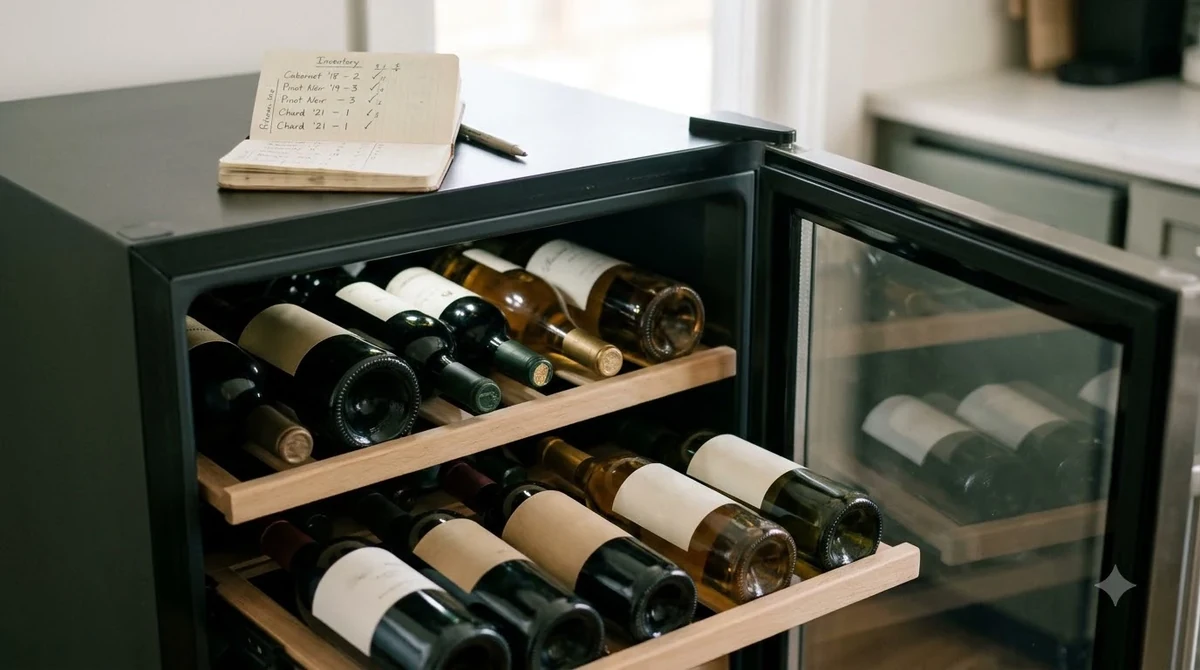
For bottles with natural cork closures, horizontal storage helps keep the cork in contact with the wine. This is particularly useful when buying several bottles that will not all be opened immediately.
Organize Wine by Style
Separating reds, whites, rosés, and sparkling wines makes it easier to choose a bottle for a particular occasion. It also helps prevent a common problem with large shipments: forgetting which bottles have been stored for longer periods.
Keep lighter wines and bottles intended for immediate consumption accessible. More structured reds can be set aside for suitable meals, while sparkling wines can be reserved for celebrations or gatherings.
Serve Each Style at an Appropriate Temperature
Serving temperature can make a noticeable difference in how a wine expresses its aromas and structure. Light whites and rosés generally show well at approximately 45 to 50 degrees Fahrenheit, while fuller-bodied whites are often better around 50 to 55 degrees.
Light reds, including many Pinot Noir styles, can be served at approximately 55 to 60 degrees. Fuller reds such as Cabernet Sauvignon generally suit 60 to 65 degrees. Sparkling wines are typically served colder, around 40 to 50 degrees.
Plan Around Delivery Frequency
The six-bottle monthly membership and twelve-bottle twelve-week membership create different storage requirements. Customers who choose the larger option should have sufficient room for twelve bottles before placing an order.
It is also useful to keep an informal inventory. Record the wines that have arrived, their varieties, and the bottles that have already been opened. This can help prevent repeated purchases of styles that are not particularly popular in your household.
Preserve Opened Bottles Properly
Once opened, most still wines retain their best qualities for approximately three to five days when properly resealed and refrigerated. Sparkling wine generally lasts around one to three days with an appropriate sparkling-wine stopper and refrigeration.
Fortified wines can last several weeks after opening, depending on their style and storage conditions. Keeping opened bottles refrigerated can slow deterioration and help make a mixed membership shipment more practical for households that do not finish a bottle in one sitting.
Frequently Asked Questions
Does Winc ship wine to every US state?
No. Wine delivery is subject to state alcohol shipping regulations and the availability of licensed retailers. Winc’s terms explain that orders may be refused when they do not comply with applicable state laws. Customers should select their shipping destination and verify availability before placing an order.
Does someone need to be present when Winc wine is delivered?
Winc’s terms require purchasers and delivery recipients to be at least 21 years old. A valid government-issued identification document is required upon delivery. Customers should plan for an eligible adult to receive the shipment rather than assuming it can be left unattended.
Can Winc replace wine that arrives damaged?
Winc’s terms explain that customers should contact customer service if an order is damaged in transit, incorrect, or unsatisfactory. The company states that it will make good-faith efforts to resolve the issue. Depending on the circumstances, the resolution may involve company credit or replacement products after the applicable return process.
Can Winc membership credits be exchanged for cash?
Winc’s terms state that purchased member credits are non-refundable and cannot be redeemed for cash, except where required by law. They can be applied toward eligible purchases on Winc’s website. Customers should distinguish these account credits from ordinary discounts when reviewing their account balance.
Can customers change their wine selections after taking the palate quiz?
Yes. The quiz is intended to generate recommendations rather than lock customers into a predetermined selection. Winc describes a shopping process in which customers can review the suggested wines, accept the recommendations, or exchange bottles for other available choices. This makes the quiz a starting point for personalized shopping rather than a compulsory fixed assortment.
Overall, Winc offers a flexible way to buy wine, with member bottle examples around $16.80 to $23.20 and average order totals that vary by membership size and selection. Its combination of personalized recommendations, a 20% membership discount, free member shipping, and flexible scheduling can make it appealing to regular wine drinkers. Compare your preferred bottles, calculate the total order cost, and choose the delivery arrangement that best matches your household’s wine consumption.
More in Wine Brands
 Underwood Wine Price: Compare Bottles, Cans, and Pack SizesUpdated Nov 21, 2026
 Zenato Wine Price: Compare Styles and Choose the Right BottleUpdated Nov 21, 2026
 Zuccardi Wine Price: Compare Bottles and Find the Right RangeUpdated Nov 21, 2026
 Yellow Tail Moscato Review: Taste, Sweetness and Serving TipsUpdated Nov 21, 2026
 Wolf Blass Yellow Label Review: Choose Your Best StyleUpdated Nov 21, 2026
 Wolffer Estate Rose Review: Choose the Right Bottle for Your TableUpdated Nov 21, 2026