

We may earn a commission when you buy through links on this page, at no extra cost to you. Learn more.
A Whynter wine fridge is a worthwhile option for shoppers seeking dedicated wine storage, particularly a dual-zone compressor cooler with built-in or under-counter installation flexibility. The brand offers compact 28-bottle cabinets, larger 46-bottle units, and higher-capacity wine refrigerators with different temperature configurations. Its strongest selling points are practical storage features, attractive stainless steel designs, and flexible installation options. However, owner feedback and the relatively short one-year limited warranty on several models make reliability, service support, and exact model specifications important considerations before buying.
Whynter occupies an interesting position in the wine refrigerator market: its lineup includes relatively compact units for apartments and home bars as well as larger cabinets intended for serious collectors. The challenge is choosing between models that can look similar but have different cooling technologies, temperature ranges, ventilation requirements, and storage layouts. This brand overview explains what Whynter offers, what owners report, how to find the correct manual, and which features deserve attention before selecting a wine cooler.
Brand Overview: Whynter’s Wine Storage Approach
Whynter is an appliance brand that describes itself as California-based and dates its business to 2006. Its wine refrigerator range emphasizes temperature-controlled storage, stainless steel styling, glass doors, and configurations that can fit different home layouts.
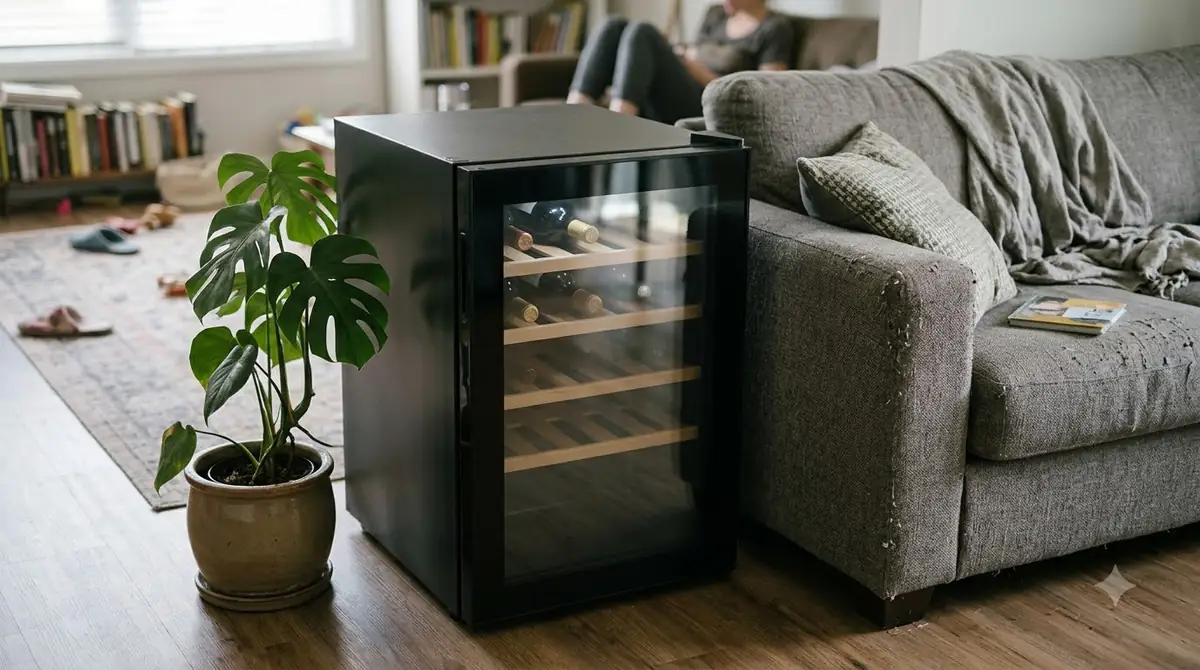
Rather than concentrating on one type of wine cabinet, Whynter offers several categories. Smaller models suit households with a limited number of bottles, while 24-inch under-counter units provide more substantial capacity. The lineup also includes freestanding wine coolers and models with separate compartments for different wine styles.
The brand’s approach is particularly appealing to homeowners planning a kitchen renovation or building a dedicated entertainment area. Several compressor models are designed for front ventilation, making them suitable for installation beneath a counter when the manufacturer’s clearance requirements are followed. Other models are intended for freestanding use and require room for heat to escape from the rear.
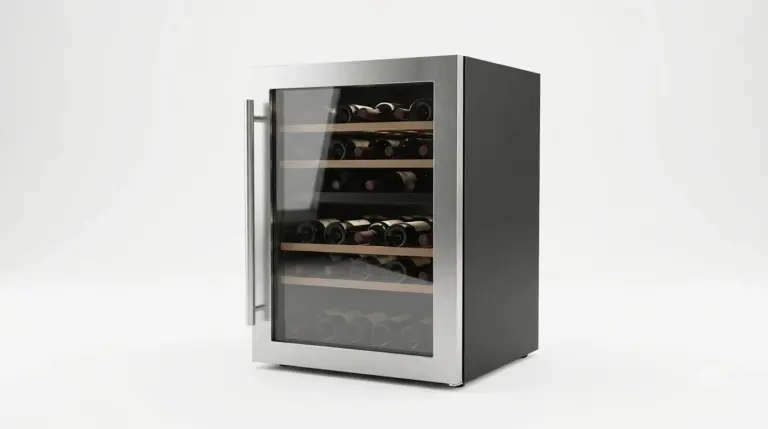
Appearance is another recurring feature. Depending on the model, shoppers can find stainless steel-trimmed glass doors, dark cabinet finishes, wooden or wood-faced shelves, digital temperature displays, and interior LED lighting. These details give Whynter appliances a more integrated appearance than basic beverage refrigerators with wire racks.
However, a wine refrigerator should be judged primarily by its storage conditions and practical usability rather than its exterior. A cabinet that looks appropriate in a kitchen still needs suitable temperature control, enough space for the bottles you actually own, and dependable operation. That distinction is important when comparing Whynter wine fridge reviews because feedback often concerns everyday functionality rather than appearance alone.
Whynter’s range is also not limited to one cooling technology. Compressor and thermoelectric designs appear in different product families. Buyers should identify the exact model before comparing performance claims, installation suitability, or maintenance instructions.
Product Lines Explained: Single-Zone, Dual-Zone and Built-In Models
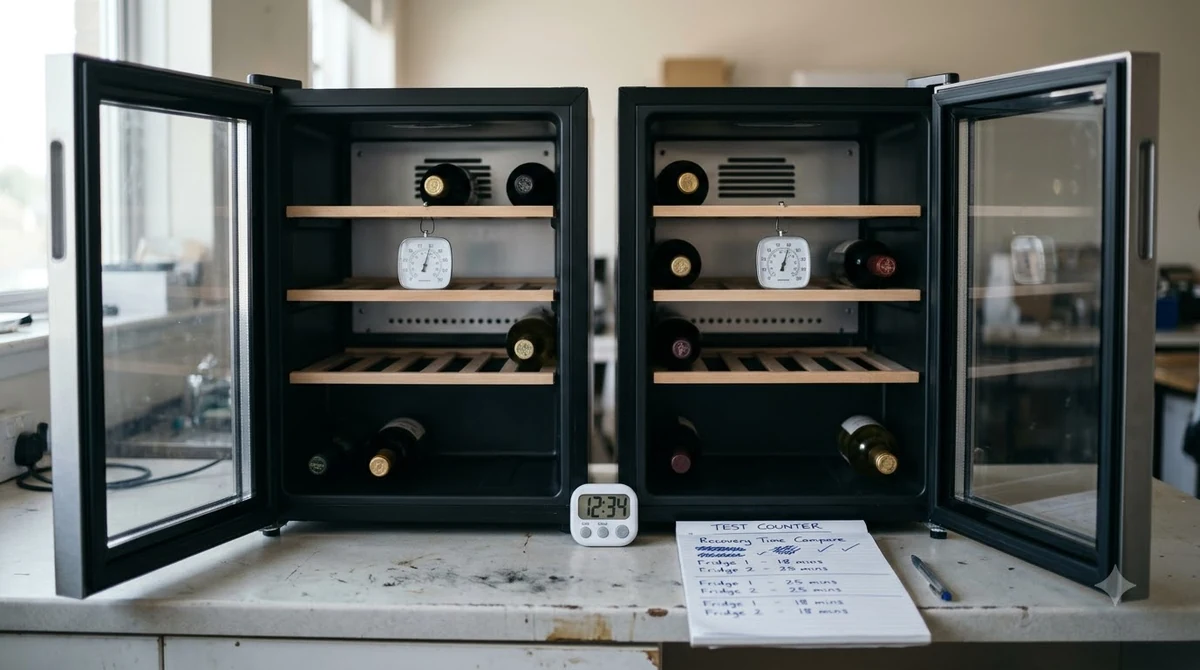
Whynter’s wine refrigerator lineup covers several capacity and installation categories. The main decision is whether you need one consistent storage temperature, two independently controlled compartments, or a cabinet designed to fit a particular kitchen opening.
| Model or category | Capacity | Temperature configuration | Main distinction |
|---|---|---|---|
| BWR-281DZ | 28 bottles | Upper 40–55°F; lower 50–65°F | 15-inch dual-zone compressor cabinet |
| BWR-462DZ | 46 bottles | Upper 40–55°F; lower 50–65°F | 24-inch dual-zone cabinet |
| BSR-046DW | 46 bottles | Both zones 40–65°F | Front-ventilated installation flexibility |
| WC-321DA | 32 bottles | Both zones adjustable from 46–66°F | Freestanding thermoelectric design |
These specifications illustrate why model numbers matter. Two Whynter wine coolers can both advertise 46-bottle capacity while offering different temperature ranges and control arrangements. The BWR-462DZ, for example, has a narrower upper-zone range than the BSR-046DW, whose two compartments are independently adjustable from 40°F to 65°F.
Compact wine refrigerators
The BWR-281DZ is an example of a smaller dual-zone compressor model. It accommodates up to 28 standard 750 ml bottles, with 10 allocated to the upper compartment and 18 to the lower compartment. Its 15-inch width makes it relevant to homeowners working with a narrow under-counter opening.
Its upper compartment operates from 40°F to 55°F, while the lower compartment operates from 50°F to 65°F. This arrangement gives users flexibility for keeping white wines and reds at different storage or serving temperatures. Five removable wood-faced shelves provide a degree of flexibility when arranging bottles.
Mid-size dual-zone cabinets
The 46-bottle category is particularly important within Whynter’s lineup. The BWR-462DZ and BSR-046DW both offer 16-bottle upper compartments and 30-bottle lower compartments, but their temperature specifications differ.
The BWR-462DZ has an upper range of 40°F to 55°F and a lower range of 50°F to 65°F. The BSR-046DW allows 40°F to 65°F in both compartments. The latter also features five removable wooden shelves, a reversible door, three-color lighting, and an activated carbon filter.
Single-zone and alternative cooling designs
A single-zone wine cooler maintains one general temperature throughout its interior. It makes sense for collectors who store most bottles for aging or prefer to keep their entire collection at a consistent cellar temperature.
Whynter also offers thermoelectric models, including the freestanding WC-321DA. This model has a 32-bottle stated capacity and two compartments with adjustable temperatures from 46°F to 66°F. Its cooling technology differs from the compressor systems found in models such as the BWR-281DZ and BSR-046DW.
For additional context, shoppers comparing appliance manufacturers can explore our Black+Decker brand overview, particularly if they are considering a broader selection of household cooling appliances.
What the Brand Does Well: Storage, Temperature Control and Design
Whynter’s most convincing advantages are its variety of cabinet sizes, practical temperature configurations, and attention to features that matter in everyday wine storage. Its better-equipped compressor models combine adjustable zones, removable shelving, and installation flexibility in one appliance.
Dual-zone storage is especially useful for households that regularly drink both red and white wine. A white wine can be kept cooler than a red without requiring a separate refrigerator. For example, a Sauvignon Blanc may be stored at a cooler setting than a Cabernet Sauvignon, while sparkling wines can occupy the cooler compartment when the temperature range permits.
Serving temperatures are different from long-term storage temperatures, so owners should not assume that every bottle must remain at its ideal drinking temperature permanently. A general cellar temperature around 55°F is useful for storing a mixed collection. A dual-zone cooler is more valuable when the household wants convenient access to different wine styles at different temperatures.
Flexible shelving and bottle organization
Removable shelving is another practical advantage. Standard Bordeaux-style bottles are the basis for most published capacity figures, but real collections often include wider Burgundy bottles, Champagne bottles, and unusual shapes. Removing a shelf can create more room for these larger formats, although doing so reduces the advertised bottle capacity.
Wooden shelves also help distinguish wine cabinets from ordinary beverage refrigerators. A bottle stored horizontally is easier to organize on a contoured wine shelf than on a flat beverage rack. This arrangement is particularly relevant for cork-finished bottles intended for longer storage.
Features that support everyday operation
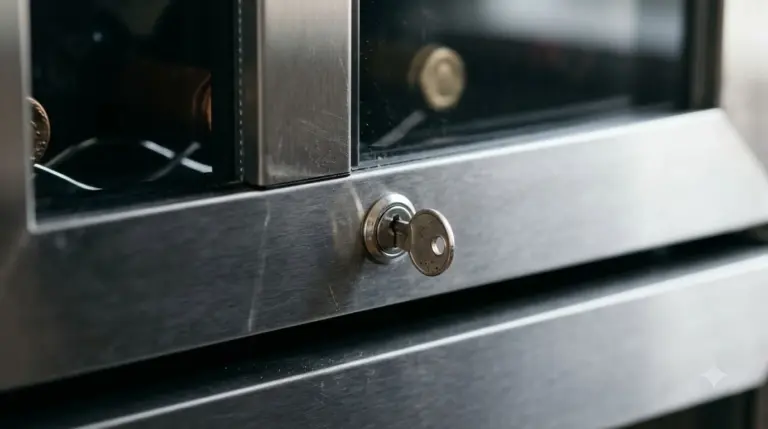
Depending on the model, Whynter includes reversible doors, temperature memory, adjustable controls, safety locks, and interior lighting. The BSR-046DW adds double-pane tempered glass and an activated carbon filter. Its manual recommends replacing that filter annually.
Temperature memory is useful because a power interruption does not necessarily mean that the owner must reprogram the cabinet. The BSR-046DW manual states that the appliance retains previous temperature settings after an interruption. This is a practical convenience, although it does not replace monitoring the actual temperature after an extended outage.
Front ventilation is another meaningful feature. A properly designed built-in cabinet can sit beneath a countertop without requiring the same rear ventilation arrangement as a freestanding appliance. However, front ventilation does not mean that the entire front grille can be covered or that installation clearances can be ignored.
Whynter’s range also provides several visual options. Stainless steel trim, glass doors, LED displays, and adjustable interior lighting can work well in a kitchen, dining room, or home bar. Shoppers who prioritize appearance alongside bottle storage will find these details useful.
Common Complaints: Reliability, Noise and Bottle Capacity
Whynter wine cooler reviews show a mixture of positive experiences and practical concerns. Owners frequently appreciate the appearance, temperature controls, and installation options, but reports about cooling performance, noise, and usable bottle capacity deserve attention.
One important limitation is that customer reviews do not establish the failure rate of an entire brand. A review describing a failed refrigerator after several years may identify a genuine problem, but it does not prove that every Whynter model shares that weakness. Likewise, positive feedback from a recent purchaser cannot establish long-term durability.
Cooling performance over time
Temperature consistency is arguably the most important feature of a wine refrigerator. Home Depot’s customer review page contains both positive and negative experiences across different Whynter wine cooler products. One owner reports that a unit stopped maintaining its selected temperature, while other comments praise consistent cooling.
These experiences should be interpreted carefully because the reviews cover different models and ownership periods. Nevertheless, cooling reliability deserves particular attention if the appliance will hold bottles intended for several years of aging.
Check the warranty terms before purchasing, and investigate whether replacement parts and service are available in your area. An attractive cabinet offers limited value if a cooling-system problem becomes difficult or expensive to resolve.
Noise and vibration
Whynter compressor wine coolers can produce humming, fan noise, and occasional sounds associated with refrigerant circulation. The BSR-046DW manual specifically explains that gurgling, rattling, and popping sounds can occur during normal operation.
Customer feedback is mixed on this subject. Some owners describe their units as quiet, while others find particular operating sounds noticeable. Placement matters: a wine cooler beside a bedroom or quiet seating area may be more distracting than the same appliance installed in a kitchen.
Actual bottle capacity
Advertised capacity is generally based on standard 750 ml Bordeaux bottles. That figure can be optimistic for collections containing large Pinot Noir bottles, Champagne bottles, or other wider formats.
Wayfair customer feedback on a Whynter 46-bottle refrigerator also highlights the difference between advertised capacity and practical storage. Some owners find that bottle dimensions affect how many bottles fit comfortably. A full collection of oversized bottles can therefore require a larger cabinet than the nominal count suggests.
Accessibility is another consideration. Some owners report that bottles are harder to insert or remove when shelves are arranged for maximum capacity. A cabinet that holds 46 bottles tightly packed may be less convenient than one holding fewer bottles with more room for handling.
Tip: If your collection includes Champagne, Burgundy, or large-format bottles, plan for fewer than the advertised standard-bottle capacity. Measure your widest bottles and compare their dimensions with the shelf layout before choosing a cabinet.
How to Choose a Whynter Wine Fridge
The right Whynter wine refrigerator depends on your collection size, preferred storage temperature, available cabinet opening, and installation requirements. Start with the physical space and cooling configuration rather than choosing a model solely by its advertised bottle count.
1. Match capacity to your collection
A 28-bottle cabinet may be sufficient for a modest collection of everyday wines. A 46-bottle refrigerator provides more room for households that regularly buy wine in cases or maintain separate red and white selections.
Think about future growth as well. A refrigerator filled to its practical limit leaves little flexibility for new purchases or wider bottles. If you expect your collection to increase, selecting a larger cabinet from the beginning may be more convenient.
2. Decide between single-zone and dual-zone cooling
Choose single-zone storage if you want to maintain one consistent temperature throughout the collection. This works well for long-term storage of mixed wines at a cellar-style temperature near 55°F.
A dual-zone unit is more suitable when you regularly serve different wine styles. For example, you might keep Sauvignon Blanc around 45°F to 50°F and red wines around 55°F to 60°F. The available temperature ranges vary between Whynter models, so compare the upper and lower compartments separately.
3. Check installation measurements
Measure the available opening in three dimensions: width, height, and depth. Remember to account for door handles, electrical connections, leveling adjustments, and space required for the door to open fully.
The BSR-046DW measures 23.7 inches wide, 23.5 inches deep, and 33.9 inches high. Its manual specifies a minimum built-in cabinet opening of 24.05 inches wide, 23.65 inches deep, and 34.05 inches high.
Its ventilation instructions are also important. The manual requires at least one-quarter inch of clearance at each side and the top for built-in installation, and the front vent must remain unobstructed. For freestanding placement, it suggests five inches of clearance at the back and sides.
4. Compare cooling technologies
Compressor cooling is common in Whynter’s larger wine refrigerators and is suitable for shoppers looking for a dedicated cabinet with a wider range of storage temperatures. Thermoelectric models provide another option, but they have different operating characteristics and temperature capabilities.
Do not compare two units solely because both advertise dual zones. A thermoelectric model with a 46°F to 66°F range is not interchangeable with a compressor cabinet offering a lower minimum temperature.
5. Review the warranty and support arrangements
Several Whynter wine cooler product pages and manuals specify a one-year limited warranty. Warranty conditions can vary by product, so examine the terms applicable to the exact model rather than assuming that every product has identical coverage.
Also consider who will handle repairs, whether the retailer provides additional protection, and whether replacement filters or shelves are available. These practical details matter more when purchasing a built-in appliance that may be difficult to remove after kitchen installation.
For another comparison point, see our ROVSUN brand overview and consider how its appliance selection compares with Whynter’s approach to wine storage.
Warranty and Support: Manuals, Maintenance and Troubleshooting
Whynter provides model-specific manuals that cover installation, controls, cleaning, and troubleshooting. Finding the correct manual is one of the most useful steps before purchasing or setting up a wine refrigerator, particularly because different models can have different control systems and ventilation requirements.
Finding the correct Whynter wine cooler manual
Start by locating the complete model number on the product identification label. Search for that exact model on Whynter’s official website and open its product support or manual section. Do not assume that a manual for a visually similar 46-bottle refrigerator will apply to another model.
The Whynter BSR-046DW instruction manual provides a useful example of the information available. It covers installation, temperature controls, shelf arrangement, cleaning, and troubleshooting.
Initial installation
The BSR-046DW manual recommends allowing the refrigerator to stand upright for approximately four hours after transportation before connecting it to electricity. This waiting period helps reduce the possibility of cooling-system problems associated with handling during delivery.
The appliance should stand on a firm, level surface, away from direct sunlight and heat-producing equipment. The manual recommends an ambient operating temperature between 72°F and 78°F for this particular model. Conditions outside the recommended range can affect internal temperature stability.
Electrical requirements also matter. The BSR-046DW requires a grounded 115V/60Hz outlet. Its manual advises against using an ordinary extension cord and recommends a dedicated electrical connection.
Using the temperature controls
On the BSR-046DW, the upper and lower compartments have separate settings. The manual describes a factory setting of 50°F for the upper zone and 60°F for the lower zone. Temperature adjustments are made in one-degree increments using the control panel.
The upper and lower displays indicate the respective compartments. The manual explains that users can switch between temperature zones using the light control button. This is an important distinction for owners who initially assume that every button controls lighting alone.
Cleaning and routine maintenance
Before cleaning, switch off and unplug the appliance, remove its contents and shelves, and clean the interior with a mild solution. The BSR-046DW manual recommends approximately two tablespoons of baking soda per quart of water for interior cleaning.
Use a mild detergent for the shelves and exterior surfaces. Avoid steel wool and abrasive brushes on stainless steel because they can damage the finish. Keep the door gasket clean so that the door seals properly.
For models with an activated carbon filter, follow the model-specific replacement schedule. The BSR-046DW manual recommends replacing its filter once a year. Keeping the front ventilation grille clear is equally important for proper cooling performance.
Understanding common error symptoms
If the refrigerator is not cooling adequately, the BSR-046DW troubleshooting instructions recommend checking the temperature setting, door closure, gasket condition, and room temperature. Frequent compressor cycling can also occur when the door is opened too often or when a large quantity of bottles is added at once.
Some operating sounds are normal, but persistent abnormal noise, repeated temperature alarms, or error codes may require professional assistance. Whynter lists customer support at 866-949-6837 and [email protected] in the BSR-046DW manual.
Owners comparing other appliance manufacturers can also consult our Galanz brand overview to understand how different household appliance brands approach product support and specifications.
Frequently Asked Questions
Is Whynter a good brand for wine refrigerators?
Whynter is worth considering if you want a dedicated wine cabinet with multiple capacity options and useful installation features. Its products receive positive feedback for appearance and temperature control, but some owners report cooling problems. Reliability should be assessed using feedback for the exact model rather than the brand name alone.
Are Whynter wine coolers manufactured in the United States?
Whynter describes itself as a California-based appliance brand, but that does not establish that its wine refrigerators are manufactured domestically. Brand location and manufacturing origin are separate matters. Buyers concerned about country of manufacture should request product-specific origin information.
Can a Whynter wine refrigerator store sparkling wine?
Yes, provided the selected model offers a suitable temperature range and enough shelf clearance for the bottle shape. Sparkling wines are generally served around 40°F to 50°F. A compartment that reaches 40°F can accommodate this serving preference, although storage temperature and serving temperature are not necessarily the same.
Does Whynter sell replacement shelves and carbon filters?
Whynter directs owners to its customer support team for replacement components and product assistance. Availability depends on the refrigerator model and the particular component. The BSR-046DW manual specifically identifies its activated carbon filter as a replaceable component and provides a support email for additional filter inquiries.
Can a Whynter wine cooler operate in a garage?
That depends on the specific model and the garage’s ambient temperature. The BSR-046DW manual recommends an operating environment between 72°F and 78°F, so a garage that experiences substantial seasonal temperature changes may be unsuitable. An enclosed or poorly ventilated garage can also affect cooling performance.
Whynter offers a varied selection of wine refrigerators, from compact dual-zone cabinets to larger compressor models with flexible installation options. The best choice is the one that matches your bottle collection, available space, temperature preferences, and expectations for long-term service. Compare exact model specifications and warranty conditions before purchasing, and prioritize practical storage capacity over the largest advertised bottle count.
More in Brand Hubs
 Icyglee Wine Fridge: Compare Capacities, Features and ModelsUpdated Nov 20, 2026
 Fomup Wine Fridge: Explore Models, Features, and Buying TipsUpdated Nov 20, 2026
 Aaobosi Wine Fridge: Compare Models and Choose the Right CoolerUpdated Nov 20, 2026
 Orymuse Wine Fridge Reviews: Compare Capacities, Features and WarrantyUpdated Nov 20, 2026
 Tylza Wine Fridge: Find the Right Cooler for Your CollectionUpdated Nov 20, 2026
 Vintec Wine Fridge: Features, Warranty, and Buying AdviceUpdated Nov 20, 2026