

We may earn a commission when you buy through links on this page, at no extra cost to you. Learn more.
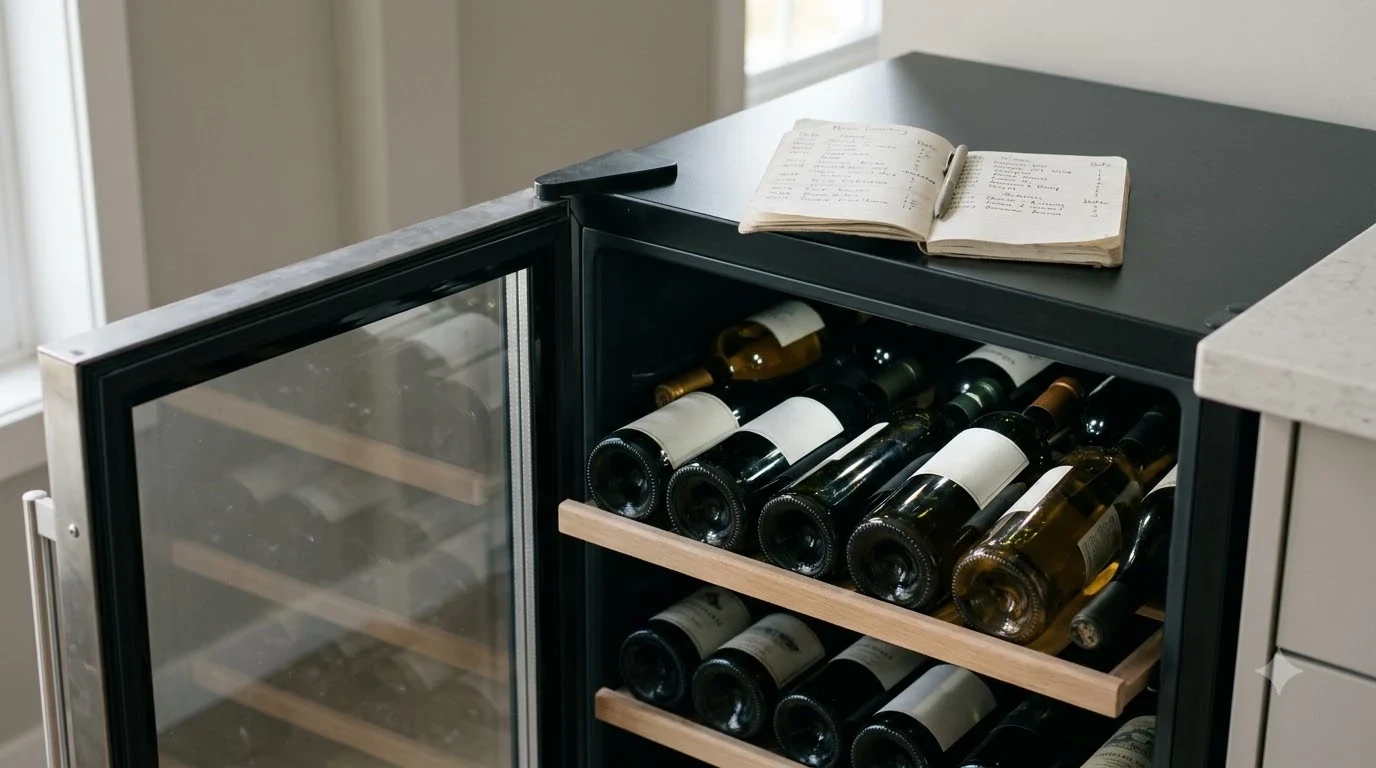
For whynter wine fridge repair, start by checking the power supply, temperature setting, ventilation, door seal, and airflow before replacing parts. Many cooling complaints come from room conditions, blocked vents, frequent door openings, or a gasket that no longer seals. More involved faults can involve a fan, temperature sensor, electronic control, compressor, or sealed refrigeration circuit. The correct procedure depends on the exact Whynter model, so match every code and installation requirement to its manual.
A wine refrigerator is a precision appliance, but not every temperature problem means a major component has failed. Work from the simple, visible causes toward the electrical and refrigeration systems, keep notes about what the cabinet is doing, and protect the bottles while you diagnose the unit.
What to Check Before Repairing a Whynter Wine Fridge
Start by identifying the model and describing the symptom before moving the cabinet or ordering parts. A Whynter FWC-1201BB freestanding cabinet and a BSR-033SW built-in model do not necessarily share the same installation rules, controls, or error-code meanings.
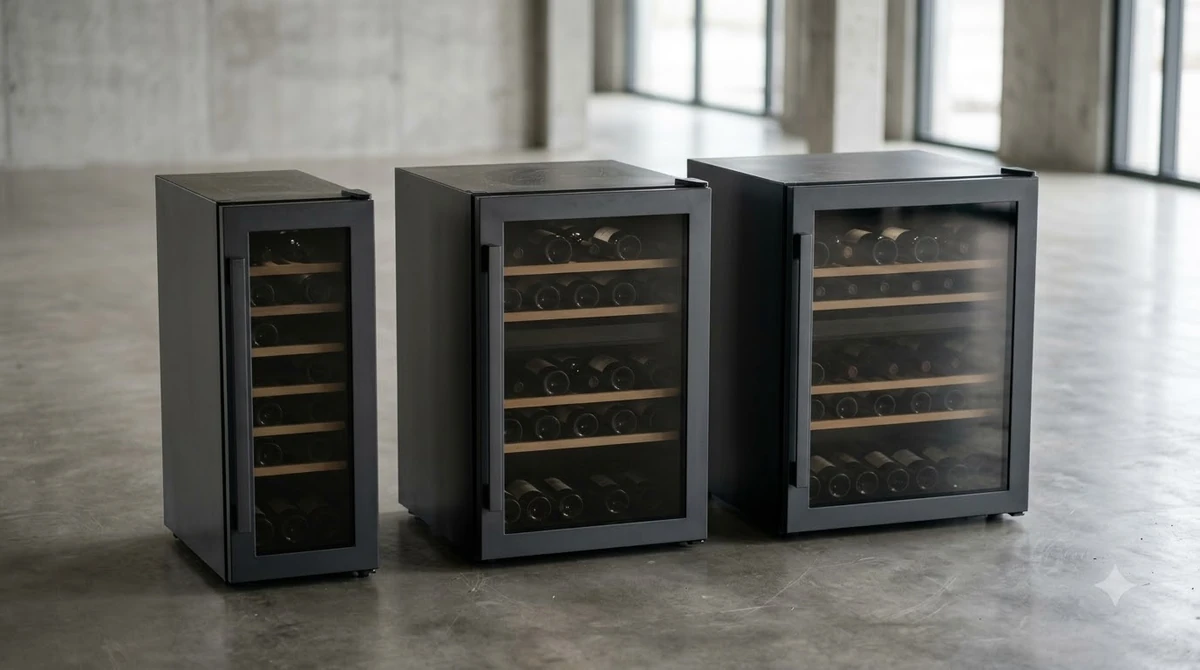
Find the model and serial numbers on the rating label, then locate the matching manual on Whynter’s website. Record the displayed and target temperatures, any error code, and whether the light, fan, and compressor operate. Note whether the compressor stays on, clicks, or remains silent; these details help distinguish a power fault from airflow or cooling-system trouble.
If the cabinet is warming, move valuable bottles to another temperature-stable space. Avoid repeated door openings; place a separate thermometer on a middle shelf and compare it with the display after the cabinet has had time to settle. This can show whether the temperature problem affects the whole cabinet or only its sensor.
Do not begin by pulling the unit apart. Whynter instructs owners to unplug it before cleaning and maintenance and to refer repairs beyond manual-approved tasks to a qualified technician. Limit the first inspection to the plug, outlet, controls, door, shelves, vents, and visible dust.
Power, Display, and Temperature Control Problems
A wine fridge that appears completely dead may have a simple supply problem, while a lit display with no cooling points toward a different set of checks. Confirm the outlet, breaker, power setting, and temperature control before assuming the control board or compressor has failed.
Confirm that the cord is firmly connected to a grounded outlet and that the household breaker or fuse has not tripped. The FWC-1201BB manual specifies a grounded three-prong connection and advises against adapters, extension cords, or removing the grounding prong. Do not use a damaged cord or hot plug; contact an electrician or service professional if outlet wiring appears damaged.
If the display works but cooling is weak, confirm that the controls are on and the target temperature has not been raised accidentally. The FWC-1201BB has a 40°F to 65°F control range; other Whynter models may differ or use separate zones. Set a target within the correct range, close the door, and allow the cabinet to respond. A large load of room-temperature bottles also takes time to cool.
After a power interruption or unplugging, the FWC-1201BB manual says to wait 3 to 5 minutes before restarting the wine cabinet. Use the restart interval in your own manual if it differs. If the display remains blank while the outlet is known to work, or if the breaker trips again after reset, stop testing. An internal fuse, damaged wiring, power board, or control fault requires proper electrical diagnosis rather than repeated power cycling.
Airflow, Installation, and Door Seal Problems
Restricted ventilation and warm air leaking through the door are common reasons a wine refrigerator runs for long periods without reaching its set temperature. Check the cabinet’s placement, clearances, internal fan openings, and gasket before treating the symptom as a compressor failure.
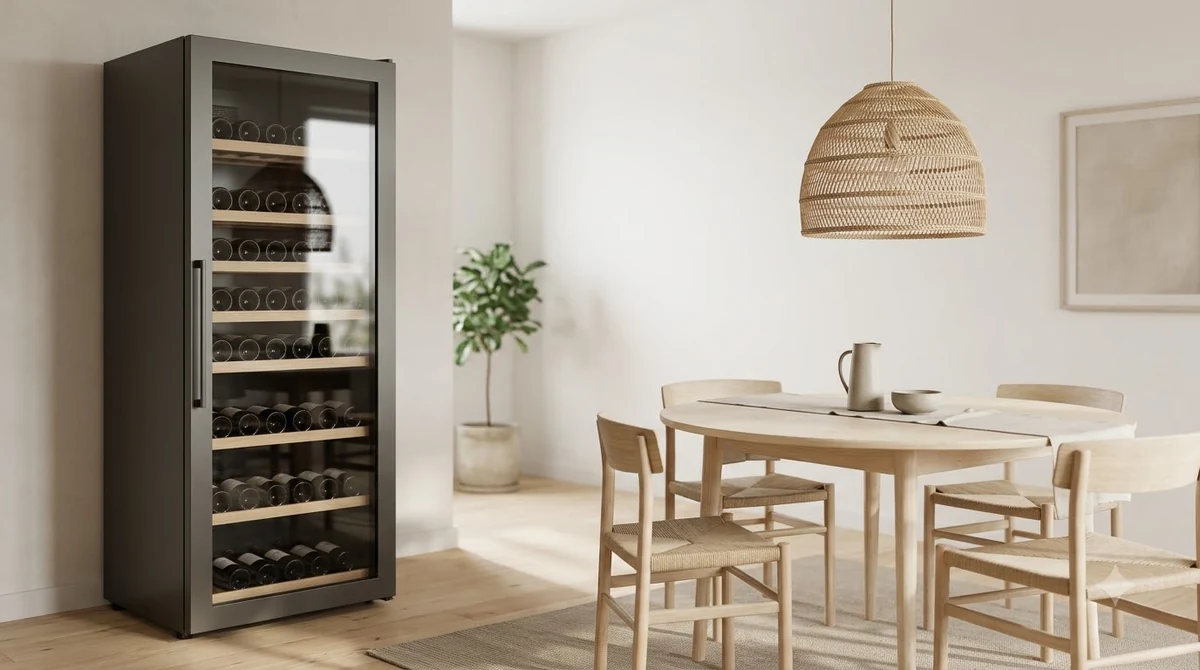
Clearances are model-specific. Whynter specifies at least 4 inches at the sides and 6 inches at the rear for the freestanding FWC-1201BB and says not to install it in a built-in space. That model’s recommended room temperature is 68°F to 78°F. These figures do not apply to every Whynter cabinet: built-in models such as the 15-inch BSR-033SW have their own installation instructions.
Keep the front grille and required side or rear openings clear of cabinetry, stored items, and dust. Arrange bottles so they do not block the circulation fan or air passages, and avoid loading many warm bottles at once. Crowded shelves can create warm pockets even when the display reads normally.
Inspect the gasket around the full door perimeter. Look for tears, hardened sections, dirt, gaps, or corners that have pulled away from the cabinet. Clean the gasket and the surface it touches with a soft damp cloth, dry it, and make sure shelves or bottles are not holding the door open. A simple paper-slip check can help: close the door on a strip of paper and gently pull; if it slides out with almost no resistance in several locations, the seal may not be making even contact. A damaged or misshapen gasket should be replaced with a model-compatible part.
Tip: Before ordering a door seal or fan, photograph the rating label and the existing part, and record the complete model number. Whynter parts can look similar across cabinet sizes, but a part that fits one series may not fit another.
Frost, Condensation, Noise, and Temperature Swings
Frost and moisture can point to humidity, a poor door seal, blocked circulation, or a setting that is too cold for the room. Noise and short cycling can also be normal operating behavior, so judge them alongside the cabinet temperature and the pattern of the sound.
Whynter lists high humidity, low room temperature, frequent door openings, and blocked fan airflow as possible causes of frost in the FWC-1201BB. Remove the wine, unplug the cabinet, and let ice melt with the door open as directed by the manual. Never chip ice with a knife or metal tool; move bottles away from the fan and confirm that the door closes tightly before restarting.
Some Whynter models use specific alarms for temperature differences or icing. For example, the BSR-033SW manual describes an Et temperature-difference alarm and directs the owner to switch off and unplug the cabinet, then leave the door open for ventilation for 24 to 36 hours. That instruction is model-specific. If the alarm remains after the prescribed defrost, or if frost quickly returns, contact Whynter service instead of repeatedly defrosting the cabinet or dismantling internal covers.
Condensation on a glass door can occur in a warm or humid room; Whynter recommends reducing room humidity with air conditioning or a dehumidifier. For water inside or under the cabinet, check the door seal, leveling, and any visible drain tube or drip tray, but do not reach into electrical areas to trace a leak. Fan noise, refrigerant gurgling, and occasional popping from temperature changes can be normal on some models. Bottles touching, an unlevel cabinet, or a loose object can also rattle. Persistent scraping, grinding, repeated hard clicks, or a fan that stops moving air is different; record when the sound occurs and whether cooling continues.
Fans, Sensors, Error Codes, and Compressor Faults
When the basic checks do not restore cooling, the next suspects include the circulation fans, temperature sensor, thermostat or electronic control, compressor starting components, and the sealed refrigeration system. These parts should be diagnosed by model and symptom, not replaced on guesswork.
The BSR-033SW manual gives a useful example of why the exact error code matters. It lists E1, E2, E5, E6, E7, E8, E9, EA, and EU as temperature-sensor failure codes and directs the owner to call the service center; it also lists L0 as a low-temperature alarm requiring service. For a HI high-temperature alarm, the manual says to confirm that the internal and external fans are operating and that the compressor has started, then contact the service center. It identifies E0 as a door-not-closed-properly warning. These meanings should not be transferred to a different Whynter series unless that model’s manual uses the same code chart. Consult the Whynter BSR-033SW instruction manual for the complete model-specific instructions.
A fan fault can leave the compressor running while the cabinet cools unevenly or barely cools. A sensor or control fault can cause inaccurate readings, irregular cycling, or an error display. A compressor that hums and clicks without starting, or a cabinet that remains warm after airflow and sealing checks, may have a failed start component or sealed-system problem. A technician can test the fan, controls, compressor, and related parts before replacement.
| Whynter model | Documented details | Repair takeaway |
|---|---|---|
| FWC-1201BB | 124-bottle freestanding cabinet; 40°F–65°F control range; 115V/60Hz, 130W | Use its 4-inch side and 6-inch rear clearances; do not install it as a built-in unit. |
| BSR-033SW | 33-bottle, 15-inch built-in model; sensor codes include E1, E2, E5–E9, EA, and EU | Use the BSR-033SW error chart; sensor and alarm faults are referred to the service center. |
Do not try to recharge refrigerant, cut tubing, attach gauges, or open the sealed cooling circuit as a home repair. The U.S. Environmental Protection Agency explains that Section 608 certification is required for work that could reasonably be expected to compromise the refrigerant circuit and release refrigerant. Read the EPA’s Section 608 guidance and leave refrigerant-circuit diagnosis to a properly qualified professional.
DIY Checks, Professional Service, and Warranty
Owner maintenance should stay within the steps in the model’s instruction manual. Electrical testing, component replacement, and sealed-system work are a different level of repair and should be assigned to a qualified appliance technician.
Owner checks include confirming the power connection, resetting a household breaker once when there are no signs of damage, verifying the setting, clearing vents, cleaning accessible surfaces, checking the gasket, leveling the cabinet, and defrosting as directed. Unplug the unit before cleaning or moving it. Do not remove covers to reach wiring, bypass a safety device, splice a cord, or handle a capacitor. Do not force a built-in cabinet out if that could strain wiring or damage the enclosure.
Call for service when an error code directs you to, the breaker trips repeatedly, a cord or plug becomes hot, wiring looks burned, a fan stops, the compressor repeatedly clicks without cooling, or frost quickly returns. A technician should handle suspected sensor, control-board, compressor, refrigerant-leak, or sealed-system faults. Ask which test confirmed the failed component before authorizing replacement.
Review the warranty before authorizing paid work or ordering parts. The FWC-1201BB manual describes a one-year limited warranty for the original owner in the 48 contiguous states, subject to its conditions, and says to retain the original purchase invoice. That is an example for one model, not a guarantee that every Whynter wine refrigerator has identical coverage. The same manual excludes certain damage caused by misuse, inadequate maintenance, or repairs by unauthorized parties, so check the warranty supplied with your own unit first. Whynter’s manuals list [email protected] and 866-WHYNTER for service; the BSR-033SW manual gives the number as 866-949-6837. Provide the model and serial numbers, purchase date, error code, actual and target temperatures, and a description of fan and compressor behavior. Include photos of the display and rating label if requested. For broader appliance upkeep, the site’s Brand Troubleshooting resource can help organize the next checks.
Preventive Care and Protecting Stored Wine
Good placement and simple cleaning reduce the chance that a minor airflow problem will become a repeated cooling complaint. A stable room, clear vents, an intact gasket, and sensible loading give the cabinet a better chance of holding its set temperature.
Keep the cabinet out of direct sun and away from ovens, dishwashers, heaters, and other warm-air sources. Preserve the model’s ventilation space, inspect the door seal, and remove dust from accessible grilles with the unit unplugged. Keep shelves seated and leave room for air to circulate around bottles.
After maintenance or a temperature adjustment, limit door openings and monitor the cabinet with a separate thermometer. A stable environment near 55°F is a common long-term wine-storage target. Avoid judging the repair immediately after loading many room-temperature bottles; let the cabinet recover, then record any later temperature swings.
If you are comparing service information across brands, the site also has dedicated pages for Allavino wine fridge repair, Zephyr wine fridge repair, and Marvel wine fridge repair. Those guides are useful for seeing how troubleshooting differs between manufacturers, but their part numbers, clearances, and diagnostic procedures should never be applied to a Whynter model.
Frequently Asked Questions
These quick answers cover model-specific details that are easy to miss during a first inspection. Confirm that the model number in your manual matches the appliance before following a setting or service instruction.
How long should the FWC-1201BB stand upright before its first use?
Whynter’s FWC-1201BB manual calls for the cabinet to stand upright for approximately 4 hours before it is connected to power. This allows the cooling system to settle after handling or transportation. Follow the manual for the exact model you own.
Should I set the BSR-033SW to its coldest setting after clearing Et?
No. After the ice has melted and the cabinet is restarted, Whynter’s manual recommends not using the minimum temperature setting at that point. Resume with a moderate setting and monitor the cabinet.
What should I do if the BSR-033SW still shows E0 after closing the door?
Whynter’s instructions say to close the door again if it is not tightly shut. When the warning remains after that check, contact after-sales service rather than removing the door switch or wiring.
How often should the BSR-033SW carbon filter be changed?
Whynter specifies replacing the BSR-033SW activated carbon filter once a year. The filter cover turns 90 degrees to release or secure the filter, as described in that model’s manual.
Can the BSR-033SW fan run continuously in normal operation?
Yes. Whynter says continuous fan operation can be part of this model’s cooling system, especially at lower temperature settings or in a warm room. The manual suggests checking whether the cabinet is cooling and waiting 15 minutes to see whether the fan stops.
In most cases, start with the model label, power, airflow, door seal, and temperature setting before considering replacement parts. When an error code, electrical symptom, stopped fan, or suspected sealed-system fault points beyond routine care, use Whynter support or a qualified technician to protect both the appliance and the wine inside it.
More in Storage & Fridge Care
 How Long Can You Store Wine in a Wine Fridge? Protect Bottle QualityUpdated Nov 20, 2026
 Can You Store Beer in a Wine Fridge? Keep Both Drinks FreshUpdated Nov 20, 2026
 Is It Worth Repairing a Wine Fridge? Spot the Cheap Fixes Before You ReplaceUpdated Nov 20, 2026
 Wine Fridge Condensation: Identify Causes and Fix Moisture ProblemsUpdated Nov 20, 2026
 Wine Fridge Too Cold: Protect Your Wine and Fix the TemperatureUpdated Nov 20, 2026
 How to Reset Wine Fridge: Restore Cooling and SettingsUpdated Nov 20, 2026