

We may earn a commission when you buy through links on this page, at no extra cost to you. Learn more.
White zinfandel carbs usually range from about 8 to 11 grams in a 5-ounce glass, based on nutrition figures published by several producers. The exact amount depends on the wine and its remaining grape sugar, so bottles do not all share one fixed carbohydrate count. A standard 750-milliliter bottle is commonly divided into five 5-ounce servings for nutrition comparisons.
White Zinfandel is a lightly colored, often semi-sweet wine made from red Zinfandel grapes. Its fruit-forward style and residual sugar help explain why its carbohydrate count is usually higher than that of a fully dry white wine. The figures below give you a practical way to estimate a glass, compare producer information, and understand what changes the count.
How Many Carbs Are in White Zinfandel?
A useful estimate is 8 to 11 grams of carbohydrates per 5-ounce pour, or about 148 milliliters. Published producer figures include 8 grams for Franzia White Zinfandel, 8.3 grams for Sutter Home White Zinfandel, and 11 grams for CK Mondavi White Zinfandel; these are examples rather than a universal formula.
That range is more useful than assuming every bottle contains the same amount. Sutter Home also lists 6 grams of carbohydrates for its White Zinfandel Reserve, showing that even two wines with the same style name and producer can have different nutrition figures. The producer’s own serving size matters too: comparing a 5-ounce pour with a 6-ounce restaurant glass without adjusting the math makes the larger serving appear to be a different wine.
For a quick estimate, use 8 to 11 grams for a measured 5-ounce serving, then scale up or down with the pour. A 2.5-ounce half-glass would contain roughly 4 to 5.5 grams if the wine has the same concentration. A 6-ounce pour would contain about 9.6 to 13.2 grams. These are proportional estimates based on the range above, not laboratory readings for a specific bottle.
Why Residual Sugar Raises the Carb Count
White Zinfandel usually has more residual sugar than a dry Sauvignon Blanc or Chardonnay, and that remaining grape sugar accounts for much of the difference in carbohydrates. During fermentation, yeast converts grape sugars into alcohol; when fermentation is stopped before all the sugar is consumed, some sweetness remains in the finished wine.
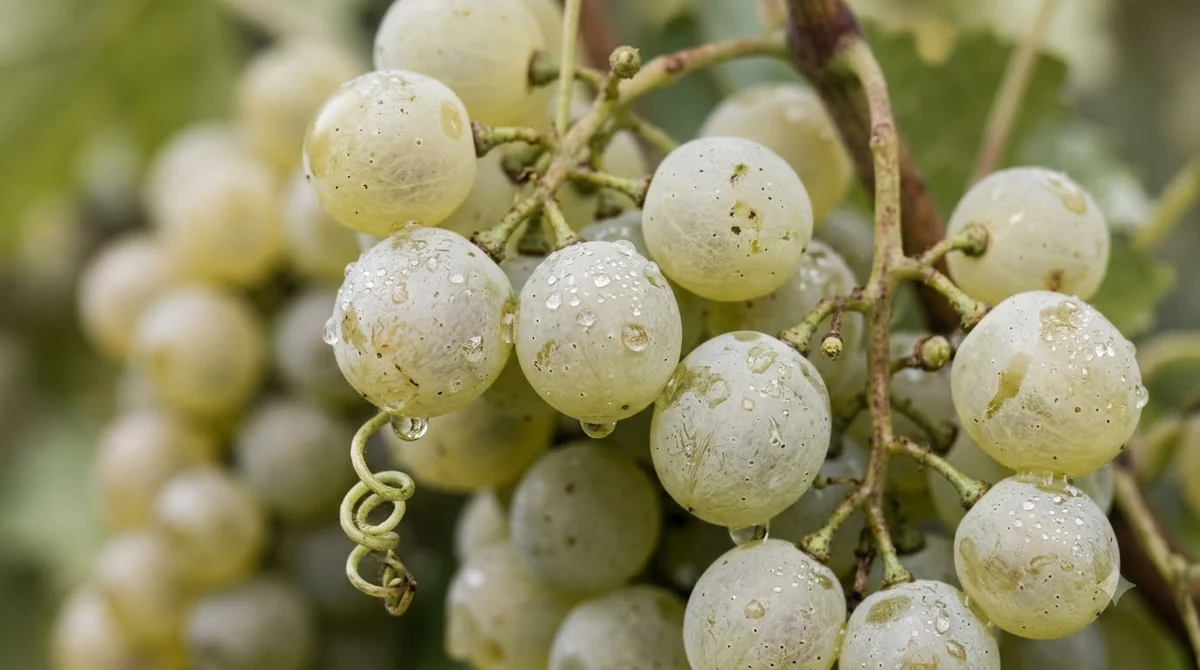
White Zinfandel is made from the red Zinfandel grape, not from a white grape. The Zinfandel Advocates and Producers organization explains in its description of Zinfandel styles that the juice is separated from the skins and seeds after crushing, then fermented in a white-wine style. The wine is not fermented fully dry, leaving residual sugar and a lightly sweet character. Its pink hue comes from brief contact with the red grape skins rather than the long extraction used for a deep-colored red Zinfandel.
Residual sugar is measured in grams per liter, while a nutrition label usually gives carbohydrates for a serving. To translate one into the other, multiply the grams per liter by the serving volume in liters. For example, a wine with 30 grams of residual sugar per liter would contain about 4.4 grams of residual sugar in 5 ounces: 30 multiplied by 0.148. That is a sugar estimate, not necessarily the full carbohydrate declaration, because label methods and other wine components can affect the final nutrition calculation.
Sweetness terms can also be imprecise in everyday conversation. A wine that tastes fruity is not automatically high in residual sugar, and a wine with moderate sugar can taste less sweet if it has enough acidity. White Zinfandel is commonly made in an off-dry to medium-sweet style, but the final balance depends on the winemaker’s choices and the wine’s acidity.
What Producer Nutrition Labels Show
Producer-published data puts real numbers behind the estimate: the examples below cover 6 to 11 grams of carbohydrates per 5-ounce serving. Use the table as a comparison of named bottlings, not as a ranking of every White Zinfandel sold in the United States.
| Producer and wine | Serving | Carbs | Calories | Sugar information |
|---|---|---|---|---|
| Franzia White Zinfandel | 5 oz | 8 g | 105 | 4 g sugar |
| Sutter Home White Zinfandel | 5 oz | 8.3 g | 108 | Not stated on nutrition page |
| Sutter Home White Zinfandel Reserve | 5 oz | 6 g | 110 | Not stated on nutrition page |
| CK Mondavi White Zinfandel | 5 oz | 11 g | 118 | Described as naturally sweet |
The table shows why a single number should not be presented as exact for every bottle. Franzia’s published White Zinfandel nutrition information gives both carbohydrate and sugar figures, while Sutter Home lists carbohydrates and calories but does not provide a sugar number on its nutrition page. CK Mondavi reports 11 grams of carbohydrates and describes its wine as naturally sweet. A missing sugar figure does not mean zero sugar; it means that the published page does not provide that separate value.
There is also a difference between a producer’s standard White Zinfandel and a reserve bottling. Sutter Home’s published entries give 8.3 grams for its regular White Zinfandel and 6 grams for its Reserve, both using a 5-ounce serving. That is a useful reminder to match the exact product name before applying a nutrition number. For a closer look at the grape beyond this blush style, see our guide to zinfandel carbs, which addresses red Zinfandel separately.
Producer data is especially helpful because White Zinfandel is a style, not a single standardized recipe. Different producers can choose different harvest ripeness, fermentation endpoints, blending decisions, and serving-size conventions. A brand’s nutrition page is therefore a better starting point than a generic number copied from a different bottle.
Carbohydrates, Sugar, and Calories Are Not the Same
Carbohydrates and sugar overlap, but they are not interchangeable terms on every nutrition panel. Sugar is one type of carbohydrate, and a wine’s total carbohydrate figure can be higher than its separately reported sugar figure. Franzia’s 5-ounce serving, for example, lists 8 grams of carbohydrates and 4 grams of sugar, so half of its stated carbohydrate amount is not identified as sugar on that page.
Calories are a separate measure of energy. Alcohol contributes calories even though it is not a carbohydrate, which is why two wines with similar carbohydrate numbers can still have different calorie totals. The producer examples in the table range from 105 to 118 calories per 5 ounces, while their carbohydrate figures range from 6 to 11 grams. Alcohol level and residual sugar both matter to the energy value, so carbohydrate count alone cannot predict calories precisely.
The Australian Wine Research Institute describes a nutrition-energy calculation that uses available carbohydrate, organic acids, and glycerol, as well as alcohol content. Its guidance says that dry wines below 4 grams per liter of residual sugar can use typical carbohydrate assumptions, but off-dry wines should use a measured sugar value. That distinction is relevant to White Zinfandel: a sweet-leaning style should not be assigned the same default carbohydrate assumption as a dry white wine.
Be careful with online entries that list only sugar or only calories. A page reporting 4 grams of sugar is not necessarily reporting 4 grams of total carbohydrates, and a calorie value does not reveal a wine’s carbohydrate count by itself. Compare like with like: the same serving volume, the same wine bottling, and the same nutrient category.
How Serving Size Changes the Total
Most producer comparisons use a 5-ounce serving, and a 750-milliliter bottle is commonly counted as five servings for simple nutrition math. A restaurant pour can be larger, however, and the amount in your glass changes the total even though the wine itself has not changed. Measuring a pour once with a kitchen measuring cup can help you recognize what 5 ounces looks like in your usual glass.
Use proportional math when the serving differs from 5 ounces. Divide the actual pour by 5, then multiply the producer’s per-serving carbohydrate figure by that result. With an 8.3-gram wine, a 6-ounce glass works out to about 10 grams (8.3 multiplied by 1.2), while a 4-ounce pour is about 6.6 grams (8.3 multiplied by 0.8). Rounding is sensible because nutrition figures themselves are commonly rounded.
A full bottle calculation is only an estimate unless the producer states the number of servings and the exact serving size. Five 5-ounce servings equal 25 ounces, or about 739 milliliters, slightly less than a 750-milliliter bottle. Using the producer’s declared five servings is convenient for comparison, but a bottle poured evenly into six glasses produces smaller servings and fewer carbohydrates in each glass.
Tip: For a reliable comparison, pour 5 ounces into a measuring cup once, note the level in your glass, and use that same fill line when comparing bottles. A glass that looks half-full may hold very different amounts depending on its shape.
For a party, serving bowl, or punch recipe, calculate the total wine used before adding fruit juice, soda, or other ingredients. For example, a 750-milliliter bottle with five declared 5-ounce portions contributes about 40 to 55 grams of carbohydrates across the bottle when the wine falls in the 8-to-11-gram range. Divide that total by the number of equal servings to estimate the wine contribution in each glass; the mixers add their own carbohydrates.
Choosing and Serving White Zinfandel
Compare two 5-ounce pours side by side, checking the stated carbohydrate grams and alcohol by volume before deciding whether you prefer a lighter or sweeter profile. Our zinfandel tasting notes explain how fruit character, acidity, and texture can be described separately.

White Zinfandel is generally served chilled, around 45 to 50 degrees Fahrenheit, which keeps its fresh fruit profile lively. Chill the bottle in a refrigerator and pour a modest 5-ounce serving to make comparisons consistent. If the wine seems very sweet, serve it alongside salty or savory foods such as mild cheeses, grilled chicken, or a cheese board; salt and fat can soften the impression of sweetness and make the pairing feel more balanced.
Be mindful of mixed drinks. A simple spritzer made with White Zinfandel and plain sparkling water dilutes the wine, but it does not remove the carbohydrates already present in the wine portion. Using less wine and more unsweetened sparkling water lowers the wine-derived carbohydrate total per glass; adding lemonade, fruit juice, or sweet soda can add carbohydrates from the mixer. A white zinfandel sangria may include fruit and juice, so its total depends on the recipe rather than the wine alone.
If you are comparing White Zinfandel with other wine styles, remember that a blush wine is not automatically equivalent to a dry rosé. Zinfandel Advocates and Producers distinguishes White Zinfandel, which retains residual sugar, from Zinfandel rosé, which is typically fermented dry. The broader Wine by Type overview can help place those styles alongside other red, white, rosé, and sparkling wines.
Frequently Asked Questions
These quick answers cover practical details beyond the 8-to-11-gram estimate and the 5-ounce comparison used above. They also clarify storage, sweetness perception, and how serving temperature affects the wine experience.
How long does opened White Zinfandel last in the refrigerator?
Reseal the bottle and refrigerate it; a typical opened still wine is best used within 3 to 5 days. Keep it cold between pours and avoid leaving the bottle open on the counter for long periods.
Does chilling White Zinfandel change its carbohydrate content?
No. Cooling a bottle from room temperature to about 45 degrees Fahrenheit does not remove or create carbohydrates. Temperature can change how sweet or fresh the wine seems, but the amount in a measured pour stays the same.
Can a White Zinfandel taste sweet without added sugar?
Yes. CK Mondavi describes its White Zinfandel as naturally sweet while also stating that it has no added sugar. Natural grape sugar left after fermentation can give the wine sweetness without a producer adding table sugar.
Is White Zinfandel always 10 percent alcohol?
No. CK Mondavi lists its White Zinfandel at 10.0 percent alcohol by volume, but that is a figure for that bottling rather than a fixed rule for the entire style. Alcohol strength is a separate specification from carbohydrate grams.
Does a colder pour always taste less sweet?
Not necessarily. Chilling can make acidity and fresh fruit character seem more pronounced, while the wine may seem rounder as it warms in the glass. Compare wines at a similar temperature rather than using perceived sweetness as a substitute for nutrition information.
For a quick estimate, start with 8 to 11 grams of carbohydrates per 5-ounce glass, then use the producer’s figure for the bottle you plan to serve. Matching the serving size and distinguishing sugar from total carbohydrates will give you a more dependable comparison than relying on sweetness or wine color alone.
More in Wine Types & Grapes
 Zinfandel Sugar Content: Dry Red vs. White Zinfandel GramsUpdated Nov 21, 2026
 Best Zinfandel Substitute Options for Sipping and CookingUpdated Nov 21, 2026
 Zweigelt Food Pairing: Best Dishes, Cheeses, and Serving TipsUpdated Nov 21, 2026
 Zinfandel Tannins Explained: How Structure Shapes Every BottleUpdated Nov 21, 2026
 Zinfandel Sweetness Level: Dry Red vs. Sweet White Zin ExplainedUpdated Nov 21, 2026
 Xinomavro Food Pairing: Best Dishes, Styles, and Serving TipsUpdated Nov 21, 2026