

We may earn a commission when you buy through links on this page, at no extra cost to you. Learn more.
White wine color ranges from nearly clear with a pale yellow-green tint to deep gold, amber, and tawny brown, serving as a direct visual clue to a wine’s grape variety, body, oak aging, and age. Lighter, translucent shades typically point to crisp, high-acid wines meant to be enjoyed young, while deeper golden hues indicate riper fruit, oak contact, sweetness, or extended bottle aging. Understanding this spectrum allows you to predict flavor profiles and spot oxidation before taking your first sip.
Although we call it white wine, the liquid inside the glass is never truly white. Instead, it spans a broad spectrum of yellows, greens, golds, and browns that tell the story of how the grapes were grown and handled in the cellar. Paying attention to visual cues is one of the fastest ways to sharpen your palate and understand what you enjoy drinking across different Wine by Type categories.
What Creates White Wine Color in the Vineyard and Cellar
White wine gets its hue from natural pigments—primarily carotenoids and phenolic compounds—found in grape skins and pulp, combined with winemaking choices like skin contact, oak aging, and oxygen exposure. Because white wines are usually pressed immediately to separate the juice from the skins, they start out much paler than red wines.
Even without extended maceration, the grape variety itself sets the baseline for color. Thin-skinned, high-acid varieties grown in cool climates tend to produce juice with very little pigment, resulting in a watery, silver-green appearance. By contrast, grapes grown in warm, sunny regions ripen more fully, developing thicker skins and richer yellow pigments that translate into deeper straw or pale gold tones in the finished wine. Interestingly, white wine does not even require green or yellow grapes; winemakers routinely craft pale white wines, including many Champagnes, from dark-skinned grapes like Pinot Noir by gently pressing the fruit and draining the clear juice away from the skins immediately.
Once the juice enters the winery, cellar decisions dramatically alter its shade. Fermentation and aging in inert stainless steel tanks preserve the wine’s natural pale hue and fresh fruit character by blocking oxygen. However, aging white wine in oak barrels introduces gentle oxygen ingress and extracts wood tannins and color compounds, shifting a pale straw wine toward a saturated, luminous gold. Winemakers can also leave the juice in contact with the grape skins for hours, days, or weeks—a technique that produces deeper golden hues and, at longer durations, creates amber-colored orange wines.
The Spectrum of White Wine Hues From Pale Straw to Tawny
Most white wines fall into four distinct visual tiers—pale yellow-green, medium straw-gold, deep gold, and amber or tawny—each corresponding to predictable differences in weight, acidity, and flavor. Learning to distinguish these shades helps you read a glass at a glance.
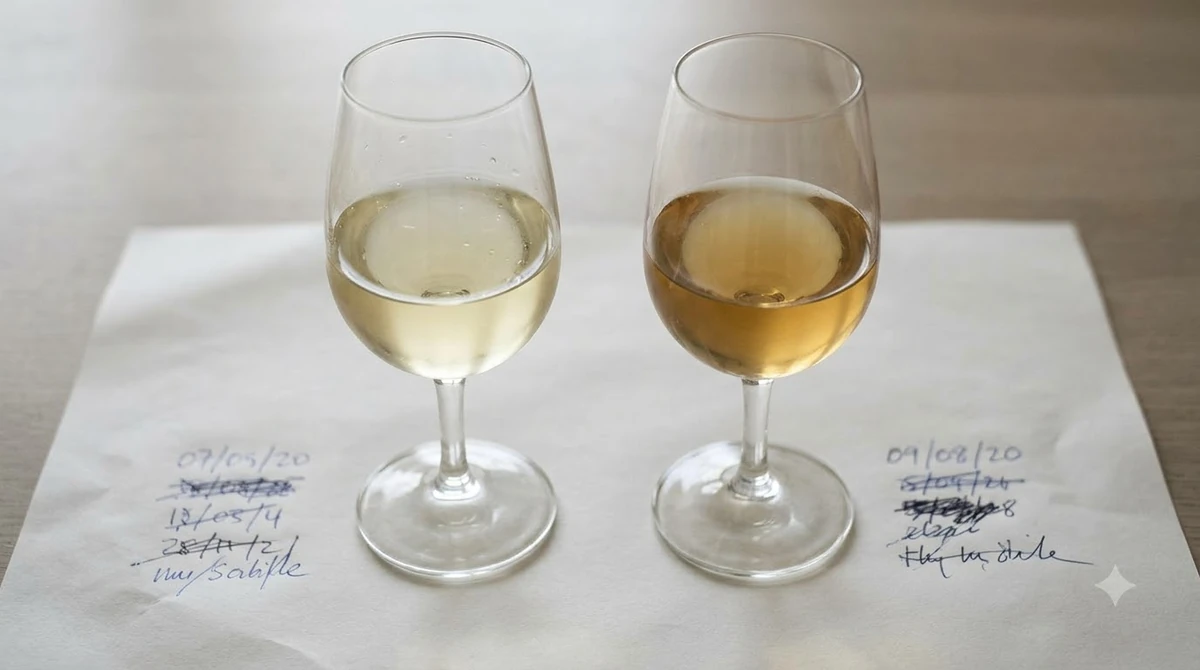
At the lightest end of the spectrum sit wines with a nearly clear core and a faint yellow-green or platinum rim. According to Wine Folly’s wine color guide, light-bodied white wines such as Pinot Grigio, Albariño, Muscadet, and Vinho Verde display this pale yellow-green hue. These wines are bottled early, see little to no oak, and are built around brisk acidity and citrus or green-apple flavors. They are designed to be served cold and consumed within a couple of years of harvest while their primary fruit aromas remain vibrant.
Moving toward the middle of the spectrum, medium-bodied white wines display a bright yellow-gold or classic straw color. Grapes like Sauvignon Blanc, Chenin Blanc, and unoaked Chardonnay commonly fall into this group, balancing refreshing acidity with riper orchard and stone fruit notes. At the richer end of everyday table wines, full-bodied white wines take on a deep, saturated gold color. Oak-aged Chardonnay, Viognier, and Marsanne frequently exhibit this rich golden tone, which signals fuller body, lower perceived acidity, and creamy, vanilla, or toasted-nut notes derived from barrel aging or malolactic fermentation.
Beyond deep gold lie amber, copper, and tawny hues, which signal either intentional oxidative winemaking, high residual sugar, or advanced age. Sweet wines affected by noble rot, such as Sauternes or Tokaji, often display a brilliant, saturated gold-to-amber sheen due to concentrated sugars and skin compounds. Similarly, fortified wines like Sherry and Madeira are aged in partially filled barrels exposed to oxygen, turning them a deliberate, nutty tawny brown. In standard dry table wines, however, a dull orange or brownish tint usually means the wine has aged past its prime.
| Color Shade | Typical Body & Acidity | Common Wine Examples | Primary Flavor & Style Clues |
|---|---|---|---|
| Pale Yellow-Green | Light-bodied, high acidity | Pinot Grigio, Vinho Verde, Muscadet, Albariño | Crisp citrus, green apple, lime, saline minerality; meant to be drunk young |
| Pale Straw to Yellow-Gold | Medium-bodied, balanced acidity | Sauvignon Blanc, Chenin Blanc, Unoaked Chardonnay | Ripe pear, peach, herbs, subtle floral notes; fresh and versatile |
| Deep Saturated Gold | Full-bodied, softer acidity | Oaked Chardonnay, Viognier, Marsanne, White Rioja | Creamy texture, vanilla, baked apple, tropical fruit, toasted oak |
| Amber to Tawny Brown | Full-bodied or sweet, complex | Aged Riesling, Sauternes, Sherry, Madeira, Orange Wine | Honey, dried apricot, roasted nuts, caramel, or signs of oxidation |
How Aging and Oxidation Change White Wine Over Time
Unlike red wines, which lose color and turn paler brick-red as they mature, white wines grow darker, richer, and more opaque as they age. Over years in the bottle, slow oxygen transfer through the cork causes phenolic compounds to polymerize and darken, shifting pale straw hues toward deep gold, amber, and eventually dull brown.
While the vast majority of white wines are made to be enjoyed within one to three years of release, age-worthy examples such as dry German Riesling, white Burgundy, and vintage Champagne evolve gracefully over a decade or more. In these bottles, the transition from pale yellow to burnished gold accompanies a dramatic aromatic shift: fresh lemon and green pear give way to honey, beeswax, dried apricot, roasted hazelnuts, and petrol or flinty mineral notes. High natural acidity acts as a preservative during this process, keeping the wine lively even as its color deepens.
However, unwanted oxidation can prematurely darken a white wine that was never meant to age—or spoil a bottle stored improperly. Exposure to heat, bright ultraviolet light, or a dried-out cork accelerates oxidation, stripping away fresh fruit aromas and turning the wine flat, bruised-apple scented, and dull orange-brown. If you pour a young Sauvignon Blanc or Pinot Grigio and notice a murky, brownish cast or a lack of bright sheen, the wine is likely oxidized and past its peak.
Tip: When evaluating white wine color at home, tilt your glass at a 45-degree angle over a white sheet of paper or napkin under natural light—colored tablecloths and dim dining rooms distort subtle green and gold undertones.
How to Evaluate White Wine Color in Your Glass
Examining a wine’s visual appearance takes only a few seconds and gives you immediate context before you ever smell or taste it. Reviewers at Wine Enthusiast recommend filling the glass roughly one-third full and inspecting it from multiple angles against a neutral white background.
Start by holding the glass by its stem—so your hand does not warm the wine—and looking straight down into the bowl to gauge color intensity. A deeply saturated core suggests riper fruit, warmer vineyard temperatures, oak aging, or concentrated sweetness, whereas a pale, transparent core points to a leaner, lighter-bodied style. Next, hold the glass up to the light from the side to check clarity. A healthy white wine should look clear and brilliant; cloudiness can indicate an unfiltered natural style, tartrate crystals, or potential fermentation flaws.
Finally, tilt the glass forward so the wine spreads toward the lip, exposing the thin outer edge known as the meniscus or rim. Observing the rim reveals subtle secondary hues that are invisible at the deeper center of the glass. A faint green glint along the edge confirms youthful, snappy acidity, while a wide, watery rim can suggest a thinner wine, and an orange or tawny rim signals age or oxidation. Swirl the glass gently on a flat surface afterward to watch the “legs” or tears form along the inside wall—thicker, slower-moving droplets indicate higher alcohol or glycerin content, which often correlates with warmer-climate, deeper-gold white wines.
Common Misconceptions About White Wine Color
Several persistent myths surround white wine color, often leading drinkers to misjudge dry, complex bottles or overlook styles they would otherwise love. Clearing up these assumptions makes shopping and ordering at restaurants far more intuitive.
One widespread belief is that darker yellow or golden white wines are always sweet. While dessert wines like Sauternes and late-harvest Riesling do display rich golden hues, color alone cannot tell you whether a wine contains residual sugar. Many bone-dry white wines—including barrel-fermented Napa Valley Chardonnay, aged white Rioja, and dry Alsace Pinot Gris—develop deep golden tones from oak aging, lees contact, or naturally pigmented grape skins without a trace of sweetness. Conversely, a pale, nearly clear Riesling or Moscato can carry noticeable sweetness despite its light appearance.
Another misconception is that white wine must come from green-skinned grapes. In reality, grape juice is naturally clear in almost all wine grape varieties; the red pigment anthocyanin resides almost exclusively in the skins. Winemakers regularly produce crisp white wines—often labeled Blanc de Noirs in sparkling wine—from red grapes such as Pinot Noir, the same variety discussed in our guide to pinot noir carbs and warm-weather pinot noir sangria recipes. By pressing red grapes gently and separating the juice immediately, vintners avoid extracting red pigment, occasionally leaving behind only the faintest coppery or onion-skin tint.
Frequently Asked Questions
Why do some white wines have a greenish tint?
A pale yellow-green tint indicates a young, unoaked white wine made from grapes harvested with high natural acidity, often in a cooler climate. Varieties like Sauvignon Blanc, Grüner Veltliner, Vinho Verde, and Albariño frequently show green reflections along the rim, which correlate with crisp citrus, lime, and herbal flavors.
Does a darker yellow white wine mean it is sweet?
No, a deep yellow or golden color does not automatically mean a white wine is sweet. While sweet dessert wines often look golden, many completely dry white wines—such as oak-aged Chardonnay, Viognier, and aged white Burgundy—develop rich golden hues from barrel aging, lees stirring, or extended bottle maturity.
How can you tell if white wine has gone bad by its color?
If a young, standard dry white wine looks dull orange, amber, or brownish instead of bright straw or gold, it has likely oxidized and gone bad. An oxidized white wine also loses its brilliant shine in the glass and smells flat, nutty, or like bruised apples rather than fresh fruit.
Can white wine be made from red grapes?
Yes, winemakers routinely make white wine from dark-skinned grapes like Pinot Noir and Pinot Meunier by pressing the fruit gently and removing the skins before fermentation begins. Because the pulp and juice of almost all wine grapes are clear, avoiding skin contact keeps the wine pale, occasionally imparting a subtle golden or coppery sheen.
Paying close attention to white wine color turns every pour into a quick visual preview of what is waiting in the glass. Whether you gravitate toward pale, green-tinged bottles for crisp weekday refreshment or deep golden wines for richer dinner pairings, matching the hue in your glass to your palate will help you choose bottles with confidence.
More in Wine Types & Grapes
 Zinfandel Sugar Content: Dry Red vs. White Zinfandel GramsUpdated Nov 21, 2026
 Best Zinfandel Substitute Options for Sipping and CookingUpdated Nov 21, 2026
 Zweigelt Food Pairing: Best Dishes, Cheeses, and Serving TipsUpdated Nov 21, 2026
 Zinfandel Tannins Explained: How Structure Shapes Every BottleUpdated Nov 21, 2026
 Zinfandel Sweetness Level: Dry Red vs. Sweet White Zin ExplainedUpdated Nov 21, 2026
 Xinomavro Food Pairing: Best Dishes, Styles, and Serving TipsUpdated Nov 21, 2026