

We may earn a commission when you buy through links on this page, at no extra cost to you. Learn more.
Where is sangiovese from? Sangiovese is an indigenous Italian red grape variety most closely associated with Tuscany, particularly the historic wine-growing areas around Chianti, Montalcino, and Montepulciano. Its precise geographical birthplace remains uncertain, however, with historical evidence pointing to a much older presence in central Italy. Today, Sangiovese is grown throughout several Italian regions and in wine-producing countries including Argentina, the United States, and Australia.
Few Italian grapes have such a strong connection to a particular landscape as Sangiovese has to Tuscany. It is the foundation of famous wines such as Chianti Classico and Brunello di Montalcino, but its identity extends beyond those familiar names. Understanding its origins means looking at Italian wine history, the different growing regions, and the way local conditions shape the wines made from this adaptable variety.
Sangiovese Originated in Italy, but Its Exact Birthplace Is Uncertain
Sangiovese is a native Italian grape, and Tuscany is the region most closely associated with its history and reputation. However, identifying one specific town or vineyard as its birthplace would go further than the available historical evidence allows. The grape has been cultivated in different parts of Italy for centuries, and its early history is difficult to reconstruct with certainty.
The Chianti Wine Consortium identifies the 16th century as the period of the first reliable written references to Sangiovese. In his treatise La coltivazione delle viti, Giovan Vettorio Soderini mentioned a grape called Sangiocheto or Sangioveto, describing its regular productivity. This is important evidence that the variety was already recognized and cultivated by Italian growers at that time, although it does not establish when or where the grape first appeared. The consortium discusses this history in its article Sangiovese and its court.
Several theories attempt to explain the name Sangiovese. One connects it with San Giovanni Valdarno, a town in Tuscany. Another suggests a relationship with the expression sangue di Giove, translated as the blood of Jupiter. Other explanations refer to local dialect and the timing of the grape’s early growing season. These interpretations are interesting parts of Italian wine folklore, but none provides definitive proof of the grape’s birthplace.
The history is also complicated by the variety’s extensive genetic diversity. According to the Chianti Wine Consortium, Sangiovese includes more than 100 clones that developed as growers propagated and selected vines across different territories. Over generations, local selections acquired distinct characteristics, making the variety particularly sensitive to its growing environment.
There is also a meaningful connection with neighboring Emilia-Romagna. Research discussed by the Consorzio Vini di Romagna points to the Tuscan-Romagnolo Apennines as an important part of the grape’s documented history. Its regional history includes the names Sangiovese and Sangioveto, which were used differently in Romagna and Tuscany. The Consorzio Vini di Romagna’s historical account explains why the region considers itself central to the variety’s identity.
For this reason, it is more accurate to describe Sangiovese as an Italian grape historically rooted in central Italy than to assign it to one definitively established village. Tuscany remains its best-known home, while neighboring Emilia-Romagna also has a significant historical connection to the variety.
That distinction matters because a grape’s modern reputation and its original geographical birthplace are not necessarily the same thing. Tuscany made Sangiovese internationally famous, but that does not mean every part of its early history can be traced to the present-day Chianti area.
Tuscany Became the Most Famous Home of Sangiovese
Tuscany is the region most closely identified with Sangiovese, thanks to its historic vineyards, distinctive hillside landscapes, and internationally recognized wine appellations. The grape is central to Chianti, Chianti Classico, Vino Nobile di Montepulciano, and Brunello di Montalcino, four important names in Italian red wine.
The European Commission traces Tuscan viticulture to the Etruscan period, with evidence of wine growing dating to the 8th century BCE. The hills between Florence and Siena became particularly associated with Chianti production. Three historic villages, Castellina, Gaiole, and Radda, were connected through the League of Chianti, an early organization associated with the area’s wine identity.
A significant milestone came in 1716, when Cosimo III de’ Medici established legal recognition for the Chianti wine area. The boundaries were initially associated with the villages of the League of Chianti, Greve, and surrounding territory. The recognized production area subsequently expanded, and the modern Chianti PDO covers parts of six Tuscan provinces: Arezzo, Florence, Prato, Pistoia, Pisa, and Siena.
The region’s physical environment helps explain why Sangiovese became so successful there. Mediterranean warmth arrives from the Tyrrhenian Sea, while rolling hills and changes in elevation influence vineyard temperatures. The difference between daytime and nighttime temperatures helps grapes develop ripe flavors while retaining acidity.
According to the European Commission, Chianti PDO vineyards are generally situated between 200 and 400 meters above sea level, with a maximum permitted elevation of 700 meters. This combination of altitude, terrain, and climate contributes to the freshness and structure associated with many Tuscan Sangiovese wines.
Soils also vary considerably across Tuscany. Growers work with combinations of clay, limestone, sandstone, and other geological materials. Different soil compositions, exposures, vineyard elevations, and winemaking decisions help explain why two Sangiovese wines from neighboring areas can taste quite different.
Tuscany’s influence extends beyond Chianti. The region’s wine identity includes traditional appellations as well as modern wines that combine Sangiovese with international grapes. For readers exploring the wider Italian wine landscape, the Wine by Type collection provides a useful starting point for understanding how grape varieties and regional traditions define different styles.
Chianti, Brunello, and Montepulciano Show Different Sangiovese Styles
Sangiovese does not produce just one recognizable style of wine. Its expression changes according to the region, grape selection, blending rules, vineyard conditions, and aging methods. Three Tuscan appellations illustrate how the same grape can form the basis of wines with different structures and drinking occasions.

Chianti and Chianti Classico
Chianti is one of the most familiar names associated with Sangiovese. Under the European Commission’s Chianti PDO specifications, Sangiovese must account for 70% to 100% of the grapes used. This makes it the defining variety, even when other permitted grapes contribute additional characteristics.
Chianti wines commonly emphasize red cherry, fresh acidity, savory herbs, and moderate to firm tannins. The style can vary depending on the particular production area and aging category. Younger examples often focus on fresh fruit, while wines with more maturation can develop additional earthy, dried-herb, and spice characteristics.
Chianti Classico comes from the historic area between Florence and Siena and has its own protected designation. It should not be treated as simply another name for every Chianti wine. The geographical distinction and separate production rules give Chianti Classico its own identity.
Brunello di Montalcino
Brunello di Montalcino represents a particularly concentrated expression of Sangiovese. In Montalcino, the grape is traditionally called Brunello, and the appellation requires the wine to be made entirely from this variety.
The Brunello di Montalcino Consortium specifies a minimum of two years in wooden barrels and at least four months of bottle aging for standard Brunello. The wine cannot be released until January 1 of the fifth year after the harvest year. Riserva requires at least six months of bottle aging and reaches the market a year later.
These extended requirements contribute to a more developed style, with aromas that can include dark cherry, dried herbs, earth, wood, and spice. The structure and acidity can support extended cellaring, although the ideal drinking window depends on the individual vintage and producer.
Vino Nobile di Montepulciano
Vino Nobile di Montepulciano is another important Tuscan wine built around Sangiovese. In this area, the grape is traditionally known as Prugnolo Gentile. The wine combines the variety’s familiar acidity and cherry character with the particular conditions of the Montepulciano territory.
Its style can range from approachable and fruit-driven to more structured and savory, depending on the producer and maturation choices. This makes it another useful example of why the name Sangiovese does not automatically tell a drinker exactly what a wine will taste like.
Together, these three appellations demonstrate Tuscany’s influence on the grape’s reputation. Chianti highlights its food-friendly freshness, Brunello emphasizes concentration and aging potential, and Vino Nobile provides another regional interpretation of the same variety.
Emilia-Romagna and Other Italian Regions Also Grow Sangiovese
Although Tuscany is Sangiovese’s most famous home, the grape is not exclusive to that region. Emilia-Romagna is another important center of production, and plantings extend into several other parts of Italy. These regional differences are essential to understanding the variety’s wider Italian identity.
Emilia-Romagna lies north of Tuscany and has a long relationship with Sangiovese cultivation. The grape is particularly important in Romagna, where it has traditionally been made into varietal wines rather than always being used as part of a blend. The region’s wines offer a different perspective from the internationally recognized Tuscan examples.
Romagna Sangiovese can display bright cherry and red-berry flavors, with acidity that makes it suitable for food. Depending on vineyard location and winemaking, it can range from lighter everyday reds to more structured examples.
The grape also grows in other parts of the Italian peninsula. The Chianti Wine Consortium describes its distribution as extending from Romagna to Campania. This broad geographical presence reflects the variety’s ability to adapt to different vineyard conditions, although successful cultivation still requires careful management.
Growers must pay attention to ripening, crop size, vineyard exposure, and soil characteristics. Sangiovese is naturally vigorous and can produce abundant crops. Controlling yields and choosing suitable vineyard sites help maintain concentration and flavor development.
Its relatively late harvest is another important consideration. The Chianti Wine Consortium gives the usual harvesting period as the second half of September through mid-October. This extended growing season allows the grapes time to develop their characteristic flavors, but it also means that local weather conditions can have a significant influence on the final wine.
The existence of regional variations explains why Italian Sangiovese should not be considered a single uniform product. A bottle from Romagna may have a different balance of fruit, acidity, tannin, and body from a Chianti or Brunello, even though all three are based on the same grape.
Sangiovese Is Also Grown in Argentina, California, and Australia
Sangiovese has traveled well beyond Italy, particularly to countries with established Italian immigrant communities and wine industries. Argentina, the United States, and Australia are among the international locations where growers have planted the variety. These wines demonstrate how a grape associated with Tuscany can develop new regional expressions.
Argentina has a notable connection to Sangiovese through Italian immigration. Italian families brought grape-growing traditions and familiar varieties to South America, helping establish the grape in the country’s wider wine culture. Argentine Sangiovese is less internationally famous than the country’s Malbec, but it remains part of the country’s diverse vineyard landscape.
In the United States, California has developed a following for the variety. Its warmer wine-growing areas can produce ripe fruit flavors, although the resulting style depends on vineyard location, exposure, harvest timing, and the winemaker’s approach.
California producers have experimented with both varietal Sangiovese and blends. Some favor fresh cherry flavors and moderate oak influence, while others pursue more concentrated wines. The results do not necessarily resemble traditional Chianti, illustrating the importance of local conditions.
Australia is another country where Sangiovese has established itself. Notable growing areas include McLaren Vale, King Valley, and Barossa. These regions offer different combinations of climate, elevation, and vineyard conditions, allowing growers to explore multiple interpretations of the grape.
King Valley, in particular, has a strong connection with Italian grape varieties and winemaking influences. McLaren Vale offers another environment for producing red wines with ripe fruit character, while Barossa’s established red-wine tradition provides opportunities for a different style of Sangiovese.
International plantings do not change the grape’s Italian origin. They simply demonstrate that Sangiovese can be cultivated in different wine-growing environments. The same principle applies to other varieties: understanding a grape’s birthplace is different from understanding every country where it is now grown.
How Sangiovese Tastes and What Makes It Distinctive
Sangiovese is known for high acidity, noticeable tannins, and flavors that frequently center on red cherries and other red fruits. Its character can become more savory with age, developing notes of dried herbs, tobacco, black tea, earth, and spice. The balance between fruit, acidity, and tannin makes it particularly suitable for meals.
Fresh Sangiovese often has a recognizable sour-cherry character. Depending on the wine, other flavors may include raspberry, plum, red currant, and occasionally darker fruit. Savory notes such as tomato leaf, dried oregano, and earthy spices can provide additional complexity.
Its naturally high acidity is one of its most important characteristics. This freshness helps the wine work with foods containing tomatoes, herbs, and rich savory sauces. It also keeps the wine from feeling heavy when served alongside dishes with substantial fat or protein.
Tannins are another important part of the profile. They provide a drying sensation in the mouth and can become more prominent in concentrated or younger examples. However, the amount and texture of tannin vary according to the grape selection, vineyard conditions, extraction, and maturation.
Not every Sangiovese is a powerful wine intended for long-term aging. Some examples are lighter-bodied, juicy, and designed for relatively early drinking. Others, particularly structured Brunello di Montalcino, have the concentration and maturation history associated with long-lived reds.
The following table summarizes some typical differences between important Sangiovese expressions. These are general stylistic descriptions rather than guarantees for every producer or vintage.
| Wine style | Typical Sangiovese proportion | General character | Typical drinking approach |
|---|---|---|---|
| Chianti PDO | 70–100% | Fresh cherry, acidity, savory notes | Often enjoyable relatively young |
| Brunello di Montalcino | 100% | Concentrated fruit, firm structure, aging potential | Released in the fifth year after harvest |
| Brunello Riserva | 100% | More mature, structured expression | Released one year later than standard Brunello |
| Rosso di Montalcino | 100% | Fresh, fruity, approachable | Released from September 1 following harvest |
| Vino Nobile di Montepulciano | Primarily Sangiovese | Cherry, herbs, balanced structure | Varies with maturation and producer |
Serving temperature can also influence the experience. A useful range for most lighter-bodied red Sangiovese is 55–60°F, while fuller-bodied examples are generally better around 60–65°F. Serving a red too warm can emphasize alcohol, while excessive chilling can make tannins feel harder and mute some aromas.
Tip: If a young, full-bodied Sangiovese tastes particularly firm, try decanting it for 30–60 minutes before serving. This can help open its aromas and soften the initial impression of its structure.
For readers comparing Italian grapes with other familiar varieties, Sangiovese offers an interesting contrast with Merlot. Merlot generally has softer tannins and a rounder texture, while Sangiovese is recognized for its brighter acidity and more pronounced savory character. Understanding where is Merlot from also helps explain how different European grape traditions developed distinct regional identities.
Food Pairings Reflect Sangiovese’s Tuscan Roots
Sangiovese is especially suited to Italian cooking because its acidity complements tomato-based dishes, while its tannins work well with savory foods containing fat and protein. Its characteristic cherry fruit and herbal notes also complement the herbs, vegetables, and grilled meats commonly found in Tuscan cuisine.
Tomato-based pasta is one of the most reliable pairings. The acidity in tomato sauce can make wines with low acidity taste flat, but Sangiovese generally has enough freshness to maintain balance. Try it with spaghetti al pomodoro, pasta with meat ragù, or lasagna with a tomato-based sauce.
Pizza is another natural partner. A traditional Margherita combines tomato, mozzarella, basil, and a crisp crust, giving the wine several complementary elements. The tomato acidity works with the wine’s freshness, while the cheese softens the perception of tannin.
Grilled meats are equally suitable. Tuscan grilled steak, roasted pork, lamb, and sausages provide protein and fat that can soften tannins. A more structured Sangiovese from Brunello or a fuller Chianti Classico can work particularly well with richer meat dishes.
Vegetarian meals also offer plenty of possibilities. Grilled eggplant, roasted peppers, mushrooms, lentils, and tomato-based vegetable stews can all complement the grape’s savory characteristics. Dishes containing rosemary, thyme, oregano, and garlic are particularly appropriate because their herbal flavors can echo notes found in the wine.
Cheese is another useful option. Aged Pecorino Toscano, Parmesan, and other firm cheeses can provide enough salt and fat to balance the tannin in a structured red. Younger, lighter Sangiovese can also work with moderately aged cheeses and simple antipasti.
There are a few pairings that require more care. Very spicy dishes can make alcohol and tannin seem more pronounced, while strongly acidic preparations need a wine with comparable acidity. Oily fish can also be difficult with tannic reds, so lighter seafood preparations are generally better suited to white wines.
For a practical dinner pairing, consider the following combinations:
- Chianti: Tomato pasta, pizza, grilled vegetables, and everyday Italian meat sauces.
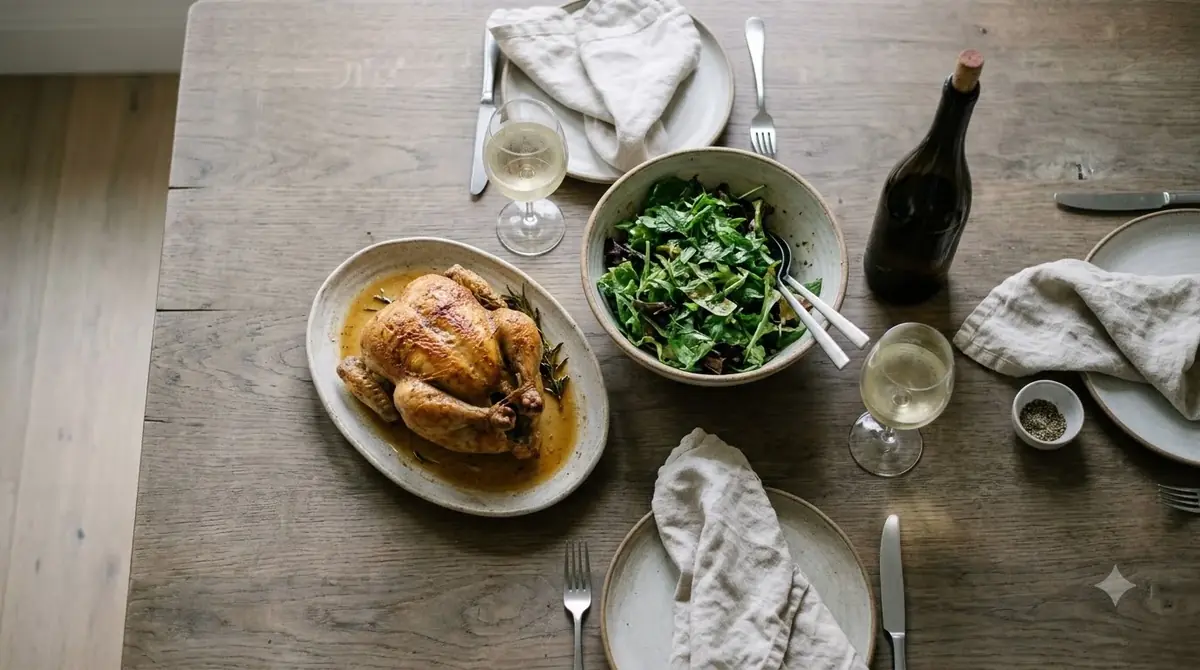
- Chianti Classico: Roast chicken, pork, mushroom pasta, and aged cheeses.
- Brunello di Montalcino: Grilled steak, braised beef, game, and truffle-based dishes.
- Rosso di Montalcino: Roast pork, mushroom risotto, poultry, and medium-bodied pasta dishes.
- Romagna Sangiovese: Regional meat dishes, sausages, pasta, and savory vegetable preparations.
These combinations are starting points rather than strict rules. The intensity of the food should generally match the intensity of the wine. A light, fruit-forward Sangiovese can be overwhelmed by a heavily braised dish, while a powerful Brunello may make a delicate vegetable preparation seem insignificant.
Sangiovese also makes a useful comparison with other Mediterranean grapes. Those interested in the origins of Syrah can explore where is Syrah from to see how a French grape developed a very different relationship with its traditional home and international growing regions. Likewise, the history of where is Port from illustrates how a wine’s regional identity can be shaped by both its grapes and its production traditions.
Frequently Asked Questions
Is Sangiovese genetically related to any other famous Italian grapes?
DNA research has identified a parent-offspring relationship between Sangiovese and the southern Italian variety Ciliegiolo. Sangiovese is also one of the parent varieties of several other Italian grapes, including Nerello Mascalese. These genetic relationships help researchers understand how Italian grape varieties developed and spread across different regions.
What is the Italian pronunciation of Sangiovese?
The commonly given English pronunciation is san-joe-VAY-zeh. The word has four syllables, with emphasis on the third syllable. You may hear slight regional differences in Italian speech, but this pronunciation is widely understood in wine shops and restaurants.
Is Sangiovese used to make rosé wine?
Yes. Although it is best known for red wine, Sangiovese can also be used to make rosato. The wine’s color depends partly on how long the juice remains in contact with the grape skins during production. Shorter skin contact produces a lighter-colored wine, while longer contact generally extracts more pigment and flavor.
Can Sangiovese be made into sparkling wine?
Yes. Sangiovese can be used for sparkling wine as well as still reds and rosés. Sparkling expressions are less internationally recognized than Chianti or Brunello, but they demonstrate the variety’s versatility. Its natural acidity can be useful in producing wines with a lively, refreshing profile.
Does Sangiovese have another name in different Italian regions?
Yes. Brunello is the traditional local name for Sangiovese in Montalcino, while Prugnolo Gentile is the name associated with the grape used in Vino Nobile di Montepulciano. Sangioveto is another historical name found in Tuscany. These names reflect local traditions and selections of a grape with considerable genetic diversity.
Sangiovese comes from Italy, with Tuscany serving as its most famous and influential home, although its precise birthplace remains historically uncertain. From Chianti and Brunello di Montalcino to Romagna and international vineyards, the grape demonstrates how one Italian variety can produce many distinctive wines. For anyone interested in Italian reds, understanding Sangiovese is an excellent way to begin exploring the country’s regional wine traditions.
More in Wine Types & Grapes
 What Does Mourvèdre Taste Like? Flavor Profile, Regions, and PairingsUpdated Nov 20, 2026
 What Does Marsanne Taste Like? Flavors, Styles, and Food PairingsUpdated Nov 20, 2026
 What Does Malvasia Taste Like? Styles, Flavors, and Food PairingsUpdated Nov 20, 2026
 What Does Grenache Blanc Taste Like? Flavor Profile, Styles, and PairingsUpdated Nov 20, 2026
 What Does Garnacha Taste Like? Key Flavors, Styles, and Pairing TipsUpdated Nov 20, 2026
 What Does Fruit Wine Taste Like? A Complete Flavor and Style BreakdownUpdated Nov 20, 2026