

We may earn a commission when you buy through links on this page, at no extra cost to you. Learn more.
If you are wondering where is montepulciano from, the red wine grape hails from central Italy—most famously the mountainous Adriatic region of Abruzzo—where it produces the deeply colored red wine Montepulciano d’Abruzzo. However, the name also belongs to a historic hilltop town in southern Tuscany that makes Vino Nobile di Montepulciano out of Sangiovese rather than the Montepulciano grape. Understanding the difference between the central Italian grape and the Tuscan town is the key to buying the right bottle.
Few names in the wine shop cause as much friendly confusion as Montepulciano. Whether you spotted it on a trattoria wine list or brought home a bottle after a vacation in central Italy, knowing the geography behind the label will immediately tell you what is inside your glass.
What It Is
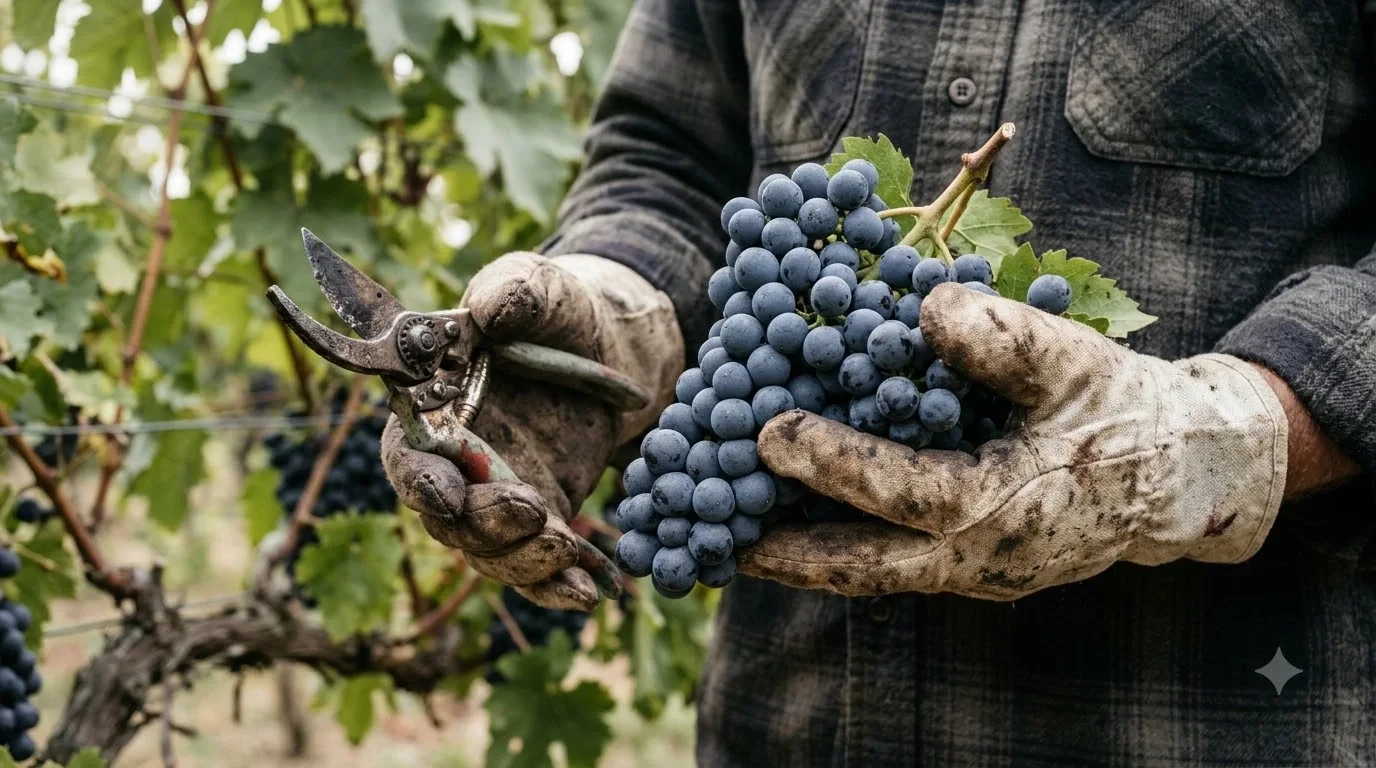
Montepulciano is one of Italy’s most widely planted indigenous red wine grapes, celebrated for yielding dark, fruit-forward, medium-to-full-bodied wines. Despite sharing an identical spelling, the grape has no genetic link to the famous Tuscan town of Montepulciano.
According to Wine Folly’s guide to Montepulciano, the variety originated in central Italy and has been cultivated along the eastern side of the Apennine Mountains for centuries. Historically, early ampelographers occasionally mistook the vine for Sangiovese, which only added to the long-standing naming mix-up between the two regions. Today, DNA profiling confirms they are completely distinct varieties, with Montepulciano standing as Italy’s second most planted native red grape right behind Sangiovese.
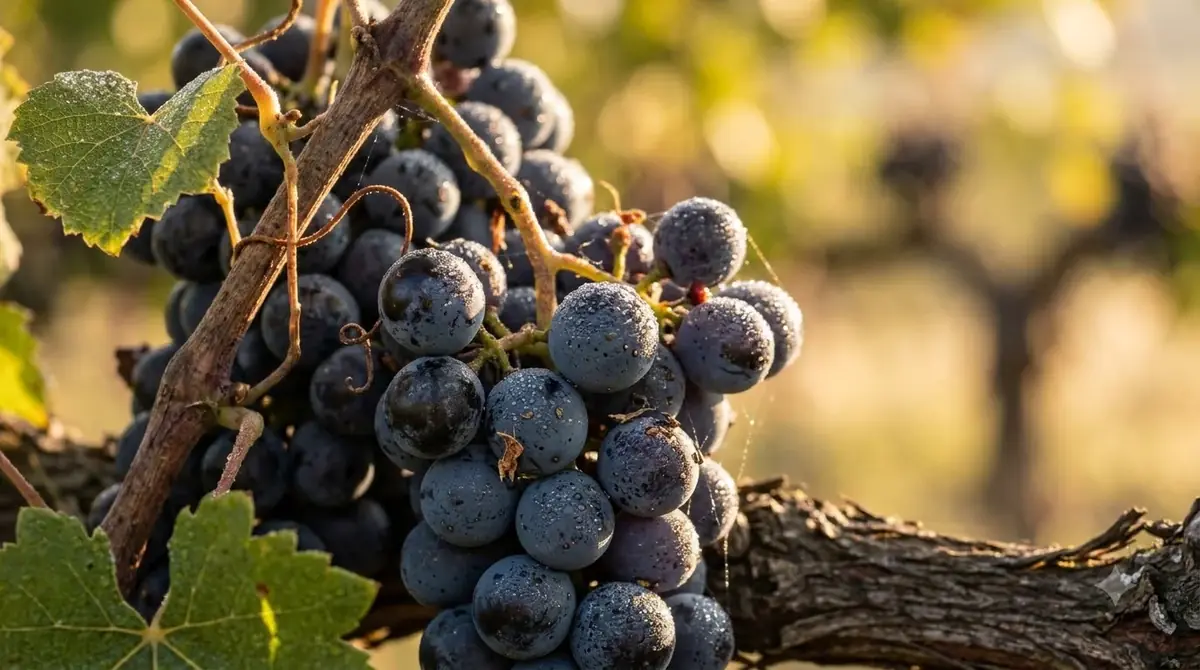
In the vineyard, Montepulciano is a late-ripening variety with thick, deeply pigmented skins that pack plenty of natural color and phenolic compounds into the must. Growers value the vine because it thrives in warm, sunny exposures without losing its natural freshness. Depending on how a winemaker handles extraction and oak aging, the grape can produce anything from an easygoing, unoaked weeknight red to a dense, cellar-worthy bottle.
You will also see the grape vinified as a vibrant, cherry-hued rosé called Cerasuolo d’Abruzzo. Named after the Italian word for cherry, Cerasuolo receives brief skin contact during fermentation, resulting in a structured, food-friendly pink wine that drinks almost like a light red.
The Grape vs. The Tuscan Town
The single biggest rule for reading an Italian label is paying attention to the preposition attached to the word Montepulciano. One refers to a grape variety grown on the Adriatic coast, while the other refers to a medieval town in Tuscany.
As VinePair explains in its guide to the two Montepulcianos, travelers frequently visit the picturesque Tuscan hill town of Montepulciano, fall in love with the local red wine, and return home looking for bottles labeled “Montepulciano.” When they buy a bottle of Montepulciano d’Abruzzo, they are often surprised to find a darker, plusher wine made from a totally different grape.
In Tuscany, the wines Vino Nobile di Montepulciano DOCG and Rosso di Montepulciano DOC are named after the town where they are produced. By law, Vino Nobile must be made primarily from Sangiovese—known locally in those hills as Prugnolo Gentile—at a minimum of 70 percent of the blend. Meanwhile, Montepulciano d’Abruzzo DOC is named for the Montepulciano grape grown in the Abruzzo region, requiring at least 85 percent of that variety.
| Feature | Montepulciano d’Abruzzo | Vino Nobile di Montepulciano |
|---|---|---|
| What “Montepulciano” Means | The red grape variety | The hilltop town in Tuscany |
| Primary Grape | Montepulciano (minimum 85 percent) | Sangiovese / Prugnolo Gentile (minimum 70 percent) |
| Region of Origin | Abruzzo (central-eastern Italy) | Tuscany (central-western Italy) |
| Color and Body | Deep ruby-purple, medium to full body | Medium garnet-ruby, medium body |
| Core Flavor Profile | Black plum, blackberry, oregano, cocoa | Sour cherry, red plum, leather, dried herbs |
| Acidity and Tannin | Moderate acidity, supple to firm tannins | High acidity, structured, earthy tannins |
Where It Grows
Montepulciano’s true heartland stretches along the central and southern Adriatic coast of Italy, centered squarely in the rugged region of Abruzzo. Because the grape needs plenty of sunshine and a long growing season to ripen fully, it rarely ventures into cooler northern Italian zones.
Abruzzo sits east of Rome, wedged between the towering Apennine peaks—some rising above 2,700 meters—and the Adriatic Sea. More than 65 percent of the region is mountainous, creating a dramatic topography of steep hillsides, calcareous clay soils, and coastal valleys. Warm Mediterranean sunlight ripens the late-harvest berries during the day, while cool breezes sweeping down from the mountains and off the sea preserve crisp acidity at night.
Within Abruzzo, the Colline Teramane DOCG sub-zone in the northern province of Teramo represents the highest quality tier for the grape. Wines from Colline Teramane must contain at least 90 percent Montepulciano and undergo stricter aging rules than standard Montepulciano d’Abruzzo DOC, resulting in concentrated, structured reds built for the cellar.
Just north of Abruzzo in the coastal region of Le Marche, Montepulciano plays a starring role in two classic appellations. In Rosso Conero DOC and Conero Riserva DOCG, grown on the limestone slopes of Monte Conero jutting into the Adriatic, Montepulciano makes up at least 85 percent of the blend and takes on a savory, mineral edge. Farther south in Marche, Rosso Piceno DOC blends 30 to 70 percent Montepulciano with Sangiovese for a lively, everyday table wine.
The variety also thrives in neighboring Molise—specifically in Biferno DOC—and further south in Puglia’s San Severo Rosso DOC. Outside Italy, warm-climate winemakers in California, Australia, and New Zealand have planted small pockets of Montepulciano, appreciating its ability to hold onto vibrant fruit in sun-drenched vineyards.
Flavor and Styles
In the glass, Montepulciano is immediately recognizable by its opaque, inky purple-ruby hue and generous aromas of dark berries. Reviewers at Wine Enthusiast note that the best examples balance ripe black fruit flavors with substantial yet approachable tannins.
Unoaked or stainless-steel-fermented styles showcase the grape’s pure, juicy fruit character. Expect bursts of black plum, blackberry, black cherry, and boysenberry, accented by subtle notes of dried oregano, black pepper, and crushed violet. Because these bottles see little to no new wood, their tannins feel soft and plush, making them easy to enjoy young.
When producers age Montepulciano in oak barrels—particularly for Riserva bottlings, which require a minimum of two years of aging including at least nine months in wood—the wine takes on a much richer personality. Oak contact layers notes of dark chocolate, espresso, sweet tobacco, licorice, and vanilla over the dense blackberry core. If you appreciate the plush dark fruit of where Merlot comes from or the peppery richness associated with the regions where Syrah grows, an oak-aged Montepulciano d’Abruzzo will feel right at home in your rotation.
How to Serve
Serving Montepulciano slightly below warm room temperature keeps its ripe dark fruit lively and prevents the alcohol from feeling heavy. Aim for a serving window between 60°F and 64°F (15°C to 18°C), or up to 68°F (20°C) for older, full-bodied Riserva bottles.
If your bottle has been sitting on a kitchen counter at 72°F, place it in the refrigerator for about 20 minutes before pouring. Conversely, if you are pouring a bottle of Cerasuolo d’Abruzzo rosé, chill it thoroughly to 45°F to 50°F (7°C to 10°C) just as you would a crisp white or full-bodied rosé. You can explore more serving benchmarks across different categories in our guide to Wine by Type.
Pour Montepulciano into a large, oversized red wine glass with a wide bowl so the aromatics have room to open up. Young, everyday bottles only need 15 to 20 minutes in the glass to breathe, whereas structured Riserva or Colline Teramane bottlings benefit from decanting for 45 minutes to an hour before dinner.
Tip: When shopping for an authentic bottle made from the Montepulciano grape, look for “Montepulciano d’Abruzzo” or “Rosso Conero” on the front label—if the label says “di Montepulciano,” you are buying a Tuscan Sangiovese instead.
Food Pairing
Montepulciano is a classic Italian table wine built for rich, savory meals where its medium-plus body and supple tannins can shine. Its natural acidity cuts cleanly through melted cheese, olive oil, and slow-simmered sauces without overwhelming delicate herbs.
Traditional pairings from Abruzzo center on rustic, hearty fare. Roasted lamb skewers (arrosticini), grilled Italian fennel sausage, pork ragù over thick pasta, and baked ziti with bubbling mozzarella all echo the wine’s dark fruit and herbal undertones. Tomato-based dishes—from wood-fired Margherita pizza to eggplant parmigiana—work especially well because the wine’s fresh acidity matches the brightness of cooked tomatoes.
Beyond Italian classics, Montepulciano handles smoky and grilled dishes effortlessly. Try it alongside barbecue pork ribs, charred burgers topped with aged cheddar, or roasted portobello mushrooms. For a simple cheese board, pair a glass with aged Pecorino Abruzzese, Parmigiano-Reggiano, and cured prosciutto or finocchiona salami.
Frequently Asked Questions
Is Montepulciano a dry or sweet wine?
Montepulciano is almost always fermented completely dry with virtually no residual sugar. Its ripe flavors of blackberry, black plum, and sweet spice can give an impression of fruitiness on the mid-palate, but the finish is crisp, savory, and dry.
What is the difference between Montepulciano and Montepulciano d’Abruzzo?
Montepulciano is the name of the red grape variety, while Montepulciano d’Abruzzo is the official wine appellation from Italy’s Abruzzo region made primarily from that grape. When wine drinkers casually ask for a glass of “Montepulciano” at a restaurant, they are almost always referring to Montepulciano d’Abruzzo.
Is Montepulciano the same grape as Sangiovese?
No, Montepulciano and Sangiovese are two completely separate grape varieties, though they are occasionally blended together in central Italy. The confusion happens because the Tuscan town of Montepulciano makes its famous Vino Nobile di Montepulciano wine out of Sangiovese rather than the Montepulciano grape.
Can you age Montepulciano wine?
Everyday Montepulciano d’Abruzzo DOC is crafted for fresh, fruit-forward drinking within two to four years of the vintage date. However, top Riserva bottlings and wines from the Colline Teramane DOCG sub-zone have the tannic structure and concentration to evolve gracefully for 8 to 15 years in a cool cellar.
Now that you know how to separate the Adriatic grape from the Tuscan hill town, browsing the Italian wine aisle becomes much easier. Reach for Montepulciano d’Abruzzo whenever you want a dark, generous red for pizza, pasta, or grilled meats—or keep an eye out for Cerasuolo d’Abruzzo when you want a bolder take on rosé.
More in Wine Types & Grapes
 Zinfandel Sugar Content: Dry Red vs. White Zinfandel GramsUpdated Nov 21, 2026
 Best Zinfandel Substitute Options for Sipping and CookingUpdated Nov 21, 2026
 Zweigelt Food Pairing: Best Dishes, Cheeses, and Serving TipsUpdated Nov 21, 2026
 Zinfandel Tannins Explained: How Structure Shapes Every BottleUpdated Nov 21, 2026
 Zinfandel Sweetness Level: Dry Red vs. Sweet White Zin ExplainedUpdated Nov 21, 2026
 Xinomavro Food Pairing: Best Dishes, Styles, and Serving TipsUpdated Nov 21, 2026