


We may earn a commission when you buy through links on this page, at no extra cost to you. Learn more.
The answer to “what is sekt” is that Sekt is the German term for sparkling wine, ranging from light, fruit-forward bottles made in large tanks to complex, traditional-method wines fermented in the bottle. The name alone does not tell you where the grapes were grown or how the bubbles were made. Labels such as Deutscher Sekt, Sekt b.A., and Winzersekt provide more useful clues about origin and production. Riesling is a signature grape, and the best examples can be bright, aromatic, and layered.
Sekt is worth knowing because Germany makes sparkling wine in several styles, at different levels of detail and craftsmanship. Understanding the label, fermentation method, grape variety, and sweetness term makes it easier to find a bottle for an aperitif, a meal, or a celebration.
What Sekt Means in German Wine
Sekt is the German word for sparkling wine, and the category covers a wide range of bottles rather than one tightly defined flavor or production style. German sparkling wine gets its bubbles through fermentation, with a minimum pressure of 3.5 bar. That pressure gives Sekt its lively mousse and persistent bubbles.
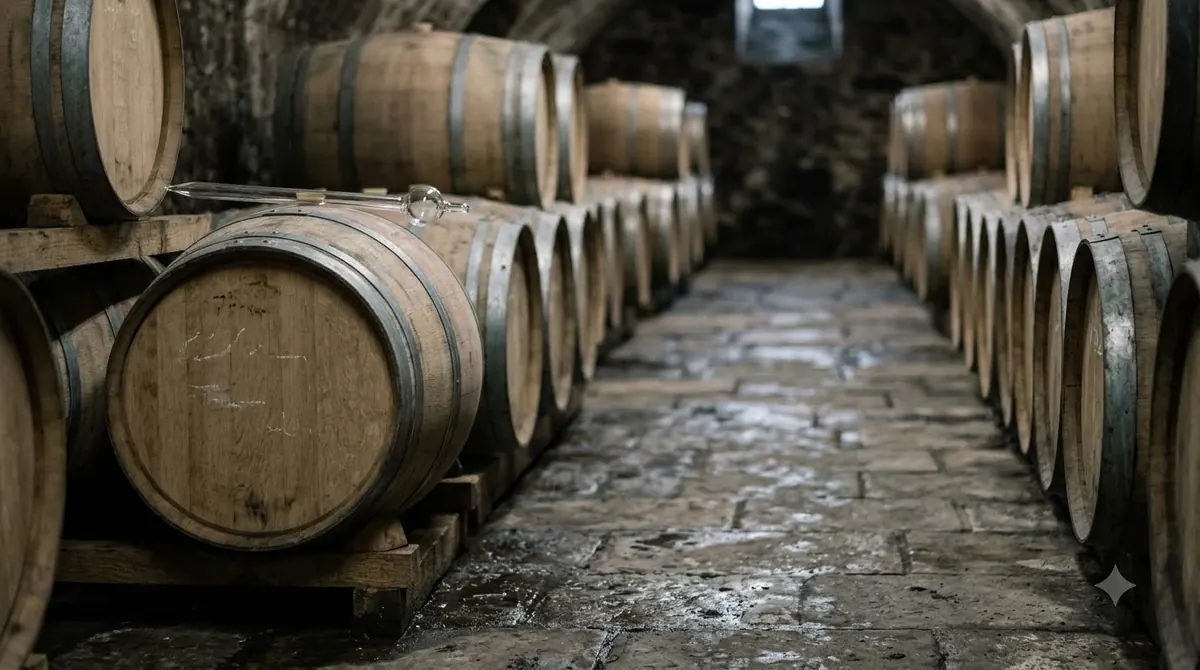
The breadth of the category matters. A basic Sekt may use base wine sourced from several European countries and be made sparkling in a large tank in Germany. At the other end, an estate may bottle-ferment its own grapes and leave the wine on the lees for months or years. Both are Sekt, but they can taste quite different.
Germany’s cool wine-growing climate helps produce fresh sparkling base wines. Grapes are usually picked to retain acidity rather than reach the ripeness sought for some still wines. The result can show citrus, green apple, pear, white flowers, or stone fruit. Bottle-fermented examples may add bread dough, biscuit, hazelnut, or brioche notes from time spent on yeast.
Sekt is served at family gatherings, brunches, holidays, and formal celebrations, not only at luxury occasions. That everyday role helps explain why the name spans both large-volume sparkling wines and carefully crafted estate bottlings. For a wider overview of wine styles, the site’s Wine by Type guide can help put Sekt alongside other wine categories.
Tank Fermentation and Bottle Fermentation
The method used to make the bubbles affects Sekt’s texture and aromas. The two methods to recognize are tank fermentation, which takes place in a sealed pressure tank, and traditional fermentation, which takes place in the bottle that will be sold.
In the tank method, a still base wine is blended with yeast and a measured amount of sugar, then sealed in a pressure-resistant tank. The yeast ferments the sugar and produces carbon dioxide, which remains dissolved in the wine because it cannot escape. The wine is then filtered and bottled under pressure. This efficient method produces consistent, fruit-led Sekt intended for early drinking. It is also known as the Charmat method, the approach used for many Prosecco wines.
Traditional-method Sekt takes longer. Base wine is bottled with yeast and sugar for a second fermentation, then rests on its lees, the spent yeast cells. Lees aging can contribute creamy texture and notes of toast, pastry, nuts, and bread. The bottles are later turned so sediment collects in the neck; the neck is chilled and the frozen yeast plug is removed during disgorgement.
For Winzersekt, the minimum lees-aging period is nine months. Wines of Germany describes a careful riddling stage in which bottles may be turned daily over four weeks before disgorgement. Some producers age their wines much longer, allowing the yeast character and fine bubbles to become more integrated. The official Wines of Germany explanation of bottle-fermented Sekt outlines the process and the minimum aging period.
German Sekt Labels: Deutscher Sekt, b.A., and Winzersekt
German label terms help distinguish a broad sparkling-wine category from wines with more specific origin and production standards. Start with the origin wording, then look for grape variety, vintage, and the phrase traditionelle Flaschengärung if you want bottle fermentation.
Deutscher Sekt
Deutscher Sekt must be made from German base wine, but the designation does not by itself promise that the grapes came from one named German wine region. It can be made by tank fermentation or traditional bottle fermentation. Deutscher Sekt establishes national origin, but method and grape variety still matter.
Sekt b.A.
The abbreviation b.A. stands for bestimmter Anbaugebiete, meaning a specified wine-growing region. Sekt b.A. is tied to one of Germany’s 13 wine regions, such as Mosel, Rheingau, Pfalz, or Rheinhessen, and carries an official quality-control designation. It may still be made by tank or bottle fermentation, so regional origin should not be mistaken for proof of traditional-method production.
Winzersekt
Winzersekt is the clearest label to look for when the goal is an estate-grown, traditional-method bottle. Wine Enthusiast explains that Winzersekt uses 100% estate-grown fruit, undergoes traditional bottle fermentation, and must state its grape variety and vintage on the label. It must spend at least nine months on the lees, although many producers choose longer aging. Riesling is especially common, but Pinot Noir, Chardonnay, Pinot Meunier, Muskateller, and Traminer can also be used.
Do not assume that a higher-sounding origin term automatically means longer aging. Sekt b.A. identifies regional provenance, while Winzersekt adds estate fruit and traditional bottle fermentation requirements. The VDP, an association of German wine estates, has its own stricter sparkling-wine rules: Decanter describes minimum lees aging of 15 months for VDP.Sekt, 24 months for vintage VDP.Jahrgangssekt, and 36 months for VDP.Sekt Prestige. Those extra requirements make the VDP wording a useful quality signal, but they are separate from the basic Sekt categories.
For more label detail and historical context, Wine Enthusiast’s guide to German Sekt explains how the different categories developed and why Riesling has become a signature style.
Riesling, Pinot Varieties, and German Regions
Grape variety gives Sekt much of its personality. Riesling is Germany’s signature contribution, while Pinot varieties and regional conditions shape acidity, ripeness, and fruit character.
Riesling is prized for its naturally high acidity and aromatic intensity. In Sekt, those traits can translate into lemon, lime, green apple, white peach, and floral aromas, with a crisp finish that keeps the wine refreshing. Wine Enthusiast notes that Riesling’s aromatic compounds help give Rieslingsekt a particularly perfumed, fruity character. Its acidity is also useful in a sparkling base wine because the second fermentation and dosage can soften the impression of sharpness.
Pinot Noir, known in Germany as Spätburgunder, can give Sekt more structure and red-fruit character. Pinot Blanc (Weissburgunder) and Pinot Gris (Grauburgunder) tend to offer gentler orchard-fruit profiles, while Chardonnay can add citrus, apple, and a broader texture. Other varieties, including Pinot Meunier, Muskateller, Traminer, Scheurebe, Kerner, Elbling, and Sauvignon Blanc, also appear in German sparkling wine. A grape name on the label is useful because it gives a more reliable flavor clue than the broad word Sekt alone.
Look to the region name for another layer of context. Mosel and Rheingau are strongly associated with Riesling, while Pfalz and Rheinhessen have a broad range of sparkling-wine producers and grape choices. Baden is also an important source of Sekt b.A. A regional designation narrows the origin, helping explain differences between lean, citrus-driven bottles and rounder, orchard-fruited examples.
Acidity is a structural feature, not a sign that a wine must taste sour. Portuguese Arinto is another grape associated with bright acidity; the separate Arinto wine overview offers a useful comparison for readers learning how grape variety shapes a wine’s feel.
Sekt Sweetness Labels and Residual Sugar
Sekt sweetness terms follow sparkling-wine rules, and the numbers are not identical to the sweetness ranges used for still wine. Carbon dioxide makes a wine seem fresher and can reduce the perception of sugar, so a sparkling wine labeled dry may contain more residual sugar than a still wine labeled dry.
Residual sugar is measured in grams per liter (g/L). The ranges below are the German Sekt categories listed by Wines of Germany. Brut nature is the driest end of the scale, while mild is the sweetest. The boundaries for brut nature, extra brut, and brut are maximum limits, so their ranges overlap rather than forming separate bands with no shared values.
| Label term | Residual sugar | Typical impression |
|---|---|---|
| Brut nature | 0–3 g/L | Very dry, crisp |
| Extra brut | 0–6 g/L | Very dry, taut |
| Brut | 0–12 g/L | Dry, balanced |
| Extra dry | 12–17 g/L | Lightly rounded |
| Dry | 17–32 g/L | Noticeably softer |
| Semi-dry | 32–50 g/L | Clearly off-dry |
| Mild | More than 50 g/L | Sweet |
These terms can surprise drinkers familiar with still wine. In the sparkling category, Extra Dry is sweeter than Brut, and Dry is sweeter than Extra Dry. Some Rieslingsekt producers also use mature Riesling Spätlese or Auslese wine in the dosage instead of a simple sugar solution, adding another layer of fruit and aroma. A shopper who wants a classic dry aperitif will often start with Brut or Extra Brut. Someone who prefers a softer profile can move toward Extra Dry or Dry, while Semi-dry and Mild suit drinkers who actively want noticeable sweetness.
Tip: For a first bottle, choose Brut if you want a versatile dry style. If you are serving Sekt with fruit dessert, spicy food, or a dish with a sweet glaze, consider a sweeter style so the wine does not taste thin or sharply acidic beside the food.
Sweetness is only one part of balance. A wine with pronounced acidity can still feel refreshing when it has a little residual sugar, and a very dry Sekt can feel rounder if its fruit is ripe or its texture is creamy from lees aging. The best way to choose is to combine the sweetness term with the grape and production method rather than treating the term as a complete tasting description.
Serving Sekt at 43–50°F and Pairing It with Food
Serve Sekt cold enough to keep its bubbles lively but not so cold that its aromas disappear. A practical range is 40–50°F; full-bodied or lees-aged examples can be served toward the warmer end.
Chill the bottle in a refrigerator or use an ice bucket with ice and water. To open it, keep a hand over the cork, loosen the wire cage, and turn the bottle rather than pulling the cork. Use a tulip-shaped sparkling glass when possible; it retains bubbles while giving aromas more room than a narrow flute.
A standard pour is about 5 ounces, so a 750-milliliter bottle provides roughly five servings. Pour slowly down the side of the glass to reduce foam. Once opened, keep the bottle cold with a sparkling-wine stopper and aim to finish it within one to three days.
Pair Sekt according to acidity, sweetness, and texture. Dry, high-acid Rieslingsekt works with oysters, shrimp, sushi, smoked trout, goat cheese, and dishes with lemon or vinaigrette. Its acidity refreshes the palate after salty or fatty foods, while bubbles suit fried appetizers, potato chips, and tempura. Pinot-based Sekt can accompany roast chicken, mushrooms, charcuterie, and lighter pork dishes.
For spicy food, choose a lower-alcohol, slightly off-dry Sekt rather than a very dry, high-alcohol bottle; sweetness can soften chili heat, while alcohol can make the burn feel stronger. With dessert, the wine should be at least as sweet as the dish. A lightly sweet Sekt can accompany fruit tart or almond cake, while a sweeter style is a better match for richer pastries. A Brut bottle can also be the base for a Sekt cocktail, especially when a recipe calls for a crisp sparkling wine rather than a strongly flavored spirit.
Frequently Asked Questions
These quick answers compare Sekt with Champagne and Perlwein, and explain the A.P. number and the traditional-method wording found on German labels.
Is Sekt the same as Champagne?
No. Champagne is a protected regional name for sparkling wine from France’s Champagne region, while Sekt is the German term used for German sparkling wine. A traditional-method Sekt can be made with a similar second-fermentation technique, but that does not make it Champagne or allow it to use the Champagne name.
What does the A.P. number on a German Sekt label mean?
The Amtliche Prüfnummer is an official test number associated with quality-control approval for relevant German wines, including Sekt b.A. The number encodes information about the testing authority, applicant location, applicant business, bottling operation, and application year. It is an administrative traceability and testing identifier, not a score or a sweetness rating.
Can Sekt be used in cocktails?
Yes. A dry Brut Sekt can replace other dry sparkling wines in recipes that use citrus, fruit liqueur, or a small measure of aperitif. Add the chilled Sekt last and stir gently to preserve carbonation; a simple build in the glass also avoids losing bubbles during shaking.
What is the difference between Sekt and Perlwein?
Perlwein is a lightly sparkling wine with lower pressure than fully sparkling Sekt. German wine information describes Schaumwein as having at least 3 bar of pressure and fermented sparkling wine as having at least 3.5 bar, while Perlwein sits below the sparkling threshold and may receive carbon dioxide by addition rather than fermentation alone.
Does every Sekt bottle use the traditional method?
No. The second fermentation may take place in a pressure tank or in the bottle, and many everyday Sekt bottlings use the tank method. Look for wording such as traditionelle Flaschengärung or klassische Flaschengärung when bottle fermentation is important to your choice.
Sekt is not one fixed style: it can be an easy, fruit-forward sparkling wine or a detailed, lees-aged bottle shaped by Riesling, Pinot grapes, and a specific German region. Start with the origin and method terms, choose a sweetness level that suits your palate, and serve the wine well chilled. That simple approach makes it easier to find a Sekt for both everyday drinking and a special meal.
More in Wine Types & Grapes
 What Does Mourvèdre Taste Like? Flavor Profile, Regions, and PairingsUpdated Nov 20, 2026
 What Does Marsanne Taste Like? Flavors, Styles, and Food PairingsUpdated Nov 20, 2026
 What Does Malvasia Taste Like? Styles, Flavors, and Food PairingsUpdated Nov 20, 2026
 What Does Grenache Blanc Taste Like? Flavor Profile, Styles, and PairingsUpdated Nov 20, 2026
 What Does Garnacha Taste Like? Key Flavors, Styles, and Pairing TipsUpdated Nov 20, 2026
 What Does Fruit Wine Taste Like? A Complete Flavor and Style BreakdownUpdated Nov 20, 2026