

We may earn a commission when you buy through links on this page, at no extra cost to you. Learn more.
If you are asking what is monastrell, it is a dark, tannic red grape grown mainly in eastern and southeastern Spain, and it is known in France as Mourvèdre. Wines made from it are typically dry and full-bodied, with blackberry and black pepper notes, high tannins and medium acidity. Most people serve it at about 60 to 65 F alongside grilled or smoked meat. The grape is also a key blending partner in Rhône-style and GSM wines.
Monastrell is one of those grapes that many wine drinkers have seen on a label without realizing what it is. The same variety is called Mourvèdre in France and Mataro in some other markets, and it sits at the heart of many Spanish reds as well as several classic blends from the Rhône and Provence. If you have a bottle in front of you, or you are deciding whether to buy one, this guide covers where the grape comes from, how it tastes, how its structure behaves, and how to serve and pair it at home.
Where Monastrell Came From
Monastrell is widely believed to have originated in Spain, where it remains one of the most planted red grapes. According to Foods and Wines from Spain, it has become the fourth most important red variety in the country, but its name changes from region to region, which is why it can be confusing on a shelf.
According to Wine Enthusiast’s profile of Mourvèdre, the variety is believed to have come from Spain, where it is known as Monastrell or Mataro. The same source suggests that the Phoenicians likely carried it from Spain to France, and that by the 16th century the grape was already central to southern French winemaking. From Roussillon it spread into Provence and the Rhône Valley, where it became a standard partner for Grenache and Syrah in the blends that now define the region.
The grape then faced its biggest threat in the late nineteenth century. Phylloxera, a root-feeding louse, devastated European vineyards, and Mourvèdre proved a poor match for grafting onto American rootstock, so many of its plots were replanted with other varieties. Alicante was hit especially hard. Great British Chefs reports that about 100,000 hectares of vines were destroyed there, and that the region’s winemaking went into decline and never fully recovered.
Some old vineyards survived with their original roots intact. Foods and Wines from Spain explains that many Monastrell plots still grow pie franco vines, meaning they are not grafted onto American rootstock. Their survival came either from the vines’ own resistance to the louse or from sandy soils that the insect could not survive in. Those old-vine wines are now highly sought after, and the trade body names Casa Castillo as the benchmark for wines from Jumilla.
Where Monastrell Grows in Spain
Monastrell dominates the vineyards of several southeastern Spanish appellations, and its share of plantings varies widely from one to the next. In the most Monastrell-heavy regions, the grape accounts for the great majority of vines.
According to Foods and Wines from Spain, five Denominaciones de Origen represent the grape most strongly: Alicante, Almansa, Bullas, Yecla and DOP Jumilla. The table below shows the share of vines planted to Monastrell in each, along with the style the trade body associates with it.
| Appellation | Share of vines planted to Monastrell | Typical style |
|---|---|---|
| DO Yecla | About 80% | Bold, highly structured reds with lively tannins |
| DOP Jumilla | About 70% | Dense, fruity reds with blackberry, cherry and plum |
| DO Bullas | About 70% | Fresh, vibrant reds with minerality and jammy blackberry |
| DO Alicante | About 60% | Fresh reds with plummy, cherry notes and herbs |
| DO Almansa | About 10% | Bold reds with balanced acidity and hints of prune and pepper |
Foods and Wines from Spain puts Yecla at about 80 percent Monastrell and Jumilla at about 70 percent, which makes Jumilla the largest of the five. Great British Chefs reports that after phylloxera destroyed the vineyards there in 1989, growers replanted mostly with the native variety. In Alicante, the co-operative Las Virtudes in Villena, founded in 1961, makes more than fifteen wines, and Monastrell is its largest grape. Its export manager says every other red the co-op plants has to measure up against it. Wine Enthusiast adds that Spanish law requires Monastrell to be one of the primary varieties in the wines of Alicante, Almansa, Jumilla, Valencia and Yecla.
Monastrell Outside Spain
In France, the grape is known as Mourvèdre and is central to the southern Rhône, Provence and Languedoc-Roussillon, where some of the densest plantings in the country are found. It is also a key part of Bandol, the Provence appellation where Mourvèdre is blended with Grenache, Cinsault, Carignan and Syrah. Outside Europe, the variety has been planted in California, Washington and several other American states, and it has found a strong footing in Australia’s Barossa Valley, where dry, warm conditions suit it well.
How Monastrell Tastes
Monastrell usually shows dark fruit, savory earth and peppery spice, with a dry, full-bodied palate. Blackberry and black pepper are the best starting points for most bottles.
Wine Folly lists blackberry, black pepper, cocoa, tobacco and roasted meat as the main flavors, and describes the wines as dry, full-bodied, high in tannin and medium in acidity, with 13.5 to 15 percent alcohol. Wine Enthusiast adds that the dark fruit often comes with cherries, blueberries, blackberries and currants, and that stewed fruit such as prunes can show up as well. The same source warns that the earthy, secondary notes can be strong enough to overpower the fruit itself.
Foods and Wines from Spain describes the reds as color-rich, with jammy aromas of red and dark berries alongside Mediterranean herbs and flowers. The palate is usually balanced, with smooth tannins and enough structure to carry the fruit. The style also shifts with the place. The trade body says Alicante Monastrell tends toward plummy, cherry notes with herbs and forest floor, while Jumilla wines are denser and fruitier, with blackberry, cherry and plum and earthy touches of cocoa. For a more detailed breakdown of aromas, read our monastrell tasting notes.
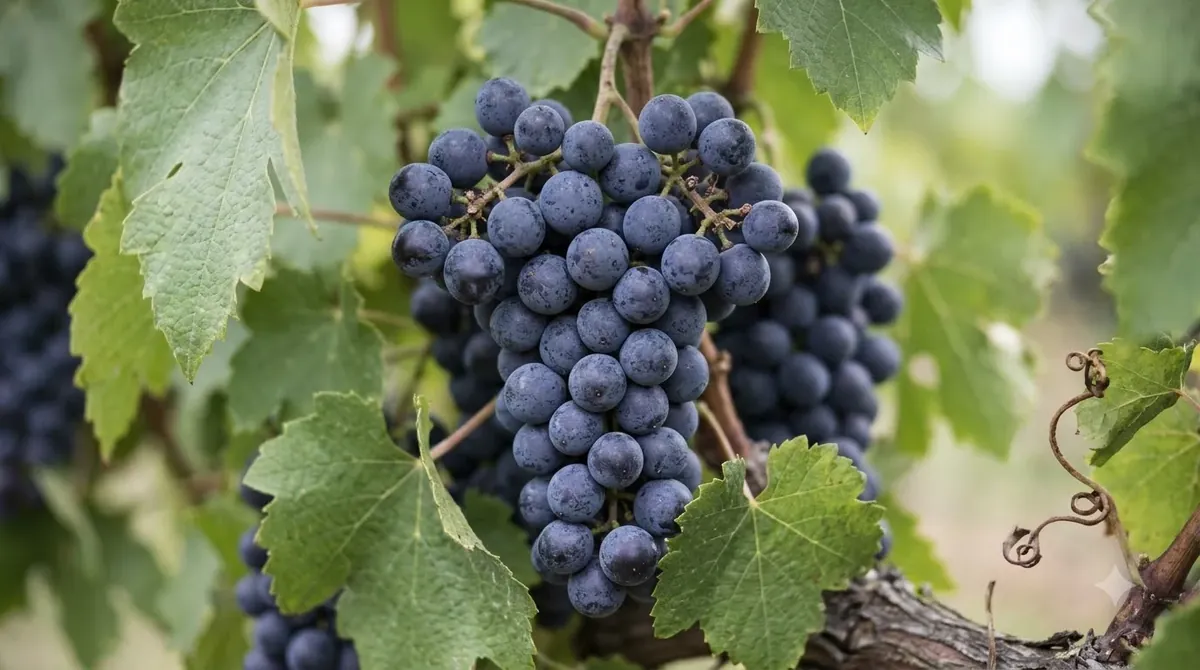
The color is also a clue. Wine Enthusiast notes that the berries are nearly black in the vineyard, and the grape ripens late and can reach high sugar levels under the right conditions. That is why the finished wine can carry significant alcohol and such a deep, dense look in the glass.
Tannin, Acidity and Aging Potential
Monastrell is typically high in tannin and medium in acidity, which gives it a firm, savory structure. Its tannin sits above Merlot and in the same general range as Syrah, so it needs food to show its best side.
Merlot is usually medium in tannin, while Syrah ranges from medium-plus to high, so a Monastrell often feels as firm as a Syrah in the mouth, with a slightly earthier character. Pinot Noir sits at the other end, with low to medium tannin and high acidity. Cabernet Sauvignon is also high in tannin, which makes Monastrell a natural comparison for drinkers who already enjoy a structured Cabernet.
Acidity is where the vineyard work matters most. Wine Enthusiast notes that acidity declines rapidly once the grapes reach peak ripeness, which leaves a short window for picking and requires close attention in the vineyard. Good producers handle this through careful harvest timing, and that is one reason the best bottles show balance rather than heaviness. A well-made Monastrell should feel structured and juicy, not flat or cooked.
Aging is another area where quality shows. Wine Enthusiast says selections from good vintages are suitable for mid- to long-term aging. Most everyday Monastrell is at its best within a few years of release, while old-vine bottles from strong vintages can develop more complexity with time in the cellar.
Tip: Young, full-bodied Monastrell benefits from decanting. Pour it into a decanter 30 to 60 minutes before serving, and give a very young bottle closer to an hour, to soften the tannins and let the dark fruit open up.
Monastrell Styles Beyond Dry Red
Most Monastrell on the market is dry red, but the grape also makes fresh rosés, sparkling wines and sweet styles. Fondillón, the Alicante specialty, is the best-known historical example of a sweet style.
Rosé is where Monastrell often shows its brightest side. Foods and Wines from Spain says the grape produces fruity and full-bodied rosés, and Great British Chefs describes Casa Balaguer, a small organic winery in DO Alicante, as a pioneer of natural wine in the region. The winery makes excellent natural rosés from Monastrell, using the biodynamic calendar and as little intervention as possible.
Sweet styles are rarer and more specialized. Fondillón is a semi-sweet wine made only in DO Alicante from overripe Monastrell. According to Great British Chefs, the grapes are left on the vine to over-ripen, then hand-picked and dried for at least a couple of weeks before a fermentation that lasts twenty to thirty days. The wine is aged in barrel for at least ten years and then further with the solera method, similar to sherry, but it is not fortified. Its alcohol, around 18 percent, comes from the sugar in those over-ripened grapes.
Whether a bottle is sweet or dry depends on the style, and the difference matters when you pour. Our guide on is monastrell sweet or dry walks through the styles in more detail. For a broader view of where this grape fits among other reds, the Wine by Type hub is a useful next step.
Serving and Pairing Monastrell at Home
Serve Monastrell at about 60 to 65 F, a touch below room temperature. Pair it with rich, smoky or charred food, where its firm tannins soften against fat and salt.
Serving Temperature and Glassware
Wine Folly suggests a broader serving range of 60 to 68 F, or 15 to 20 C, and lists a universal glass style as the right choice. For most home bottles, 60 to 65 F is the practical target. Pour about 5 ounces per glass, since a standard 750 ml bottle yields roughly five glasses.
If you do not finish the bottle, keep it corked in the refrigerator for three to five days, which is the usual window for still wines. Store unopened bottles on their sides in a cool spot, ideally near 55 F, so the cork stays moist and the wine ages evenly.
Food Pairings That Work
Smoked meats and barbecue are among Monastrell’s best partners. Wine Folly notes that the wine’s peppery and gamey edges seem to recede alongside smoked meats, letting the black fruit and cocoa notes come forward. Wine Enthusiast describes the grape’s meaty, char-like quality as a natural match for grilled meats and other substantial dishes. Thick-cut beef, a pork shoulder with a dry rub, or a char-grilled steak all suit a full red like this.
The basic rules apply here. Salt and fat soften tannin, so a fattier cut usually makes a Monastrell taste smoother. Chili heat is amplified by both alcohol and tannin, so very spicy dishes are better matched with a fresh rosé than with a big red. Oily fish clashes with firm tannic reds, so keep Monastrell with meat. Fondillón is the exception to the savory rule: because it is sweet, it should be at least as sweet as the dessert, which makes dark chocolate or dried-fruit desserts good choices. For more dish ideas, see our monastrell food pairing notes.
Frequently Asked Questions
Is monastrell the same grape as Mourvèdre?
Yes, they are the same grape. Wine Enthusiast’s synonym list also includes Balzac Noir, Damas Noir and Alicante, which is one reason the variety can appear under several names on labels. Spain uses Monastrell, France uses Mourvèdre, and the grape is sometimes sold under older regional names.
How long can monastrell age?
Wine Folly suggests cellaring Monastrell for ten years or more, which points to a wine with real structure. Wine Enthusiast notes that selections from good vintages handle mid- to long-term aging well. Vintage quality matters more than the label name when you are planning to keep a bottle.
Why does monastrell do well in dry, windy places?
Foods and Wines from Spain says the vines are resistant to dry climates and wind, and they produce low yields. Their shallow clay soils hold water through hot summers, which helps the vines ripen fully. Wine Enthusiast adds that the grape is susceptible to powdery mildew, so it still needs warm, dry weather and good irrigation.
Is monastrell grown organically?
Many producers across the Monastrell appellations have joined the organic movement. Foods and Wines from Spain reports a steadily growing share of certified organic vineyards, which makes organic Monastrell easier to find than it was a generation ago. Organic farming describes how the grapes are grown, not what the finished wine will taste like.
Why do some monastrell wines taste softer than others?
Wine Enthusiast notes that New World versions tend to be a little less powerful and tannic than Old World wines. Spanish Monastrell often sees ample oak and produces beefy, muscular styles, so oak treatment can change the texture noticeably. Winemaking standards and practices also leave a strong mark on the finished bottle.
Monastrell rewards drinkers who like structured reds with savory, earthy character. Start with a dry bottle from a well-known DO, or try a fresh rosé to see the fruitier side of the grape. Once you know the style, a bottle of Fondillón makes a rewarding next step for a special dessert night.
More in Wine Types & Grapes
 Zinfandel Sugar Content: Dry Red vs. White Zinfandel GramsUpdated Nov 21, 2026
 Best Zinfandel Substitute Options for Sipping and CookingUpdated Nov 21, 2026
 Zweigelt Food Pairing: Best Dishes, Cheeses, and Serving TipsUpdated Nov 21, 2026
 Zinfandel Tannins Explained: How Structure Shapes Every BottleUpdated Nov 21, 2026
 Zinfandel Sweetness Level: Dry Red vs. Sweet White Zin ExplainedUpdated Nov 21, 2026
 Xinomavro Food Pairing: Best Dishes, Styles, and Serving TipsUpdated Nov 21, 2026