

We may earn a commission when you buy through links on this page, at no extra cost to you. Learn more.
What is dry white wine? It is white wine with little or no residual sugar, because yeast has turned nearly all of the grape sugar into alcohol during fermentation. Dryness describes sugar content, not how the wine feels in the mouth. A dry white can still taste fruity, floral or creamy, and it is one of the most common styles in the world.
This guide explains what makes a white wine dry, how to tell dry from sweet on the label and in the glass, which grapes make the most common dry whites, and what to serve with them. It is written for someone who wants a clear answer before picking a bottle.
What makes a white wine dry
Wine starts as grape juice, and the sugar in that juice is what yeast eats. During fermentation, yeast converts sugar into alcohol and carbon dioxide. When the process runs close to completion, very little sugar remains and the wine is dry. Bonterra, a wine producer, describes a dry white as one where the grape’s natural sugars have been almost entirely converted to alcohol, usually leaving less than 4 grams of residual sugar per liter.
Dryness is a matter of degree, not a yes-or-no switch. Some white wines are bone dry, others keep a trace of sweetness that shows up on the finish, and dessert wines keep so much sugar that they taste plainly sweet. Winemakers can stop fermentation early to leave sugar in the wine, which is how off-dry and sweet whites are made.

How dry wine differs from sweet wine on the palate
Many people confuse dryness with acidity or body, and the confusion is understandable. A dry wine can taste crisp and sharp, but a dry wine can also feel round and creamy. Dryness is about sugar. Acidity makes a wine taste tart, and body describes how heavy it feels. Oak aging and time on the lees can add richness or texture to a wine that is still dry, because those effects add flavor and feel without adding sugar.
When you taste a white, look at the fruit and the finish. A wine with ripe fruit that lingers without a sugary aftertaste is usually dry. If the wine tastes like syrup, the wine is probably sweet. Chilling a wine also affects how sweet it seems, so sample at the serving temperature you plan to use.
| Style | Typical grapes | What to expect |
|---|---|---|
| Crisp and citrus-forward | Sauvignon Blanc, Pinot Grigio | Lime, green apple, high acidity |
| Unoaked | Unoaked Chardonnay | Crisp, mineral, clean finish |
| Oaked or creamy | Oaked Chardonnay | Richer texture, vanilla and butter notes |
| Aromatic | Pinot Gris, Riesling (dry styles) | Pear, floral notes, round feel |
Common dry white grapes and styles
Sauvignon Blanc is one of the clearest examples of a dry white. It is usually citrus-forward, with grassy or herbal notes, and its high acidity suits a dry style. Bonterra notes that Sauvignon Blanc is typically dry because the acidity gives the wine its structure.
Chardonnay can be dry in almost any style, but the winemaking changes the taste a great deal. Unoaked versions are crisp and mineral-driven, while oaked versions have a creamy texture that can make a wine feel less dry than it is. Malolactic fermentation softens acidity and can add buttery notes, which is common in richer Chardonnay.
Pinot Grigio is typically light-bodied, with crisp acidity and fairly neutral pear, apple and citrus flavors. It is one of the most widely sold dry whites, and many bottles are made to be served young. Pinot Gris, the same grape under a French name, can be rounder and more textured, depending on the winery.
How to serve dry white wine
Serving temperature changes how dry a wine tastes. Bonterra advises serving most dry whites between 45 and 55 degrees Fahrenheit, with lighter wines such as Pinot Grigio and Sauvignon Blanc at the cooler end and fuller Chardonnay a little warmer. Over-chilling mutes aroma, so take the bottle out of the refrigerator 10 to 15 minutes before pouring if it has been very cold.
Use a glass with a medium bowl so the aromas can open. A tall, narrow glass suits crisp styles, and a slightly wider bowl suits oaked, fuller whites. Pour a modest amount so the wine stays cool in the glass.
Food pairing for dry white wine
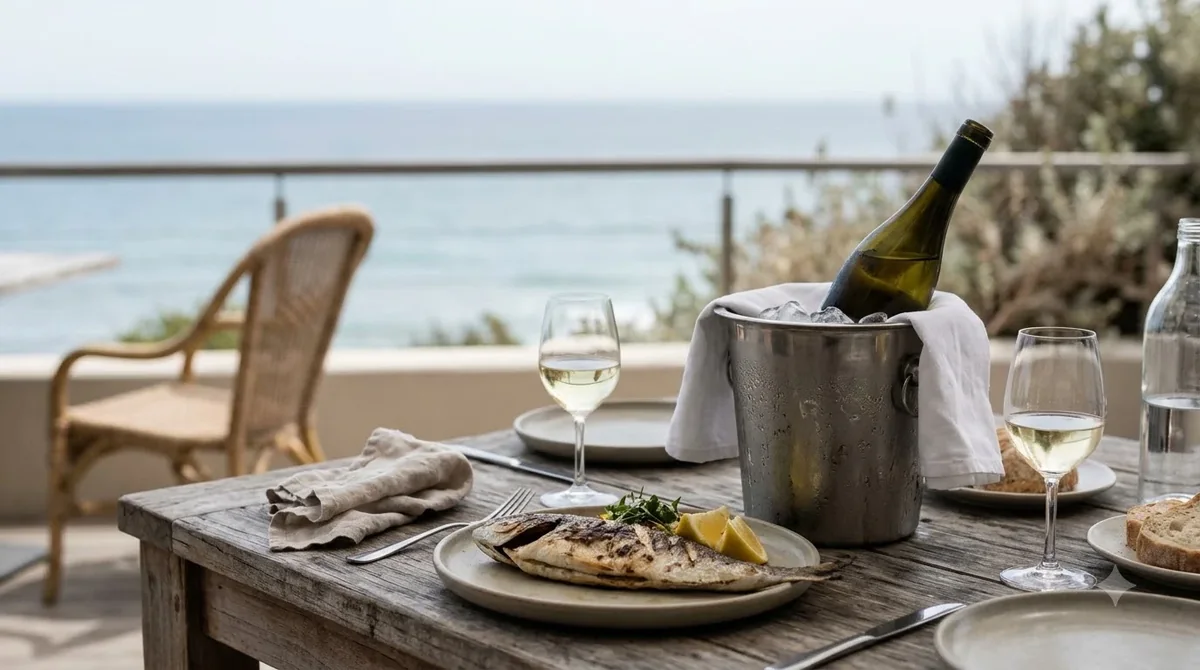
Acidity is the main reason dry whites pair so well with food. Crisp, high-acid wines cut through fat and bring out the flavor of seafood. Bonterra suggests dry whites with shellfish, oysters and grilled fish with herbs, and with poultry and pork in dishes that use herbs, citrus or cream sauce. For vegetarian meals, try vinaigrette salads, grilled vegetables and goat cheese. Match the weight of the wine to the weight of the dish: a light Pinot Grigio suits a delicate fish, and a fuller oaked Chardonnay suits roast chicken with cream.
Common questions when buying dry white
Most shoppers look for a dry label, but many bottles do not list sweetness. In that case, check the grape and region. Sauvignon Blanc, Pinot Grigio and unoaked Chardonnay are usually dry, and wines from many European regions are dry by default. If a bottle is described as off-dry or sweet, the label should say so. When in doubt, ask a shop staff member or read a producer’s tasting notes.
Reading a label for dryness
Many bottles do not state sweetness on the front label, so look at the back label and the producer’s notes. Terms such as dry, secco or sec on European wines usually point to a dry style, while off-dry, demi-sec or medium signal a touch of sweetness. In the United States, the label often focuses on the grape and region rather than the sugar level, so a few tasting notes from a shop can help. If the notes describe the wine as crisp, zesty or bone dry, it is almost certainly dry.
Taste is the final check. A dry wine finishes clean, with the fruit fading rather than sticking to the palate. A sweet wine leaves a syrupy coating and tastes rounder even when it is chilled. Once you know this difference, it becomes easier to guess a wine’s style before you open it.
Dry white wine in the kitchen
Dry white wine is also a common cooking ingredient. Its acidity helps brighten sauces, and it deglazes a pan well after searing fish or chicken. Because it has little sugar, it reduces into a savory base rather than a sweet syrup. Choose a bottle you would drink on its own, since the flavor of a poor wine concentrates as the sauce reduces. Sauvignon Blanc and unoaked Chardonnay are reliable choices for most cooking, and both fit into the same dry style covered above.
Frequently Asked Questions
What does dry mean in wine?
In wine, dry means the wine has very little residual sugar left after fermentation. It describes sweetness, not sourness or body, so a dry wine can still taste fruity or feel full.
Is Sauvignon Blanc a dry white wine?
Yes. Sauvignon Blanc is usually dry, with high acidity and citrus or herbal flavors. Its sharp, fresh profile is one reason many people recognize it as a dry white.
Does dry white wine have a lot of sugar?
No. Dry white wines usually have only a few grams of residual sugar per liter. Most of the sugar from the grape has been converted into alcohol during fermentation.
How should I store an open bottle of dry white?
Recork it, keep it in the refrigerator, and drink it within a few days. Cold storage slows oxidation, so the wine keeps its freshness longer than a bottle left on the counter.
Dry white wine is a broad, useful category, and once you know the grapes and serving habits, choosing a bottle becomes much simpler. For more on how the styles are grouped, see the Wine by Type hub, and if you plan to cook with a white, read about cooking with dry white wine.
More in Wine Types & Grapes
 Zinfandel Sugar Content: Dry Red vs. White Zinfandel GramsUpdated Nov 21, 2026
 Best Zinfandel Substitute Options for Sipping and CookingUpdated Nov 21, 2026
 Zweigelt Food Pairing: Best Dishes, Cheeses, and Serving TipsUpdated Nov 21, 2026
 Zinfandel Tannins Explained: How Structure Shapes Every BottleUpdated Nov 21, 2026
 Zinfandel Sweetness Level: Dry Red vs. Sweet White Zin ExplainedUpdated Nov 21, 2026
 Xinomavro Food Pairing: Best Dishes, Styles, and Serving TipsUpdated Nov 21, 2026