

We may earn a commission when you buy through links on this page, at no extra cost to you. Learn more.
What does strawberry wine taste like? Strawberry wine typically tastes fruity, fragrant, and softly sweet, with recognizable flavors of ripe strawberries, red berries, and sometimes floral or jammy notes. Its sweetness and acidity depend on how the strawberries are fermented and how much residual sugar remains after fermentation. Some bottles are light and refreshing, while others are richer, sweeter, and closer to a strawberry preserve or fruit dessert in character.
Strawberry wine offers a different experience from traditional grape wine because its main fruit character comes from strawberries rather than grapes. It can be enjoyed chilled on its own, served with fresh fruit, or paired with desserts and savory dishes. Understanding its sweetness, acidity, aroma, and texture makes it easier to choose a style that suits your preferences.
The Main Flavors and Aromas of Strawberry Wine
Strawberry wine typically features ripe strawberry, red berry, and floral aromas, with a fruit-forward flavor that can range from fresh and delicate to concentrated and jammy. Its defining characteristic is recognizable strawberry fruit, although fermentation adds complexity that separates it from ordinary strawberry juice.

The first impression is usually strawberry. Depending on the fruit and production method, the aroma can resemble freshly sliced berries, crushed strawberries, strawberry preserves, or ripe summer fruit. Some wines also show hints of raspberry and cherry. These additional red-fruit characteristics make the wine smell more complex than a simple fruit beverage.
Floral aromas can provide another layer. Certain strawberry wines have delicate blossom-like notes that complement the main fruit character. Fermentation produces aromatic compounds, including esters, that contribute to these impressions. A review published in Comprehensive Reviews in Food Science and Food Safety identifies fruity and floral aromas as characteristic features of strawberry wine.
The distinction between fresh and cooked strawberry aromas is particularly useful when describing the wine. Fresh strawberry suggests a bright, delicate fruit character, while cooked strawberry suggests concentrated fruit, jam, or preserve-like aromas. Neither description automatically indicates a particular sweetness level.
Strawberry aromas also appear in grape wines. Decanter’s explanation of strawberry tasting notes identifies strawberry among the red-fruit aromas found in wines such as California Zinfandel, New Zealand Pinot Noir, and several rosé styles. These wines are still made from grapes, but fermentation can create aromatic compounds that resemble strawberries.
However, strawberry wine generally places the fruit itself at the center of the experience. Rather than finding strawberry as one supporting note among several grape-derived characteristics, drinkers can expect it to be the main flavor theme. Depending on the bottle, supporting notes may include raspberry, cherry, floral aromas, and a gentle fermented-fruit character.
Is Strawberry Wine Sweet or Dry?
Strawberry wine can be sweet, semi-sweet, or dry, although many commercially available fruit wines emphasize noticeable fruit sweetness. The important distinction is between natural strawberry aromas and residual sugar: a wine can smell intensely of ripe strawberries without necessarily tasting sugary.
Sweet strawberry wine usually has an immediately recognizable fruit-dessert character. The strawberry flavor resembles ripe berries, strawberry syrup, or preserves, and the sweetness can linger after swallowing. These bottles are particularly appealing to people who enjoy Moscato, sweet rosé, or other fruit-forward wines.
Semi-sweet strawberry wine provides a middle ground. It has enough sweetness to highlight the strawberry flavor but usually retains some refreshing acidity. The result can resemble fresh strawberries sprinkled with a little sugar rather than a spoonful of jam. This balance makes semi-sweet styles versatile for casual drinking and food pairing.
Dry strawberry wine is less common in some retail markets but is an important style to recognize. During fermentation, yeast converts fermentable sugars into alcohol. If most of the available sugar is consumed, the finished wine can taste dry even though its aroma remains distinctly fruity.
A comprehensive review of berry wines documents strawberry wine samples with substantially different residual sugar measurements. The differences demonstrate why strawberry wine cannot be assigned one universal sweetness category simply because strawberries are naturally sweet.
| Style | Typical sweetness impression | Dominant flavor | Best occasion |
|---|---|---|---|
| Dry | Little noticeable sweetness | Fresh strawberry and light red berries | Meals and savory snacks |
| Semi-sweet | Moderate, balanced sweetness | Ripe strawberry and floral notes | Casual sipping and brunch |
| Sweet | Clearly sugary and fruit-forward | Strawberry preserves and ripe berries | Fruit desserts and celebrations |
| Dessert-style | Rich, concentrated sweetness | Strawberry jam and cooked fruit | Dessert courses and after-dinner drinking |
These descriptions are general tasting categories rather than legally standardized sweetness classifications for strawberry wine. Different producers may use their own descriptions, and two bottles labeled semi-sweet can still taste noticeably different.
For comparison, someone exploring other fruit-forward wines might also enjoy learning what does chenin blanc taste like. Chenin Blanc can range from dry to sweet, but its characteristic apple, citrus, honey, and mineral notes create a different flavor experience from strawberry wine.
Tip: If you prefer a refreshing drink rather than a dessert-like wine, start with a dry or semi-sweet strawberry wine. If you enjoy sweet fruit flavors, choose a sweeter bottling and serve it chilled.
Acidity, Body, and Mouthfeel
Strawberry wine generally has a soft, approachable texture, with acidity that varies according to the fruit, fermentation, and winemaking adjustments. Its body can range from light and easy-drinking to fuller and rounder, especially in wines with more residual sugar.
Acidity is important because strawberries naturally contain organic acids, including citric and malic acid. These compounds contribute tartness and help prevent fruit flavors from seeming excessively sweet. Fermentation changes the balance of sugars and acids, so finished strawberry wine does not necessarily taste like the fresh fruit used to make it.
Some strawberry wines have a refreshing, almost crisp impression. The strawberry flavor appears first, followed by a gentle tartness that keeps the finish from becoming too heavy. Other versions have a rounder, softer character, particularly when their sweetness is more pronounced.
The body also depends on how the wine is made. Fermentation creates alcohol and other compounds that influence texture. Glycerol, for example, can contribute to a fuller and smoother mouthfeel in fruit wines. The amount of residual sugar also affects how rounded or substantial a wine seems on the palate.
Strawberry wine generally does not have the firm tannic grip associated with full-bodied red grape wines. Its structure is more often based on fruit, acidity, alcohol, and sweetness than on strong tannins. Some production methods can extract phenolic compounds that contribute additional structure, but a pronounced drying sensation is not the defining feature of the category.
Another important characteristic is the finish. A sweeter wine may leave a lingering strawberry-preserve impression, while a drier version can finish with fresh berry flavors and more noticeable tartness. A well-balanced wine should retain its fruit character without allowing sweetness or acidity to overwhelm everything else.
Excessive volatile acidity can also affect the mouthfeel. Research on strawberry wine identifies acetic acid as one of the acids that can influence its sensory quality. At higher concentrations, it may mask other aromas and create an unpleasant sour, thin impression. At lower concentrations, it can contribute positively to the overall flavor.
How Strawberry Wine Is Made and Why It Changes the Flavor
Strawberry wine is produced by fermenting strawberry juice or crushed strawberries with yeast, followed by clarification, maturation, and bottling. Differences in fruit selection, extraction, fermentation, and aging explain why one bottle may taste like fresh berries while another resembles strawberry jam.
The process begins with ripe strawberries. Their condition matters because fruit quality affects the juice’s sugar, acidity, aroma, and color. Strawberries have a relatively short shelf life, which is one reason fermentation offers a way to preserve their fruit characteristics in a different beverage.
After preparation, the fruit is crushed or processed to release its juice. Some producers ferment juice alone, while others allow the fruit pulp and skins to remain in contact with the liquid. These approaches can produce different levels of color, aromatic intensity, and phenolic extraction.
Yeast then converts fermentable sugar into alcohol and carbon dioxide. The yeast strain influences fermentation speed and the aromatic compounds that develop. Different fermentation conditions can produce variations in fruity, floral, and fermented aromas even when producers begin with similar strawberries.
Some producers use specialized techniques to influence extraction. Thermovinification involves heating the fruit material before or during processing to encourage the release of color and other compounds. A 2024 study published in Molecules compared several strawberry wine pretreatments, including juice fermentation, pulp maceration, thermovinification, and enzymatic hydrolysis.
One approach examined in the study used juice maceration at 50°C. The resulting wine showed differences in its volatile aroma profile and phenolic composition compared with wines made using other treatments. The research identified aromatic compounds including linalool and several fatty acid ethyl esters.
Carbonic maceration is another approach. This method changes the fermentation environment and can influence the wine’s acidity and chemical composition. On-the-skin fermentation also affects the extraction of fruit-derived compounds.
These techniques are not interchangeable, and they do not guarantee identical results. Different pretreatment methods produce measurable differences in strawberry wine color, phenolic composition, and volatile aroma compounds. One experimental approach using juice macerated at 50°C produced a richer profile of certain fruity and floral aroma compounds.
After fermentation, the wine can be clarified and matured. Maturation changes its aromatic and pigment composition, sometimes producing a more integrated flavor. The strawberry character may become less like freshly crushed fruit and more like a concentrated, developed fruit aroma.
Color also changes during production. Strawberry wine can retain anthocyanin pigments naturally present in strawberries, including pelargonidin and cyanidin derivatives. However, alcoholic fermentation can reduce some of these pigments, while maturation can encourage the development of more stable polymeric pigments.
The final result is a wine whose taste reflects much more than the original strawberry. The fruit variety, fermentation temperature, yeast selection, extraction method, residual sugar, and maturation period all contribute to its identity.
Strawberry Wine Compared With Other Fruit Wines
Strawberry wine is generally recognizable for its fresh red-berry and floral character, while other fruit wines can emphasize darker berries, orchard fruit, citrus, or tropical flavors. Comparing these categories helps clarify what makes strawberry wine distinctive.
Raspberry wine is one of the closest comparisons. Both beverages can have a red-berry aroma and fruit-forward character, but raspberry often suggests a sharper, more tart impression. Strawberry usually brings a softer, sweeter-smelling fruit character, particularly when the wine retains some residual sugar.
Blueberry wine generally moves toward darker fruit impressions. Depending on its production, it can suggest ripe blueberries, blackberry-like flavors, and deeper fruit characteristics. Strawberry wine typically feels brighter and more immediately recognizable as a red berry.
Apple wine provides a different comparison. Its aroma can resemble fresh apple, baked apple, or orchard fruit, while its acidity can create a crisp impression. Strawberry wine is usually more floral and red-fruited, with less emphasis on the clean, orchard-like character associated with apple-based wines.
Cherry wine can have a richer red-fruit impression, sometimes suggesting sour cherries or dark cherry preserves. Strawberry wine tends to be softer and more delicate, although sweeter versions can become similarly concentrated and dessert-like.
It is also useful to distinguish strawberry wine from grape wines that simply have strawberry aromas. Pinot Noir and certain rosés can display strawberry notes, but their underlying structure still comes from grapes. Their acidity, tannin, and body are shaped by grape variety and winemaking rather than strawberry fermentation.
For readers exploring traditional red grape wines, what does corvina taste like offers an interesting contrast. Corvina is associated with red cherry, sour cherry, and other red-fruit flavors, while strawberry wine places a more direct emphasis on strawberry character.
Strawberry wine also differs from spiced fruit beverages. A wine made with strawberries may have floral or jammy aromas without containing added spices. A drink such as what does mulled wine taste like has a more pronounced combination of warm spices, such as cinnamon and cloves, that changes its overall flavor profile.
These distinctions are useful when browsing a broader selection of wine by type. The fruit used as the fermentation base is one of the clearest ways to understand the expected flavor, although production choices remain important.
Best Food Pairings for Strawberry Wine
Strawberry wine pairs particularly well with fresh fruit, creamy cheeses, lightly sweet desserts, and dishes that complement its berry character. The best match depends on sweetness: sweeter wines generally work with desserts, while drier and more acidic styles offer greater flexibility with savory foods.
For a simple pairing, serve strawberry wine with a bowl of fresh strawberries, raspberries, and blueberries. The shared fruit flavors reinforce the wine’s main characteristics without introducing competing aromas. A small fruit platter also works well for casual gatherings.
Soft cheeses provide another appealing combination. Brie, fresh goat cheese, and mascarpone have creamy textures that complement the wine’s fruitiness. A semi-sweet strawberry wine can balance the richness of these cheeses, while a drier version works particularly well with fresh goat cheese because its acidity helps refresh the palate.
Cheesecake is a natural match for sweeter strawberry wine. The creamy filling and buttery crust complement the strawberry flavors, especially when the dessert includes fresh berries. Strawberry shortcake is another straightforward option because its fruit, cream, and biscuit components echo the wine’s flavor profile.
Chocolate can also work, although the type matters. Milk chocolate generally suits sweeter strawberry wines because its sweetness and creamy character complement the fruit. Dark chocolate can create a more contrasting combination, especially with a strawberry wine that has enough sweetness to balance the chocolate’s bitterness.
For savory dishes, consider roasted chicken, mild pork, or salads with berries and soft cheese. A dry strawberry wine can provide a fruity counterpoint to lightly seasoned meat. Salads with vinaigrette need particular attention because acidic dressings can make a less acidic wine seem flat.
For dishes containing tomatoes, citrus, or vinegar, choose a strawberry wine with acidity that can match the food. Acidic foods require wines with equal or higher acidity to maintain balance. A wine that tastes refreshing on its own may seem dull beside a strongly acidic dressing or tomato sauce.
Salt and fat can soften the perception of tannin, although strawberry wine generally has less tannic structure than many red grape wines. This makes creamy cheeses, mildly salty appetizers, and rich desserts practical choices.
Spicy food is more difficult. Alcohol can intensify chili heat, so a high-alcohol strawberry wine may make a spicy dish seem hotter. A lightly sweet, lower-alcohol version may be more comfortable with mildly seasoned food, but very hot dishes can still overwhelm its delicate strawberry aromas.
Oily fish is generally better paired with wines that have suitable acidity and little tannin. Although strawberry wine is not typically highly tannic, its fruit sweetness may not complement every seafood preparation. A dry, refreshing version may work with a mild fish dish, but a sweet bottle is usually better saved for fruit, cheese, or dessert.
For a simple serving arrangement, try semi-sweet strawberry wine with a cheese board containing Brie, goat cheese, strawberries, and plain crackers. For dessert, choose a sweeter bottle with cheesecake or vanilla panna cotta. These combinations allow the wine’s main flavor to remain recognizable.
How to Serve and Store Strawberry Wine
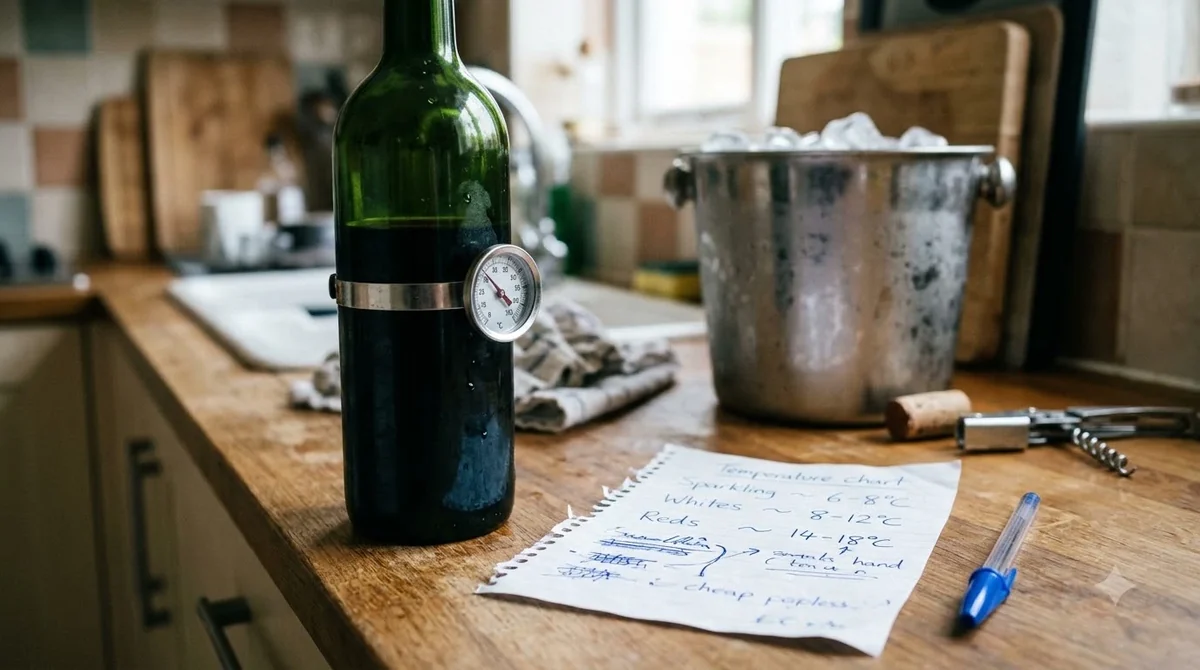
Strawberry wine is generally best served chilled, particularly when it is sweet or semi-sweet. A serving temperature of approximately 45°F to 50°F works well for lighter, fruit-forward styles, while slightly warmer temperatures can help fuller versions reveal more of their aroma.
Temperature has a noticeable effect on sweetness and aroma. A cooler wine can feel crisper and more refreshing, while a warmer wine releases more aromatic compounds. However, excessive chilling can make delicate strawberry and floral notes harder to recognize.
For a typical serving, pour approximately 5 ounces into a standard wine glass. A 750 ml bottle provides about five standard glasses. A medium-sized white wine glass is a practical choice because it gives the aromas room to develop without requiring a large pour.
There is generally no need to decant strawberry wine. Most fruit-forward styles are intended to be enjoyed without extended aeration. Pouring directly from the bottle into a glass is sufficient, particularly for young, fresh examples.
Storage matters because fruit aromas can gradually fade when wine is exposed to oxygen, heat, and light. Keep unopened bottles in a cool, dark location with a relatively stable temperature. For longer-term storage of bottles with cork closures, laying them on their sides can help maintain cork contact with the wine.
After opening, reseal the bottle and refrigerate it. As a general guideline, still wines often retain acceptable quality for approximately three to five days under refrigeration, although the exact period varies with the wine’s sweetness, acidity, and exposure to oxygen.
Strawberry wine is best enjoyed while its fruit aromas remain fresh and expressive. If the aroma becomes noticeably dull, the flavor loses its freshness, or the wine develops an unpleasant oxidized character, its quality may have declined.
It is also possible to use leftover strawberry wine in cooking. Small quantities can add fruit character to sauces for desserts, poached fruit, or reductions served with mild cheeses. Avoid prolonged heating if the goal is to preserve a fresh strawberry impression, since heat can change delicate aromas.
Frequently Asked Questions
Is strawberry wine made from real strawberries?
Traditional strawberry wine is produced by fermenting strawberries or strawberry juice. Some commercial fruit wines may also use concentrates, blended fruit materials, or flavor adjustments. The production method determines how much of the final aroma comes directly from the original fruit.
Does strawberry wine contain tannins?
Strawberry wine can contain phenolic compounds extracted from the fruit, including compounds associated with tannin-like structure. However, its tannic sensation is generally much less prominent than that of heavily structured red grape wines. Some winemaking recipes also use small quantities of added tannin to influence the finished wine’s structure.
What color is strawberry wine?
Strawberry wine can range from pale pink and salmon to deeper red or ruby shades. Its final appearance depends on the strawberry variety, extraction method, fermentation conditions, and maturation. The pigments naturally present in strawberries include pelargonidin-based anthocyanins, which contribute to the wine’s color.
Can strawberry wine be sparkling?
Yes. Strawberry wine can be made sparkling through methods that introduce or retain carbon dioxide. Bubbles add a lively texture and can make sweeter versions feel particularly refreshing. Sparkling strawberry wine is often suitable for celebrations, fruit-based appetizers, and light desserts.
Can strawberry wine be used in cocktails?
Yes. Strawberry wine can serve as a fruity base in simple wine cocktails. It can be combined with sparkling water, citrus juice, or other compatible ingredients to create a lighter mixed drink. Its sweetness should be considered before adding additional syrups or sweet liqueurs.
Strawberry wine is a fruit-forward alternative to traditional grape wine, offering flavors that range from fresh strawberries and floral aromas to concentrated jam-like fruit. Its sweetness, acidity, and texture depend on how it is produced, so choosing between dry, semi-sweet, and sweet styles is the best starting point. Serve it chilled with fresh fruit, creamy cheese, or dessert to make the most of its distinctive strawberry character.
More in Wine Types & Grapes
 Zinfandel Sugar Content: Dry Red vs. White Zinfandel GramsUpdated Nov 21, 2026
 Best Zinfandel Substitute Options for Sipping and CookingUpdated Nov 21, 2026
 Zweigelt Food Pairing: Best Dishes, Cheeses, and Serving TipsUpdated Nov 21, 2026
 Zinfandel Tannins Explained: How Structure Shapes Every BottleUpdated Nov 21, 2026
 Zinfandel Sweetness Level: Dry Red vs. Sweet White Zin ExplainedUpdated Nov 21, 2026
 Xinomavro Food Pairing: Best Dishes, Styles, and Serving TipsUpdated Nov 21, 2026