

We may earn a commission when you buy through links on this page, at no extra cost to you. Learn more.
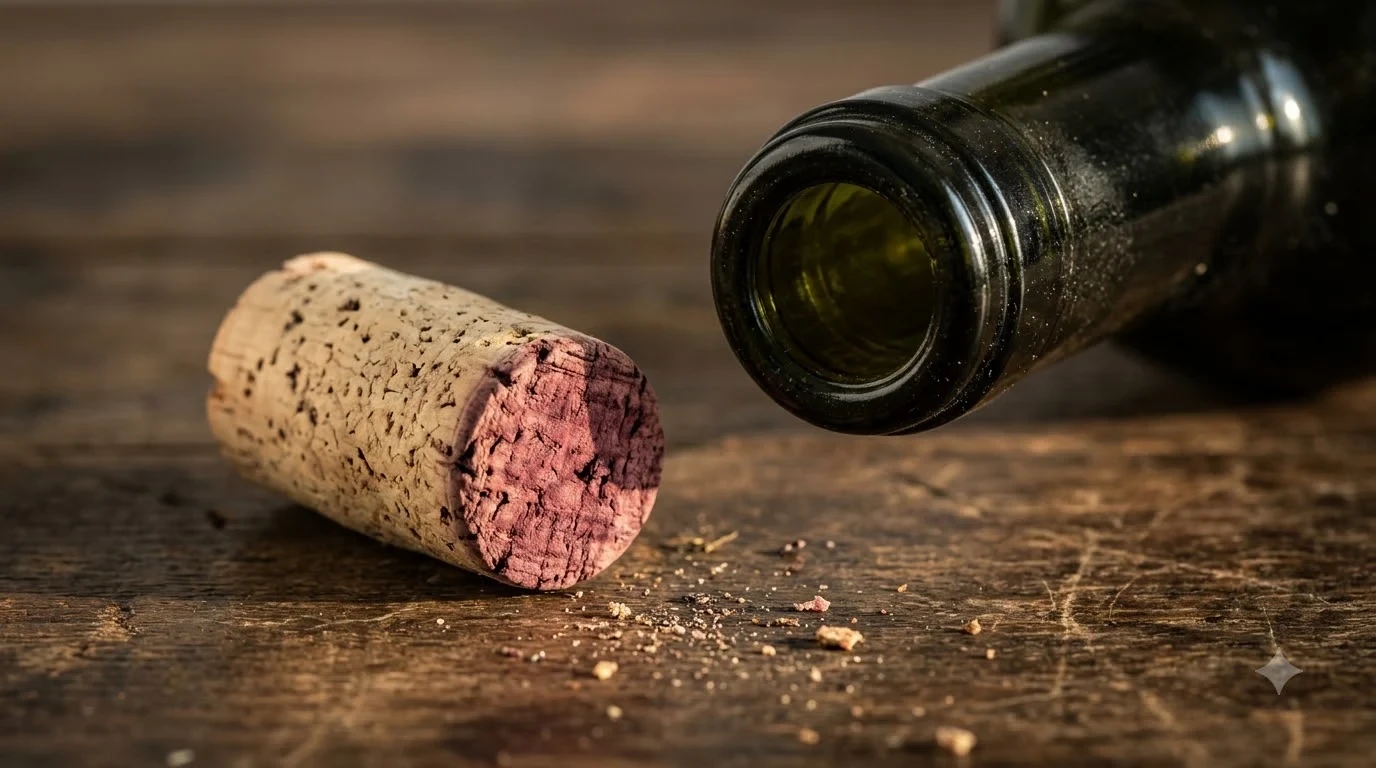
What does corked wine taste like? It smells and tastes musty and damp, like wet newspaper, moldy cardboard, or a wet dog. The fruit that should lead the wine fades into the background, and what is left tastes flat and dull. The cause is a compound called TCA, which usually gets into the wine through the cork.
Most wine drinkers reach for a bottle expecting fresh fruit, and a corked wine can be a disappointing surprise. This guide explains what the fault tastes and smells like, why it happens, how it differs from other wine problems, and what to do when you open a bottle that seems wrong.
What Corked Wine Means
The word “corked” describes a wine affected by TCA, short for 2,4,6-Trichloroanisole. Wine Folly’s guide to wine faults explains that TCA is a chemical contaminant that usually reaches a bottle through the cork, but it can also come from oak barrels or from the equipment used in a winery. When the contamination comes from barrels or processing lines, it can spoil a whole batch instead of a single bottle, so the problem is not always limited to one cork.
Corked wine is a wine fault, not a sign of age or a normal stage of development. A corked bottle is simply a bottle that tastes wrong, and the cause is chemical rather than a matter of style.
How Corked Wine Smells and Tastes
The most common description is a damp, dusty smell, something like the inside of a basement after a flood. Wine Folly describes the odor as “dank,” and says it smells almost exactly like wet newspaper, moldy cardboard, or wet dog. The Wikipedia entry on TCA describes the aroma as an “unpleasant earthy, musty and moldy smell.”
A helpful way to check is to compare the wine with a second bottle from the same case, or with a glass poured from a different bottle of the same wine. If one glass smells clean and the other smells damp and flat, the problem is almost certainly the bottle, not the style of the wine.
On the palate, the off-flavors tend to dominate the wine. The fruit that should give red and white wines their character is hard to find, and the finish can feel short and flat. Some people find that a corked wine tastes dull rather than obviously bad, which is why the fault is easy to miss if you have not smelled it before.
The sense of smell is more sensitive to TCA than most other tastes. Wikipedia reports that people can detect TCA at roughly 4 to 10 nanograms per liter in white wine and around 50 nanograms per liter in red wine, so a small amount is enough to change the aroma.
How Corked Wine Differs From Other Faults
Several other wine problems can look or smell similar to a corked bottle, so it helps to know the differences. The table below lists the most common ones and the clue that usually separates each from TCA.
| Fault | Typical smell | Clue to tell it apart |
|---|---|---|
| Corked (TCA) | Wet newspaper, moldy cardboard | Fruit is muted and the wine tastes dull |
| Oxidation | Vinegar, caramelized apple | The color is brownish or orange |
| Sulfur compounds | Rotten egg, burnt rubber, skunk | Often fades within 15 to 20 minutes of opening |
| Brettanomyces | Barnyard, hay, sweaty saddle | Farmyard or Band-Aid notes rather than damp cardboard |
| Mousy taint | Like a gerbil cage | A rodent-like smell that stands out on its own |
| Lightstrike | Wet wool | Caused by light exposure rather than the cork |
Tip: Swirl the glass and smell it before you taste. A corked wine usually smells off right away, while many other faults change as the wine opens up.
How Common Corked Wine Is
Wikipedia notes that the incidence of moldy and musty off-flavors in cork-sealed wines has increased significantly over the last two decades, and it attributes a worldwide loss of about one billion US dollars a year to cork taint. The page does not give a single percentage for how many bottles are affected, so the honest answer is that it happens often enough to matter, but most bottles are not corked.
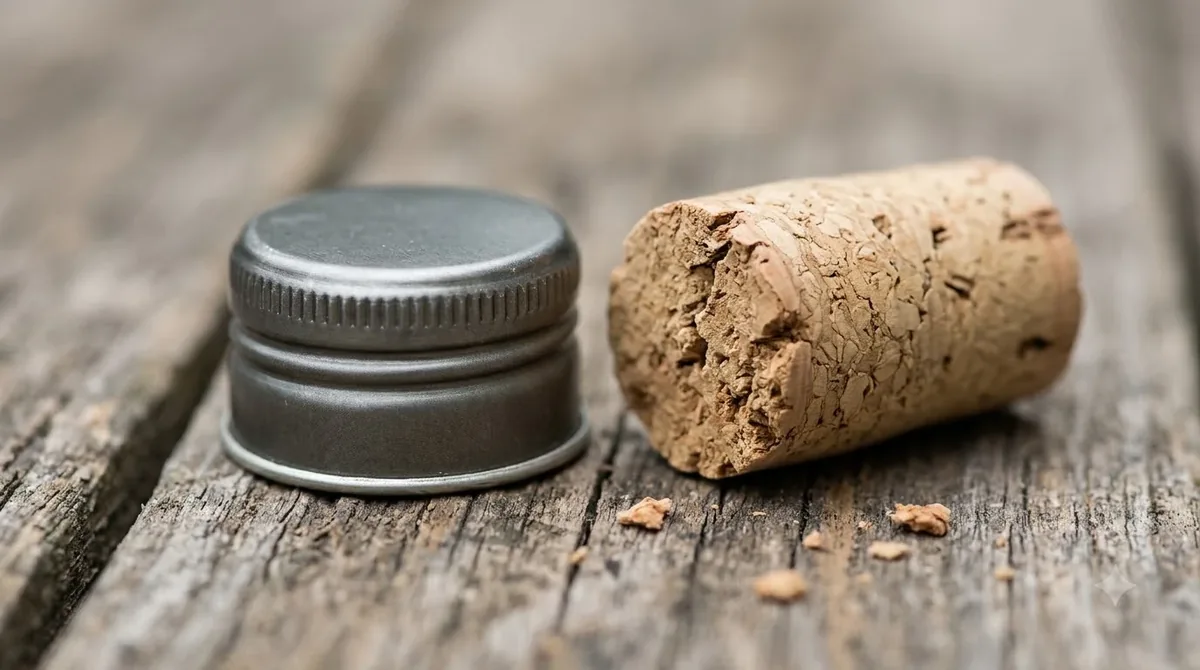
Wine makers have worked on cork quality, and some producers use screw caps or other closures to avoid the risk. Those closures do not prevent every kind of taint, because TCA can also come from winery equipment and barrels.
It also helps to know that a single corked bottle does not always mean the rest of the case is bad. Because TCA can come from a cork, a barrel, or a piece of equipment, the source may be different for each bottle, and a second bottle from the same case can taste perfectly clean. If two bottles in a row taste musty, it is worth reporting the problem to the seller, since a shared source could affect more of the stock.
What to Do With a Corked Bottle
If a bottle smells like wet cardboard, you can be fairly sure it is corked. Wine Folly states that TCA cannot be fixed at home. Older tricks, such as the Saran Wrap method, do not work with current polyethylene wrap, so the practical answer is to return the bottle to the store where you bought it.
Keep the receipt if you can, and tell the staff what you noticed. Most shops understand the fault and will replace a bottle that is clearly corked. If you bought the wine in a restaurant, ask the server to taste it and explain the problem, since a corked bottle is a fault, not a matter of taste preference.
How to Keep Your Wine Fresh at Home
You cannot control TCA once a bottle is made, but you can keep the wine in good condition after you buy it. Store bottles away from heat and strong light, and keep them at a steady temperature. Light and heat speed up other faults, and a wine that is already fragile is harder to enjoy even when it is sound.
For a cellar or a home storage setup, a wine fridge keeps bottles at a stable temperature and blocks most light. If you want to learn more about how wine develops and ages, our guide on how long wine takes to ferment explains the early stages of winemaking.
Frequently Asked Questions
Can you fix a corked wine at home?
According to Wine Folly, no. TCA cannot be removed at home, and the older Saran Wrap trick does not work with current wraps. The usual answer is to return the bottle to the seller.
Does corked wine smell like cork?
Not really. Despite the name, a corked wine usually smells like wet newspaper, damp cardboard, or a basement. The cork is only the most common route for TCA, not the scent itself.
Can a screw cap wine be corked?
It is less likely, since the closure is not a cork, but it is not impossible. TCA can also come from oak barrels or winery processing lines, so a screw cap does not guarantee a clean wine.
Is a wine that tastes dull always corked?
No. Oxidation, heat damage, and other faults can also mute the fruit. Check the smell and color, because a corked wine usually has a distinct damp, musty odor that sets it apart.
Corked wine is one of the few wine faults that most people can learn to spot on their own. Once you know the wet cardboard smell, you can tell a bad bottle from a wine that simply has a different style. For a wider view of the wine world, see our wine basics section, and the guide on what a sommelier does explains how trained tasters judge wines.
More in Wine Basics
 Which Rose Is Best for Your Taste, Budget, and Food PairingsUpdated Nov 21, 2026
 Is Cheap Wine Bad? How to Find Bottles Worth DrinkingUpdated Nov 21, 2026
 What To Write On A Wine Gift Tag: Thoughtful Messages For Every OccasionUpdated Nov 21, 2026
 Which Wine Is Best For Weight Loss? Compare Lower-Calorie ChoicesUpdated Nov 21, 2026
 What Is The Best Wine For Mimosas? Choose Bubbly That Balances Orange JuiceUpdated Nov 20, 2026
 Which Prosecco Is Best for Your Taste and OccasionUpdated Nov 20, 2026