

We may earn a commission when you buy through links on this page, at no extra cost to you. Learn more.
The question “what does cabernet franc taste like” has a clear answer: it is usually a dry, medium-bodied red with tart raspberry and cherry, violet, green bell pepper, and savory herbs. Its acidity is often lively, while its tannins are generally noticeable but less forceful than those in Cabernet Sauvignon. Depending on where the grapes grow and how the wine is made, the glass can lean bright and floral or turn darker, fuller, and more spicy.
Cabernet Franc is grown both as a stand-alone red and as a blending grape, so the name covers more than one style. Learning its usual flavor markers—and how climate, oak, and food change their impression—makes it easier to choose a bottle that suits the meal.
The Core Flavor Profile: Red Fruit, Flowers, and Herbs
Cabernet Franc most often leads with fresh red fruit, aromatic flowers, and a leafy or peppery accent. Raspberry, red cherry, strawberry, and red plum are common fruit references; violet, dried rose, green bell pepper, and fresh herbs add the details that distinguish it from many other dry reds.
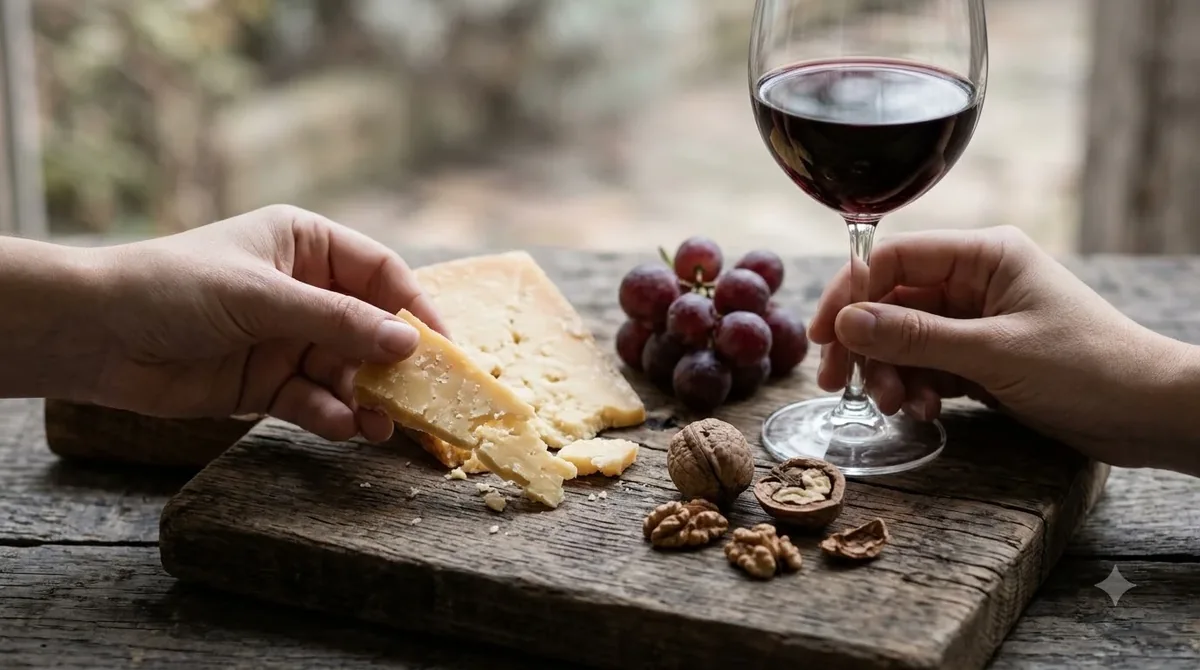
The fruit is usually more tart and red-toned than the dense blackcurrant character associated with Cabernet Sauvignon. A cool-climate bottle may smell of crushed raspberry, sour cherry, cranberry, or red currant, with violet petals and a faint scent like pencil shavings or damp gravel. On the palate, those flavors can be crisp rather than jammy. The wine remains dry, even when the fruit smells ripe, and the finish may bring a gentle bitter-herbal edge similar to black tea or dried oregano.
Green notes are part of Cabernet Franc’s identity, not automatically a sign that the wine is faulty. Think of freshly cut bell pepper, mint, leafy herbs, or a hint of jalapeño rather than the sweetness of cooked fruit. The intensity varies: a well-ripened wine can balance the herbal character with juicy berries, while a wine from a very cool or poorly ripened site may taste sharply vegetal and less harmonious. A good example keeps fruit, freshness, and savory detail in proportion.
Texture is another clue. Cabernet Franc commonly has medium body, brisk acidity, and medium to medium-high tannin, though the balance changes by region and winemaking. Its tannins can feel fine-grained or gently drying rather than massive and gripping. That gives the wine shape without making it heavy, and helps explain why a lighter Loire bottle can work much like Pinot Noir or Gamay at the table.
Cool- and Warm-Climate Regions Change the Glass
Climate is one of the strongest influences on Cabernet Franc’s flavor, body, and tannin. The Loire Valley in France tends toward bright red fruit, flowers, and savory herbs, while warmer places such as California and Tuscany often produce riper fruit, greater weight, and more pronounced oak or spice.
In the Loire Valley, appellations such as Chinon, Bourgueil, and Saumur-Champigny are reference points for varietal Cabernet Franc. Chinon can show raspberry, sour cherry, roasted red pepper, smoky tomato, dried oregano, and a stony impression often described as wet gravel. Saumur-Champigny is known for fragrant red-fruit aromas; wild strawberry and sour cherry may sit alongside dried rose, spice, earth, and firm acidity. These wines often feel medium-bodied or lighter, with a fresh finish that makes them suited to food rather than heavy sauces. A Decanter sommelier profile of Cabernet Franc describes Saumur-Champigny with wild strawberry, sour cherry, dried rose, and spice.
Bordeaux uses Cabernet Franc differently. It is frequently blended with Merlot and Cabernet Sauvignon, especially on the Right Bank, where it can contribute aromatic lift, freshness, and structure. Because Cabernet Franc buds and ripens earlier than Cabernet Sauvignon, it can also provide a useful safeguard in Bordeaux’s maritime climate when the later-ripening grape struggles to mature. In Saint-Émilion and Pomerol, Cabernet Franc can play a major role in the blend and lend floral notes, fine tannin, and an herbal edge. A Bordeaux blend therefore may not taste like a Loire Cabernet Franc bottled on its own.
In warmer parts of California and Tuscany, Cabernet Franc often shifts toward black cherry, blackberry, plum, blueberry, and sometimes cassis. The aroma can include cocoa, licorice, sweet spice, leather, or roasted pepper, especially when the wine spends time in oak. Warm-climate examples can have more alcohol, fuller body, and firmer tannin than a cool-climate Loire red, while retaining enough acidity to avoid tasting flat. New York’s Finger Lakes and Long Island offer other American expressions, with the cooler Finger Lakes often showing red berries and herbal freshness and maritime Long Island tending toward riper fruit.
How Acidity, Tannin, and Body Shape the Taste
Cabernet Franc is usually dry, medium-bodied, and high in acidity, with medium to medium-high tannin. Those structural elements explain why the wine can taste refreshing even when its fruit is ripe, and why its texture ranges from supple and easygoing to firm enough for a roast.
Acidity is the bright, mouthwatering sensation that makes the finish feel fresh. In a Loire Cabernet Franc, it makes sour cherry and raspberry taste especially lively; in a warmer bottle, it balances darker fruit and oak. Tannin creates a drying sensation along the gums and inside the cheeks. Cabernet Franc has enough tannin for grilled meat or roasted vegetables, but it is generally less tannic than Cabernet Sauvignon. More extraction or new oak may make a wine feel firmer.
Body describes weight on the palate, not sweetness. Most examples sit around medium body, although warmer-climate and oak-aged wines can seem fuller. A warmer-region wine may feel broader, while a cooler-region wine often feels brisker. The figures below are useful orientation points, not rigid rules; producer choices, vintage conditions, and bottle age can move an individual wine outside the typical range. Wine Folly’s Cabernet Franc profile lists an approximate alcohol range of 11.5–13.5% ABV.
| Feature | Typical Cabernet Franc range | What you notice |
|---|---|---|
| Sweetness | Dry | No dessert-like sugar; fruit aromas can still seem ripe. |
| Body | Medium | More weight than many light reds, usually less than a rich Cabernet Sauvignon. |
| Acidity | Medium-high to high | A bright, mouthwatering finish. |
| Tannin | Medium to medium-high | A gentle to firm drying feel, depending on style. |
| Alcohol | About 11.5–13.5% ABV | Cooler-climate bottlings may feel leaner; warmer ones can feel broader. |
| Serving temperature | 55–60°F for lighter reds; 60–65°F for fuller reds | Cooler service keeps fresh fruit lively; warmer service opens richer aromas. |
How Cabernet Franc Compares With Other Red Wines
Cabernet Franc sits between lighter, high-acid reds and more concentrated, tannic Cabernet Sauvignon. Comparing it with Cabernet Sauvignon, Merlot, Pinot Noir, and Syrah helps identify whether its fruit, herbs, and structure match what you already enjoy.
Compared with Cabernet Sauvignon, Cabernet Franc is often lighter in color and body, with less imposing tannin and a more obvious floral or green-herbal signature. Cabernet Sauvignon commonly emphasizes blackcurrant and firm tannin; Cabernet Franc more often brings raspberry, red cherry, violet, and bell pepper. The two grapes are close relatives, but their wines are not interchangeable. In Bordeaux blends, Cabernet Franc can add freshness and aromatic detail to the broader frame supplied by other grapes.
Merlot usually has softer, rounder tannins and a plumper plum or black-cherry profile. Cabernet Franc generally feels brighter and more herbal, with a firmer line of acidity. Pinot Noir is usually lower in tannin and can be high in acidity too, but it tends to show red cherry, cranberry, and earthy or mushroom notes without Cabernet Franc’s signature bell pepper. Syrah can have medium-plus to high tannin and darker blackberry, pepper, and smoky flavors, often giving a more powerful impression. These are broad comparisons: site, vintage, oak, and bottle age can narrow or widen the differences.
For a white-wine contrast, consider what does chenin blanc taste like: it can also be brisk and food-friendly, but its fruit, texture, and tannin profile come from a white grape rather than a red one. For an Italian red comparison, what does corvina taste like is useful because Corvina-based wines often emphasize cherry while offering a different balance of body, acidity, and winemaking influence. Cabernet Franc’s calling card remains the combination of red berries, floral lift, and leafy spice.
Food Pairings That Complement Its Fruit and Herbs
Cabernet Franc is especially useful at the table because its acidity refreshes the palate and its herbal notes echo many savory ingredients. Match lighter Loire styles with poultry, vegetables, and goat cheese; choose fuller, more tannic bottles for lamb, pork, and grilled meats.
Roast chicken, turkey, pork tenderloin, and herb-crusted lamb are reliable matches. Rosemary, thyme, sage, and parsley bring out the wine’s savory character, while the meat’s protein and fat soften tannin. A medium-bodied Cabernet Franc from Chinon or Saumur-Champigny can work with roast chicken and pan juices; a richer Bordeaux- or California-style example can handle lamb cutlets or grilled pork ribs. If the dish includes a tomato sauce, the wine’s acidity is helpful because the food will not make it taste dull or sour.
Vegetarian dishes can be equally successful. Try eggplant Parmesan, ratatouille, lentils with herbs, grilled peppers, or mushrooms. Charred eggplant and bell pepper mirror the wine’s savory side, while mushrooms echo earthy or tea-like notes in bottles with some age. Goat cheese is a classic partner for Loire Cabernet Franc: its tangy flavor meets the wine’s acidity, and its creamy texture softens tannin. Cured meats and semi-firm cheeses also suit a bright, fruit-forward style.
Pay attention to heat, sweetness, and richness. A very spicy chili or hot sauce can make alcohol and tannin seem harsher, so keep chile heat moderate. Sweet sauces should not be sweeter than the wine, or the Cabernet Franc may taste sharp. Very oily fish can clash with tannic reds, while lemon- or vinegar-rich dishes need a wine with equal or greater acidity. Salt and fat soften tannin, which is why charcuterie, hard cheese, and grilled meats work so consistently.
Tip: Match the wine to the strongest flavor in the dish, not just its main ingredient. With rosemary lamb, choose a Cabernet Franc with herbal notes; with tomato-rich eggplant Parmesan, favor a lively, red-fruited Loire style.
Serving, Decanting, and Storing the Bottle
Serve Cabernet Franc cool rather than warm: lighter styles are most expressive around 55–60°F, while fuller examples can be served around 60–65°F. A moderate temperature preserves the red-fruit freshness and keeps alcohol from dominating the aroma.
For a lighter Loire red, a brief chill in the refrigerator may be enough before serving; take care not to make it as cold as sparkling wine. Fuller Cabernet Franc from Bordeaux, California, or Tuscany can benefit from air, especially when young and tightly wound. Decant a young, full-bodied red for about 30–60 minutes, then taste it again to see whether the fruit and herbs have opened. Lighter bottles generally need little or no decanting. A standard red-wine glass with a bowl wide enough to gather aroma is a practical choice.
Pour about 5 ounces per glass. A 750 ml bottle contains roughly five such pours, making it a useful size for dinner with four people who each want a modest serving and a little extra for the table. If you are serving more than one style, begin with the lighter, more acidic bottle and move to the fuller, more tannic one. That sequence keeps the more concentrated wine from overwhelming the subtler aromas of a lighter Cabernet Franc.
Store unopened bottles on their sides in a cool, dark place near 55°F, away from temperature swings and direct sunlight. Once opened, reseal the bottle and refrigerate it; most still wines retain their best character for about 3–5 days, though fruit gradually fades. Bring the remaining wine back toward serving temperature before pouring, and enjoy mature bottles sooner because their aromas can be delicate. For more grape styles and categories, visit Wine by Type.
Frequently Asked Questions
How do you pronounce Cabernet Franc?
It is commonly pronounced “kab-er-nay fronk,” with the final c in Franc sounded softly as part of the “fronk” pronunciation. In conversation, many wine drinkers shorten the name to “Cab Franc.”
Is Cabernet Franc related to Cabernet Sauvignon?
Yes. Cabernet Franc and Sauvignon Blanc crossed naturally to produce Cabernet Sauvignon, which makes Cabernet Franc one of that famous grape’s parent varieties. Cabernet Franc is also a parent of Merlot and Carménère, so it has an important place in the family tree of several well-known red grapes.
Why can Cabernet Franc smell like green pepper?
The leafy, bell-pepper aroma comes from a family of compounds called methoxypyrazines, often shortened to pyrazines. A related aroma compound is also found in Sauvignon Blanc, which helps explain why the two grapes can share a recognizable green note even though one is usually made as a red wine.
Can Cabernet Franc be made as a sweet wine?
Yes. Although most bottles are dry reds, Cabernet Franc can also be made as rosé, sparkling wine, and sweet dessert wine. In Canada’s Niagara Peninsula, it is used for red icewine, where freezing grapes concentrates sweetness while preserving the variety’s fruit and savory character.
Does Cabernet Franc have other names?
Breton and Bouchet are two traditional synonyms associated with Cabernet Franc. The name Breton is especially familiar in parts of the Loire, where local usage can differ from the grape name printed on labels for international markets.
Cabernet Franc is a good choice for drinkers who enjoy dry reds with fresh acidity, red-berry fruit, and a savory herbal edge. Start with a Loire bottle for a lighter, brighter style or try California and Tuscany for darker fruit and more body, then pair the wine with herbs, roasted vegetables, pork, or lamb.
More in Wine Types & Grapes
 What Does Mourvèdre Taste Like? Flavor Profile, Regions, and PairingsUpdated Nov 20, 2026
 What Does Marsanne Taste Like? Flavors, Styles, and Food PairingsUpdated Nov 20, 2026
 What Does Malvasia Taste Like? Styles, Flavors, and Food PairingsUpdated Nov 20, 2026
 What Does Grenache Blanc Taste Like? Flavor Profile, Styles, and PairingsUpdated Nov 20, 2026
 What Does Garnacha Taste Like? Key Flavors, Styles, and Pairing TipsUpdated Nov 20, 2026
 What Does Fruit Wine Taste Like? A Complete Flavor and Style BreakdownUpdated Nov 20, 2026