

We may earn a commission when you buy through links on this page, at no extra cost to you. Learn more.
The walmart decanter worth considering for everyday wine service is the True Wine Decanter, a 52-ounce glass carafe with a curved handle, broad base, and tilted pouring spout. Its one-bottle capacity, traditional appearance, and straightforward design make it a practical option for serving red or white wine. However, buyers should understand that Walmart carries several different decanters, that product availability can vary, and that this particular True model requires hand washing rather than automatic dishwasher cleaning.
Shopping for a wine decanter at Walmart involves comparing more than appearance. The retailer’s selection includes traditional handled carafes, decorative glass vessels, crystal alternatives, and larger designs intended for entertaining. The True 52-ounce model is a useful starting point because its listed dimensions, material, and customer feedback provide concrete details to evaluate. This review examines its features, practical strengths, limitations, and alternatives to help determine whether it belongs on your dining table.
Specs and Key Features
The True Wine Decanter is a traditional glass serving vessel designed around convenient handling and straightforward presentation. Its 52-ounce capacity, 10-inch height, and tilted spout make it suitable for serving a standard bottle while leaving room for wine to spread across the bottom of the vessel.
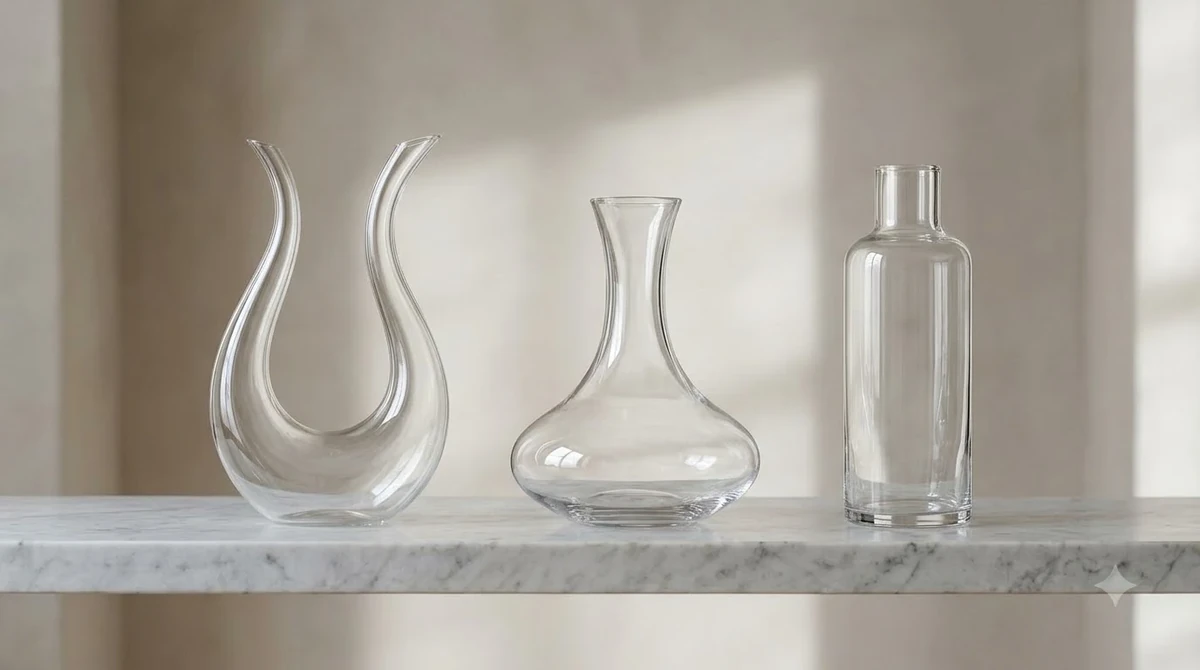
According to Walmart’s product listing, the decanter uses soda-lime glass and features a hand-blown construction. The listing describes a broad-set base, curved handle, and angled pouring opening. These details matter because a decanter should be comfortable to lift, stable when placed on a table, and practical to fill without making a mess.
| Specification | True Wine Decanter |
|---|---|
| Brand | True |
| Product category | Standard wine decanter |
| Material | Soda-lime glass |
| Capacity | 52 oz |
| Height | 10 inches |
| Diameter | 7 inches |
| Construction | Hand-blown glass |
| Color | Clear |
| Handle | Yes |
| Pouring design | Tilted spout |
| Recommended cleaning | Hand wash |
| Wine compatibility | Red and white wine |
The 52-ounce capacity is particularly useful. A standard 750 ml wine bottle contains approximately 25.4 fluid ounces, so the listed capacity provides roughly twice the volume needed for one bottle. This extra space gives the wine room to spread through the vessel rather than filling it close to the rim. It also leaves space for controlled swirling when serving younger reds.
The 7-inch diameter is another important specification. A broader base generally provides more exposed wine surface than a narrow-necked bottle or slim carafe. That is useful for aeration, although the precise effect depends on the amount of wine poured, its temperature, and how long it rests.
Glass construction and everyday handling
The material deserves attention before purchasing. Soda-lime glass is a common glass type used for household drinkware and serving pieces. It provides a clear presentation without requiring buyers to pay extra for a crystal construction. The transparent body also makes it easier to observe the wine’s color and notice sediment collecting near the bottom.
The hand-blown description adds some appeal for buyers who prefer traditional glassware. However, hand-blown construction should not automatically be interpreted as proof of exceptional durability. Glass thickness, finishing, manufacturing consistency, and everyday handling all influence how long a decanter lasts.
The handle is one of the more practical design features. A full decanter can become awkward to lift when the glass is wet, particularly when the bowl is broad. A dedicated handle offers another point of contact and can make transferring the vessel from the counter to the table easier. The tilted spout also helps direct the wine into a glass instead of requiring the user to pour directly over a wide opening.
For buyers comparing glassware, the True decanter is best understood as an everyday serving accessory rather than a specialist collector’s piece. Its listed features emphasize capacity, presentation, and convenient pouring rather than advanced wine-preservation technology or specialized sediment filtration.
What Owners Like
The strongest positive signals in the Walmart customer feedback concern the decanter’s appearance, general usefulness, and serving experience. These comments support its appeal as an uncomplicated household wine accessory, although the available feedback should not be mistaken for extensive long-term durability testing.
Several comments highlight the appearance. One verified purchaser describes the design positively, while another says the decanter looks good and works well. These observations align with the product’s traditional silhouette, clear glass, curved handle, and broad base.
Appearance matters more than some buyers initially expect. A decanter often sits in the middle of a dining table or on a bar cart for much of an evening. Unlike a bottle that remains in the kitchen until pouring, it becomes part of the presentation. A clear vessel also allows the color of a Cabernet Sauvignon, Merlot, or Pinot Noir to remain visible during service.
The handling design is another likely advantage. The combination of a handle and angled spout addresses two common problems with larger glass carafes: gripping a heavy vessel and controlling the flow of wine. Buyers who regularly pour for several guests may appreciate these details more than those who generally serve one or two glasses at a time.
Useful capacity for entertaining
A 52-ounce vessel can accommodate one standard 750 ml bottle comfortably, with substantial additional room. That makes it suitable for a dinner involving several guests who will share the same red wine. It also allows the wine to be transferred from its original bottle before everyone sits down.
For example, a host serving Cabernet Sauvignon with grilled steak can pour the bottle into the decanter before the meal. The wine can then rest for a period while the table is prepared. The broad base gives the wine greater contact with air, while the clear glass makes the serving presentation more attractive than leaving the original bottle on the table.
The same basic arrangement works for Merlot served with roast chicken or Syrah served alongside grilled lamb. These varieties can benefit from some aeration, although the ideal time depends on the particular wine rather than the vessel alone.
The generous capacity is also convenient when pouring into several glasses. A standard 750 ml bottle provides approximately five 5-ounce servings. With enough room around the wine, the decanter is not filled to the brim, leaving space to hold and maneuver it comfortably.
Simple, recognizable design
Another advantage is the absence of complicated components. The True model does not rely on a removable aerator attachment, mechanical filtration system, or specialized pouring mechanism. Its principal features are conventional glass construction, a handle, and a tilted spout.
That simplicity makes it easier to understand how the vessel works. Buyers can fill it, let the wine rest if appropriate, and pour directly into their preferred glasses. There are fewer separate accessories to store, and the clear construction fits a variety of dining-room styles.
One Walmart customer also mentions using a mixture of water and vinegar to address water spots after washing. This is a useful practical observation for owners who want their glassware to remain clear, although it is an individual cleaning suggestion rather than a formal manufacturer cleaning instruction.
Overall, the positive feedback suggests that buyers appreciate the basic combination of presentation and usability. The available comments are encouraging, but shoppers should remember that a small number of reviews cannot establish how the glass performs after years of frequent use.
Common Complaints
The clearest practical limitation of the True Wine Decanter is its recommended hand-washing requirement. Its broad shape, handle, and curved interior can also make cleaning and drying less convenient than maintaining a simple straight-sided pitcher.
Walmart’s listing specifies hand washing. Buyers who routinely put all their kitchenware in the dishwasher should take this seriously rather than assuming that ordinary glass construction means automatic dishwasher compatibility.
A dishwasher can expose delicate serving pieces to movement, contact with other items, detergent, and repeated temperature changes. Even when a glass vessel survives an individual wash, repeated cycles may create avoidable risks. The safer approach for this model is to wash it manually and avoid placing it where it can strike other dishes.
Cleaning the broad interior
The broad base is helpful for aeration, but its shape can create cleaning challenges. Wine residue may collect along the bottom, particularly if a red wine is left in the vessel for several hours. Reaching every part of the interior with an ordinary sponge may be awkward, depending on the opening and the user’s hand size.
Rinsing promptly after serving helps prevent dried wine deposits. A suitable glass-cleaning brush can help reach the bottom without requiring the owner to force a hand through the opening. The vessel should be handled carefully during cleaning, especially around the rim and handle attachment points.
Water spots are another cosmetic concern with clear glass. Minerals in tap water can leave visible marks after drying. A final rinse with clean water and careful drying using a lint-free cloth can help maintain a clear finish. For stubborn spots, owners should use a gentle cleaning method appropriate for ordinary glass and rinse thoroughly.
Tip: Rinse the decanter immediately after serving, then allow it to drain before drying. Avoid leaving red wine residue overnight, and never use abrasive pads that could scratch the glass.
Limited evidence about long-term durability
Another consideration is the amount of available owner feedback. Positive comments about appearance and initial performance are useful, but they do not establish resistance to accidental impacts, repeated handling, or long-term wear.
Hand-blown glass should always be treated as breakable, regardless of its shape or apparent thickness. The handle makes pouring easier, but it should not be used to swing or carry the vessel carelessly when full. Support the base when moving the decanter between the kitchen and dining table.
Buyers seeking a dishwasher-safe decanter may prefer another listing. Walmart also carries alternatives whose product descriptions identify dishwasher-safe construction. The Epicureanist Classic Wine Decanter, for example, is described as lead-free glass and dishwasher safe. That distinction is important because cleaning instructions are product-specific rather than universal across the retailer’s selection.
It is also important not to confuse the lack of a large number of complaints with proof that no problems exist. The available feedback is limited, and a potential buyer should evaluate the published specifications, seller information, return conditions, and handling requirements before making a decision.
Who Should Buy and Who Should Skip
The True 52-ounce decanter is a reasonable choice for people who want a traditional glass serving vessel for everyday red and white wine. Its handle, tilted spout, and generous capacity make it particularly suitable for home dinners, casual entertaining, and simple table presentation.
Buyers who regularly serve young Cabernet Sauvignon, Syrah, or other structured reds may find the broad base useful. These wines can benefit from exposure to air, and the decanter provides a convenient place for them to rest before serving.
It is also suitable for people who prefer to transfer wine into a separate serving vessel instead of leaving bottles on the dining table. The clear body shows the wine’s color, while the handle makes the vessel easier to position during service.
Good fit for casual entertaining
Consider this decanter if you usually open one bottle at a time and want a vessel with enough room to accommodate it. Its capacity is considerably larger than the volume of a standard 750 ml bottle, so there is room for swirling and pouring without bringing the wine close to the rim.
It also suits households that prefer traditional glassware rather than elaborate decorative designs. The simple clear appearance works with stemmed Bordeaux glasses, Burgundy glasses, and everyday tumblers. A coordinated table setting can be created without matching every accessory to a particular brand.
Wine enthusiasts who are still learning about aeration may also find a basic decanter useful. It provides a straightforward way to observe how the aromas of a young red change after exposure to air. Comparing the wine immediately after opening with the same wine after 30 minutes can be an informative serving exercise.
Who should consider another option
The True model is less suitable for people who prioritize dishwasher cleaning. The hand-wash recommendation creates an additional maintenance step, particularly for households that entertain frequently or prefer low-maintenance kitchen equipment.
It may also be unnecessary for people who primarily drink light, fresh wines that are usually served directly from the bottle. Many everyday white wines, rosés, and light reds do not require extended aeration. A basic carafe can still serve a presentation purpose, but its full aeration potential may not be especially important for those drinking styles.
Collectors who regularly open mature Bordeaux, old Burgundy, or aged Rioja should also consider whether a broad-base design is appropriate. Older wines can be delicate, and excessive oxygen exposure may cause their aromas and flavors to fade. A narrower vessel or careful pouring directly into glasses may be more appropriate when sediment removal is the principal objective.
Another reason to skip this model is a preference for lead-free crystal. The True listing identifies soda-lime glass, not crystal. That does not prevent it from serving wine, but it may not satisfy buyers specifically seeking the appearance, weight, or material characteristics associated with crystal glassware.
Choosing the right wine glasses
A decanter is only one part of a serving setup. The glasses used afterward also affect how wine is presented and experienced. Buyers can compare wine glasses for general serving, or explore red wine glasses when their collection consists primarily of Cabernet Sauvignon, Merlot, and Pinot Noir.
For sparkling wine, a separate set of appropriately shaped glasses may be more useful than trying to use the same equipment for every wine style. A decanter should be selected according to the wines being served, not simply because it looks attractive beside other glassware.
How It Compares to Alternatives
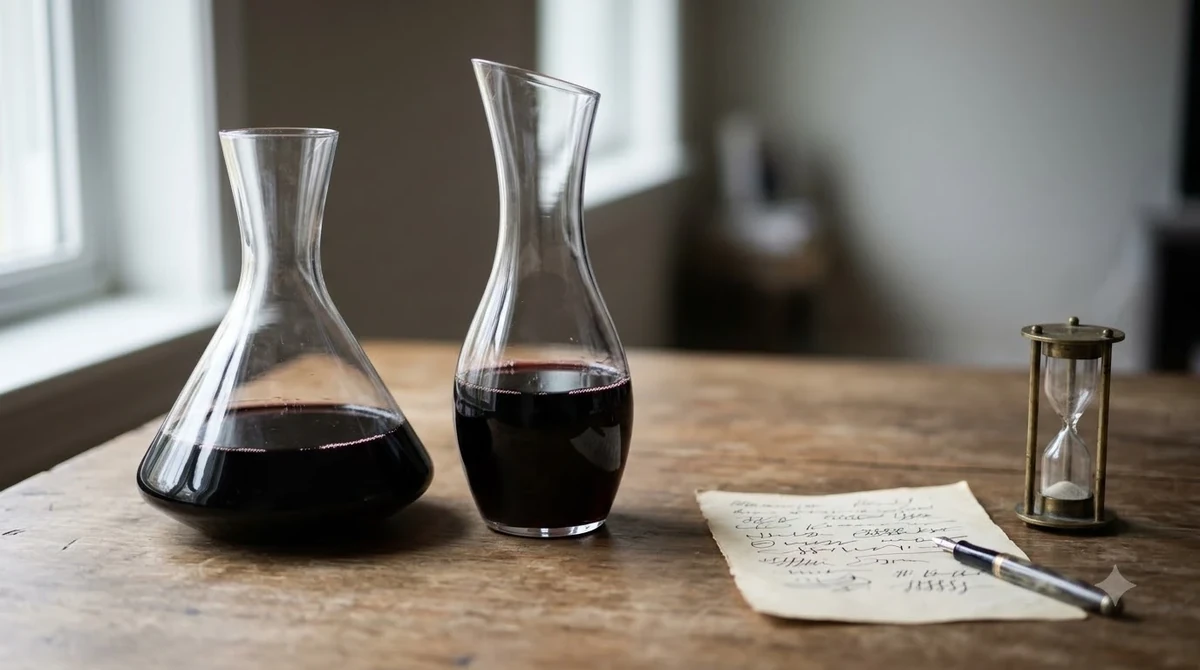
Walmart’s decanter selection includes several different capacities, materials, and designs, so the True 52-ounce model is not the only reasonable option. The most useful comparisons involve the True handled carafe, the Viski crystal decanter, and the Epicureanist Classic Wine Decanter.
Each has a different practical advantage. The True model emphasizes handling and traditional presentation, the Viski offers lead-free crystal construction and a stopper, and the Epicureanist listing specifically identifies dishwasher-safe glass.
True versus Viski
The Viski Glass Wine Decanter with Stopper is listed at Walmart with a 60-ounce capacity. Its description identifies lead-free crystal construction, a broad base, chrome accents, a glass stopper, and a contemporary angled silhouette.
Compared with the True decanter, Viski is the more feature-oriented choice for buyers who want a stopper and crystal construction. Its 60-ounce capacity also offers more room than the True model’s 52 ounces.
The True has a different advantage: its curved handle provides a dedicated gripping point. That may matter more to buyers who regularly carry a filled decanter to the dining table. The Viski design instead emphasizes a streamlined geometric appearance and a stopper-equipped presentation.
Neither design is automatically better for every household. Consider whether a handle or stopper is more important, whether crystal is a purchasing priority, and how the vessel will be stored between occasions.
True versus Epicureanist
The Epicureanist Classic Wine Decanter is another option listed by Walmart. Its product description identifies lead-free glass and dishwasher-safe cleaning, making it especially relevant to buyers who do not want to hand wash their serving accessories.
The True model’s published specifications provide more information about its dimensions and handling features, including its 10-inch height, 7-inch diameter, curved handle, and tilted spout. The Epicureanist listing focuses more heavily on its simple shape, glass construction, and cleaning convenience.
For a buyer who values easy cleanup, the Epicureanist description offers a useful advantage. For someone who wants a handled decanter with clearly listed dimensions and a traditional pouring design, True is easier to evaluate against those priorities.
Comparing capacities and materials
Walmart’s broader wine decanter category illustrates how much the selection can vary. Its listings include smaller 28-ounce vessels as well as larger examples around 58 and 60 ounces. Those differences affect how much room a bottle has inside the vessel and how easily the decanter fits into a cabinet or serving area.
A smaller decanter may suit someone who generally serves half a bottle or wants a compact table accessory. A larger vessel may be more practical for entertaining or handling wine from larger bottles. However, extra capacity does not automatically mean better aeration. The base shape and the amount of wine inside remain important.
Material is another distinction. Ordinary glass is a practical choice for everyday use, while lead-free crystal may appeal to buyers who prioritize a more refined appearance. Borosilicate glass is another material shoppers may encounter in glassware selections, although its properties and care instructions should be evaluated separately.
For more context about serving accessories and the differences between glassware brands, the Glassware Brands overview can help buyers evaluate the rest of their setup.
What the right decanter should accomplish
Regardless of the model, the most useful decanter is one that supports the type of wine being served. For a young Cabernet Sauvignon, a broad base and enough capacity for the full bottle can make aeration convenient. For an older red with sediment, controlled pouring and the ability to observe the wine as it leaves the bottle are more important.
Wine.com explains that young, tannic reds such as Cabernet Sauvignon, Petite Sirah, and Nebbiolo commonly benefit from approximately 30 to 60 minutes of aeration. It also distinguishes aeration from sediment removal, which requires a gentler technique. Its guide to when and how to decant wine provides useful context for deciding which vessel characteristics matter most.
For older bottles, the technique can be more important than the design. Decanter magazine recommends standing sediment-bearing bottles upright beforehand and pouring slowly with a light source beneath or behind the bottle neck. Its wine decanting instructions explain why careful handling is important when preserving clarity and avoiding unnecessary aeration.
Ultimately, the True decanter is a straightforward everyday option rather than a specialized solution for every wine. Its main selling points are the handle, tilted spout, clear glass, and single-bottle serving capacity. Buyers who need a dishwasher-safe vessel or prefer crystal should compare the other available designs before deciding.
Frequently Asked Questions
Can a wine decanter also be used for whiskey?
A glass decanter can physically hold whiskey, bourbon, brandy, and other beverages if its material and construction are suitable. However, a vessel intended for wine aeration does not necessarily provide the same storage benefits as a sealed spirits decanter. For longer-term storage, a properly fitting stopper and secure closure are more important than a broad aeration base.
Does a wine decanter need a stopper?
No. A stopper is optional for a vessel primarily intended for serving and aerating wine. Some designs include stoppers for presentation or temporary covering, but a stopper does not make an opened wine suitable for indefinite storage. If wine remains after dinner, transferring it to an appropriate sealed container is generally more practical.
Can a wine decanter be used for water?
Yes. A clean glass decanter can serve water at a dining table or during a dinner party. Its clear construction also works well for presenting infused water with citrus slices or fresh herbs. Rinse it thoroughly before switching between beverages so that previous wine aromas do not affect the next serving.
Should a decanter be stored upside down?
It is generally better to let a decanter drain and dry completely before putting it away. Storing a damp vessel upside down for extended periods can trap moisture inside and encourage stale odors. A clean, dry storage cabinet with sufficient clearance around the glass is a sensible choice.
Can a decanter remove cork pieces from wine?
A decanter can help separate visible cork fragments during a careful transfer, particularly when a fine-mesh wine strainer is used. However, it is not a specialized filtration device, and pouring directly through the opening will not reliably capture every small particle. A purpose-made wine strainer is a better accessory if broken cork is a recurring problem.
The True Wine Decanter is a practical choice for buyers who want a clear, handled glass vessel with enough capacity for a standard bottle and a broad base for serving young reds. Its hand-wash requirement and ordinary soda-lime glass construction are important considerations, particularly for buyers comparing it with dishwasher-safe or crystal alternatives. Choose it for straightforward presentation and convenient pouring, and compare other Walmart decanters if material, cleaning, or specialized wine service is your priority.
More in Wine Glasses
 Zwiesel Glas Champagne Flutes for Durable Everyday Sparkling WineUpdated Nov 20, 2026
 Vera Wang Crystal Wine Glasses: Design, Quality and Buying AdviceUpdated Nov 20, 2026
 West Elm White Wine Glasses: Compare Designs for Better Everyday Wine ServiceUpdated Nov 20, 2026
 Zalto Stemless Wine Glasses: Discover Their Distinctive DesignsUpdated Nov 20, 2026
 Viski Champagne Glasses That Match Your Style and Sparkling WineUpdated Nov 20, 2026
 Vista Alegre Decanter Review: Crystal Style and Wine ServiceUpdated Nov 20, 2026