

We may earn a commission when you buy through links on this page, at no extra cost to you. Learn more.
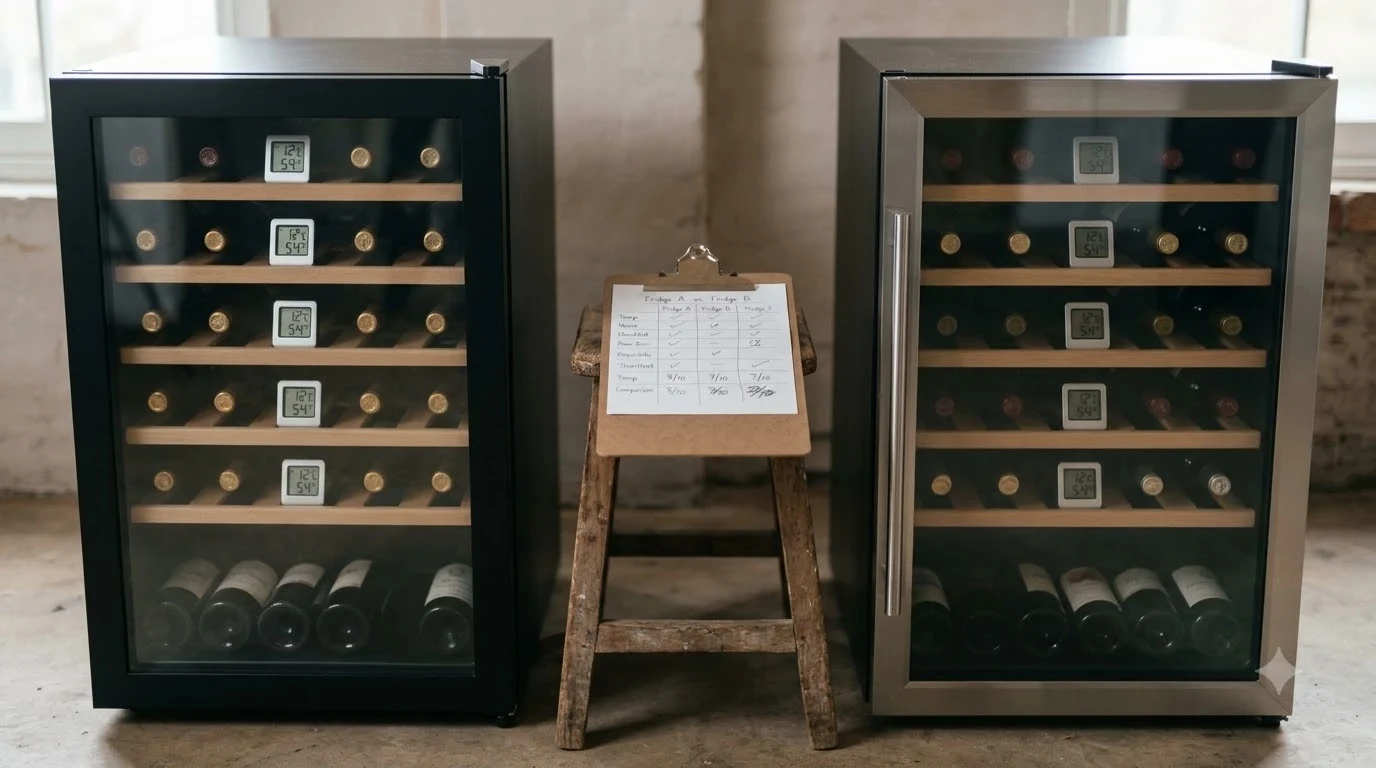
The vintec 30 bottle wine fridge is a compact, freestanding wine cabinet designed for collectors who want dedicated temperature-controlled storage for a modest wine collection. Its appeal lies in its 30-bottle advertised capacity, digital temperature controls, glass-door presentation, and relatively small footprint. However, buyers should distinguish between Vintec’s different 30-bottle models, understand the limitations of a single temperature zone, and pay close attention to owner reports about long-term cooling reliability before purchasing.
A wine refrigerator is a useful investment when ordinary kitchen refrigeration cannot provide the consistent storage conditions a collection needs. Vintec’s 30-bottle cabinets offer an alternative to large cellar installations, particularly for households with a regular selection of reds, whites, and sparkling wines. The important question is whether the cabinet’s capacity, configuration, installation requirements, and reliability record match the way you intend to store wine.
Specs and Key Features of the Vintec 30 Bottle Wine Fridge
The Vintec 30-bottle range is built around compact freestanding storage, with digital temperature adjustment and a glass door. The precise specifications depend on the model, so the V30SGME, V30SGMEBK Noir, and older Allure versions should not automatically be treated as identical products.
| Specification | V30SGMEBK Noir |
|---|---|
| Advertised capacity | 30 bottles |
| Temperature zones | 1 |
| Temperature range | 6°C–18°C |
| Number of shelves | 4 |
| Controls | Digital |
| Interior lighting | LED |
| Door | UV-treated, triple-glazed glass |
| Cabinet lock | No |
| Installation | Freestanding only |
| Weight | 44 kg |
| Width | 493 mm |
| Depth | 590 mm |
| Height | 840 mm |
These specifications come from Vintec’s product information for the V30SGMEBK Noir. Another version, the V30SGME, is listed by Australian retailer Dan Murphy’s with a similar 30-bottle capacity, single temperature zone, and 6°C to 18°C operating range. Its published dimensions are 493 mm wide, 588 mm deep, and 840.5 mm high. Small differences in dimensions and construction are another reason to identify the precise model before buying.
The advertised capacity is based on standard 750 ml Bordeaux bottles. That qualification matters because wine bottles are not manufactured to one universal shape. Burgundy bottles have wider shoulders, Champagne bottles are generally broader, and some premium wines come in unusually shaped packaging. These differences can reduce the practical number of bottles that fit comfortably.
The four-shelf arrangement provides several storage levels, while digital controls make temperature adjustments more convenient than a basic mechanical dial. The LED lighting also makes it easier to see labels without opening the door repeatedly.
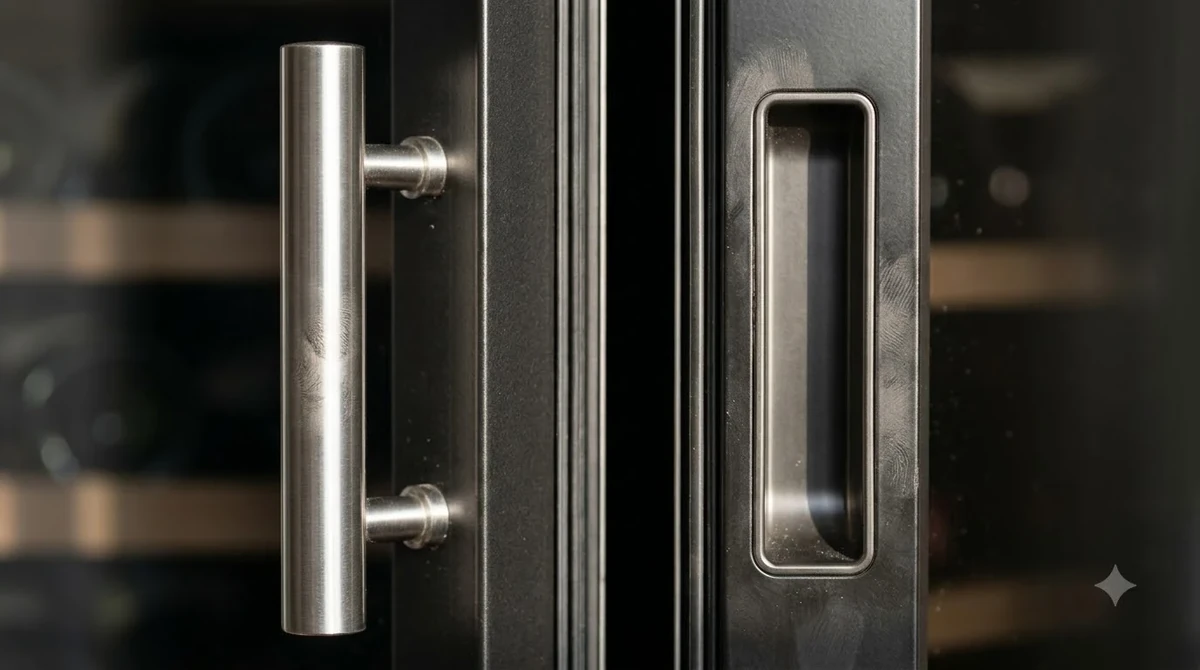
The Noir version has a particularly restrained appearance. Its dark glass presentation and minimal exterior design suit contemporary kitchens, dining areas, and dedicated home bars. The UV-treated glazing is intended to reduce exposure to harmful light, although the cabinet should still be positioned away from direct sunlight.
Vintec also describes several wine-storage features, including humidity regulation, vibration reduction, stabilized temperature control, and regular air circulation. These are useful design considerations because wine storage involves more than simply making bottles cold. A consistent environment is important for wines intended to mature over an extended period.
One specification deserves particular attention: the cabinet is freestanding. Vintec explicitly states that the Noir model is unsuitable for under-counter slot-in installation. A cabinet that appears to fit beneath a kitchen worktop is not necessarily suitable for that position, since refrigeration equipment needs appropriate ventilation and clearance.
For the full technical details, consult Vintec’s V30SGMEBK Noir product specifications.
What Owners Like About the Vintec Wine Cabinet
Positive owner feedback generally focuses on the cabinet’s appearance, manageable footprint, straightforward controls, and ability to keep a small collection organized. For households without a basement cellar, a dedicated wine refrigerator can provide convenient storage without requiring a substantial renovation.
The 30-bottle format is particularly attractive to people who buy wine regularly but do not maintain hundreds of bottles. A collection of approximately 20 to 25 bottles leaves some flexibility for new purchases, different bottle shapes, and wines that need to be consumed sooner.
Owners have also described the cabinets as visually attractive. The glass door allows bottles and labels to remain visible, while the compact upright format can fit into a dedicated dining-room or entertainment area. The Noir design is especially suited to interiors where a conventional stainless-steel appliance might look out of place.
Convenient everyday storage
Digital temperature controls are another practical advantage. Instead of relying on the temperature of a kitchen refrigerator, owners can select a setting intended for wine storage or serving. The advertised range on the Noir model extends from 6°C to 18°C, covering many common storage and serving requirements.
For example, a household that regularly drinks Chardonnay, Sauvignon Blanc, Pinot Noir, and Cabernet Sauvignon can keep all four styles in one cabinet. The limitation is that a single-zone design cannot independently maintain the ideal serving temperatures for each wine at the same time.
Vintec’s stated cellaring recommendation for the Noir cabinet is 12°C to 14°C. That makes the appliance more suitable for keeping a mixed collection at a consistent storage temperature than for operating as two separate serving refrigerators.
Some owners report satisfactory operation
Not every owner experience is negative. Product feedback reproduced through retailer listings includes a customer who described more than four years of reliable operation, quiet performance, and stable temperature control. Other reports describe cabinets remaining in service for several years before developing problems.
This variation is important. A review should not imply that every unit fails prematurely, just as a positive experience from one household cannot establish that every cabinet will provide trouble-free service. Installation conditions, usage, maintenance, model differences, and individual appliance condition can all influence ownership.
The strongest reason to consider the Vintec is therefore its combination of compact storage, wine-specific temperature adjustment, and understated design. Those are useful advantages, provided the particular unit has a verifiable operating history and appropriate service support.
For a small collection that is growing gradually, the format can be more practical than purchasing a large wine cabinet with unused capacity. It also provides a dedicated location for bottles that would otherwise occupy ordinary refrigerator shelves or kitchen cupboards.
Common Complaints and Reliability Concerns
The most important concern in the available owner feedback is cooling reliability. Several Vintec 30-bottle owners describe cabinets that stopped maintaining their selected temperature, with compressor or suspected refrigerant-system problems appearing in their accounts.
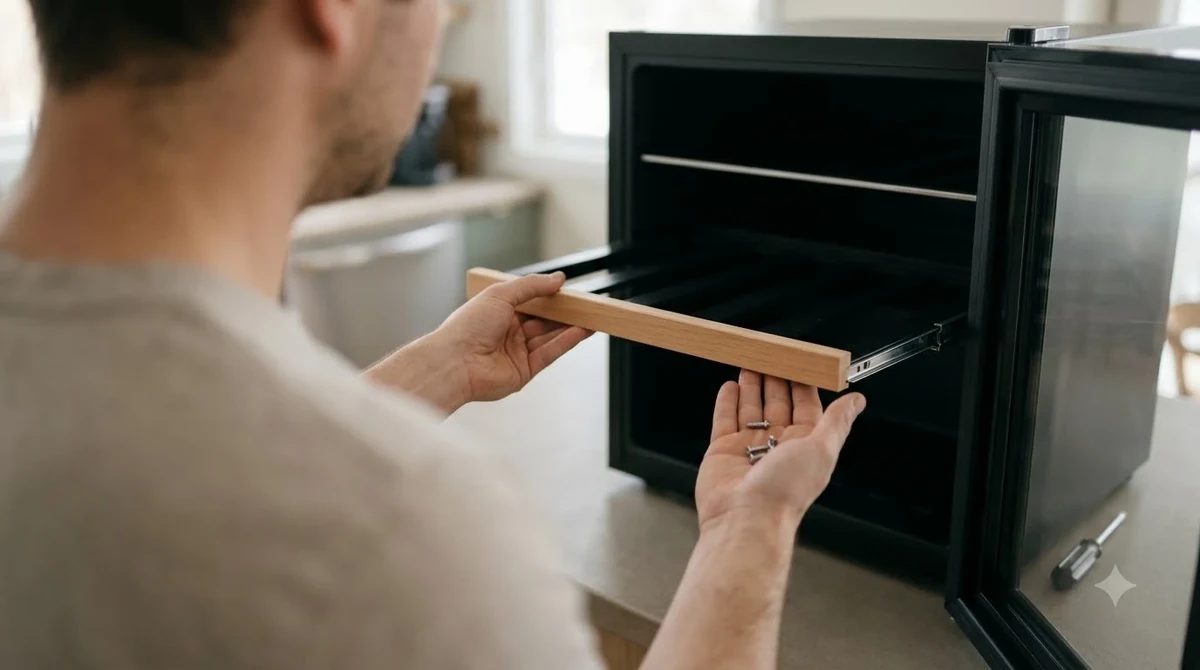
ProductReview’s V30SGE listing identifies the model as discontinued and displays 25 reviews. Its published owner feedback includes reports of cooling failures after approximately three years, compressor replacement concerns, and cabinets that could no longer reach their selected temperatures.
One V30SGME owner described a cabinet that remained around 22°C instead of cooling properly. Another reported compressor trouble shortly after the warranty period. A separate owner described multiple units developing similar problems. These are individual experiences rather than a verified engineering failure rate, but the repetition of cooling-related complaints deserves attention.
Compressor and cooling-system problems
A wine refrigerator that cannot maintain its temperature defeats its primary purpose. A cabinet that runs continuously while remaining too warm can also create uncertainty about whether stored wine has experienced prolonged temperature fluctuations.
Some owners mention suspected gas leaks and expensive repair estimates. In refrigeration equipment, a refrigerant-system problem can be more complicated than replacing a shelf or adjusting a door hinge. The final repair decision depends on the fault, the availability of components, labor costs, and the age of the appliance.
For a discontinued cabinet, parts availability becomes especially important. A buyer should not assume that a technician will be able to repair every possible fault simply because the brand still sells other wine-storage products.
Noise and operating conditions
Noise is another consideration. Some owners describe the compressor becoming noticeable when it starts, comparing the sound to an ordinary refrigerator. Other users report quiet operation.
That variation suggests that placement and the condition of the appliance matter. A wine refrigerator installed in a quiet bedroom or open-plan living room may be more noticeable than one positioned in a separate utility area. Buyers should also make sure the cabinet is level and has the clearance required by its installation instructions.
Discontinued models and secondhand purchases
The older V30SGE family includes several related model numbers, and ProductReview identifies the V30SGE as discontinued. A used appliance may still operate properly, but its purchase price should reflect the uncertainty associated with age, repair history, and available support.
Do not assume that an attractive exterior indicates a healthy refrigeration system. A cabinet can have clean shelves, an intact glass door, and working lights while struggling to maintain its temperature.
Before buying a used unit, request a demonstration with an actual temperature reading. Ideally, observe the cabinet running over an extended period rather than accepting a quick demonstration in which the display merely illuminates.
For additional owner experiences, consult the Vintec 30 Bottle Wine Cabinet owner reviews. The recurring complaints should be considered alongside the positive accounts rather than treated as proof that every model has the same problem.
Who Should Buy the Vintec 30 Bottle Wine Fridge and Who Should Skip It
The Vintec 30-bottle cabinet makes the most sense for someone who wants a compact, dedicated wine-storage appliance and has space for a freestanding unit. Its capacity is appropriate for a modest collection, but its single-zone configuration and reliability questions narrow the range of buyers for whom it is an ideal choice.
Who should consider it?
Small wine collectors: A 30-bottle cabinet is a sensible size for someone who keeps a selection of everyday wines and a few bottles for special occasions. It can accommodate a varied collection without requiring a full cellar installation.
Households with dedicated appliance space: The approximately 493 mm width and 840 mm height make the cabinet relatively compact compared with larger wine-storage units. A freestanding position in a dining room, pantry, or home bar may work well, provided ventilation and clearance requirements are respected.
Buyers who prefer a consistent storage temperature: A single-zone cabinet can be useful for storing different wine styles together. Setting the cabinet around 12°C to 14°C provides a practical cellaring environment according to Vintec’s Noir product information.
People considering a verified, warrantied unit: A new or professionally inspected appliance with documented support offers a more defensible purchase than an older cabinet with an unknown history. Warranty coverage and service availability should be established before payment.
Who should look elsewhere?
Collectors who need separate red and white serving temperatures: The single-zone V30SGMEBK cannot maintain two independently selected temperatures. Someone who wants whites chilled while reds remain warmer should consider a genuine dual-zone cabinet instead.
People who need built-in installation: The Noir specification explicitly identifies the model as freestanding only. It should not be treated as an under-counter appliance simply because its height appears compatible with a kitchen opening.
Large or fast-growing collectors: Thirty standard Bordeaux bottles may sound sufficient, but unusual bottle shapes reduce usable capacity. A collector who regularly buys Champagne, large-format bottles, or broad-shouldered Burgundy bottles may quickly run out of room.
Buyers who cannot tolerate repair uncertainty: The repeated cooling complaints in the owner feedback make it sensible to investigate service arrangements carefully. Anyone who expects long-term, predictable operation should compare current alternatives and warranty conditions before committing.
People purchasing an untested secondhand cabinet: A low purchase cost does not compensate for an appliance that cannot hold its selected temperature. If the seller cannot demonstrate stable operation, walking away is the safer purchasing decision.
Tip: Before purchasing any Vintec 30-bottle model, photograph the model and serial-number plate, confirm its exact specifications, and ask for a cooling demonstration. For a used unit, request information about previous compressor or refrigerant-system repairs and verify whether replacement parts and qualified servicing are available.
Storage is only one part of enjoying a collection. If the cabinet will hold wines intended for dinner, consider how the bottles pair with your regular meals. For example, a medium-bodied red can work well alongside the flavors of a chicken Marsala recipe, while keeping the wine stored at a consistent temperature until serving.
How the Vintec Compares to Alternatives
The most useful comparison is between Vintec’s own 30-bottle configurations. The Classic, Allure, and Noir product information describes different features and layouts, so buyers should compare exact model numbers rather than relying on the shared capacity description.
The older Vintec Classic V30SGMe is a single-zone cabinet with four shelves, digital controls, and a published temperature range of 5°C to 18°C. Its brochure lists a weight of 38 kg and dimensions of 840 x 493 x 590 mm.
The Noir V30SGMEBK is also single-zone, with four shelves and digital controls. Its advertised range is 6°C to 18°C, and its listed weight is 44 kg. Its UV-treated triple-glazed door and darker minimalist styling distinguish it from the Classic configuration.
The Allure ALV30SG2E is a more interesting option for people who want separate temperature settings. Its published specifications describe five shelves, an upper zone operating from 5°C to 10°C, and a lower zone operating from 10°C to 18°C.
| Model | Zones | Temperature range | Shelves | Weight |
|---|---|---|---|---|
| Classic V30SGMe | 1 | 5°C–18°C | 4 | 38 kg |
| Noir V30SGMEBK | 1 | 6°C–18°C | 4 | 44 kg |
| Allure ALV30SG2E | 2 | 5°C–10°C upper; 10°C–18°C lower | 5 | 44 kg |
These figures are drawn from Vintec’s published product literature and refer to specific configurations, not interchangeable specifications for every appliance marketed as a 30-bottle Vintec. The Allure’s dual-zone layout is particularly relevant to households that want to separate serving-ready whites from reds.
Single-zone versus dual-zone storage
For long-term storage, one consistent temperature is generally sufficient for red, white, and sparkling wines. A single-zone cabinet can therefore make sense if the collection is primarily intended to mature rather than remain immediately ready for serving.
A dual-zone design provides greater flexibility for drinking different styles at different temperatures. For example, a household might keep Sauvignon Blanc and sparkling wine in the cooler compartment while storing Cabernet Sauvignon and Merlot in the warmer compartment.
Remember that the ideal serving temperature is not necessarily the ideal long-term storage temperature. A white wine stored at approximately 12°C can be chilled before serving, while a red wine kept at the same storage temperature can be allowed to warm slightly before pouring.
For reference, light whites and rosé are generally served at 45°F to 50°F, full-bodied whites at 50°F to 55°F, and full-bodied reds at 60°F to 65°F. A single-zone wine refrigerator cannot maintain all those serving conditions simultaneously.
Choosing the right Vintec configuration
The Classic is worth understanding if straightforward single-temperature storage is the priority. The Noir is more appropriate for someone who prefers its particular glass-door design and advertised humidity and vibration-management features. The Allure dual-zone configuration is the more logical choice when separate serving temperatures matter.
However, older model literature does not establish current availability, current warranty coverage, or the availability of replacement components. A discontinued or secondhand model should be evaluated according to its actual condition and support options, not just its original specification sheet.
For readers comparing additional wine-storage appliances, the wine fridge model reviews provide a useful starting point for considering different capacities and configurations. The most appropriate alternative is the one that meets your installation requirements, usable capacity, and service expectations.
Frequently Asked Questions
Can the Vintec 30-bottle wine fridge store Champagne bottles?
Yes, Champagne bottles can generally be stored in a wine cabinet, but their wider diameter can reduce the total number of bottles that fit. A cabinet advertised for 30 Bordeaux bottles should not be expected to hold 30 Champagne bottles in the same arrangement. Check shelf spacing and the available width before loading several sparkling bottles.
Does a Vintec wine fridge need to run continuously?
A compressor wine refrigerator normally cycles on and off as it regulates the internal temperature. Continuous operation without reaching the selected setting may indicate a cooling problem, poor ventilation, or an unsuitable surrounding environment. A persistent change in performance warrants professional inspection rather than repeated adjustments to the controls.
Can wine be stored upright in the Vintec cabinet?
Upright storage can be convenient for short-term organization, but bottles sealed with natural cork are generally better stored horizontally for extended periods. Horizontal positioning keeps wine in contact with the cork and makes efficient use of the shelves. Follow the manufacturer’s loading instructions and avoid placing more weight on a shelf than it is designed to support.
How long should a Vintec cabinet take to stabilize after installation?
The stabilization period depends on the starting temperature, room conditions, and the number of bottles loaded. Allow the appliance to reach its selected temperature before treating it as ready for normal storage. A cabinet that cannot approach its target after an appropriate operating period should be checked against its installation instructions and assessed by a qualified technician.
Is a wine refrigerator suitable for unopened wine bottles for several years?
Yes, a suitable wine refrigerator can provide an appropriate storage environment for wines intended to mature over several years. Consistent temperature, limited light exposure, low vibration, and appropriate humidity all matter. Not every wine improves with extended aging, however, so storage equipment should match the types of bottles being collected.
The Vintec 30-bottle wine fridge offers attractive compact storage, useful digital controls, and a practical format for a modest home collection. Its single-zone configuration is suitable for consistent storage, but installation restrictions and recurring owner complaints about cooling performance deserve serious consideration. The best purchasing decision is to verify the exact model, inspect its operating condition, and confirm warranty and repair support before committing to the cabinet.
More in Model Reviews
 Magic Chef 44 Bottle Wine Cooler Review for Flexible StorageUpdated Nov 21, 2026
 Whynter 164 Bottle Wine Cooler Review: Capacity, Features, and FitUpdated Nov 21, 2026
 Insignia NS WC16BK6 Review: Compact 16-Bottle Wine StorageUpdated Nov 21, 2026
 Wine Enthusiast Electric Blue Omega Review: Opening, Pouring, and Preserving Made EasierUpdated Nov 21, 2026
 Koolatron 20 Bottle Wine Cooler Review: Features, Fit, and PerformanceUpdated Nov 21, 2026
 NewAir AWC 330E Review for Home Wine StorageUpdated Nov 21, 2026