

We may earn a commission when you buy through links on this page, at no extra cost to you. Learn more.
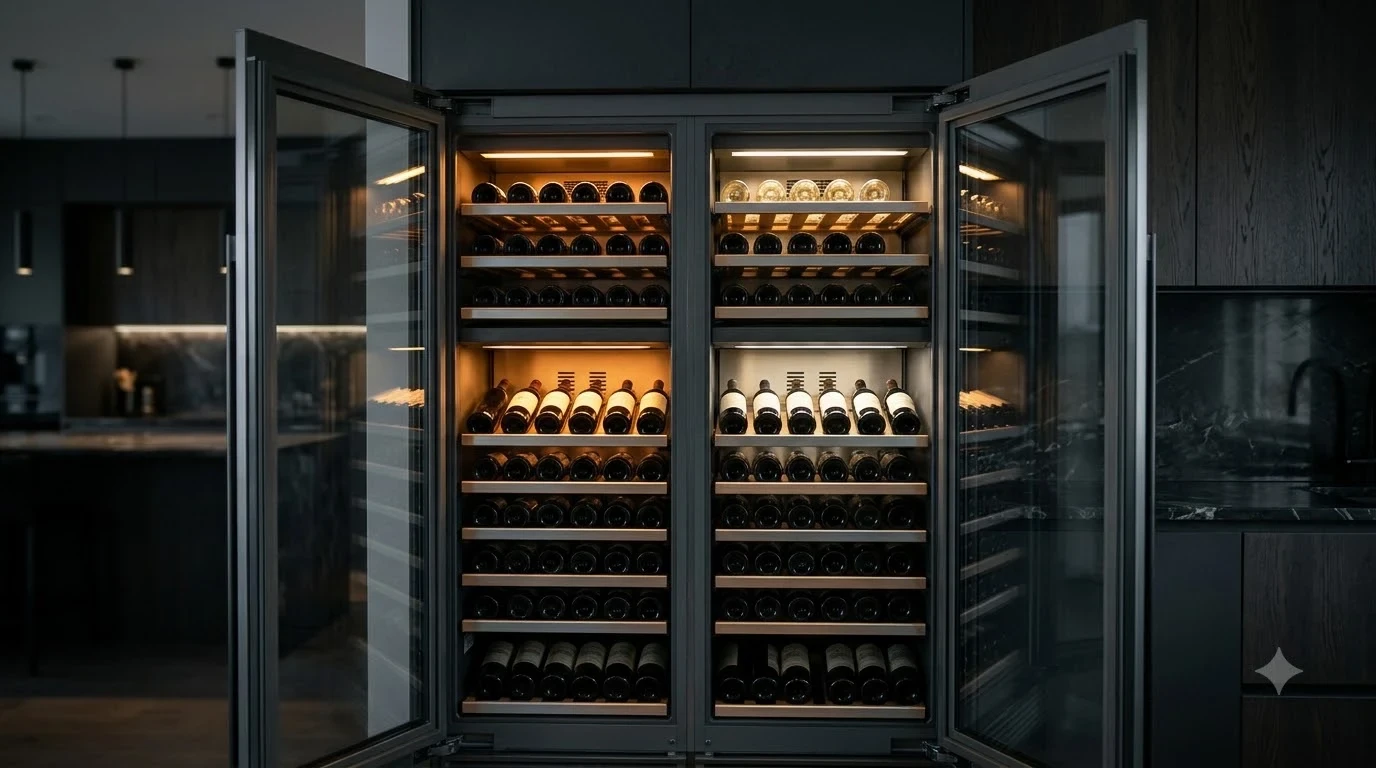
The vinotemp dual zone wine fridge EL-142SDST is a large-capacity wine refrigerator designed for collectors who want separate storage temperatures for reds and whites, approximately 155-bottle capacity, and flexible built-in or freestanding installation. Its 15 sliding shelves, inverter compressor, dual-pane glass door, and adjustable temperature compartments make it an interesting option for a substantial home collection. However, its 231-pound weight, substantial installation footprint, and inability to maintain identical temperatures in both zones deserve consideration before purchasing.
A wine refrigerator needs to do more than look attractive behind a glass door. It should provide suitable storage temperatures, accommodate the bottles in a collection, and fit the available space without creating installation or maintenance problems. Vinotemp offers several dual-zone configurations, but this review focuses on the EL-142SDST, a specific 155-bottle model, rather than treating every Vinotemp wine refrigerator as interchangeable. Understanding its specifications and limitations makes it easier to decide whether this cabinet suits a growing collection or whether a smaller alternative would be more practical.
Specs and Key Features of the EL-142SDST
The EL-142SDST is designed for collectors who need considerable storage space and two distinct temperature environments. Its most important features are its approximately 155-bottle capacity, 15 sliding shelves, separate temperature controls, and front exhaust ventilation.
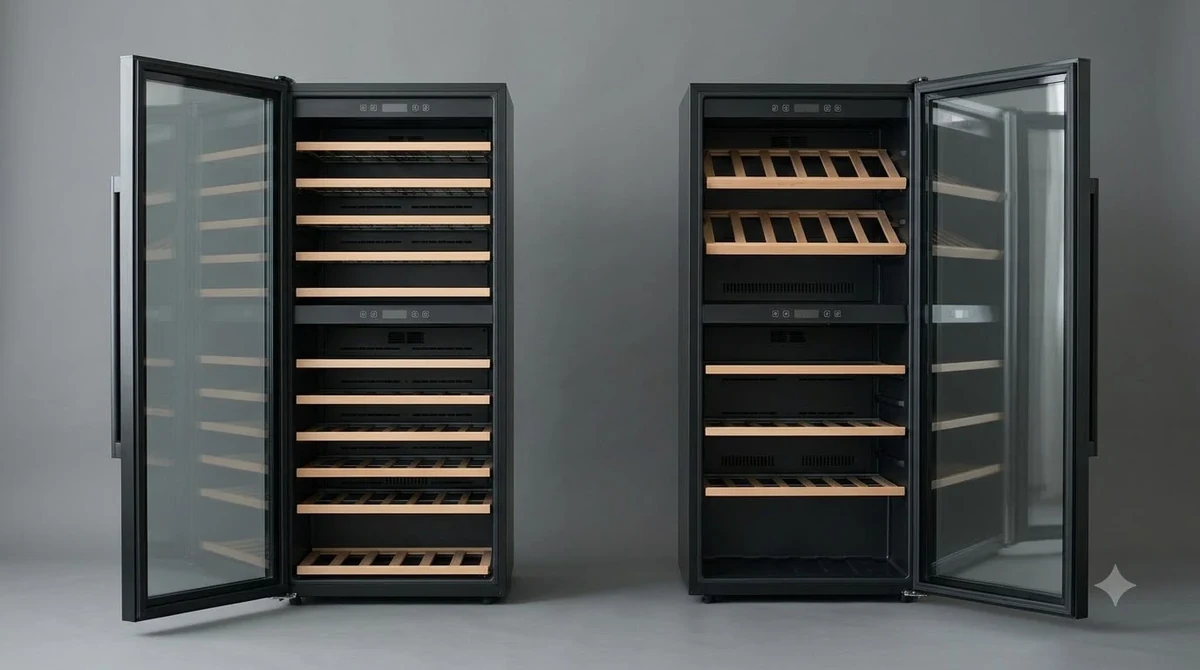
Vinotemp describes the refrigerator as a compressor-powered appliance with inverter technology. The manufacturer identifies an Embraco compressor, a digital control panel in the middle divider, and a dual-pane glass door with a stainless steel frame. The cabinet combines a black interior and exterior with stainless steel shelf lips and a vertical pole handle. White interior LED lighting helps illuminate the stored bottles without requiring the door to remain open. The manufacturer’s EL-142SDST product specifications provide the complete feature description and installation information.
The advertised capacity assumes standard 750 ml bottles. This distinction matters because wine collections rarely consist entirely of identically shaped Bordeaux bottles. Burgundy bottles, Champagne bottles, sparkling wine bottles, and larger formats can occupy more shelf space. Vinotemp specifically warns that larger bottles reduce the stated capacity.
| Specification | Vinotemp EL-142SDST |
|---|---|
| Product type | Dual-zone wine refrigerator |
| Advertised capacity | Approximately 155 bottles |
| Shelf configuration | 15 sliding metal shelves |
| Full-size shelves | 13 |
| Half-size display shelves | 2 |
| Upper temperature range | 40°F–55°F |
| Lower temperature range | 55°F–72°F |
| Overall temperature range | 40°F–72°F |
| Cooling system | Embraco compressor with inverter technology |
| Width | 23.5 inches |
| Depth | 26.75 inches |
| Height | 69 inches |
| Empty weight | 231 pounds |
| Ambient operating range | 60°F–90°F |
| Door | Dual-pane glass with stainless steel frame |
| Ventilation | Front exhaust |
| Security | Built-in lock and key |
| Installation | Built-in or freestanding |
One particularly useful feature is the removable top shelf. It creates additional flexibility for Champagne and Magnum bottles that may not fit comfortably in a standard horizontal rack. Collectors who regularly purchase large-format wines should still plan their storage arrangement around the actual dimensions of those bottles rather than assuming the full advertised capacity will remain available.
The temperature split also deserves attention. The upper compartment supports settings from 40°F to 55°F, while the lower compartment supports 55°F to 72°F. These ranges provide considerable flexibility for storing sparkling wines, white wines, rosé, and red wines in separate environments. However, the manufacturer explicitly states that the two compartments cannot be set to the same temperature.
The refrigerator is also relatively heavy for its footprint. At 231 pounds empty, it requires a suitable floor or cabinet structure and careful planning for delivery. The dimensions are relatively narrow compared with some larger wine cabinets, but the 69-inch height and 26.75-inch depth still require accurate measurements.
For collectors comparing this unit with other wine refrigerator model reviews, the important distinction is that the EL-142SDST prioritizes large-capacity wine storage rather than beverage versatility or compact countertop convenience.
What Owners May Appreciate About the Storage Design
The strongest appeal of this Vinotemp refrigerator is its combination of capacity, separate temperature compartments, and accessible sliding shelves. These features are particularly useful for households that regularly purchase wine by the case or maintain different collections for everyday drinking and longer-term storage.
The 15 sliding metal shelves make bottle access more convenient than arrangements that require removing several bottles to reach one at the back. Collectors who organize wine by producer, region, grape variety, or drinking window can use the shelf arrangement to create a practical storage system. A shelf dedicated to California Cabernet Sauvignon, another for Burgundy Pinot Noir, and separate sections for Riesling and Champagne are possible examples.
The stainless steel shelf lips provide a finished appearance while helping keep bottles positioned on their racks. The dual-pane glass door also allows the collection to remain visible, which can be attractive in a dining room, kitchen, or home bar. Its interior LED lighting adds display value, especially when the refrigerator is installed in a visible location.
The removable upper shelf offers another practical advantage. Champagne bottles often have broader bodies than conventional Bordeaux bottles, while Magnum formats require additional space. Removing a shelf provides a way to accommodate some larger bottles without completely redesigning the storage arrangement.
Separate temperatures for different wine styles
The upper zone’s 40°F to 55°F range is useful for wines that benefit from cooler storage. Sparkling wines generally serve well around 40°F to 50°F, while lighter whites and rosé are commonly served around 45°F to 50°F. The lower zone’s 55°F to 72°F range gives collectors more room for red wine storage and other bottles that do not require the coldest environment.
For example, Sauvignon Blanc, Riesling, and sparkling wine can occupy the upper compartment, while Cabernet Sauvignon, Merlot, and Syrah can be placed in the lower compartment. Chardonnay may also fit comfortably into the upper zone, depending on the intended serving style.
These are serving and short-term temperature considerations, not a requirement to store every bottle at its ideal drinking temperature continuously. Long-term wine storage generally benefits from a stable environment around 55°F. Owners should therefore distinguish between maintaining a collection for aging and preparing individual bottles for service.
The middle-mounted digital control panel makes the two-zone arrangement relatively straightforward to understand. The temperature displays and separate compartments allow the owner to manage different wine categories without relying on one compromise temperature for the entire collection.
For a household that regularly serves different wines with dinner, this flexibility can be useful. A bottle of Pinot Noir for chicken Marsala and a bottle of white wine for seafood do not necessarily require the same serving temperature. Keeping the two categories in separate compartments can simplify preparation before a meal.
Common Complaints and Potential Ownership Concerns
The main concerns to investigate before purchasing are temperature accuracy, long-term reliability, operating noise, and the difference between advertised and practical bottle capacity. Available owner feedback for another Vinotemp 155-bottle model highlights issues worth considering, although those reports should not be mistaken for verified defects in the EL-142SDST.
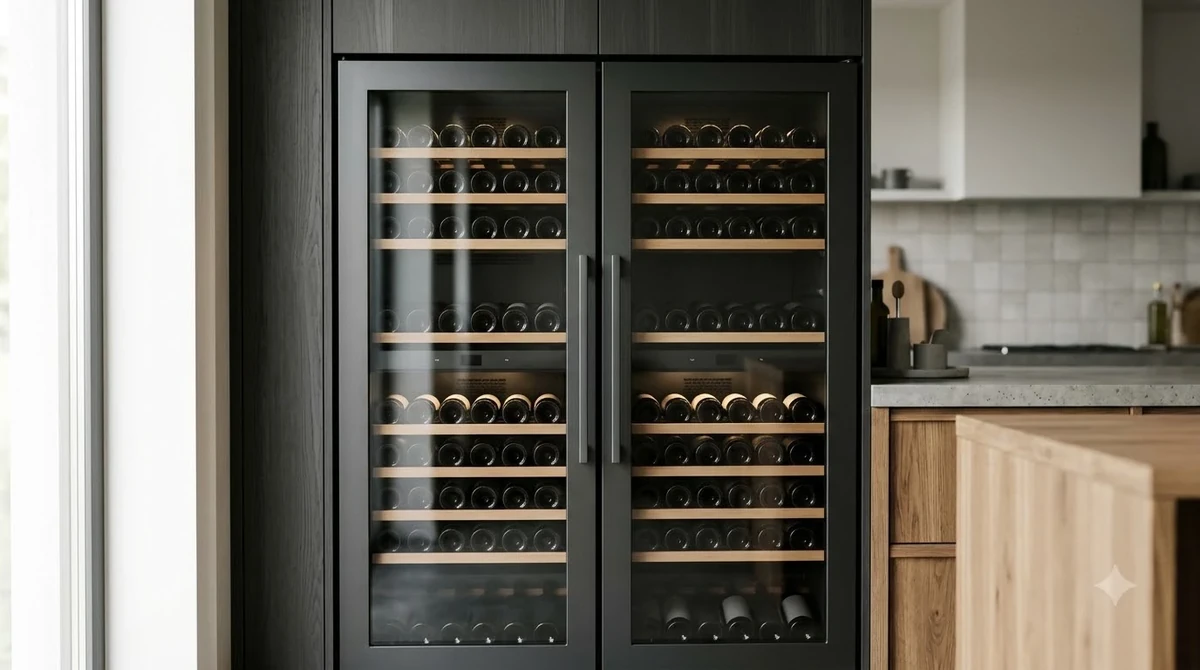
A particularly relevant source is the Lowe’s customer feedback page for the VT-155SBB. This is a separate Vinotemp 155-bottle model, not the EL-142SDST reviewed here. One owner reported that the unit stopped regulating temperature properly after approximately five years and froze the wine inside. Another owner described a substantial difference between the displayed temperature setting and an independently measured interior temperature.
These reports are individual experiences rather than proof that all Vinotemp refrigerators have the same problems. They also cannot establish the failure rate of the EL-142SDST. Nevertheless, they identify two practical considerations for buyers of large wine cabinets: temperature verification and protection of valuable collections.
Temperature accuracy deserves attention
A digital temperature display is convenient, but it should not automatically be treated as a perfect measurement of every shelf location. Temperature can vary within a refrigerator, especially when it is newly installed, heavily loaded, or recovering after the door has been opened repeatedly.
A separate refrigerator thermometer can help owners understand actual storage conditions. For an expensive collection, using an independent temperature monitor in each compartment is a sensible precaution. A thermometer positioned near the middle of each zone provides a useful reference, while periodic checks help reveal unusual temperature changes.
Collectors should also avoid responding to a single unusual reading by making repeated large adjustments. Allow the cabinet time to stabilize after changing settings, then compare the measurements again. Persistent differences deserve attention from the manufacturer’s support team rather than continued experimentation.
Compressor noise and installation conditions
Vinotemp’s general wine-cooler guidance explains that compressor models produce sounds comparable to a standard household refrigerator as the compressor cycles. Inverter technology is intended to improve compressor operation, but it should not be interpreted as a promise of completely silent performance.
This matters if the refrigerator will stand beside a quiet living area, bedroom, or open-plan dining space. A compressor sound that is unnoticeable in a utility room may become more obvious in a small apartment or an otherwise quiet kitchen.
Installation quality can also influence performance. A refrigerator that is not level, has unsuitable ventilation, or is exposed to excessive ambient heat may operate under less favorable conditions. The EL-142SDST is specified for ambient temperatures between 60°F and 90°F, so a hot garage or poorly ventilated storage area is not an appropriate assumption for its use.
Tip: Before filling a valuable collection, let the refrigerator stabilize after installation and independently measure both temperature zones. Record the readings over several days so that unusual changes can be identified before the cabinet holds expensive bottles.
Who Should Buy the Vinotemp EL-142SDST and Who Should Skip It
This refrigerator makes the most sense for serious home collectors who need substantial bottle capacity and want separate storage temperatures for different wine styles. It is less attractive for people with limited floor space, small collections, or a preference for storing every bottle at one consistent temperature.
The advertised 155-bottle capacity is the clearest indication of its intended audience. Someone who buys wine occasionally and keeps only 12 to 30 bottles is unlikely to use enough of the cabinet to justify its physical footprint. A smaller wine refrigerator would probably make more sense for that type of household.
However, collectors who purchase multiple cases of wine, maintain a mixture of reds and whites, or want a dedicated storage appliance may appreciate the additional room. The removable top shelf is another advantage for people who purchase Champagne, sparkling wine, or occasional larger formats.
Good candidates for this refrigerator
Established home collectors: People with substantial collections can benefit from the 15 sliding shelves and separate temperature environments. The layout provides a reasonable foundation for organizing wines by region, grape, producer, or drinking window.
Households that serve different wine styles: The upper compartment can accommodate cooler-serving wines, while the lower compartment supports warmer storage settings. This is useful for households that regularly serve Sauvignon Blanc, Chardonnay, Cabernet Sauvignon, and Pinot Noir.
Home bars and kitchen renovations: The front exhaust and built-in or freestanding installation design give the refrigerator flexibility in a properly planned space. The stainless steel frame and glass door also suit installations where the collection is intended to remain visible.
Collectors with larger-format bottles: The removable top shelf offers useful flexibility for some Champagne and Magnum bottles. Buyers should still account for reduced overall capacity when storing bottles with larger dimensions.
Who should consider another refrigerator
Small wine collections: A 155-bottle cabinet is unnecessarily large for someone who normally keeps fewer than 30 bottles. Smaller models can occupy less space and may be easier to position in an apartment or compact kitchen.
People who want identical temperatures: Vinotemp explicitly states that the EL-142SDST cannot maintain the same temperature in both compartments. Someone seeking a uniform long-term storage environment throughout the cabinet should compare single-zone alternatives instead.
Garage and basement installations: The manufacturer does not recommend this particular refrigerator for garages or basements. Its specified ambient range is 60°F to 90°F, making it important to consider the actual room conditions rather than relying on the appearance of the cabinet.
Buyers who prioritize silent operation: The compressor can produce normal refrigerator-like operating sounds. Those who require a particularly quiet appliance should investigate operating characteristics and alternative cooling technologies before committing to a large compressor model.
Anyone without a suitable installation location: A refrigerator that weighs 231 pounds before bottles are added requires careful planning. Buyers should confirm floor support, doorway access, cabinet dimensions, and electrical access before arranging delivery.
How It Compares to Alternative Wine Refrigerators
The EL-142SDST competes most directly with other large-capacity wine cabinets, rather than compact beverage coolers. Buyers should compare usable bottle capacity, temperature configuration, installation requirements, and shelf flexibility before choosing a refrigerator.
One important distinction is that Vinotemp’s product range contains several models with similar advertised capacities. The VT-155SBB, for example, is listed separately from the EL-142SDST. A similar bottle count does not establish identical construction, controls, dimensions, or cooling performance.
Another relevant category is the dual-zone wine and beverage center. These refrigerators divide their interiors between wine bottles and cans or other drinks. They can be more practical for households that want a mixed beverage station, but the storage arrangement is different from a cabinet dedicated to approximately 155 wine bottles.
Vinotemp’s own Butler Series EL-100WBC-TS is one example of this alternative configuration. Its published design separates wine storage from beverage storage, with a dedicated wine compartment and another section for cans. That arrangement serves a different household need from the EL-142SDST’s two wine-storage zones.
Buyers can also investigate other brands identified alongside Vinotemp in retailer listings, including NewAir, Avallon, and Empava. These names represent potential comparison candidates, not a claim that every model offers the same capacity or installation specifications.
| Comparison point | EL-142SDST | Other configurations |
|---|---|---|
| Primary purpose | Large wine collection | Wine, beverages, or compact collections |
| Temperature arrangement | Two different wine zones | Depends on the model |
| Advertised bottle capacity | Approximately 155 | Varies by cabinet |
| Large-format bottle flexibility | Removable top shelf | Depends on shelf design |
| Installation | Built-in or freestanding | Depends on ventilation design |
| Best use | Separate red and white wine storage | Different collection sizes and beverage needs |
For buyers comparing a wine-only cabinet with a wine and beverage center, the key question is how much space should be reserved for wine. A refrigerator that stores cans and bottles together may be more versatile for entertaining, but it will not necessarily provide the same wine capacity as a dedicated collection cabinet.
The EL-142SDST is also worth distinguishing from a single-zone wine cellar. A single-zone refrigerator can maintain one shared temperature throughout its interior, which is attractive for collectors prioritizing consistent long-term storage. The dual-zone Vinotemp instead prioritizes separate environments for different wine categories.
There is no universally better configuration. A collector aging bottles of Bordeaux and Burgundy may prefer a consistent environment, while a household that frequently serves chilled whites and reds may appreciate two independently controlled compartments. The best comparison is therefore based on collection habits rather than the number of features listed on a product page.
Installation, Everyday Use, and Maintenance
Proper installation is particularly important for a tall, heavy refrigerator with a substantial wine capacity. Vinotemp’s guidance emphasizes a level, solid surface, suitable environmental conditions, and careful preparation before the appliance is switched on. Its wine cooler installation and maintenance FAQ also explains the upright waiting period, cleaning precautions, and ventilation considerations.
The first step is measuring the available space. The cabinet itself measures 23.5 inches wide, 26.75 inches deep, and 69 inches high. These measurements should be compared with the complete installation opening, including any additional clearance required by the owner’s manual and the surrounding cabinetry.
Although the front exhaust allows built-in or freestanding installation, that does not eliminate the need to follow the model-specific ventilation instructions. Front ventilation is particularly useful for kitchen cabinetry because the refrigerator can release warm air through its front-facing ventilation arrangement rather than relying on open space behind it.
The second consideration is delivery. At 231 pounds empty, the refrigerator should not be treated like a small household appliance that one person can casually move into position. Check doorway widths, stair access, floor surfaces, and the final installation route before delivery. Professional assistance may be appropriate for a difficult installation.
Preparing the refrigerator for operation
Vinotemp recommends allowing a newly delivered wine cooler to remain upright for 24 hours before plugging it in. This gives the cooling system time to settle following transportation. Following this instruction is a simple but important part of the installation process.
- Measure the installation area. Confirm that the 23.5-inch width, 26.75-inch depth, and 69-inch height suit the intended position.
- Check the floor. Make sure the surface is solid, level, and capable of supporting the refrigerator and its eventual bottle load.
- Inspect the ventilation arrangement. Follow the manufacturer’s model-specific instructions for the front exhaust and surrounding cabinetry.
- Allow the unit to settle. Keep the delivered refrigerator upright for 24 hours before connecting it to power.
- Set the two compartments. Choose appropriate upper and lower temperature settings for the intended wine categories.
- Verify temperatures independently. Use suitable thermometers to check the actual conditions in both compartments.
- Organize the collection. Load standard bottles first, then determine how much capacity remains for Champagne, Burgundy, and larger formats.
Keeping the cabinet clean and organized
Routine cleaning helps keep the cabinet presentable and makes it easier to spot spills, loose shelving, or other changes inside the refrigerator. Vinotemp advises unplugging the unit before cleaning and using a mild, nonabrasive cleaner on the exterior. Components should be dried thoroughly before they are returned or the refrigerator is plugged back in.
Owners should also avoid overloading individual shelves or forcing bottles into spaces that are too narrow. Sliding shelves are useful only when they can move without catching against neighboring bottles. A consistent arrangement reduces unnecessary handling and makes it easier to identify bottles without leaving the door open for extended periods.
It is also sensible to maintain an inventory. Record each bottle’s producer, vintage, grape variety, location, and intended drinking window. With approximately 155 advertised bottle positions, an organized inventory can prevent forgotten bottles from remaining in storage longer than intended.
For long-term storage, stability matters more than frequently changing the settings to match individual serving preferences. Vinotemp identifies approximately 55°F as a suitable general storage temperature for preserving wine over time. The EL-142SDST’s separate zones offer flexibility, but owners should choose settings that support their collection’s intended storage conditions.
Finally, remember that a wine refrigerator is not a substitute for careful bottle handling. Keep bottles away from direct sunlight, avoid unnecessary temperature fluctuations, and do not use the refrigerator as a general-purpose food or beverage appliance if doing so interferes with its intended wine-storage arrangement.
Frequently Asked Questions
Does the EL-142SDST have a humidity control setting?
The published product specifications describe temperature controls, compressor cooling, and interior lighting but do not identify a dedicated adjustable humidity control. Buyers who need active humidity management should ask Vinotemp about the specific model before purchasing. A separate monitoring device can help identify the conditions inside the cabinet.
Can the refrigerator be connected to a smart home system?
The published EL-142SDST specifications do not identify Wi-Fi connectivity, a smartphone application, or smart-home integration. Its documented controls are digital controls located in the middle divider. Buyers who require remote temperature notifications should investigate compatible independent monitoring equipment.
Can the refrigerator store opened wine bottles?
Opened wine can be stored in the refrigerator with suitable closures, although the best location depends on the wine style and desired serving temperature. Sparkling wines generally retain their quality for approximately one to three days after opening, while most still wines last around three to five days under refrigeration. These storage periods depend on the wine, closure, and handling.
Does the EL-142SDST include a reversible door?
The manufacturer’s product page describes the door construction but does not clearly establish a reversible-door procedure for this particular model. A separate product specification document lists a reversible swing, but installation details should be confirmed against the exact unit being purchased. This is especially important when the refrigerator is positioned beside a wall or kitchen cabinet.
Can the upper and lower zones be switched off independently?
The published product information describes separate temperature compartments but does not establish independent power-off functionality. Separate temperature adjustment should not be confused with separate electrical operation. Buyers who need independent shutdown or seasonal operation should request clarification from Vinotemp before installation.
The Vinotemp EL-142SDST is a substantial wine refrigerator with useful dual-zone flexibility, an attractive display design, and generous advertised capacity for serious home collectors. Its weight, installation requirements, temperature limitations, and the importance of independent monitoring should all be considered before committing to it. For households that genuinely need approximately 155 bottle positions and separate red and white wine storage, it deserves a place on the comparison shortlist; smaller collections should consider more compact alternatives.
More in Model Reviews
 Magic Chef 44 Bottle Wine Cooler Review for Flexible StorageUpdated Nov 21, 2026
 Whynter 164 Bottle Wine Cooler Review: Capacity, Features, and FitUpdated Nov 21, 2026
 Insignia NS WC16BK6 Review: Compact 16-Bottle Wine StorageUpdated Nov 21, 2026
 Wine Enthusiast Electric Blue Omega Review: Opening, Pouring, and Preserving Made EasierUpdated Nov 21, 2026
 Koolatron 20 Bottle Wine Cooler Review: Features, Fit, and PerformanceUpdated Nov 21, 2026
 NewAir AWC 330E Review for Home Wine StorageUpdated Nov 21, 2026