

We may earn a commission when you buy through links on this page, at no extra cost to you. Learn more.
Vina Sol wine is a dry, light Spanish white made mainly from the Parellada grape by Familia Torres in Catalonia. It is a still wine, not a sparkling cava, and it tastes best chilled to about 45 to 50 F. Expect melon and apple notes, around 11 to 12 percent alcohol, and a clean finish that pairs well with lemony, herb-driven dishes.
Vina Sol has been a staple of supermarket wine shelves for decades, and it is the bottle many people reach for when they want something fresh, dry and easy to share. Its appeal is simplicity, but getting the most from it depends on a few details: which grape drives the flavor, how cold to serve it, and which foods cut through its acidity. This guide walks through each of those points so you can decide when and how to pour it.
What Vina Sol Wine Is and Where It Comes From
Vina Sol is a still white wine from Catalonia, Spain, made by the Torres family and sold in UK supermarkets. It is not a sparkling wine, even though its main grape also appears in cava.
The producer is Familia Torres, and the bottle is bottled by Miguel Torres S.A. in Spain. According to the UK retail listing for the wine, the story starts in 1962, when Miguel Torres, having just finished his winemaking studies, used a small winery in the Penedès mountains to ferment Parellada at a low temperature. That cool fermentation is a large part of why the wine tastes fresh rather than heavy.
The wine is fermented in stainless steel tanks at a controlled temperature and is not oak aged. That matters for the flavor: without barrel time there are no vanilla or toast notes, so what you taste is mostly the grape and the fermentation. The listing describes the wine as fresh, fruity and dry, which is a fair summary of what you will find in the glass.
Torres also makes a richer sibling, Gran Vina Sol, which blends Chardonnay with Parellada and is fermented in oak barrels. If you see both on a shelf, Vina Sol is the lighter, simpler choice and the better fit for everyday meals.
When you shop, the easiest way to tell the everyday bottle from its richer sibling is the name on the front label and the closure. Both wines come from the same family, and the difference shows up in the glass. Vina Sol is built on one grape, dry and fresh, while Gran Vina Sol adds a barrel-fermented component and a more layered texture. Choosing between them comes down to whether you want a crisp white for a weeknight or a bottle with more presence for a dinner you want to slow down for.
Why the Parellada Grape Shapes the Flavor
Parellada is a traditional Catalan white grape, and it accounts for most of what makes this wine light, aromatic and clean. Most drinkers know it as a supporting player in cava rather than as a grape that stands on its own, which is why it gets less attention than it deserves.
The D.O. Cava regulatory board ranks Parellada as the third most cultivated variety in the cava planting area, behind Macabeo and Xarel·lo. The board describes the grape as having large clusters, medium-sized berries and thick skin, with buds that burst early and fruit that matures late. It also says Parellada does best in the more elevated parts of Penedès, where it gives wines with moderate acidity and good aging potential.
Elevation really does matter here. According to the London merchant Jeroboams, the Alt Penedès vineyards reach up to 800 meters, and that cooler height lets grapes ripen slowly while keeping their acidity. Decanter’s cava guide quotes Jesi Llopart of Cava Llopart, who says altitudes of 300 meters and above let Parellada balance acidity with ripeness. Not every producer is convinced. Gramona avoids the grape in its own lower-altitude area, where it reaches low acidity, and Parellada’s low alcohol of 9 to 10 percent contributes to oxidative character that makes it unsuitable for long ageing. For Vina Sol, a wine built to be fresh and drunk young, that is a feature rather than a flaw.
Young Parellada tends to show melon, apple and a faint floral note, and those notes are what make Vina Sol easy to drink with almost any simple meal. In wines that spend longer on their lees, the grape can develop a more textured, orange zest character, as Llopart describes. That is one reason the grape is more interesting in cava than in a simple still bottle, but the still version rewards drinking it fresh.
Taste Profile and Alcohol Content
Expect a light, dry white with melon, green apple and a clean finish, and an alcohol level that retail listings place between about 11 and 12 percent.
An older Wine Enthusiast review describes the wine as light and simple, with melon, apple and underripe banana flavors before a dry, smooth finish. The same review lists 11.5 percent alcohol in a 750 ml bottle. That lines up with the UK retail listing, which gives 11 percent and calls the wine fresh and fruity, while another UK merchant lists a current bottling at 12 percent. Small differences like these are normal across bottlings and retailers.
On the palate, expect a light body, moderate acidity and a short, clean finish. The fruit is the main story rather than texture or oak. If you are used to richer whites such as oaked Chardonnay, the difference will be noticeable: Vina Sol feels crisp and open rather than creamy. That contrast is part of its appeal for a weeknight glass.
| Detail | What the listings report | What it means in practice |
|---|---|---|
| Alcohol by volume | 11% to 12% | Modest strength for a white, so it won’t dominate a meal |
| Bottle size | 750 ml | About five 5-ounce pours per bottle |
| Sweetness | Dry | Best with savory food rather than desserts |
| Grape base | Parellada, sometimes with a little Grenache | Fresh citrus, melon and orchard fruit |
| Closure | Screw cap | Easy to reseal after opening |
| Serving temperature | 45 to 50 F | Chilled, but not ice cold |
| Fridge life once opened | 3 to 5 days | Finish within the week for the best flavor |
In practical terms, a 750 ml bottle gives about five 5-ounce pours, so one bottle covers four guests with a glass each and a little left over. The alcohol is modest for a white, which keeps the wine light enough to pair with lunch as easily as dinner. If you are comparing strength across everyday whites, our black box pinot grigio alcohol content guide is a useful side-by-side.
How to Serve and Store Vina Sol
Serve it chilled to about 45 to 50 F and pour roughly 5 ounces per glass. That range suits light whites and rosé, and it lets the melon and apple come through without the wine tasting thin.
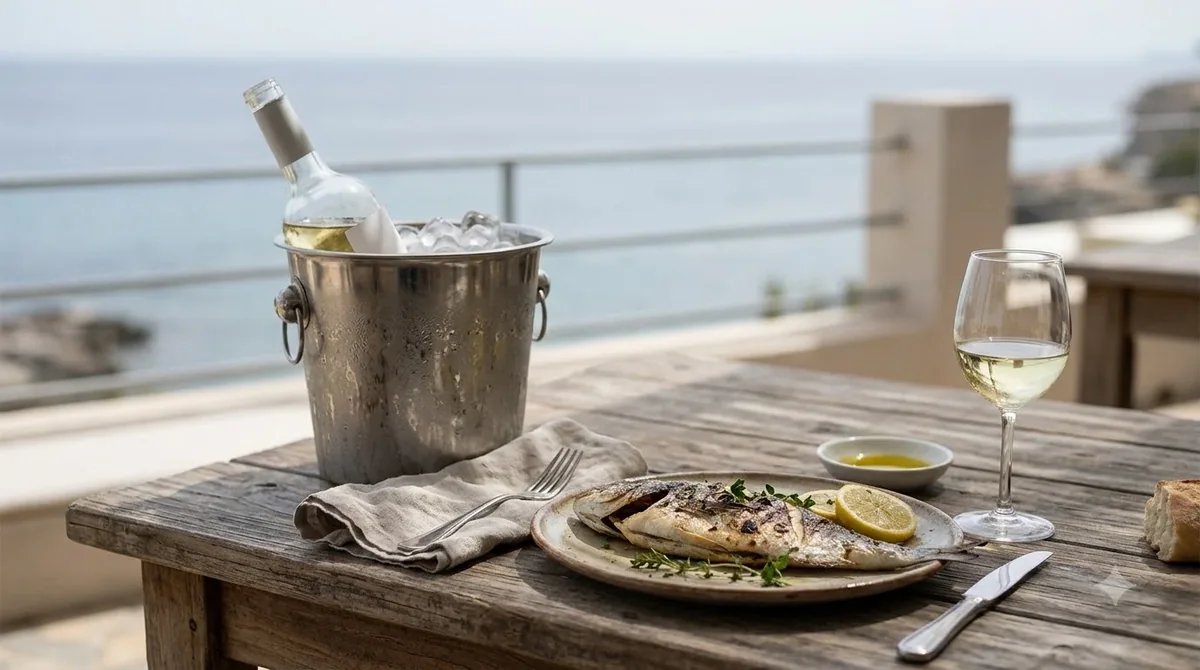
To get there, refrigerate the bottle for two to three hours before pouring, or chill it in an ice bucket for 20 to 30 minutes if you are short on time. Warmer than 50 F and the wine loses its lift; much colder, and the fruit gets muted, so avoid leaving it in the freezer. Once the bottle is open, keep the screw cap on and store it in the fridge. Still wines usually hold for 3 to 5 days, so plan to finish the bottle within the week.
Glassware helps too. A white wine glass with a medium bowl keeps the aromas focused while leaving room to swirl. Pour about half a glass at a time for a relaxed table, which also keeps the wine cold longer in the glass. For guests, set the bottle in an ice bucket on the table rather than leaving it on the counter, since the wine warms noticeably over a long meal.
Unopened bottles do best in a cool, dark cupboard around 55 F, away from the stove and sunny windows. Vina Sol is made to be drunk young, so there is little reason to hold it for years. Buy it for near-term meals rather than for cellaring.
Tip: If the wine tastes flat, it is probably too cold. Let it sit in the glass for two or three minutes, then taste again, because the fruit opens up as it warms a few degrees toward 50 F.
Food Pairings That Suit a Dry, Fresh White
Pair Vina Sol with foods that bring their own acidity, such as lemon, lime or vinaigrette, because a wine with moderate acidity needs a partner that matches it.

Acidity is the main rule here. Acidic food needs a wine with equal or higher acidity, or the wine tastes thin and the dish tastes sharper than it should. Parellada’s moderate acidity makes it a good match for lemon-herb grilled chicken, lime-marinated shrimp, and green salads with a sharp vinaigrette. Fresh goat cheese and simple white fish with capers are also natural partners.
A few specific dishes show the pairing rule at work. Try mussels steamed with garlic, white wine and parsley, where the shellfish brings sweetness and the wine brings a clean lift. Asparagus with lemon butter, or a simple risotto finished with lemon zest, also works well. Each of these foods has a bright, acidic edge that the wine can match rather than overpower.
Spice is easier with a low-alcohol white. Alcohol and tannin tend to amplify chili heat, and at about 11 to 12 percent alcohol, Vina Sol keeps a mildly spiced dish from feeling hotter than it is. Choose mild to medium heat, such as a Thai-style fish curry with lime and herbs, rather than something fiery.
Skip the sweet end of the menu. A wine should be at least as sweet as the dessert it accompanies, and Vina Sol is dry, so it will taste sour beside a sugary cake. Save it for the starter or the main course, where its freshness can do its job.
Vina Sol Compared With Cava and Other Spanish Whites
Vina Sol is a still wine, while most cava from the same region is sparkling and made by a different route. Seeing the two side by side helps explain why the Parellada in this bottle is so easy to notice.
Jeroboams notes that over 95 percent of cava is made in Penedès, mainly from the vineyards on the plateau around Sant Sadurní d’Anoia. Cava gets its sparkle from a second fermentation in the bottle, the same traditional method used in Champagne. According to Decanter’s cava guide, the blends are led by Macabeo at about 35 percent of white plantings, followed by Xarel·lo at about 25 percent and Parellada at about 20 percent. Cava must also age at least nine months before release.
Because Parellada plays a smaller role in cava than in Vina Sol, a still bottle shows the grape’s character far more clearly. Penedès as a whole is more varied than many buyers expect, since its DO was created in 1960 and covers red, white and rosé wines. If you want to explore a different side of Spanish winemaking, our campo viejo red wine guide offers a red to compare with this white.
Other Spanish whites make useful comparisons. Albariño from Rías Baixas tends to be more aromatic and saline, while Verdejo from Rueda leans toward herbal notes. Vina Sol sits in a gentler middle ground, with less perfume than Albariño and softer edges than many Verdejo bottlings. If you like Vina Sol, those are natural next stops on the shelf.
Frequently Asked Questions
Is Vina Sol the same as cava?
No. Vina Sol is a still wine, so it has no bubbles, while cava is sparkling. Decanter’s cava travel guide says Reserva cava must age at least 15 months and Gran Reserva at least 30 months. Those rules apply to cava only, not to still wines like Vina Sol.
Does Vina Sol contain sulfites and is it vegan?
The UK retail listing says it contains sulphites, which is standard for most wines, and it carries a vegan designation from the V-Label certification body. Both details matter if you are shopping for a group with dietary needs. Allergen details can vary between markets, so the retailer’s product page is the place to confirm them.
What is Gran Vina Sol like?
A retail listing describes Gran Vina Sol as deeper and denser than traditional Spanish whites, with aromas of ripe peaches and a finish with vanilla notes. That makes it a useful step up for people who want more weight in the glass. The everyday bottle stays brighter and more straightforward.
How does Wine Enthusiast rate it?
An older Wine Enthusiast review gave the bottling 85 points, which the magazine places in its “Good” band, described as suitable for everyday consumption and often good value. The magazine does not review anything rated below 80, so every wine it covers has cleared that bar. A single review reflects one bottling at one moment, so treat the score as a starting point rather than a permanent verdict.
How long has Parellada been grown in Spain?
According to the D.O. Cava board, Parellada was first cultivated in Spain in the 14th century. The same board says Macabeo was first mentioned in 1617 and Xarel·lo in 1785. That history shows how long these Catalan varieties have shaped local wine, which is why Parellada is treated as a traditional grape rather than a recent arrival.
Vina Sol is a simple, dry white that rewards cold serving and acid-friendly food. Start with the 45 to 50 F serving range and the acidity rule, and it will taste closer to the wine that reviewers describe. Whether you buy it for a weeknight or a casual gathering, the same rules hold: serve it cold, pair it with acid, and drink it fresh. For more on how brands compare, browse the Wine Brands section.
More in Wine Brands
 Underwood Wine Price: Compare Bottles, Cans, and Pack SizesUpdated Nov 21, 2026
 Zenato Wine Price: Compare Styles and Choose the Right BottleUpdated Nov 21, 2026
 Zuccardi Wine Price: Compare Bottles and Find the Right RangeUpdated Nov 21, 2026
 Yellow Tail Moscato Review: Taste, Sweetness and Serving TipsUpdated Nov 21, 2026
 Wolf Blass Yellow Label Review: Choose Your Best StyleUpdated Nov 21, 2026
 Wolffer Estate Rose Review: Choose the Right Bottle for Your TableUpdated Nov 21, 2026