

We may earn a commission when you buy through links on this page, at no extra cost to you. Learn more.
Veuve Clicquot Yellow Label is the non-vintage Champagne from the Reims house Veuve Clicquot, built on a blend led by Pinot Noir and designed to taste consistent from year to year. The wine is made from a mix of crus and aged in the cellar for a long period before release, which gives it a rich, biscuity character many drinkers recognize. If you want to know what the bottle is, how it is made, how to serve it, and what to eat with it, the sections below explain each point.
Yellow Label is a familiar name on Champagne shelves, and it is a common choice when people want a classic sparkling wine for a celebration. Knowing a little about the house and the blend makes it easier to judge whether it suits your taste and your occasion.
The House Behind the Yellow Label
The house traces its origin to 1772, when Philippe Clicquot established a wine business in Champagne. The company is based in Reims. The most famous figure in its history is Barbe-Nicole Ponsardin, who took over the business after her husband François died in 1805. Despite opposition at the time, she built the firm into Veuve Clicquot-Ponsardin, which she launched in 1810.
Two of her innovations are often cited in the house’s story. She is credited with inventing the riddling table in 1816, a device that lets winemakers gradually tilt bottles so that sediment settles in the neck. She is also credited with producing the first known blended rosé Champagne in 1818. Those techniques shaped the way Champagne is made today, and they are part of why the house is so closely linked with the category. For background on the region and its history, see the Veuve Clicquot entry on Wikipedia.
How the Yellow Label Blend Is Built
Yellow Label is a non-vintage blend, which means it is not made from a single harvest. The house combines wines from a range of crus, and the result is designed to taste like the house style each year. According to the summary of the producer’s history on Wikipedia, the blend is about 50 percent Pinot Noir, 20 percent Pinot Meunier, and 30 percent Chardonnay.
That split explains much of the flavor. Pinot Noir brings body, red-fruit and structure. Pinot Meunier adds roundness and fruit, and Chardonnay contributes freshness and a clean line through the finish. Because the blend draws on many crus, it tends to show a balanced profile rather than the sharp focus of a single-vineyard bottle.
Aging and What It Does to the Wine
Yellow Label is aged for a long period in the cellar before it is released, and the producer states that its champagnes are cellared for at least 30 months. Longer time on the lees, the spent yeast left from the second fermentation in the bottle, gives Champagne its toasty, bread-like character and a fine, creamy bubble.
During riddling, the lees collect in the bottle neck. They are removed at disgorgement, which is the step where the neck is frozen and the plug is expelled. The wine is then topped up and corked. Understanding this process helps explain why a non-vintage Champagne can taste consistent across years, since the house blends reserve wines to match its style.
| Feature | What it means for the glass |
|---|---|
| Non-vintage blend | Consistent house style from year to year |
| Pinot Noir-led blend | Body, red fruit, and structure |
| Long cellar aging | Toast, brioche, and a fine, creamy mousse |
| Chardonnay share | Freshness and a clean finish |
Tip: Check the sweetness level on the back label. Brut is the most common style of Champagne today, and it is drier than Extra Dry or Sec, so it is a useful reference when you compare bottles.
How to Serve Yellow Label
Serve Champagne well chilled, but not ice cold. A cool temperature keeps the bubbles lively and the flavors clean. If the bottle has been sitting in a warm room, a short time in an ice bucket or the refrigerator is enough. Very cold Champagne can hide the aromas, so avoid freezing it.
Choose a glass that keeps the bubbles and aroma together. Many people prefer a tulip-shaped flute or a white wine glass over a wide, shallow coupe, because the narrower shape holds the fizz longer. Pour slowly down the side of the glass to limit foam, and fill the glass about two-thirds full.
Once opened, keep the bottle sealed with a proper stopper and refrigerate it. Champagne loses its fizz over a day or two, so finish the bottle soon after opening for the best texture.
Food Pairings for Yellow Label
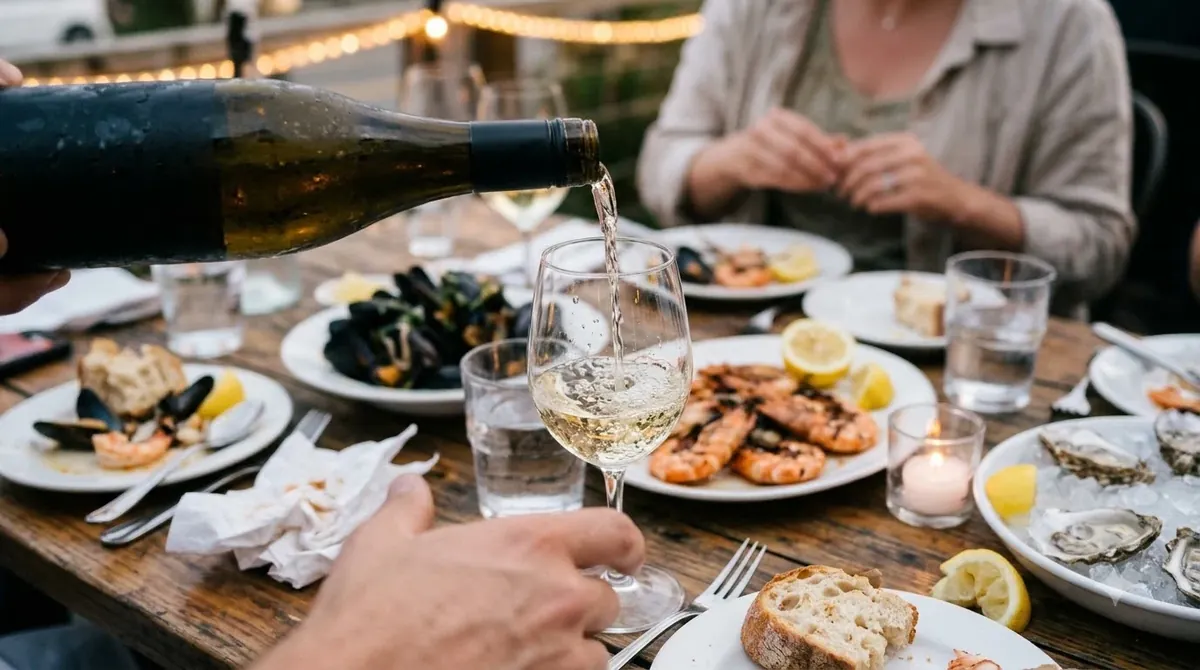
The Pinot Noir and Chardonnay character makes Yellow Label a flexible partner for food. It works well with roast chicken, pan-seared fish, and fried foods, since the bubbles and acidity cut through richness. Oysters and shellfish are a classic match, as are salty snacks such as potato chips and popcorn.
For a more composed meal, pair it with creamy pasta, soft cheeses like brie, or a mushroom risotto. The bread-like notes from aging also suit toasted bread with butter and light pâté. Avoid heavy desserts with a lot of sugar, which can make the wine taste thin by comparison.
How Yellow Label Compares With Other Sparkling Wines
Yellow Label is a serious sparkling wine, so it is natural to compare it with cheaper or more casual options. If you prefer sweeter styles, the wine brands guide explains how house style and sugar level shape what you taste. Readers who already know a fruit-forward, easy-drinking bottle such as Yellow Tail Chardonnay will notice that Champagne delivers a different texture and depth.
The main difference is structure. A Champagne like Yellow Label has more toast, finer bubbles, and a longer finish than most everyday sparkling wines. Whether that difference is worth it depends on the occasion, your budget, and how much you enjoy aged, savory notes.
Who Yellow Label Suits and Who Might Skip It
Yellow Label suits anyone who wants a reliable, classic Champagne for a celebration, a holiday gathering, or a dinner where the wine should feel special. It is also a good choice for people who want consistency across years and do not need a single-vintage bottle.
It may not suit drinkers who prefer very fruity, sweet sparkling wine, such as a moscato-style bottle or a semi-sweet frizzante. Those drinkers may find Yellow Label dry and yeasty. For them, a demi-sec or a sweeter sparkling wine will feel more natural.
If you are comparing sparkling styles across the shelf, the Yellow Tail Moscato page offers a contrasting sweet, easy-drinking option that shows how far the styles can differ.
Frequently Asked Questions
Is Veuve Clicquot Yellow Label a vintage Champagne?
No. Yellow Label is a non-vintage blend, which means it combines wines from several harvests. This allows the house to keep a consistent style from year to year.
What grapes are in Yellow Label?
According to the summary of the producer’s history on Wikipedia, the blend is roughly 50 percent Pinot Noir, 20 percent Pinot Meunier, and 30 percent Chardonnay, drawn from a mix of crus.
How long is Yellow Label aged?
The Yellow Label is described as aged for 36 months, and the Wikipedia summary of the house says its champagnes are cellared for at least 30 months before release. The long aging gives the wine its toasty, bread-like notes.
What should I serve with Yellow Label?
Oysters, roast chicken, fried foods, creamy pasta, and soft cheeses are all good matches. Serve the wine well chilled in a flute or white wine glass.
Veuve Clicquot Yellow Label is a classic Champagne that rewards a careful serve and a good meal. Chill the bottle well, pour it into a suitable glass, and match it with food that has some richness or salt. For more ideas on how brands shape what you drink, the wine brands guide is a useful next read.
More in Wine Brands
 Underwood Wine Price: Compare Bottles, Cans, and Pack SizesUpdated Nov 21, 2026
 Zenato Wine Price: Compare Styles and Choose the Right BottleUpdated Nov 21, 2026
 Zuccardi Wine Price: Compare Bottles and Find the Right RangeUpdated Nov 21, 2026
 Yellow Tail Moscato Review: Taste, Sweetness and Serving TipsUpdated Nov 21, 2026
 Wolf Blass Yellow Label Review: Choose Your Best StyleUpdated Nov 21, 2026
 Wolffer Estate Rose Review: Choose the Right Bottle for Your TableUpdated Nov 21, 2026