

We may earn a commission when you buy through links on this page, at no extra cost to you. Learn more.
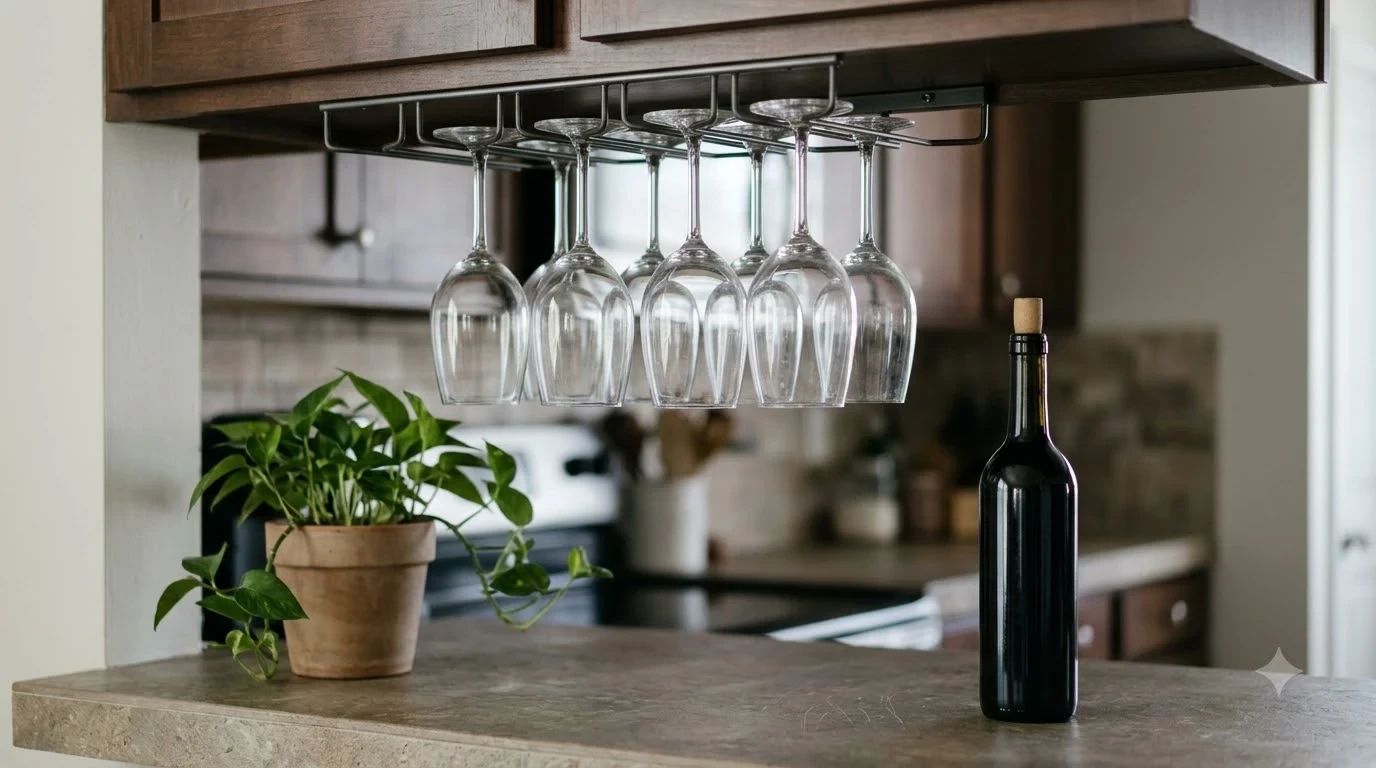
The best under cabinet wine rack is a slim metal or wood rack that fits the gap between your cabinet bottom and counter, holds a few bottles at a comfortable angle, and leaves the counter clear. Under-cabinet racks take advantage of space most kitchens waste, but they vary a lot in how many bottles they hold, how the bottles sit, and how easily you can reach the back. The right choice depends on your gap height, how many bottles you keep on hand, and whether you want the rack hidden or on display.
Kitchens often have a shallow strip of unused space under the upper cabinets, and a well-chosen rack can turn that strip into a practical wine spot. The category covers several designs, from pull-out slides to fixed bars and single-bottle holders. Some are built for a dozen bottles, others only for two or three. This roundup groups the options by the need they serve, so you can match a rack to your kitchen layout and to how you actually drink wine during the week.
Quick Comparison of Under Cabinet Rack Types
The table below compares the main rack types by capacity, access, and the kind of space each one fits. Use it to narrow the field before reading the sections that match your kitchen.
| Rack type | Typical capacity | Access | Main drawback |
|---|---|---|---|
| Pull-out slide rack | Several bottles | Easy, slides out from the cabinet | Needs a clear cabinet bottom and depth |
| Fixed bar rack with bins | Three to six bottles | Reach in and lift out | Back bottles are harder to see |
| Slim single-bottle holder | One bottle | Quick to grab | Little storage for a full case |
| Rail rack with bottle and glass space | Mixed bottles and stemware | Open front | Can look busy on a shallow counter |
| Low-profile metal rack | Two to four bottles | Front-facing | Metal can scratch if placed on hard surfaces |
Best for Kitchens That Need Easy Access
A pull-out slide rack is the best fit when you reach for the same bottle every night and do not want to stretch across the counter. The rack sits on a track under the cabinet and slides forward, so every bottle is visible and within reach. It works especially well in a galley kitchen where the counter space is tight.

The limit is depth. The rack needs a cabinet bottom that is clear of hardware and a gap deep enough for the bottle. Measure the space from the back of the cabinet to the front edge before you buy, and check that the slide does not hit the faucet or outlet on the wall behind it.
For everyday use, look for a slide with a stop that keeps the rack from pulling out too far, and a finish that resists fingerprints. A smooth track makes a noticeable difference when the rack is full.
Keep in mind: a slide rack adds a moving part, so check that the mount is screwed into the cabinet frame and not just the thin bottom panel.
Best for: people who open a bottle most days and want quick access without bending down.
Best for Holding a Small Collection
A fixed bar rack with two or three bins is the most common under-cabinet design. It gives a steady place for three to six bottles, and the bins keep each bottle from rolling. It suits a household that keeps a few reds and whites on hand rather than a large cellar.
Materials matter for this style. Wood is the most popular choice and adds warmth to a kitchen, but cedar has a strong aroma that some people find appealing and others do not. Reference material on wine racks notes that cedar’s scent can pass into the wine through the cork, so it is better to use a rack made from a neutral wood for bottles you plan to keep for a long time. Metal racks avoid that concern and resist staining. Stainless steel stands up well to moisture near a sink, which is a real benefit in a busy kitchen.
A fixed rack is simple to load. Lay the bottles in the bins, check that the labels face out, and keep the newest bottles toward the front so the older ones stay at the back. Those habits help you rotate stock without a second look.
Keep in mind: the back bottles are harder to see, so a quick label check every few weeks keeps the rack useful.
Best for: small households that keep a steady supply of everyday reds and whites.
Best for Tight Spaces and a Single Bottle
A slim single-bottle holder is the answer when the gap under the cabinet is narrow and you only need a place to keep one open bottle close by. Most racks in this category are designed around the standard 750 ml bottle, so a single-bottle holder can fit where a larger rack would not. It is also a good option for a small apartment kitchen or a second spot near the coffee station.
The trade-off is obvious: one bottle is all you get. A single-bottle holder is less of a storage solution and more of a convenience, so it pairs well with a larger cabinet or a shelf elsewhere in the home.
Wrought iron versions often look attractive, but they commonly hold only one bottle, and their open designs can catch crumbs or dust. A metal holder with a closed base is easier to wipe down.
Keep in mind: a single-bottle holder does not add much storage, so think of it as a grab-and-go spot.
Best for: narrow gaps, small kitchens, and anyone who only opens one bottle at a time.
Best for Mixed Bottles and Stemware
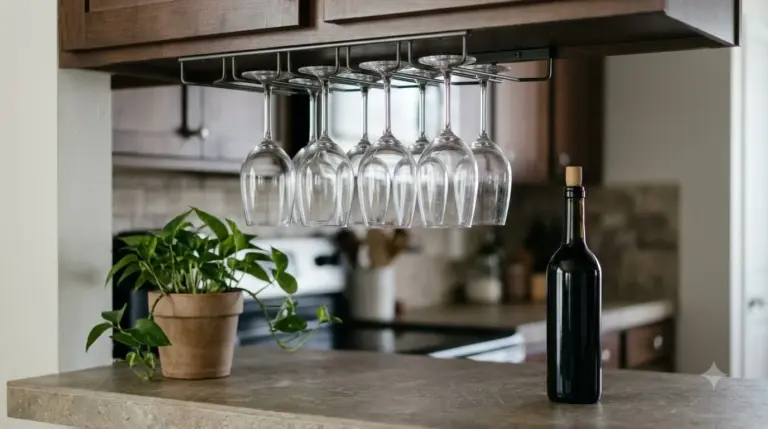
A rail rack that holds both bottles and glasses appeals to people who want wine and glassware in one place. Some designs combine a bottle bin with hooks or a rail for stemmed glasses, which saves a second cabinet. This style is useful when the counter is shallow and you want the glasses off the surface.
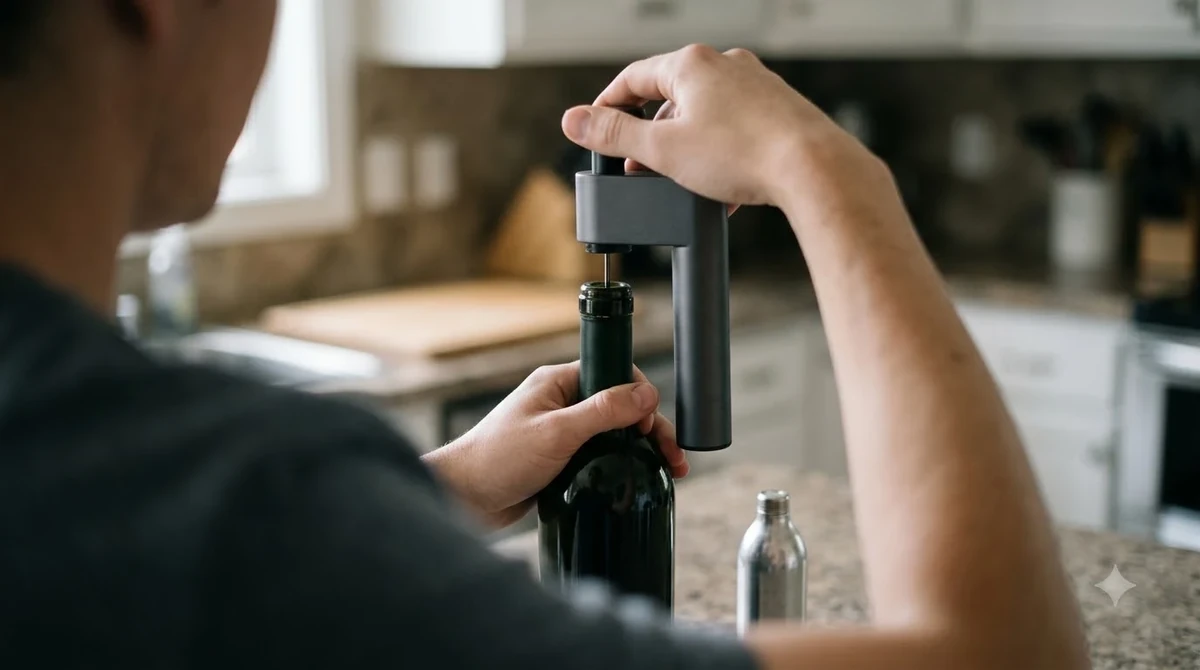
Combined designs need careful placement. A rail that holds glasses should be positioned so the stems do not knock against the bottle when you lift it out. Stemware hanging too close to a bottle can chip or tap the rim, so leave enough space between them. It also helps to choose a rail with rubber or padded tips so the glass does not ring against metal when you move it.
Because the design is busier than a plain bar rack, it can look crowded on a short counter. If the cabinet is shallow, measure the glass height as well as the bottle diameter, since a tall stem may hit the cabinet above.
Keep in mind: mixed racks are convenient, but they are harder to clean than a plain bin, so wipe the rail regularly.
Best for: home bars, small dinner parties, and kitchens where wine and glasses are used in the same spot.
Best for Shallow Cabinets and a Clean Look
A low-profile metal rack is the choice when the cabinet is shallow and the look needs to be clean. These racks sit close to the underside of the cabinet, hold two to four bottles, and leave the counter free for cooking. Their slim frame blends with modern kitchens, and a matte finish hides fingerprints better than a glossy one.
Metal has a practical edge. It resists corrosion and staining, which matters in a kitchen that sees steam and splashes. The metal can also be shaped into more fluid forms than wood, so these racks often look lighter. The catch is that metal can scratch a bottle or a counter if the rack is placed on a hard surface without felt pads, so add pads to the feet or the base before loading.
Check how the rack attaches. Screws into the cabinet frame are more secure than adhesive, especially when the rack holds full bottles.
Keep in mind: a low profile means fewer bottles, so this style suits a small rotation rather than a stocked collection.
Best for: modern kitchens, narrow cabinets, and buyers who want a minimal look.
How to Choose an Under Cabinet Wine Rack
Start with the measurements under your cabinet, then decide how many bottles you need to keep within reach. The table below lists the criteria that matter most for this category.
| Criteria | What to look for | Why it matters |
|---|---|---|
| Gap height | Clear space for a standard 750 ml bottle | Stops bottles from hitting the cabinet |
| Depth | Room from cabinet back to front edge | Controls how far bottles sit forward |
| Material | Metal for moisture, wood for warmth | Affects cleaning and scent |
| Mounting | Screws into the cabinet frame | Holds full bottles securely |
| Capacity | Match to how many bottles you open each month | Avoids a rack that is too small or too big |
Tip: store bottles on their side only if the cork stays moist, and keep the rack away from the stove and dishwasher, since heat and humidity swings are hard on wine.
If the rack will hold bottles you plan to age, a dedicated cellar setup is a better home for them. An under-cabinet rack is best for wine you open within a few weeks. For larger storage needs, see the wine rack cabinet options, and for a broader look at what fits your space, the Racks & Storage section lists the main types.
Frequently Asked Questions
How many bottles fit in a typical under-cabinet wine rack?
It depends on the design. Single-bottle holders hold one bottle, fixed bar racks commonly hold three to six, and slide racks can hold several. Most racks are designed around the standard 750 ml bottle, so check the listed capacity against your bottle size.
What material is best for an under-cabinet wine rack?
Metal and stainless steel resist moisture and staining well, which suits a kitchen. Wood adds warmth, but cedar can give off an aroma that may pass into the wine through the cork, so a neutral wood is a safer pick for longer storage.
Can I install an under-cabinet rack myself?
Most racks can be installed with a drill and a level. Screw the mount into the cabinet frame rather than only the thin bottom panel, and check the clearance for the faucet, outlets and cabinet hardware before you drill.
Is an under-cabinet rack good for storing wine long term?
An under-cabinet rack is best for bottles you plan to open within a few weeks. Kitchens have heat, light and humidity changes that make them less suitable for long aging, so keep aging wine in a cooler, darker spot.
An under-cabinet rack is a simple way to keep everyday wine within reach. Measure the gap, choose the style that fits how you open bottles, and check the mount before loading it. For a closer look at the glass-focused side of this category, read about under cabinet wine glass rack designs, and for guidance on how wine is stored at home, see the Wikipedia overview of wine racks and their materials.
More in Racks & Storage
 Best Wine Barrel Racks for Distinctive Bottle StorageUpdated Nov 20, 2026
 Best Wine Storage Tower: Sizing, Protection and Room LayoutUpdated Nov 18, 2026
 Best Pyramid Wine Rack: Materials, Sizes and Where It FitsUpdated Nov 18, 2026
 Best Kitchen Cabinet Wine Rack Insert for Built-In Bottle StorageUpdated Nov 18, 2026
 Best 16 Bottle Wine Rack Options for Kitchens, Bars and CellarsUpdated Nov 18, 2026
 Best 48 Bottle Wine Rack Options for Cellars, Kitchens, and Tight SpacesUpdated Nov 18, 2026