

We may earn a commission when you buy through links on this page, at no extra cost to you. Learn more.
Umbria wine tasting introduces visitors to central Italy’s distinctive wines, from powerful Montefalco Sagrantino reds to crisp Grechetto whites and traditional Orvieto blends. Located between Tuscany and Lazio, Umbria offers a varied collection of indigenous grapes, historic appellations, and family-run wineries. The best tasting experiences combine several wine styles with local foods, visits to medieval hill towns, and an appreciation of the region’s agricultural traditions.
Often called the Green Heart of Italy, Umbria has a wine identity that extends well beyond its better-known neighbors. Its vineyards stretch across rolling hills, volcanic landscapes, lake districts, and historic farming communities. Visitors can compare structured reds in Montefalco, explore white wine traditions around Orvieto, and discover lesser-known varieties in Todi and Spoleto. Understanding the main wine areas before arranging visits makes it easier to choose tastings that reveal the region’s character rather than simply sampling unrelated bottles.
Understanding Umbria’s Wine Regions and Appellations
Umbria’s wine identity comes from several distinct growing areas, each with recognizable grapes and styles. Montefalco, Orvieto, Torgiano, and Trasimeno are particularly useful starting points for understanding the region.
Umbria sits in central Italy, southeast of Tuscany and north of Rome. It is the country’s only region without a coastline, and its landscape includes agricultural valleys, wooded slopes, olive groves, and vineyards surrounding historic towns. The region’s geography creates different growing conditions across relatively short distances. Hillside vineyards, lake influences, and variations in soil composition all contribute to differences between local wines.
The main appellations to recognize are Montefalco Sagrantino DOCG, Torgiano Rosso Riserva DOCG, Orvieto DOC, Montefalco DOC, Torgiano DOC, Spoleto DOC, Todi DOC, and Colli del Trasimeno DOC. DOC and DOCG classifications establish geographical and production requirements. DOCG is the higher classification, with additional controls over the wine’s origin and production standards.
Umbria has two DOCG designations, both associated with red wine. Montefalco Sagrantino is built around the region’s powerful native Sagrantino grape, while Torgiano Rosso Riserva is associated with Sangiovese. These wines offer a useful comparison for visitors interested in how two different varieties express the same broad regional identity.
The following distinctions help organize a tasting itinerary:
| Wine area | Main grape or style | What to explore |
|---|---|---|
| Montefalco | Sagrantino and Sangiovese | Structured reds and traditional passito |
| Orvieto | Grechetto and Trebbiano | Dry white blends and historic cellars |
| Torgiano | Sangiovese and white varieties | Traditional red wines and wine heritage |
| Todi | Grechetto | Distinctive regional white wines |
| Spoleto | Trebbiano Spoletino | Still and sparkling white wines |
| Lake Trasimeno | Trasimeno Gamay | Fruit-forward red wines and rosé |
These areas are not interchangeable. A visitor who enjoys the intensity of Montefalco Sagrantino may prefer a different experience from someone looking for fresh whites in Orvieto. Exploring two or three areas is often more rewarding than attempting to visit every appellation during a short trip. Travelers interested in comparing Italian regional wine traditions can also explore Bolgheri wine tasting, where Tuscan coastal conditions produce another distinctive collection of reds.
Montefalco Sagrantino and the Region’s Powerful Red Wines
Montefalco is the essential destination for visitors interested in Umbria’s most famous red wine. Sagrantino offers concentrated fruit, substantial tannins, and the structure to develop with bottle age.
The Montefalco area lies south of Perugia, surrounded by hills that support a varied agricultural landscape. Sagrantino is the signature grape, and Montefalco Sagrantino DOCG is made entirely from this variety. Its naturally thick skins contribute to the wine’s deep color and pronounced tannic structure. For visitors accustomed to softer Italian reds, the first encounter can be striking.
Typical tasting descriptions include dark cherry, blackberry, plum, dried herbs, and spices. Some examples also show earthy, savory, or tobacco-like characteristics as they mature. The precise profile depends on vineyard conditions, vintage, fermentation, and aging choices. Newer releases can feel particularly firm, while mature bottles may show greater complexity and a more integrated texture.
Sagrantino has an interesting historical connection to sweet wine. It was traditionally associated with passito production, in which harvested grapes are dried before fermentation to concentrate their sugars and flavors. Dry Sagrantino later became the best-known modern expression. Tasting both styles provides a particularly useful lesson in the versatility of the grape.
Comparing Sagrantino with Montefalco Rosso
Montefalco Rosso offers a more approachable introduction to the area’s red wines. It generally combines Sangiovese with Sagrantino and may include another permitted red variety, such as Merlot. Sangiovese contributes red fruit and acidity, while Sagrantino adds color, tannin, and structure.
Compared with a concentrated Sagrantino DOCG, Montefalco Rosso is often easier to enjoy alongside everyday meals. Expect cherry, red plum, herbs, and savory notes, with tannins that generally feel less imposing. The exact balance varies according to the producer’s blend and winemaking decisions.
During a winery visit, taste the two wines side by side rather than separating them across different days. Notice how Sangiovese changes the overall impression of the blend. Pay attention to the firmness of the tannins, the intensity of the fruit, and how the finish develops after swallowing.
Tip: If Sagrantino tastes unusually firm, try it with a bite of roasted meat or aged cheese before deciding whether the tannins are too aggressive. Salt and fat can soften the perception of tannin, making the wine easier to appreciate.
Several producers have explored different ways to present Sagrantino, including alternative fermentation vessels and vineyard approaches intended to produce more refined textures. Decanter has highlighted producers such as Moretti Omero and Le Thadee for their contemporary interpretations. Reading its Umbria wine region and producer guide can help visitors identify additional wineries to investigate before traveling.
Orvieto, Grechetto, and Umbria’s White Wine Traditions
Orvieto is the natural starting point for white wine enthusiasts visiting Umbria. Its wines typically combine Grechetto with Trebbiano varieties, creating styles that range from fresh and uncomplicated to textured and suitable for extended aging.
The town of Orvieto stands on volcanic rock in western Umbria. Its underground spaces and caves reflect a long history of settlement and winemaking. The Etruscans occupied the area long before the development of modern Italian wine classifications, and wine production became deeply connected with the town’s agricultural and cultural identity.
Orvieto DOC is among the region’s best-known white wine appellations. Common blends use Grechetto and Trebbiano Toscano, which is frequently referred to as Procanico in local wine discussions. Other permitted varieties can contribute depending on the specific appellation requirements and producer choices.
Grechetto is especially important because it gives visitors a clear sense of Umbria’s indigenous white wine identity. Depending on the producer and growing conditions, it can show citrus, orchard fruit, floral notes, and a subtle almond-like character. Its texture can be more substantial than that of a very light white wine, making it suitable for food as well as aperitif service.
Orvieto wines were historically associated with sweeter styles, but modern examples are commonly dry. When tasting several bottles, compare their acidity, weight, aromatic intensity, and finish. Some producers favor fresh, straightforward wines, while others use careful aging or more involved cellar techniques to create additional texture and complexity.
Grechetto from Todi
Todi offers another important perspective on Grechetto. The local DOC is particularly associated with this variety, and the surrounding vineyards provide an opportunity to compare its expression with wines from Orvieto.
The Umbrian wine organization UmbriaTop Wines reports approximately 140 hectares of Grechetto vineyards in the Todi area, with potential production of around 1.2 million bottles. These figures illustrate the importance of the grape to local agriculture. Todi also produces Sangiovese, Merlot, and other red and white wines.
When comparing Grechetto from different parts of Umbria, look beyond the basic fruit aromas. Consider whether the wine feels lean or rounded, how its acidity balances its texture, and whether its finish suggests almonds, herbs, or citrus. These details help reveal differences that a grape name alone cannot explain.
Orvieto also offers visitors opportunities to explore traditional underground cellars and the historic architecture of the town. Combining a winery appointment with time around the cathedral and old streets makes this an especially rewarding stop for travelers who appreciate both wine and history.
Trebbiano Spoletino, Torgiano, and Lesser-Known Umbrian Grapes
Umbria’s identity is not limited to Sagrantino and Grechetto. Trebbiano Spoletino, Torgiano’s traditional wines, and Trasimeno Gamay provide additional reasons to explore the region beyond its most famous appellations.
Trebbiano Spoletino is one of the most interesting white grapes to discover during a regional tasting. Despite its name, it is not considered closely related to the other varieties carrying the Trebbiano name. It has developed a distinctive identity in Umbria, particularly around Spoleto and the neighboring central wine districts.
Its versatility is a major attraction. Producers make still wines as well as sparkling expressions, including brut nature styles. Depending on the winemaking approach, the wines can show citrus, orchard fruit, herbs, freshness, and a more substantial texture than expected from a simple aromatic white.
Some producers experiment with fermentation and maturation techniques to reveal different aspects of the variety. Antonelli, for example, has been associated with a brut nature sparkling interpretation. Other wineries explore barrel fermentation or alternative vessels. Tasting different versions of Trebbiano Spoletino provides a useful opportunity to understand how production choices influence the final wine.
Torgiano and its historic wine identity
Torgiano is another important destination, particularly for visitors interested in the relationship between wine, history, and local agriculture. It received its DOC designation in 1968, making it the first Umbrian wine to receive this classification. Its better-known red wine tradition includes Torgiano Rosso Riserva DOCG, associated with Sangiovese.
The town also has an established cultural connection with wine. The MUVIT Wine Museum, supported by the Lungarotti Foundation, preserves artifacts that illustrate the history of winemaking and the role of wine in local life. A museum visit can add historical context to a tasting appointment, particularly for visitors who want to understand how agricultural practices developed over time.
Lake Trasimeno and the local Gamay
In northern Umbria, Lake Trasimeno provides a different setting for wine production. The area is associated with Trasimeno Gamay, the local name for a form of Grenache. This historical naming distinction can confuse visitors who expect the wine to resemble the Gamay-based reds of Beaujolais.
Trasimeno Gamay often offers a fruit-forward profile, with ripe red berries, spice, and a smoother texture than the most tannic Sagrantino examples. Producers also make rosé and experiment with different fermentation methods. Its approachable character makes it a useful contrast in a tasting lineup that also includes Montefalco’s more structured reds.
Travelers interested in indigenous varieties can compare these discoveries with other European regional traditions, including Alsace wine tasting, where Riesling, Gewurztraminer, and Pinot Gris provide a very different interpretation of place and grape variety.
Planning Winery Visits and Building a Tasting Itinerary
A successful Umbrian wine trip depends on choosing a manageable route and arranging appointments in advance. Montefalco, Orvieto, and Torgiano are strong starting points for visitors who want to understand the region’s major wine styles.
Montefalco is particularly convenient for exploring the surrounding vineyards and neighboring communities such as Bevagna. It is an excellent base for visitors interested in Sagrantino, Montefalco Rosso, and local food traditions. Several wineries operate in the surrounding countryside, so a tasting can be combined with a visit to a historic village or a countryside restaurant.
Orvieto is a strong choice for travelers focusing on white wine. The town itself provides historical attractions, underground spaces, and opportunities to explore its long association with wine production. A tasting appointment can be paired with a visit to the cathedral and a walk through the old town.
Torgiano is useful for visitors who want to connect wine with cultural heritage. Its wine museum adds context to a tasting, while nearby agricultural landscapes demonstrate the importance of olives and vineyards to the local economy.
How many wineries should you visit?
For a first visit, two wineries in one day is a sensible target. This leaves enough time to discuss individual wines, explore the property, enjoy lunch, and travel between appointments without rushing. A third visit can work if the locations are close together and the appointments are relatively short.
Allow roughly 60 to 90 minutes for a typical winery visit, although the length varies according to the tour and tasting format. Some estates offer vineyard walks, cellar tours, food pairings, or more extensive comparative tastings that require additional time.
Many Umbrian wineries are located on rural roads rather than in town centers. Renting a car provides flexibility, but arranging a driver or guided wine tour is a practical alternative when several tastings are planned. Public transportation may connect major towns, but it does not necessarily provide convenient access to individual vineyard properties.
When requesting an appointment, explain which wines interest you. A visitor interested in Sagrantino may benefit from a tasting that includes both Montefalco Rosso and Montefalco Sagrantino DOCG. Someone who prefers whites can request a comparison of Orvieto, Grechetto di Todi, and Trebbiano Spoletino.
For broader regional planning, the Wine Regions resource can provide useful context for comparing Umbria with other Italian and international destinations.
Umbrian Food Pairings and Wine Serving Temperatures
Food is an important part of understanding Umbrian wine. Local dishes often feature pork, wild boar, mushrooms, truffles, legumes, aged cheese, and olive oil, providing natural partners for the region’s reds and whites.
Sagrantino is particularly suited to rich meat dishes. Its substantial tannins work well with fatty foods, which soften the wine’s drying sensation. Roasted pork, grilled beef, braised meats, and wild boar are natural choices. Aged cheeses can also complement its concentration and structure.
Montefalco Rosso offers greater flexibility at the table. Its combination of Sangiovese fruit and Sagrantino structure makes it suitable for pasta with meat sauce, grilled sausages, roasted vegetables, and cured meats. The wine’s acidity can help balance dishes containing tomato or other acidic ingredients.
Grechetto and Orvieto are useful partners for lighter meals. Try them with freshwater fish, white meats, vegetable dishes, soft cheeses, and pasta with olive oil or herbs. Trebbiano Spoletino can also work with seafood, vegetable preparations, and moderately rich dishes, depending on the wine’s weight and acidity.
For a simple regional pairing exercise, compare three combinations:
- Montefalco Sagrantino with roasted pork, wild boar, or aged sheep’s cheese.
- Montefalco Rosso with pasta in tomato-based meat sauce or grilled sausages.
- Orvieto or Grechetto with freshwater fish, grilled vegetables, or herb-seasoned poultry.
Serving temperature has a major influence on the tasting experience. A very warm red can emphasize alcohol and make tannins feel heavier, while an excessively cold white can suppress its aromas and texture.
| Wine style | Recommended serving temperature | Umbrian example |
|---|---|---|
| Light whites | 45–50°F | Fresh Orvieto |
| Fuller whites | 50–55°F | Structured Grechetto |
| Light reds | 55–60°F | Fruit-forward Trasimeno Gamay |
| Full-bodied reds | 60–65°F | Montefalco Sagrantino |
| Sweet whites | 43–50°F | Sweet regional passito wines |
| Sparkling wines | 40–50°F | Trebbiano Spoletino spumante |
For young, full-bodied Sagrantino, decanting for approximately 30 to 60 minutes can help the wine open and make its structure easier to appreciate. A lighter Montefalco Rosso may need less time. During a multi-wine tasting, begin with sparkling wines and lighter whites, progress to fuller whites and lighter reds, and finish with the most concentrated reds and sweet wines.
Remember that sweetness and acidity also affect food matching. A dessert wine should generally be at least as sweet as the dessert itself. Acidic dishes need wines with comparable or higher acidity, while very spicy food can make alcohol and tannin seem more pronounced.
Best Times to Visit and What to Expect at a Tasting
Spring through autumn is a particularly appealing period for wine tourism in Umbria. Vineyard landscapes change throughout the growing season, while local festivals and winery events provide additional opportunities to experience the region’s food and wine culture.
Spring brings fresh vegetation and comfortable conditions for exploring countryside properties. The Trasimeno Rosé Festival has been one of the wine-related events associated with the region’s spring calendar. This is an interesting time for visitors who enjoy rosé and want to explore the Lake Trasimeno area.
Late spring also brings Cantine Aperte, a winery open-day initiative that gives visitors opportunities to discover participating estates. The format varies between producers, but activities can include guided tastings, cellar visits, and introductions to local agricultural products. Individual winery schedules should be confirmed before traveling.
Summer offers long daylight hours and opportunities for outdoor tastings, vineyard walks, and meals on winery terraces. However, afternoons can be warm, so morning appointments or later sessions are often more comfortable for exploring vineyards. Reserving accommodations and tastings ahead of time is particularly useful during busy holiday periods.
Autumn is closely connected with the grape harvest and the region’s agricultural calendar. September and October can be especially interesting because visitors may encounter harvest activity, changing vineyard colors, and seasonal food preparations. Winery access can vary during this period because production responsibilities may limit the availability of staff for tours.
What happens during a typical tasting?
A standard winery tasting may begin with a short introduction to the property, grape varieties, and production methods. Visitors may then see the fermentation or aging areas before moving to a tasting room or outdoor seating area. Some estates offer food alongside the wines, while others focus on a guided comparison of different labels.
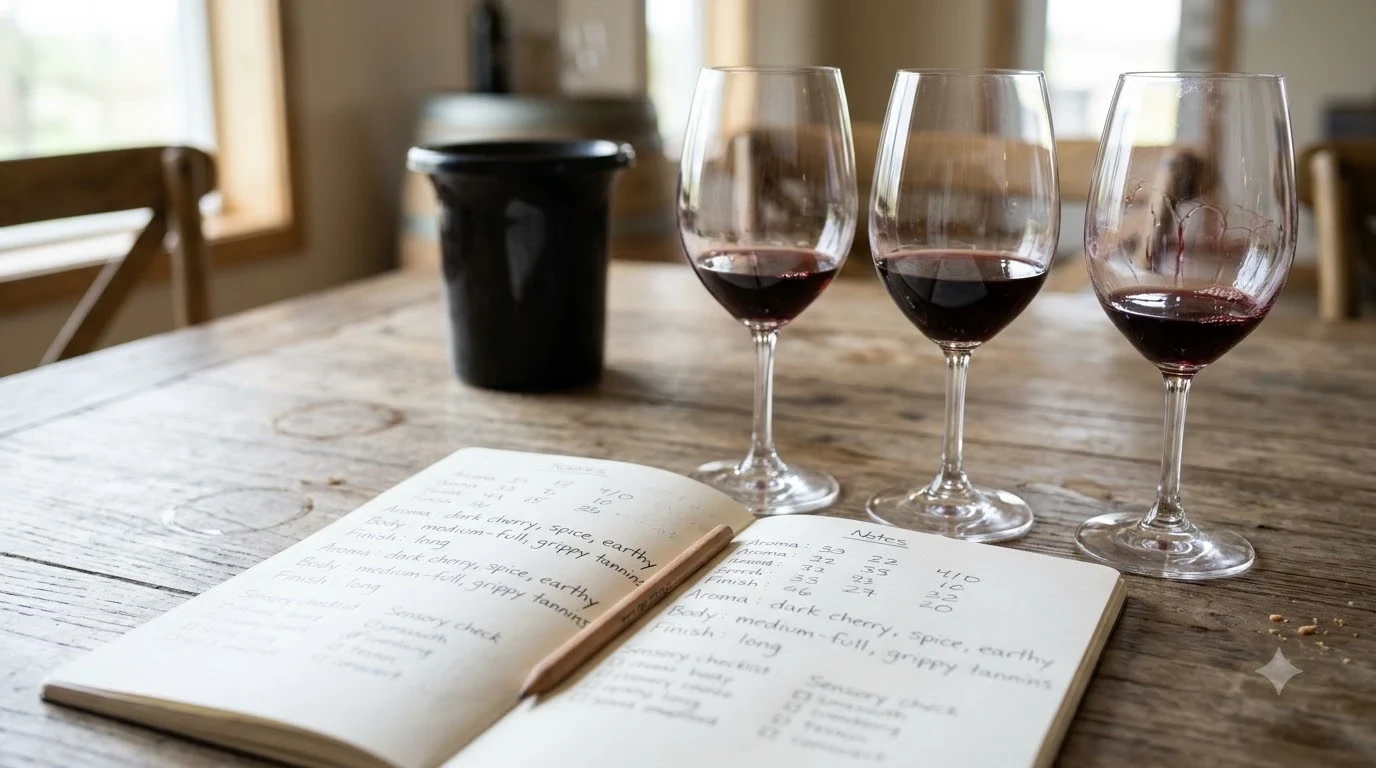
Rather than concentrating only on whether a wine is enjoyable, pay attention to a few practical characteristics. Notice the acidity, tannin, alcohol impression, texture, and length of the finish. Compare how these elements change between varieties and appellations.
A tasting of four wines might include an Orvieto white, a Grechetto, a Montefalco Rosso, and a Montefalco Sagrantino. This lineup provides a useful introduction to the contrast between fresh white wines and structured reds. If the producer offers a passito wine, it can provide an interesting final comparison.
It is also sensible to pace the tasting. Take small sips, drink water between samples, and use the spittoon if you are visiting multiple producers. Visitors planning to drive should arrange a designated driver or alternative transportation rather than relying on small tasting pours.
Frequently Asked Questions
Is Umbria the same wine region as Tuscany?
No. Umbria and Tuscany are separate administrative wine regions in central Italy. Umbria is landlocked and has its own appellations, including Montefalco Sagrantino DOCG and Orvieto DOC, rather than being part of Tuscany’s Chianti or Brunello classifications.
What is the traditional sweet wine of Montefalco?
Montefalco Sagrantino Passito is made from dried Sagrantino grapes and reflects the variety’s historical association with sweet wine. The drying process concentrates sugars and flavors before fermentation. It offers a different expression of the grape from the region’s better-known dry Sagrantino.
Can visitors taste wine in underground Orvieto cellars?
Some wineries in the Orvieto area incorporate historic underground caves into their tours and wine experiences. These spaces are associated with the town’s ancient settlement history and can provide naturally cool environments for wine storage and aging. Access depends on the individual property’s visitor arrangements.
What is the difference between Procanico and Trebbiano Toscano?
Procanico is the local name commonly used for Trebbiano Toscano in the Orvieto wine context. The name appears frequently in discussions of traditional Orvieto blends. It should not be confused with Trebbiano Spoletino, which is a distinct variety associated with central Umbria.
Is there a wine museum in Umbria?
Yes. The MUVIT Wine Museum is located in Torgiano and is supported by the Lungarotti Foundation. Its collection includes historical objects connected with wine production and consumption, making it a useful cultural stop for visitors interested in the history of Italian winemaking.
Umbria rewards visitors who approach its wines as a collection of distinct local traditions rather than focusing on one famous bottle. From the powerful reds of Montefalco to the expressive whites of Orvieto and the distinctive grapes of Spoleto and Trasimeno, the region offers plenty of variety for curious wine enthusiasts. Plan a few well-chosen winery visits, pair the wines with local food, and leave enough time to appreciate the historic towns and countryside that make Umbria such a memorable Italian wine destination.
More in Wine Regions
 Willcox Wine Trail: Discover Arizona’s High-Elevation Wine CountryUpdated Nov 20, 2026
 Yakima Valley Wine Region: Find the Best Styles to TryUpdated Nov 20, 2026
 Vosne Romanee Wine Tasting: Identify Aromas and Choose Better PairingsUpdated Nov 20, 2026
 Yakima Valley Wine Festival: Find the Best Seasonal Wine EventsUpdated Nov 20, 2026
 Wales Vineyards: Discover Cool-Climate Wines and Where to VisitUpdated Nov 20, 2026
 Yountville Wine Festival: Discover Napa Wines and Local FoodUpdated Nov 20, 2026