

We may earn a commission when you buy through links on this page, at no extra cost to you. Learn more.
The ideal tawny port serving temperature is 50°F to 55°F, slightly cooler than typical room temperature. This gentle chill helps balance the wine’s natural sweetness and fortified alcohol while preserving its characteristic aromas of toasted nuts, caramel, dried figs, and spice. Chill the bottle before serving, pour a small glass, and allow the wine to warm gradually as you drink it.
Tawny Port is a Portuguese fortified wine known for its amber color, mellow texture, and complex flavors developed during wood aging. Serving it at the right temperature makes a noticeable difference, particularly with older bottles that have developed delicate aromas over many years in oak casks. Whether opening a young Reserve Tawny, a 10 Year Old, or a 40 Year Old bottle, a little refrigeration helps bring the wine into balance.
The Ideal Temperature for Tawny Port
Serve most Tawny Ports between 50°F and 55°F for a balanced combination of freshness, sweetness, and aromatic complexity. This range provides a useful starting point for everyday bottles and older age-designated expressions alike.
There is some variation among professional recommendations. Decanter wine expert Richard Mayson suggests serving Tawny and Colheita Ports at approximately 50°F to 54°F, describing this as cellar-cool service. Taylor’s recommends a slightly broader range of approximately 54°F to 61°F for its Fine Tawny. Both approaches favor a temperature below ordinary room temperature rather than serving the wine warm. For the producer’s specific recommendation, see Taylor’s Fine Tawny serving and storage guidance.
For a practical home serving routine, aim for approximately 52°F. This gives the wine enough chill to keep its sweetness and alcohol in check without suppressing the aromas that make Tawny Port distinctive. If the bottle starts closer to 50°F, it can gradually warm in the glass, revealing additional layers as you drink.
Temperature also matters because Port is a fortified wine. Many examples have an alcohol content around 19% to 20%, which can feel particularly pronounced when the wine is served too warm. A moderate chill helps the alcohol integrate with the wine’s sweetness, acidity, and mature flavors.
It is useful to distinguish between a refrigerator temperature and a serving temperature. A typical household refrigerator operates around 37°F to 40°F, considerably colder than the preferred range for Tawny Port. The goal is not to pour the wine directly from a very cold refrigerator but to chill it and allow it to approach the desired temperature before drinking.
Why Temperature Changes Tawny Port’s Flavor
Tawny Port develops its distinctive character through extended maturation in wooden casks, where gradual oxidation changes its color, texture, and aromatic profile. Serving it slightly chilled helps preserve the freshness needed to balance its concentrated flavors.
Unlike Ruby Port, which generally retains a deeper red color and more youthful fruit character, Tawny Port develops amber and brown tones during wood aging. The wine can show dried apricot, prune, fig, walnut, hazelnut, butterscotch, caramel, and baking spice. These characteristics become particularly important in older expressions, where subtle aromatic details contribute much of the wine’s appeal.
When Tawny Port is too warm, its alcohol can become more noticeable, and its sweetness may seem heavier. Instead of clearly defined nutty and dried-fruit flavors, the wine can feel broad, hot, and syrupy. This is particularly noticeable when a bottle has been stored in a warm kitchen or served in a heated dining room.
Excessive chilling creates the opposite problem. At temperatures substantially below 45°F, aromatic compounds become less expressive, making it harder to distinguish between the wine’s different layers. A mature 30 Year Old Tawny may have remarkable complexity, but serving it too cold can make those details difficult to appreciate.
The ideal temperature therefore creates a balance. The wine should feel refreshing rather than cold, with enough warmth developing in the glass to reveal its aromas without allowing the alcohol to dominate.
Wood aging also explains why Tawny Port benefits from a different serving approach than Vintage Port. The latter develops much of its complexity in the bottle and generally needs a warmer serving temperature. For a comparison, see our guide to vintage port serving temperature.
Serving Temperatures for Different Tawny Port Styles
Most Tawny Ports can be served within the same general temperature range, although their age and aromatic concentration can influence the ideal starting point. Reserve, 10 Year Old, 20 Year Old, 30 Year Old, and Colheita expressions all benefit from moderate chilling.
Age indications on Tawny Port labels describe a style approved to represent the characteristics associated with that age. They do not necessarily mean that every wine in the blend spent exactly that number of years in the cask. Producers blend wines of different ages to achieve a consistent character.
| Port style | Suggested temperature | Serving approach |
|---|---|---|
| Reserve Tawny | 50°F–55°F | Serve gently chilled |
| 10 Year Old Tawny | 50°F–55°F | Emphasize freshness and dried fruit |
| 20 Year Old Tawny | 50°F–55°F | Allow to warm gradually in the glass |
| 30 Year Old Tawny | 50°F–55°F | Give the aromas time to develop |
| 40 Year Old Tawny | 50°F–55°F | Pour moderately and avoid excessive chilling |
| Colheita Port | 50°F–55°F | Serve cellar cool |
These are practical serving targets rather than separate legal temperature requirements. Individual producers sometimes recommend broader ranges. For example, Taylor’s suggests 54°F to 61°F for Fine Tawny, while Decanter’s recommendation for Tawny and Colheita is approximately 50°F to 54°F. Starting around 52°F offers a convenient middle ground.
Reserve and 10 Year Old Tawny
Reserve Tawny is an accessible introduction to wood-aged Port. It generally offers a combination of youthful fruit and mellow maturation, with flavors that can include dried berries, caramel, and toasted nuts. A temperature around 52°F keeps the wine refreshing without hiding its softer characteristics.
A 10 Year Old Tawny generally has more pronounced notes of dried figs, orange peel, nuts, and spice. Its fruit remains important, but wood maturation contributes a smoother texture and more developed aromas. Serve it around 52°F to 54°F if you prefer a slightly more expressive presentation.
20, 30, and 40 Year Old Tawny
Older age-designated Tawny Ports often show greater aromatic complexity, including walnut, hazelnut, caramel, dried citrus, and delicate spice. A 20 Year Old expression can offer an especially attractive balance between freshness and mature nutty character.
For 30 and 40 Year Old bottles, avoid serving straight from a very cold refrigerator. Begin around 50°F to 52°F and allow the wine to warm naturally. This gives the more delicate aromas an opportunity to develop without sacrificing the freshness provided by moderate chilling.
Colheita Tawny
Colheita is a single-harvest Tawny Port matured in wood for at least seven years before bottling. Its character depends on the harvest, the producer’s maturation choices, and the time spent in cask. Because Colheita wines can vary considerably, the same 50°F to 55°F range provides a dependable starting point.
How Long to Chill Tawny Port Before Serving
Refrigerate Tawny Port for approximately 30 to 45 minutes before serving if it starts at a typical room temperature of 68°F to 72°F. The actual time depends on the bottle’s starting temperature, refrigerator performance, and whether the wine is being served in a cool or warm room.
A bottle kept in a cool wine storage area may need only a short period of refrigeration. A bottle that has been sitting in a warm kitchen may need longer. The important consideration is the temperature of the wine itself rather than following a rigid refrigeration schedule.
A wine thermometer is helpful if you want consistent results. Measure the wine after pouring a small sample rather than relying entirely on how cold the bottle feels. Glass bottles can feel cold even when the liquid inside is warmer than expected.
A Simple Refrigeration Routine
For an ordinary bottle stored at room temperature, use this approach:
- Place the unopened Tawny Port in the refrigerator approximately 30 to 45 minutes before serving.
- Prepare your glasses while the wine chills.
- Pour a small sample and check whether the wine feels gently chilled rather than icy.
- If it is too cold, leave the bottle at room temperature for several minutes.
- Pour the remaining wine and allow it to develop gradually in the glass.
There is no need to put the bottle in the freezer for a quick chill. Freezing can cool the wine unevenly, and leaving a bottle unattended can create unnecessary problems if the liquid becomes partially frozen.
Tip: If you are serving Tawny Port at a dinner party, chill the bottle slightly below your preferred drinking temperature. Small pours warm naturally in the glass, so starting around 50°F to 52°F gives the wine room to develop while guests drink.
For outdoor meals or warm-weather gatherings, use an ice bucket containing a mixture of ice and water to maintain a cool serving temperature. Keep the bottle out of direct sunlight, and avoid leaving it in a hot car or beside a grill.
Glassware, Pouring Size, and Decanting
Serve Tawny Port in a small Port glass or a modest-sized white wine glass, using a controlled pour of approximately 2.5 to 3.5 ounces. Most standard wine glasses also work well if they provide enough room for the aromas to collect.
Glass shape influences how aromas reach the nose. A narrow Port glass concentrates the wine’s aromatic profile and makes it convenient to serve small portions after dinner. A smaller white wine glass provides slightly more room for swirling and can be useful with a complex 20, 30, or 40 Year Old Tawny.
A large red wine glass is not essential. Tawny Port generally does not need the same amount of aeration as a structured young red wine. The main objective is to give the aromas enough room to develop without making the serving unnecessarily large.
How Much Tawny Port Should You Pour?
A 750 ml bottle contains approximately 25.4 fluid ounces. At a serving size of 3 ounces, it provides around eight small servings, making Tawny Port practical for after-dinner gatherings.
Small pours are particularly appropriate because Port is fortified and often considerably sweeter and more concentrated than ordinary table wine. A smaller serving allows guests to appreciate the wine’s texture and aromas without filling a large glass.
Does Tawny Port Need Decanting?
Most Tawny Ports do not require decanting. They are generally ready to drink after bottling, and their maturation in wood means they usually do not develop the bottle sediment associated with older Vintage Port.
Richard Mayson explains in Decanter’s advice on drinking and serving Tawny Port that Tawny and Colheita Ports generally have no sediment that needs removing. A clear decanter can still make an attractive presentation, especially for an older bottle, but transferring the wine is not necessary to prepare it for drinking.
Open the bottle carefully, pour directly into clean glasses, and avoid unnecessary aeration. If you want to serve a particularly old Colheita in a decanter for presentation, pour it gently and keep the vessel away from excessive heat.
For comparison, ruby port serving temperature is generally warmer than the preferred starting point for Tawny Port. The difference reflects the contrasting styles and maturation methods of these two types of fortified wine.
Food Pairings and the Best Time to Serve Tawny Port
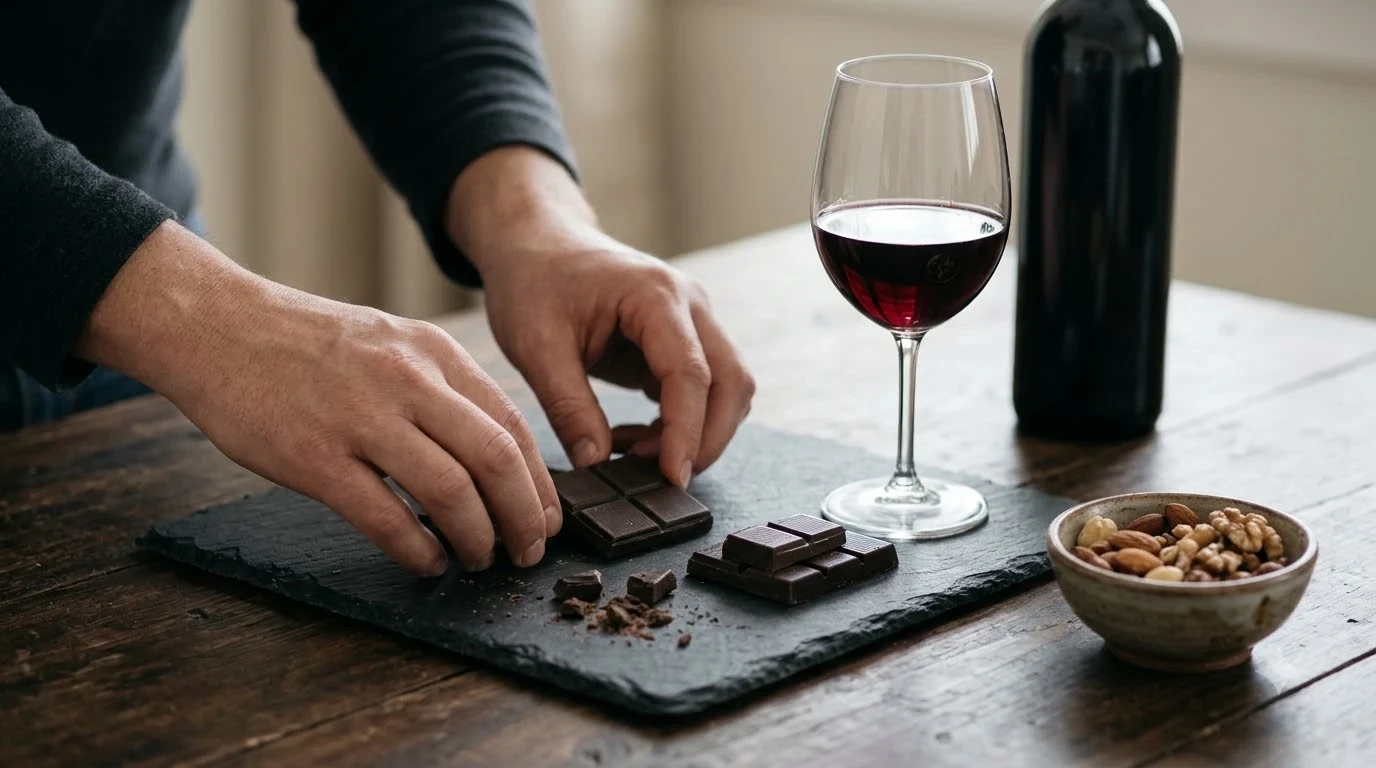
Tawny Port works particularly well with nuts, dried fruit, caramel desserts, dark chocolate, and mature cheeses. Its sweetness and nutty character make it a natural after-dinner wine, although lighter examples can also be served as an aperitif.
One of the simplest pairings is a plate of roasted almonds and walnuts. These foods complement the wine’s toasted-nut aromas, while their savory qualities help balance its sweetness. Dried figs, prunes, apricots, and dates also work well with the wine’s mature fruit characteristics.
Dark chocolate is another useful pairing, particularly with a richer Tawny Port. Chocolate desserts with caramel, roasted nuts, or dried fruit can complement the wine’s concentrated flavors. Avoid extremely bitter chocolate if the wine is relatively delicate, since excessive bitterness can make its sweetness seem less balanced.
Cheese Pairings
Blue-veined cheeses are classic companions for Tawny Port. Their saltiness and rich texture provide a contrast to the wine’s sweetness, while the mature flavors can complement its nutty and caramel notes.
Other suitable choices include aged hard cheeses such as Comté and Gruyère. These cheeses have enough savory character to stand alongside a 20 Year Old Tawny without overwhelming its more subtle aromas.
For a simple dessert course, serve Tawny Port with roasted almonds, dried apricots, and a small portion of dark chocolate. A 10 Year Old or 20 Year Old expression is a particularly flexible choice for this combination.
Serving Tawny Port Before or After Dinner
Although Tawny Port is traditionally associated with the end of a meal, it can also work as an aperitif. A moderately chilled Reserve Tawny served with toasted almonds or small savory snacks provides an alternative to sparkling wine or dry white wine.
Older expressions are often best enjoyed slowly after dinner, when guests can concentrate on their aromas and texture. A 30 Year Old or 40 Year Old bottle can be served on its own in a small glass rather than being paired with a complicated dessert.
White Port offers another serving option, especially for guests who prefer a lighter or fresher fortified wine. See our guide to white port serving temperature for the appropriate chilling approach to dry and sweet White Port.
Storing Tawny Port Before and After Opening
Store unopened Tawny Port upright in a cool, dark location with a reasonably constant temperature. After opening, replace the stopper promptly and refrigerate the bottle to help preserve its freshness and aromatic character.
Unlike many wines that continue to develop significantly in the bottle, most Tawny Ports are ready to drink when released. Their main maturation has already taken place in wooden casks, where gradual exposure to oxygen contributes to their distinctive character.
Taylor’s specifically recommends storing Fine Tawny upright, away from light, and at a cool, constant temperature. This is an appropriate general approach for most standard Tawny Ports, particularly bottles with stopper closures.
How Long Does an Opened Bottle Last?
Tawny Port generally keeps longer after opening than Vintage Port because it has already undergone substantial oxidative maturation during its time in wood. Decanter’s Richard Mayson suggests that Tawny and Colheita Ports can remain enjoyable for approximately a week after opening, although delicate aromas may gradually lose freshness.
Other producers provide longer drinking windows for particular products. Storage recommendations vary according to the wine’s age, production method, closure, and the amount of air remaining in the bottle. Refrigeration and prompt resealing help slow the loss of freshness.
For a bottle you plan to enjoy over several occasions, follow these simple practices:
- Replace the stopper immediately after pouring.
- Keep the opened bottle upright.
- Refrigerate the remaining wine between servings.
- Limit the time the bottle remains open and exposed to air.
- Bring the next serving toward 50°F to 55°F before drinking.
Do not assume every bottle has the same storage life. A younger Reserve Tawny and a delicate old Colheita may respond differently after opening. Pay attention to changes in freshness, fruit character, and aromatic intensity rather than relying exclusively on a fixed number of days.
Frequently Asked Questions
Can Tawny Port be served over ice?
Yes, although serving it over ice is generally better suited to casual aperitif-style drinking than appreciating an older Tawny on its own. Melting ice gradually dilutes the wine and changes its sweetness and concentration. For a mature 20 Year Old or 40 Year Old expression, a chilled glass without ice is usually preferable.
Should Tawny Port be served in a chilled glass?
A chilled glass is unnecessary if the wine is already at the appropriate serving temperature. An extremely cold glass can cool a small pour too quickly and reduce aromatic expression. Clean glassware stored at ordinary room temperature is generally sufficient.
Does Tawny Port need to breathe after opening?
Tawny Port does not generally require extended breathing before drinking. Its development through wood aging has already introduced the oxidative characteristics associated with the style. A few minutes in the glass can help reveal additional aromas, particularly in older bottles.
Does the age printed on Tawny Port indicate the bottling year?
No. An age indication such as 10, 20, 30, or 40 Years Old represents an approved style of blended Tawny Port rather than a specific bottling year. Colheita is different because it identifies wine from a single harvest, with its harvest and bottling dates providing additional information about its history.
Can an unopened Tawny Port bottle be kept for decades?
Many age-indicated Tawny Ports are ready to drink when bottled and are not intended to undergo the same extended bottle maturation as Vintage Port. Proper storage protects their quality, but additional years in the bottle do not necessarily improve them. A Colheita or older age-indicated Tawny should generally be appreciated for the characteristics it already possesses when released.
The best tawny port serving temperature is approximately 50°F to 55°F, providing enough chill to balance sweetness and alcohol while allowing mature aromas to develop. Refrigerate the bottle before serving, use small pours, and let the wine warm naturally in the glass. With the right temperature and a suitable food pairing, Reserve, 10 Year Old, 20 Year Old, and older Tawny Ports can all make memorable after-dinner wines.
More in Wine Types & Grapes
 What Does Mourvèdre Taste Like? Flavor Profile, Regions, and PairingsUpdated Nov 20, 2026
 What Does Marsanne Taste Like? Flavors, Styles, and Food PairingsUpdated Nov 20, 2026
 What Does Malvasia Taste Like? Styles, Flavors, and Food PairingsUpdated Nov 20, 2026
 What Does Grenache Blanc Taste Like? Flavor Profile, Styles, and PairingsUpdated Nov 20, 2026
 What Does Garnacha Taste Like? Key Flavors, Styles, and Pairing TipsUpdated Nov 20, 2026
 What Does Fruit Wine Taste Like? A Complete Flavor and Style BreakdownUpdated Nov 20, 2026