

We may earn a commission when you buy through links on this page, at no extra cost to you. Learn more.
The Sub Zero under counter wine fridge is a premium built-in wine storage appliance designed for homeowners who want two temperature zones, organized bottle storage, and a kitchen-integrated appearance. The legacy UW-24/S holds up to 46 bottles in a 24-inch-wide cabinet and includes six racks, UV-resistant glass, LED lighting, and dual evaporators. Its main drawback is availability: Sub-Zero identifies this model as a legacy product with limited availability, so buyers should investigate the newer 24-inch Designer wine storage models before committing.
A dedicated wine refrigerator offers more control than an ordinary kitchen refrigerator, particularly for households that regularly keep red and white wines on hand. Sub-Zero’s UW-24/S was designed to fit beneath a counter while providing separate storage environments for different wine styles. Its combination of capacity, temperature management, and cabinet integration makes it an appealing appliance, but its legacy status changes the buying decision. This review examines its specifications, practical advantages, ownership considerations, and differences from the newer DEU2450W.
Specs and Key Features of the Sub-Zero UW-24/S
The Sub-Zero UW-24/S combines a 46-bottle capacity with two temperature zones in a built-in cabinet measuring approximately 24 inches wide. Its six racks, glass door, and interior lighting are intended to make a substantial home collection accessible without dedicating space to a full-size wine cellar.
Sub-Zero lists the UW-24/S as a legacy model. The manufacturer describes its availability as limited and recommends contacting a local dealer for current purchasing information. This distinction matters because a shopper looking for a brand-new appliance may have to consider remaining dealer inventory, rather than assuming the original model is still part of the regular product lineup. The manufacturer’s UW-24/S product specifications and feature information provide the most useful starting point for confirming the exact configuration.
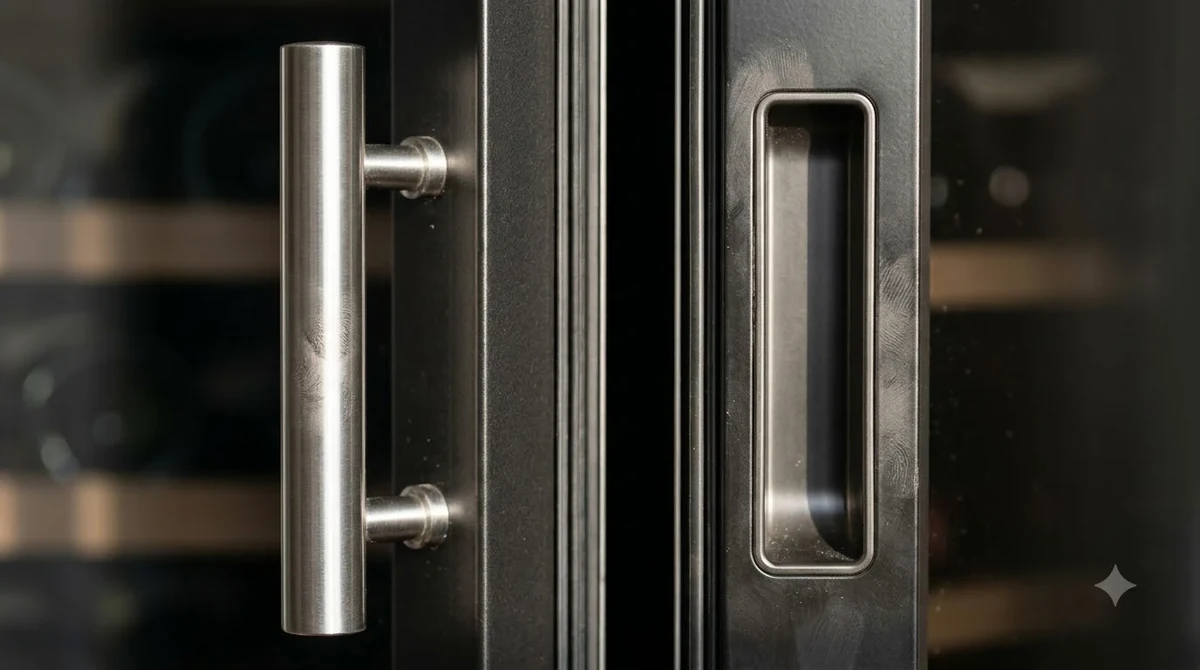
The following specifications are drawn from Sub-Zero’s product information and its UW-24/S quick reference guide.
| Specification | Sub-Zero UW-24/S |
|---|---|
| Appliance type | Built-in undercounter wine storage |
| Nominal width | 24 inches |
| Overall width | 23 7/8 inches |
| Overall height | 34 inches |
| Overall depth | 24 inches |
| Storage capacity | 46 bottles |
| Storage racks | 6 |
| Temperature zones | 2 |
| Door clearance | 25 3/8 inches |
| Electrical supply | 115 VAC, 60 Hz |
| Electrical service | Dedicated 15-amp circuit |
| Shipping weight | 195 pounds |
| Interior lighting | LED |
| Glass protection | UV-resistant glass |
Two independent temperature zones
One of the strongest features is the ability to keep reds and whites in separate temperature zones. This is more practical than forcing every bottle into one compromise setting, particularly for households that regularly serve different wine styles.
For example, a household might keep a light Pinot Noir in one section and Sauvignon Blanc in the other. Pinot Noir is generally served around 55 to 60 degrees Fahrenheit, while light white wines are typically served around 45 to 50 degrees Fahrenheit. Separate zones make it easier to keep these bottles closer to their preferred serving temperatures.
Sub-Zero states that the UW-24/S maintains temperatures within one degree of the setpoint. That specification is a useful indicator of the manufacturer’s temperature-control design, although actual performance in a particular kitchen also depends on installation conditions, maintenance, and operating environment.
Humidity and light protection
The UW-24/S uses dual evaporators to maintain constant, moderate humidity. Sub-Zero presents this arrangement as a way to help prevent corks from drying out. Humidity management matters particularly for bottles intended to remain stored for extended periods, because cork condition is one part of maintaining a suitable storage environment.
The UV-resistant glass door is another meaningful feature. Light exposure is an undesirable condition for wine storage, especially when bottles remain in a bright kitchen for extended periods. The glass helps limit ultraviolet exposure while allowing owners to see the collection without opening the door.
Racks, lighting, and organization
The six storage racks have stainable fronts, giving homeowners some flexibility when coordinating the appliance with surrounding cabinetry. Textured roller-glide shelves are designed to reduce vibration and allow access to individual bottles without disturbing the rest of the collection.
LED lighting makes it easier to identify bottles inside the cabinet. The inventory tile system provides another organizational feature, particularly for households that maintain several varieties and want a more systematic way to identify their selections.
What Owners May Like About the Design and Storage
The UW-24/S has several features that make sense for everyday wine enthusiasts as well as homeowners with more developed collections. Its strongest advantages are its built-in format, two-zone storage, and combination of bottle organization and environmental controls.
One appealing aspect is the ability to integrate wine storage directly into a kitchen or entertaining area. Rather than keeping a freestanding wine cooler in a utility room, owners can place the appliance beneath a counter where bottles are accessible during meal preparation and entertaining.
The 46-bottle capacity is also substantial for an undercounter appliance. It provides room for a mixture of everyday drinking wines, special-occasion bottles, and a few selections intended for later consumption. However, the advertised capacity should be viewed as a nominal figure rather than a guarantee that every bottle shape will fit equally well.
Convenient access to different wine styles
Separate temperature zones are especially useful when a household serves both red and white wine regularly. A chilled Riesling, a bottle of Chardonnay, and a red Bordeaux do not necessarily benefit from the same serving temperature.
For instance, full-bodied Chardonnay is generally served around 50 to 55 degrees Fahrenheit, while Cabernet Sauvignon is often served around 60 to 65 degrees Fahrenheit. Having separate zones makes it easier to prepare bottles for different occasions without repeatedly changing one shared temperature setting.
This is particularly convenient before a dinner party. A host can prepare the white wines in one compartment while keeping the reds in the other. Bottles can then be selected without moving several other wines around.
Quiet access and bottle organization
Sub-Zero’s textured roller-glide racks are intended to minimize vibration during bottle retrieval. This design is appealing to collectors who prefer not to disturb bottles unnecessarily when selecting a particular vintage.
The inventory tile system also offers a practical organizational benefit. A collection becomes harder to manage as the number of bottles increases, especially when several bottles have similar labels or come from the same producer. A designated identification system can make selection easier.
The six racks provide a defined storage arrangement, while the stainable fronts offer a visual advantage in a kitchen where cabinetry finishes are important. Owners who value coordinated appliances may appreciate these details more than shoppers who simply need inexpensive refrigerated storage.
A useful fit for entertaining
Wine storage close to the dining and entertaining areas reduces the need to retrieve bottles from another room. The built-in configuration also keeps the appliance from occupying additional floor space.
For a casual gathering, owners might keep sparkling wine and white wine available alongside bottles of red. An Aperol Spritz recipe can complement the same entertaining setup, although cocktails should be prepared separately rather than treated as wine-storage products.
For dinner, the convenience of having different wines ready to serve can be particularly helpful. A bottle of Chardonnay with roasted poultry or a red wine with a richer main course can be selected without leaving the kitchen for another storage area.
Common Complaints and Potential Ownership Drawbacks
The biggest purchasing concern with the UW-24/S is not a particular feature deficiency but its legacy status and the practical implications of buying an older appliance design. Buyers should also consider its substantial weight, installation requirements, and relatively specialized purpose before choosing it.
Sub-Zero’s product information establishes the model’s features and specifications, but it does not provide a verified aggregate of owner complaints or failure rates. Therefore, it would be misleading to present specific reliability complaints as established owner consensus. The following are practical ownership concerns to investigate before purchasing.
Limited availability and replacement considerations
Sub-Zero explicitly identifies the UW-24/S as a legacy model with limited availability. Its official wine-storage production timeline also distinguishes discontinued UW-24/S configurations from newer products. That means buyers may encounter remaining inventory, dealer-held stock, or previously owned appliances rather than a straightforward new-model purchase.
Availability also affects the buying process if the appliance is part of a larger kitchen renovation. A homeowner should establish whether the exact configuration can be supplied, whether it is new or previously installed, and whether the selected hinge and handle arrangement matches the planned cabinetry.
For a used appliance, request its model and serial information, installation history, service records, and confirmation that the relevant parts and service support can be obtained. A visually attractive used wine refrigerator is not necessarily a sound purchase if its cooling system or controls require expensive attention.
Installation is less flexible than it looks
A 24-inch appliance opening may appear straightforward, but the UW-24/S has specific dimensional and electrical requirements. Its quick reference guide identifies a standard opening of 24 inches wide, 34 1/2 inches high, and 24 inches deep.
The appliance itself is listed at 195 pounds shipping weight. That makes careful handling important during delivery and installation, especially when the surrounding kitchen cabinets have already been completed.
Door clearance is another detail that should not be overlooked. Sub-Zero lists a 25 3/8-inch door clearance measurement. A cabinet opening may be dimensionally correct but still create an access problem if a nearby island, drawer, or wall interferes with the door swing.
Capacity depends on bottle dimensions
The advertised 46-bottle capacity is a useful comparison point, but real collections rarely consist entirely of identical standard bottles. Champagne bottles, wider Burgundy bottles, and some specialty formats can take up more room than conventional Bordeaux-style bottles.
Collectors should consider their actual bottle mix rather than assuming the advertised number will always be achievable. A cabinet that holds 46 standard bottles may accommodate fewer when a significant portion of the collection uses wider glass.
Premium positioning may not suit every household
The UW-24/S is designed as a built-in appliance with specialized wine-storage features. That makes it less suitable for buyers who simply want to chill a few inexpensive bottles occasionally.
A freestanding wine cooler may offer a more practical solution for a small collection or a household that does not need cabinetry integration. Likewise, someone who needs substantially more than 46 bottles may find a larger wine-storage cabinet a better long-term choice.
There is also the question of whether two temperature zones are genuinely necessary. If nearly every bottle in the collection is red, the additional flexibility may have less everyday value than it does for a household that regularly serves both reds and whites.
Tip: Before buying a legacy UW-24/S, ask the dealer to confirm the exact model configuration, condition, remaining parts availability, service options, and warranty coverage in writing. Do not assume that an older unit carries the same warranty terms as a current Sub-Zero appliance.
Who Should Buy the Sub-Zero UW-24/S and Who Should Skip It?
The UW-24/S makes the most sense for homeowners who prioritize built-in design, separate wine temperatures, and organized storage in a compact kitchen footprint. It is less compelling for shoppers who need a readily available current model or want inexpensive refrigeration for a small number of bottles.
Who should consider buying it
Homeowners renovating a kitchen: The 24-inch undercounter format is a natural fit for a planned appliance layout. Its glass door, stainless-steel appearance, and integrated design make it appropriate for kitchens where the wine refrigerator is part of the overall cabinetry plan.
Households with mixed wine collections: The two temperature zones provide a practical benefit for people who regularly serve red and white wine. Keeping Sauvignon Blanc separate from Cabernet Sauvignon is more convenient than using a single temperature setting for both.
Collectors with moderate storage requirements: A 46-bottle capacity provides meaningful space without requiring a dedicated wine room. It can suit households that rotate through a collection rather than storing hundreds of bottles for long-term aging.
Owners who value organization: Six racks, inventory tiles, LED lighting, and roller-glide access make the appliance appealing to people who want their collection arranged and accessible.
Who should skip it
Shoppers who require a current-production model: The UW-24/S is identified as a legacy product. If a current manufacturer-supported purchasing experience is a priority, compare it with the newer Designer undercounter range.
Budget-conscious buyers: A premium built-in appliance may be unnecessary if the main requirement is simply keeping several bottles cool. Less specialized refrigeration can be a more sensible purchase.
Large collectors: Forty-six bottles may not provide enough room for people who purchase wine by the case or maintain an extensive cellar. A larger cabinet or dedicated wine room would offer more room for expansion.
Homeowners with unsuitable cabinetry: The unit requires careful attention to opening dimensions, electrical supply, and door clearance. If the kitchen cannot accommodate those requirements, forcing the appliance into an unsuitable opening is not a good solution.
People who rarely drink wine: Two temperature zones and specialized storage racks may offer little practical benefit to someone who only keeps a few bottles at home.
How It Compares to Newer Sub-Zero Alternatives
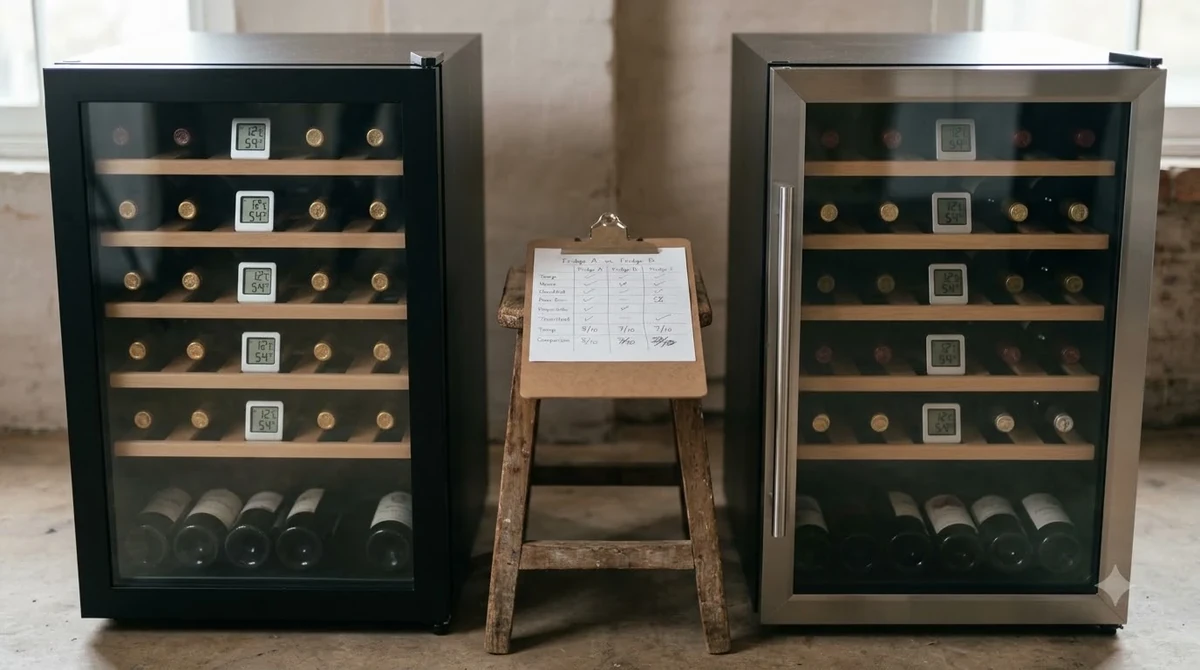
The most relevant comparison is the newer Sub-Zero DEU2450W Designer undercounter wine storage model. Both products target homeowners looking for built-in wine refrigeration, but their published dimensions and storage capacities differ.
The newer model is listed with a 42-bottle capacity, compared with 46 bottles for the legacy UW-24/S. It is also slightly different in height and depth, making it important to compare the installation documentation rather than assuming the two appliances are interchangeable.
| Feature | UW-24/S | DEU2450W |
|---|---|---|
| Product generation | Legacy | Current Designer model |
| Nominal width | 24 inches | 24 inches |
| Published width | 23 7/8 inches | 24 inches |
| Published height | 34 inches | 34 1/2 inches |
| Published depth | 24 inches | 23 1/8 inches |
| Bottle capacity | 46 | 42 |
| Published weight | 195 lb shipping weight | 176 lb |
| Electrical supply | 115 VAC, 60 Hz | 115 VAC, 60 Hz |
| Electrical service | 15-amp dedicated circuit | 15-amp dedicated circuit |
The UW-24/S: More stated bottle capacity
The legacy model has a nominal advantage in published bottle capacity. Its 46-bottle rating exceeds the DEU2450W’s 42-bottle rating by four bottles.
That difference may matter to an owner who is trying to maximize storage in an existing 24-inch cabinet opening. However, capacity should not be the only deciding factor. A newer appliance with a different interior arrangement may be a more suitable long-term purchase even if its nominal capacity is slightly lower.
The DEU2450W: A newer design option
The DEU2450W is a 24-inch Designer undercounter wine storage appliance. Sub-Zero’s published specifications list its dimensions as 24 inches wide, 34 1/2 inches high, and 23 1/8 inches deep, with a capacity of 42 bottles.
Its published weight is 176 pounds, compared with the UW-24/S shipping weight of 195 pounds. These figures should be understood in their respective specification contexts rather than treated as identical weight measurements.
The DEU2450W also has a dedicated 15-amp electrical requirement and operates on 115 VAC, 60 Hz power. These shared electrical specifications make the two models similar in one important installation respect, but they do not establish that an existing cabinet opening will automatically accept the newer appliance.
Panel-ready versus stainless-steel finishes
The UW-24 product family included a stainless-steel UW-24/S and a panel-ready UW-24/O. The panel-ready version was intended for homeowners who wanted the appliance door to coordinate with surrounding cabinetry.
The UW-24/S is the stainless-steel version. Its appearance is more immediately defined, while the panel-ready option allows greater flexibility in coordinating the appliance with a particular kitchen design.
Buyers should distinguish the exact model suffixes when researching used appliances or remaining inventory. Hinge direction and handle configuration also matter. Sub-Zero lists left-hinge and right-hinge configurations, with different handle options for the legacy stainless-steel model.
For additional appliance comparisons, the Brand x Type model reviews section can help readers evaluate other wine-storage products and decide which format suits their kitchen.
Frequently Asked Questions
Is the Sub-Zero UW-24/S manufactured in a right-hinge version?
Yes. Sub-Zero lists both left-hinge and right-hinge configurations for the UW-24/S. The available model suffixes also distinguish handle arrangements, including pro-handle and tubular-handle versions. Confirm the complete model designation before ordering or purchasing replacement components.
Can the UW-24/S connect to a home security system?
Sub-Zero lists home security system connectivity as one of the UW-24/S features. This is separate from its ordinary wine-storage functions, such as temperature zoning and interior lighting. Ask the manufacturer or an authorized service provider about the compatibility requirements for the particular installation.
Does the UW-24/S have an inventory system for identifying bottles?
Yes. The manufacturer identifies an inventory tile system as part of the appliance’s organization features. The system is intended to help owners keep track of their wine collection. Sub-Zero also lists writable inventory tiles as an accessory for the legacy product family.
Is the UW-24/S certified for Sabbath observance?
Sub-Zero lists Star-K certification for the UW-24/S. Certification details and applicable operating modes should be confirmed with the manufacturer or the relevant certification organization before relying on a particular appliance configuration for religious observance.
Where can owners obtain genuine replacement parts for a legacy UW-24/S?
Sub-Zero directs customers to its Factory Certified Parts Distributor network for genuine replacement components. Its support information explains that filters and cleaners are available through the online store, while other genuine parts are handled through the distributor network. Owners should provide the complete model and serial numbers when requesting assistance.
The Sub-Zero UW-24/S remains an appealing undercounter wine refrigerator on paper, particularly for households that value two temperature zones, organized storage, and a 46-bottle capacity. Its legacy status is the main reason to approach a purchase carefully: compare the exact condition, installation requirements, and available support with the newer DEU2450W before making a decision. For buyers who find a suitable, properly supported UW-24/S, its combination of wine-storage features and compact built-in design remains a compelling proposition.
More in Model Reviews
 Magic Chef 44 Bottle Wine Cooler Review for Flexible StorageUpdated Nov 21, 2026
 Whynter 164 Bottle Wine Cooler Review: Capacity, Features, and FitUpdated Nov 21, 2026
 Insignia NS WC16BK6 Review: Compact 16-Bottle Wine StorageUpdated Nov 21, 2026
 Wine Enthusiast Electric Blue Omega Review: Opening, Pouring, and Preserving Made EasierUpdated Nov 21, 2026
 Koolatron 20 Bottle Wine Cooler Review: Features, Fit, and PerformanceUpdated Nov 21, 2026
 NewAir AWC 330E Review for Home Wine StorageUpdated Nov 21, 2026