

We may earn a commission when you buy through links on this page, at no extra cost to you. Learn more.
The Sub Zero dual zone wine fridge lineup delivers precise independent temperature control within one degree of the setpoint, dual evaporators for steady humidity, and custom cabinetry integration across undercounter and full-height column models. Built in the United States with UV-resistant bronze-tinted glass and smooth roller-glide racks, these units protect bottles from heat, light, vibration, and dry air. However, high purchase costs, heavy panel installation requirements, and multi-month factory lead times mean casual drinkers or budget-minded buyers can find simpler options elsewhere.
Sub-Zero organizes its wine storage catalog into three distinct built-in formats—Classic Series, Designer Series, and Designer Undercounter—rather than a single standalone cooler. Evaluating the full product line requires looking at how the dual-zone cooling architecture performs across different bottle capacities, how owners experience daily access and maintenance, and where dedicated cellar cabinets like EuroCave offer an alternative approach.
Specs and Key Features Across the Lineup
Sub-Zero equips every dual-zone wine storage model with two independently controlled temperature zones ranging from 38°F to 65°F, paired with separate evaporators that regulate moisture without transferring air between compartments. Capacities scale from 42 bottles in a 24-inch undercounter cabinet up to 146 bottles in full-height 30-inch columns, all running on a dedicated 115-volt, 15-amp electrical circuit.
Each zone relies on a microprocessor that samples internal air temperatures every second to keep conditions within one degree of the chosen setting, according to Sub-Zero use and care documentation. From the factory, the upper zone arrives preset at 45°F for whites and sparkling wines while the lower zone sits at 55°F for reds or long-term aging, though owners can adjust either zone in one-degree increments via the touch control panel or the Sub-Zero Group Owner’s App. Because dual evaporators manage each compartment independently, dry air from a colder white-wine section does not strip moisture from corks stored in the warmer red-wine section.
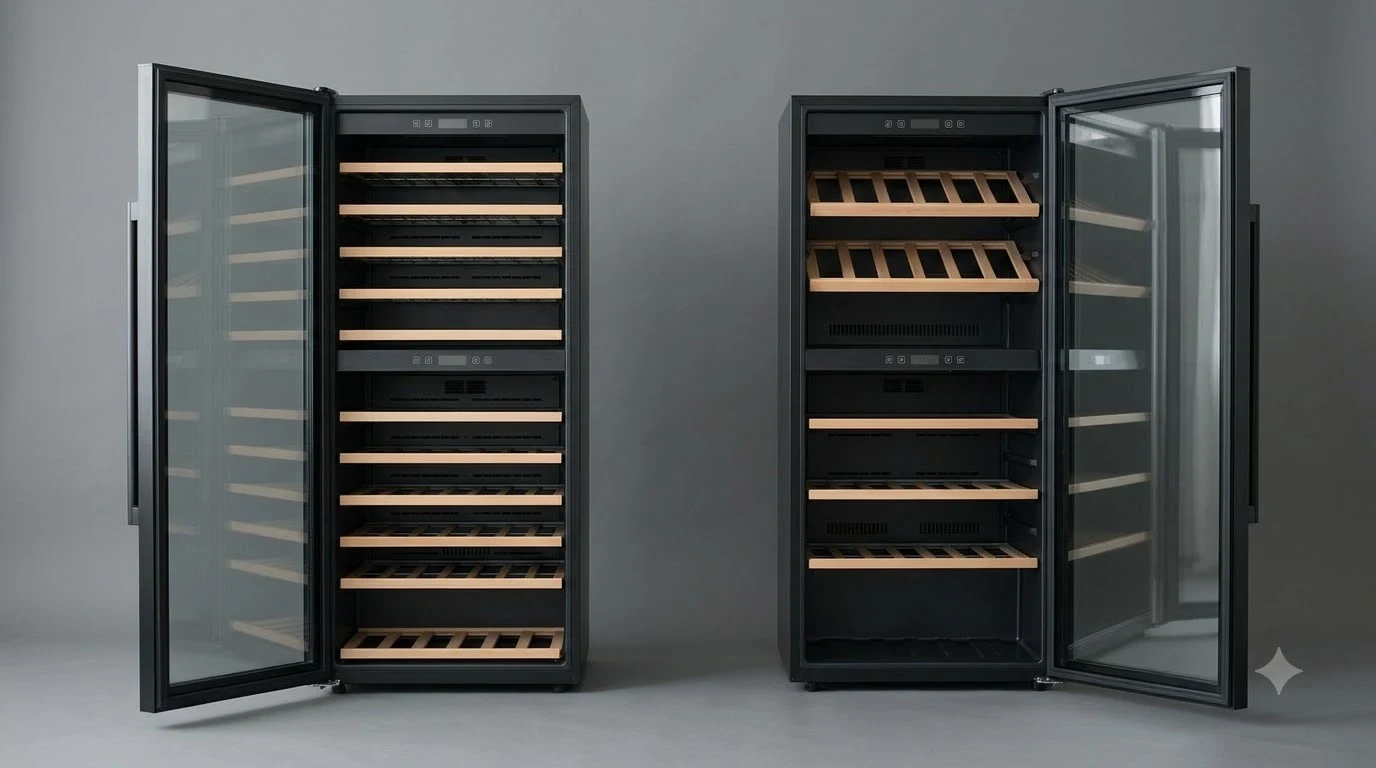
Physical construction emphasizes vibration isolation and light protection across every width. Doors use bronze-tinted, UV-resistant thermal glass framed by magnetic vacuum gaskets that pull the door shut to block warm ambient air. Inside, rustproof wire racks faced with natural cherrywood glide out on roller assemblies so you can read labels or lift a bottle without jostling neighboring bottles. Standard 750 ml Bordeaux bottles fit side by side, and removing one upper rack creates clearance for magnums or half bottles without forcing corks out of liquid contact.
| Model Line & Code | Width x Height x Depth | Bottle Capacity (750 ml) | Temperature Zones & Range | Weight & Installation Style |
|---|---|---|---|---|
| Designer Undercounter (DEU2450W) | 24″ x 34 1/2″ x 23 1/8″ | 42 bottles | 2 zones (38°F–65°F) | 176 lbs; panel-ready built-in |
| Designer Column 18″ (DEC1850W) | 18″ x 84″ x 24″ | 59 bottles | 2 zones (38°F–65°F) | 350 lbs; flush panel-ready |
| Designer Wine + Drawers (IW-30R) | 30″ x 84″ x 24″ | 86 bottles + 5.2 cu. ft. drawers | 2 wine zones (38°F–65°F) + drawer zone | 475 lbs; flush panel-ready |
| Designer Column 30″ (DEC3050W) | 30″ x 84″ x 24″ | 146 bottles | 2 zones (38°F–65°F) | 425 lbs; flush panel-ready |
| Classic Column 30″ (CL3050W/S) | 30″ x 84″ x 24″ | 146 bottles | 2 zones (38°F–65°F) | 475 lbs; stainless steel built-in |
Tip: When configuring a dual-zone cabinet for dinner service, set the upper zone to 45°F for crisp whites and sparkling wines and the lower zone to 58°F for reds, or set both zones to 55°F if your priority is multi-year aging rather than immediate pouring.
What Owners Like About Sub-Zero Wine Storage
Long-term owners and appliance specialists consistently highlight temperature stability, smooth kitchen integration, multi-decade replacement parts availability, and smooth rack ergonomics as the primary strengths of a Sub Zero dual zone wine fridge. Many buyers choose the brand specifically because a panel-ready Designer column or undercounter cabinet aligns flush with surrounding millwork in a kitchen or butler’s pantry.
Smooth Cabinetry Integration and Display Lighting
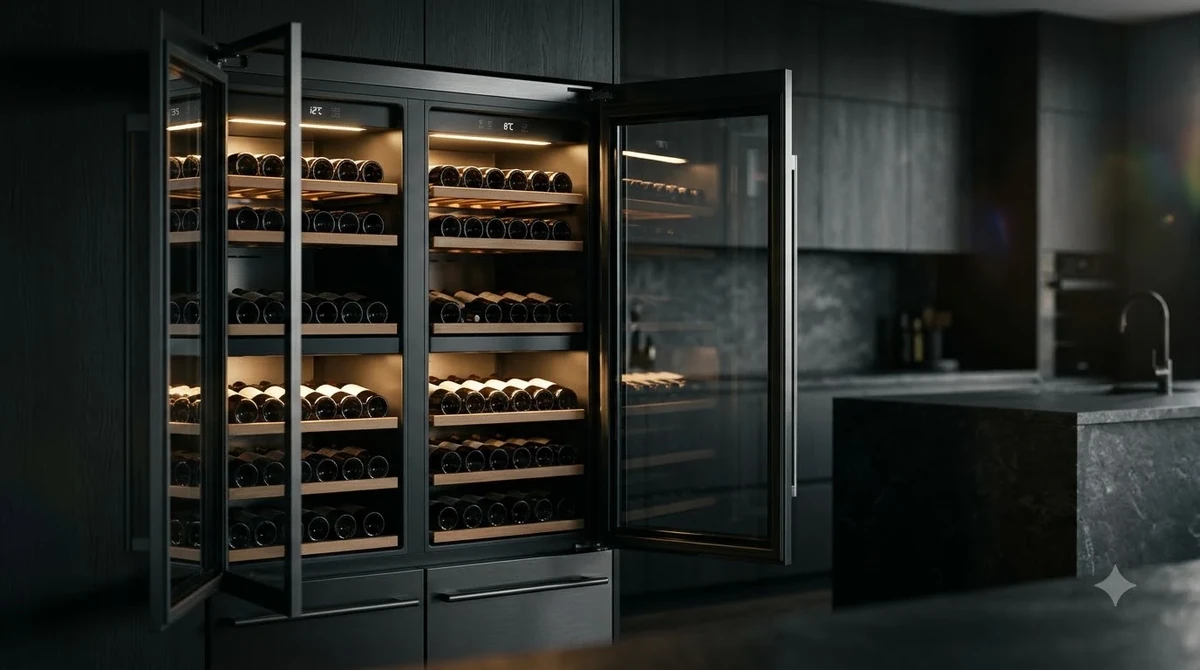
Architectural flexibility stands out in owner discussions on WineBerserkers, where collectors note that Sub-Zero units blend into custom kitchens far more naturally than utilitarian cellar cabinets. Designer Series models accept custom wood panels and handles down to tight reveals, while Classic Series columns offer signature stainless-steel grilles and pro or tubular handles that match Wolf ranges and Cove dishwashers. Soft-on LED accent lighting can remain illuminated independently of door openings across four standby brightness settings, turning a 146-bottle column into an architectural focal point without generating excess heat.
Quiet Operation and Smooth Rack Access
In open-concept kitchens and dining rooms, owners appreciate that the isolated compressor and front-venting airflow keep mechanical noise unobtrusive during normal cycling. Full-extension roller racks glide smoothly even when loaded with heavy glass bottles, and an optional writable inventory tile system clips onto the cherrywood shelf facings so you can locate specific vintages without holding the door open. Combination models like the 30-inch Designer unit with dual refrigerator drawers add 5.2 cubic feet of cold storage below the 86-bottle wine cabinet, keeping garnishes, mixers, or aperitif ingredients close at hand when preparing an aperol spritz recipe alongside chilled sparkling wine.
Multi-Decade Parts Support and Warranty Coverage
According to Yale Appliance, Sub-Zero continues stocking replacement parts for appliances going back roughly 40 years, meaning an aging built-in unit rarely becomes a total loss due to obsolete components. Every residential wine storage model includes a full two-year parts-and-labor warranty on the entire appliance, a full five-year parts-and-labor warranty on the sealed refrigeration system, and limited parts coverage on sealed-system components from years six through twelve.
Common Complaints and Real-World Drawbacks
Despite strong build quality, recurring criticisms center on the high upfront investment, strict custom panel installation tolerances, reduced real-world bottle capacity with wider Burgundy bottles, and occasional service scheduling delays. Understanding these friction points before finalizing cabinet drawings prevents costly surprises during a kitchen remodel.
High Cost and Multi-Month Factory Lead Times
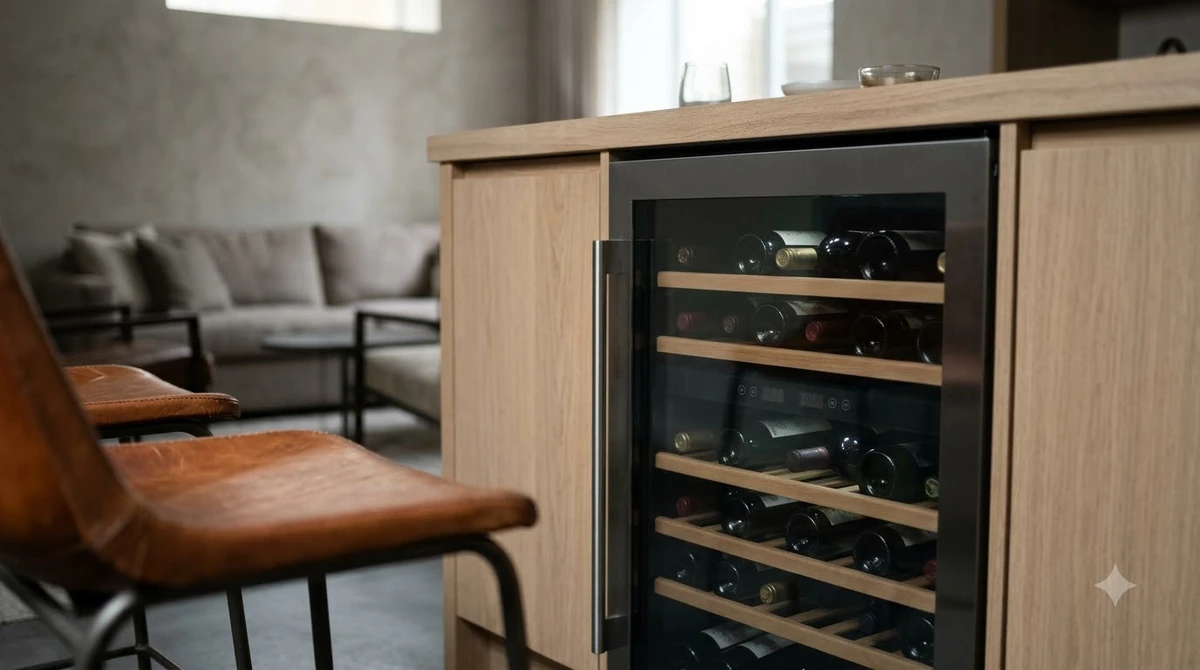
Sub-Zero sits at the top tier of residential refrigeration, and the price of the unit itself represents only part of the total project budget once custom cabinet panels, pro handles, and specialized delivery are factored in. Retail appliance dealers note that while post-pandemic supply backlogs have eased, custom Classic and Designer configurations can still require several months of factory lead time. For homeowners on a tight renovation schedule, ordering early is essential.
Sensitive Panel Alignment and Door Seal Adjustments
Appliance service data from Yale Appliance identifies custom panel installation as the single most common callback across all built-in refrigeration brands. Because Designer and Classic doors carry heavy glass plus custom millwork panels—up to 20 pounds on certain integrated doors—even a fraction of an inch of misalignment can prevent the magnetic gasket from sealing evenly. Some new owners also mistake the quiet, low-suction magnetic closure for a weak seal, or notice internal condensation during humid summer months if the door is opened frequently or left slightly ajar.
Capacity Drop with Non-Bordeaux Bottles and Maintenance Needs
Like nearly all wine refrigerators, Sub-Zero calculates its 42-bottle, 59-bottle, and 146-bottle ratings using standard 750 ml Bordeaux cylinders. Loading wider-shouldered Pinot Noir, Champagne, or Syrah bottles reduces usable capacity by roughly 15 to 25 percent, and storing magnums requires removing an entire adjacent shelf. Finally, owners must vacuum dust from the front-venting condenser behind the kickplate or upper grille every three to six months; neglecting condenser cleaning triggers temperature drift and illuminates the control panel’s service indicator.
Who Should Buy and Who Should Skip
A Sub Zero dual zone wine fridge is built for homeowners remodeling a custom kitchen, wet bar, or butler’s pantry who want furniture-grade integration, dual serving zones, and long-term parts support. Buyers seeking maximum bottle-per-dollar capacity, standalone garage placement, or ultra-high humidity for decades-long aging of rare Bordeaux should look elsewhere.
Who Should Buy
- Luxury kitchen and pantry remodelers: Homeowners pairing refrigeration with Wolf or Cove appliances or commissioning flush inset cabinetry benefit most from Sub-Zero’s 18-inch, 24-inch, and 30-inch panel-ready dimensions and custom wood shelf facings.
- Frequent entertainers who serve mixed styles: Dual independent zones let you hold Sauvignon Blanc and Champagne at 45°F while keeping Cabernet Sauvignon or Pinot Noir ready to pour at 58°F to 62°F, or chilling white wine for cooking a chicken marsala recipe.
- Long-term homeowners prioritizing serviceability: Buyers planning to stay in their home for 15 to 20 years gain peace of mind from Sub-Zero’s 5-year sealed-system warranty, 12-year limited sealed-system parts coverage, and 40-year parts inventory.
Who Should Skip
- Budget-focused or freestanding buyers: If you do not need built-in cabinetry integration or custom panels, freestanding dual-zone compressor coolers from mainstream brands deliver comparable 40°F–65°F temperature control at a fraction of the cost.
- Serious collectors aging hundreds of investment bottles: Collectors storing 200 or more bottles for 10 to 30 years often prefer dedicated passive cellars, offsite wine lockers, or high-capacity cellar cabinets that prioritize bulk racking over glass display doors.
- Renters or DIY installers without cabinetry support: Weighing between 176 pounds for a 24-inch undercounter model and 475 pounds for a 30-inch column, these units require dedicated 15-amp circuits, anti-tip brackets, and precision leveling that make casual relocation impractical.
How Sub-Zero Compares to Alternatives
When shopping in the luxury wine storage category, buyers most often cross-shop Sub-Zero against dedicated cellar specialist EuroCave and fellow built-in luxury appliance makers such as Thermador and Miele. Each brand optimizes for a different balance between architectural kitchen integration, multi-zone serving flexibility, and long-term aging conditions.
Sub-Zero vs. EuroCave
In collector discussions on WineBerserkers, experienced buyers draw a clear distinction between kitchen-integrated serving units and dedicated aging cabinets. EuroCave focuses squarely on long-term cellaring, offering single-temperature and multi-temperature cabinets with active humidity management, thick insulation, and solid or dark-tinted doors built to replicate an underground cave at 55°F. Sub-Zero, by contrast, excels at flush built-in integration with custom kitchen cabinetry, wider dual-zone serving spreads (38°F to 65°F), and nationwide residential appliance service networks. Collectors who store bottles for two to five years before opening generally favor Sub-Zero for its aesthetics and dual-zone convenience, while collectors aging grand cru Bordeaux or Burgundy for 15 to 25 years often lean toward EuroCave or climate-controlled offsite storage.
Sub-Zero vs. Thermador and Miele Built-In Columns
Within the custom kitchen column segment, Thermador Freedom and Miele MasterCool wine columns compete directly with Sub-Zero’s 18-inch and 30-inch Designer units. Thermador offers three-zone cooling on select 24-inch and 30-inch columns along with motorized push-to-open doors, while Miele provides triple-zone temperature control, SommelierSet prep accessories, and push-to-open hardware across 18-inch and 24-inch widths. Sub-Zero counters with its 30-inch 146-bottle capacity, dual-evaporator humidity isolation, Star-K Sabbath certification across Designer and Classic columns, and a long-running replacement parts commitment backed by family ownership since 1945. Buyers comparing additional Brand x Type options should weigh whether a third temperature zone matters more than Sub-Zero’s long-term service track record.
Installation, Sizing, and Care Essentials
Proper cabinet rough-in dimensions, dedicated electrical wiring, and twice-yearly condenser cleaning determine whether a Sub-Zero wine unit runs quietly for two decades or develops premature cooling strain. Planning these details with your cabinetmaker and contractor before delivery avoids costly millwork modifications.
Rough-In Dimensions, Clearances, and Electrical
According to Sub-Zero specification sheets, full-height 84-inch Classic and Designer columns require a finished opening depth of 24 inches (or 25 inches for flush inset Designer installations with 3/4-inch custom panels) and a width matching the nominal 18-inch or 30-inch chassis. Undercounter Designer units like the 24-inch DEU2450W and 15-inch DEU1550W measure 34 1/2 inches high by 23 1/8 inches deep, fitting standard American base cabinet cutouts with a 4-inch toe kick. Every model requires a dedicated 115-volt, 60 Hz, 15-amp circuit with a grounded three-prong outlet positioned within the rear service zone, plus factory-supplied anti-tip brackets anchored into wall studs or masonry.
Routine Maintenance and Temperature Management
Because Sub-Zero units vent warm air through the front grille or base kickplate rather than the rear, zero rear clearance is needed—but the front condenser coils must remain free of pet hair and kitchen dust. Sub-Zero’s use and care manual instructs owners to turn off power at the control panel, remove the grille or kickplate, and vacuum the condenser fins with a soft brush attachment every three to six months. Magnetic door gaskets should be wiped quarterly with warm water and mild soap to maintain an airtight seal, and bottles should rest horizontally so wine stays in continuous contact with the cork. When stocking sparkling wines for warm-weather entertaining—such as Prosecco for a hugo spritz recipe—place those bottles in the upper 45°F zone while keeping full-bodied reds in the lower 55°F to 60°F zone.
Frequently Asked Questions
Can you reverse the door swing on a Sub Zero dual zone wine fridge?
No, Sub-Zero wine storage models are built with a fixed left-hinge or right-hinge factory orientation and cannot be converted in the field. You must specify the exact hinge side (such as DEU2450WR for right hinge or DEU2450WL for left hinge) when placing your order so the door opens cleanly away from adjacent walls or islands.
Does a Sub-Zero wine cooler work in a garage or outdoor kitchen?
According to Sub-Zero installation specifications, standard indoor wine storage models are engineered for conditioned indoor living spaces and should not be installed in unheated garages or exposed patios. For outdoor kitchens, Sub-Zero manufactures a separate stainless-steel outdoor undercounter wine storage model (DEU2450W/O) rated for exterior ambient conditions.
What happens during a power outage in a Sub-Zero wine unit?
Sub-Zero’s microprocessor retains your preset upper and lower zone temperatures in non-volatile memory, automatically resuming cooling to those exact targets once power returns. Keeping the bronze-tinted thermal glass door closed during an outage helps preserve internal temperatures for several hours thanks to the magnetic gasket seal and insulated cabinet walls.
Do Sub-Zero wine fridges have a Sabbath mode?
Yes, Sub-Zero Designer and Classic wine storage columns are Star-K certified and include a built-in Sabbath mode accessible through the control panel. Activating Sabbath mode disables interior LED lights, display readouts, audible door alarms, and user-initiated cycle changes while allowing the cooling system to maintain safe storage temperatures.
How noisy is a Sub-Zero dual zone wine fridge in an open kitchen?
Sub-Zero isolates its compressor on vibration-dampening mounts and uses variable-speed fans so operating sound blends into normal household background noise. Brief, soft humming or faint refrigerant flow sounds are normal during active cooling cycles, whereas loud rattling usually indicates a loose kickplate or unlevel cabinet feet.
The Sub Zero dual zone wine fridge lineup stands out for homeowners who want architectural built-in integration, one-degree microprocessor precision across two independent zones, and multi-decade parts support. If your remodel budget and timeline accommodate custom panel installation and dedicated electrical prep, either the 24-inch undercounter unit or the 30-inch column will protect and serve a diverse wine collection for years to come.
More in Model Reviews
 Magic Chef 44 Bottle Wine Cooler Review for Flexible StorageUpdated Nov 21, 2026
 Whynter 164 Bottle Wine Cooler Review: Capacity, Features, and FitUpdated Nov 21, 2026
 Insignia NS WC16BK6 Review: Compact 16-Bottle Wine StorageUpdated Nov 21, 2026
 Wine Enthusiast Electric Blue Omega Review: Opening, Pouring, and Preserving Made EasierUpdated Nov 21, 2026
 Koolatron 20 Bottle Wine Cooler Review: Features, Fit, and PerformanceUpdated Nov 21, 2026
 NewAir AWC 330E Review for Home Wine StorageUpdated Nov 21, 2026