
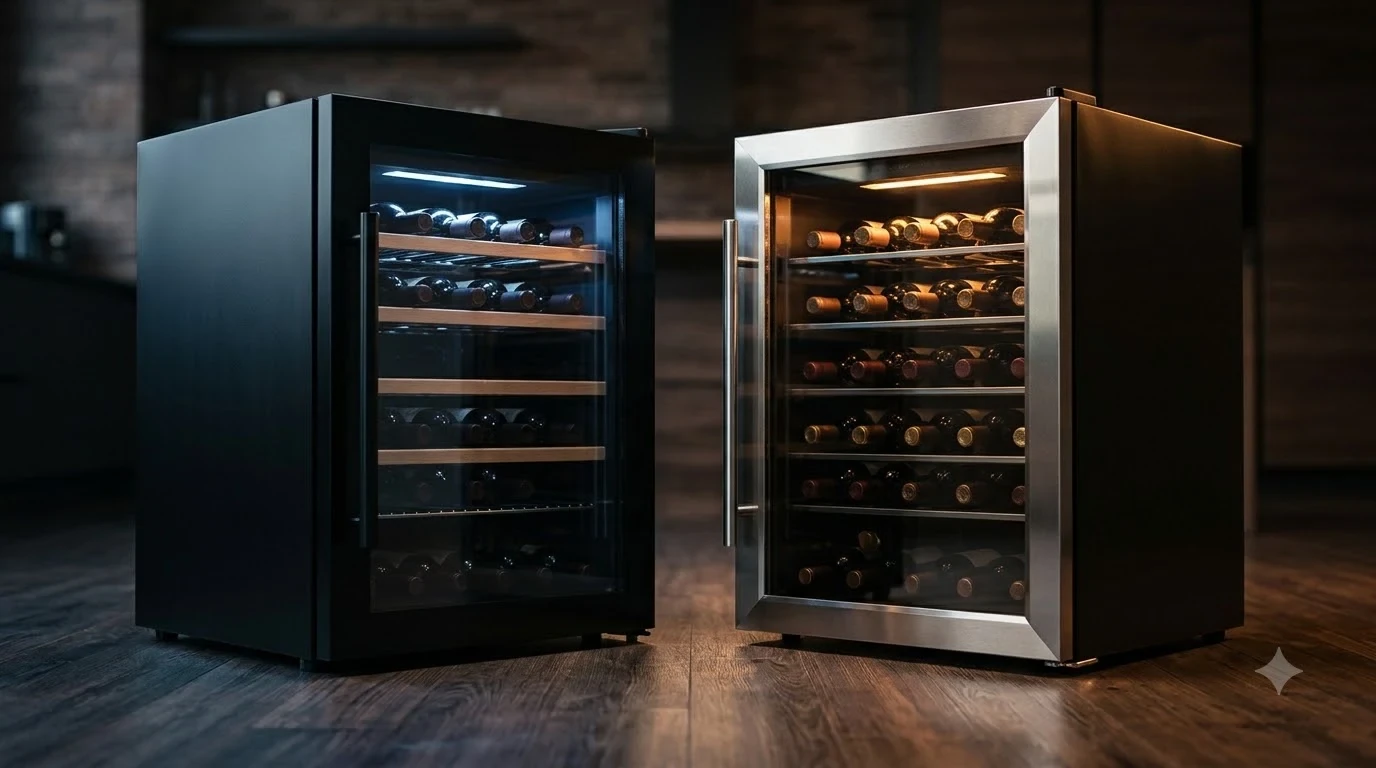

We may earn a commission when you buy through links on this page, at no extra cost to you. Learn more.
The sub zero beverage cooler is a premium undercounter refrigeration option for homeowners who want organized drink storage, adjustable shelving, and an integrated kitchen appearance. The Sub-Zero UC-24BG family offers 6 cubic feet of refrigerator capacity, adjustable glass shelving, wine storage, and a glass-door design. However, these UC-24 models are discontinued, making availability, condition, replacement parts, and installation compatibility essential considerations before purchasing one.
Sub-Zero has a strong presence in premium kitchen refrigeration, and its undercounter beverage centers were designed to make chilled drinks accessible without taking up space in a full-size refrigerator. The UC-24BG is particularly interesting because it combines beverage storage with a dedicated wine rack and a display-style glass door. This review examines the model’s specifications, everyday practicality, potential ownership concerns, and the details worth checking before buying a new-old-stock or previously owned unit.
Specs and Key Features
The Sub-Zero UC-24BG is a 24-inch undercounter beverage center designed for built-in installation. Its combination of adjustable shelves, dedicated wine storage, temperature control, and illuminated glass-door presentation makes it suitable for a kitchen, entertaining area, or home bar.
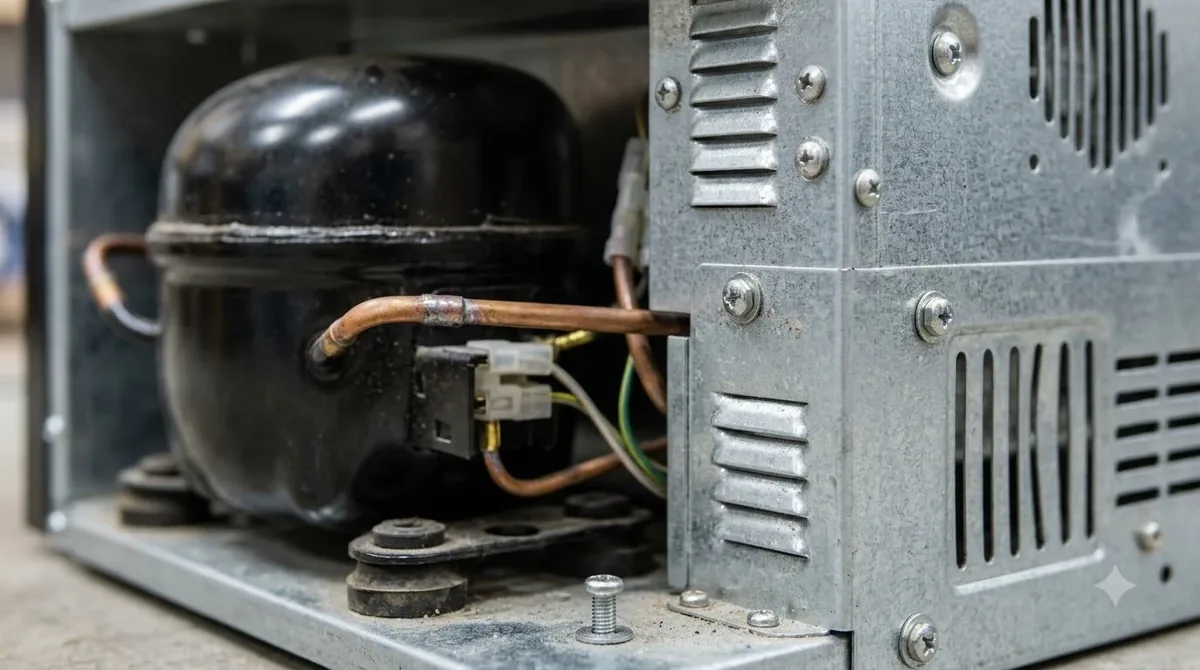
The UC-24BG/O is the panel-ready configuration, while the UC-24BG/S is associated with the stainless-door configuration. Both belong to the same general undercounter beverage-center family. The distinction matters because the door finish and cabinetry integration affect the appearance of the finished installation, even though the central storage purpose remains similar.
Sub-Zero lists the UC-24BG/O with 6 cubic feet of refrigerator capacity and a stated wine storage capacity of 8 bottles. That combination is useful for households that want a mixture of chilled cans, bottled drinks, mixers, and a smaller wine collection. The wine capacity should not be confused with total beverage capacity: the actual number of cans and bottles depends on their dimensions and how the adjustable shelves are arranged.
| Specification | Sub-Zero UC-24BG/O |
|---|---|
| Appliance type | Undercounter beverage center |
| Exterior width | 23 7/8 inches |
| Exterior height | 34 inches |
| Exterior depth | 24 inches |
| Refrigerator capacity | 6 cubic feet |
| Wine storage capacity | 8 bottles |
| Glass shelving | 3 shelves |
| Adjustable glass shelves | 2 shelves |
| Wine storage rack | 1 adjustable rack |
| Storage bin | 1 |
| Electrical supply | 115 VAC, 60 Hz |
| Electrical service | Dedicated 15-amp circuit |
| Annual energy consumption | 314 kWh |
| Shipping weight | 168 pounds |
These figures come from the manufacturer’s published product specifications for the UC-24BG/O. The stainless-door UC-24BG/S has its own specification documentation, so buyers should confirm the precise model suffix before ordering accessories or planning cabinetry. The official Sub-Zero UC-24BG product information provides a useful starting point for checking the original configuration and documentation.
Temperature control is another central feature. Sub-Zero specifies control within one degree of the selected setpoint, while magnetic door seals help retain cold air. This precision is useful for keeping different beverages consistently chilled, although it does not turn the appliance into a dedicated wine-aging cabinet with independently controlled wine-storage zones.
The lighting also contributes to the design. Soft-on LED illumination has adjustable brightness, allowing the contents to remain visible without requiring a bright overhead light. For a kitchen island, entertainment room, or home bar, that presentation can be as important as the storage arrangement.
What Owners Like
The strongest reasons to consider the Sub-Zero beverage center are its built-in appearance, flexible interior, and combination of beverage and wine storage. It is designed for homeowners who value an integrated kitchen rather than a freestanding refrigerator placed beside a counter.
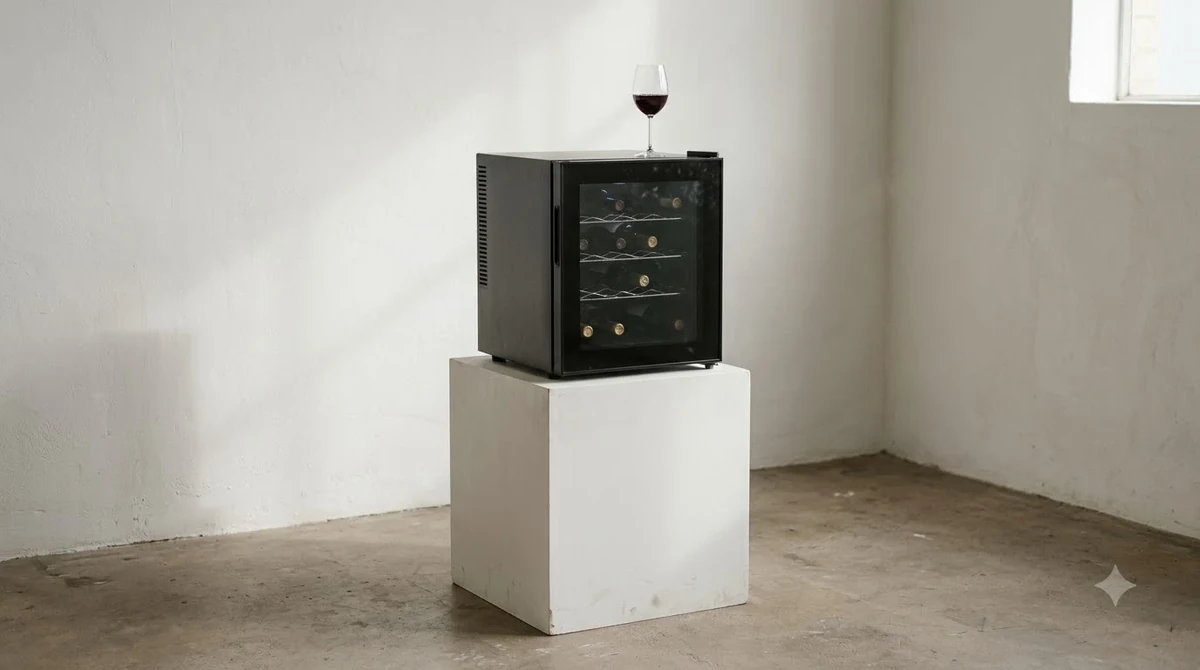
The first advantage is the compact undercounter format. At 23 7/8 inches wide and 34 inches high, the UC-24BG was designed around standard 24-inch cabinetry planning. Its dimensions make it a practical option for a dedicated beverage station, provided the existing cabinet opening matches the installation requirements. The finished result can look considerably more integrated than a countertop drink refrigerator or a freestanding appliance.
The second advantage is the interior arrangement. The three glass shelves provide flexible space for beverages and other refrigerated items, while two adjustable shelves allow the storage layout to change. The separate wine rack creates a designated place for wine bottles rather than forcing every bottle onto a flat shelf.
This arrangement is particularly useful for households that entertain regularly. A homeowner might use the upper shelves for cans and mixers, reserve another shelf for bottled water, and keep wine on the dedicated rack. The storage bin offers another location for smaller items that could otherwise become scattered around the cabinet.
Another appealing feature is the glass door. It provides a view of the contents without requiring the door to be opened every time someone wants to find a drink. The magnetic seals are intended to help keep cold air inside, while the soft-on LED lighting makes the interior easier to see.
The manufacturer’s temperature-control specification is also attractive. Control within one degree of the setpoint suggests that the appliance was designed for consistent refrigeration rather than occasional cooling. That is particularly relevant for frequently used beverage stations where doors may be opened several times during a gathering.
Some of the practical details are easier to appreciate through specialist repair information than through a basic product specification sheet. A Sub-Zero repair specialist describes the UC-24BG’s roller wine racks as having cherrywood-facing details and identifies an interior accent-light switch. These details reinforce the appliance’s emphasis on presentation and organization.
The door alarm is another useful feature for a busy household. According to the specialist’s UC-24BG information, the alarm sounds when the door remains open beyond 60 seconds. That can help draw attention to an improperly closed door after someone retrieves a drink or restocks the shelves.
However, prospective buyers should distinguish between published specifications and broad owner satisfaction. The available manufacturer documentation establishes the design and capabilities, but it does not establish a current owner-review consensus or guarantee that an older individual appliance will perform like a new unit. Condition, installation, and maintenance history remain important.
For buyers who already have compatible Sub-Zero cabinetry, matching the appliance to the surrounding kitchen can be a significant advantage. A panel-ready configuration can coordinate with cabinet fronts, while the stainless version offers a more conventional appliance appearance.
Common Complaints
The most significant drawback is that the UC-24BG belongs to a discontinued product family. Buyers should approach it as a legacy appliance rather than assume that it is a currently manufactured model with unrestricted availability and straightforward replacement options.
Sub-Zero’s official undercounter production timeline identifies the UC undercounter series as no longer in production. The UC-24BG/O production run ended in 2020, and several UC-24BG/S configurations also have a listed final production year of 2020. This makes the age of any available unit an important part of the purchasing decision.
Discontinued status does not automatically make an appliance a poor purchase. A properly maintained unit may still serve its intended purpose. Nevertheless, buyers should understand that an older beverage center may require more attention than a newly manufactured appliance, particularly if it has experienced heavy use or inadequate maintenance.
Parts availability is another concern. Sub-Zero continues to provide product documentation and directs customers toward authorized dealers and parts distributors, but the existence of an old manual does not guarantee that every component remains available. Before committing to a used UC-24BG, ask a qualified service provider about the availability of important components for that particular serial number.
Door seals deserve particular attention. A damaged or flattened gasket can allow warm, humid room air into the cabinet. This may contribute to condensation, frost, inconsistent temperatures, and longer compressor operating periods. Inspect the entire perimeter rather than checking only the handle side of the door.
The condenser also requires routine maintenance. A specialist repair resource locates the condenser behind the kickplate and recommends cleaning it every three to six months. Dust accumulation can interfere with heat removal and contribute to excessive operating time. A neglected condenser is therefore a meaningful concern when evaluating an older appliance.
Another limitation is storage specialization. Although the manufacturer specifies 8 bottles of wine, the UC-24BG is primarily a beverage center, not a large wine cellar. Its combination of wine racks and general-purpose shelves is convenient, but a serious collector may prefer a dedicated wine refrigerator with a more wine-focused storage arrangement.
The electrical and installation requirements also deserve attention. The UC-24BG/O requires a 115 VAC, 60 Hz supply and a dedicated 15-amp circuit. An attractive secondhand appliance can become an expensive project if the existing kitchen wiring or cabinetry needs substantial modification.
Finally, the 168-pound shipping weight listed by Sub-Zero illustrates why installation should not be treated as a casual DIY project. Moving and positioning the appliance requires appropriate handling, especially when it must fit into finished cabinetry without damaging the surrounding surfaces.
Tip: Before purchasing a used UC-24BG, obtain a photograph of its model and serial number, request a demonstration of the cooling system, inspect the door gasket, and ask when the condenser was last cleaned. A professional inspection is particularly sensible if the appliance has been stored unused or disconnected for an extended period.
Who Should Buy and Who Should Skip
The Sub-Zero beverage center makes the most sense for buyers who already have a suitable undercounter opening and want a built-in refrigerator for drinks. Its glass door, adjustable shelving, and dedicated wine rack offer a practical combination for a kitchen or home entertainment space.
Existing Sub-Zero owners may have an additional reason to consider it. If their kitchen already uses compatible cabinetry and appliance finishes, a matching beverage center can preserve the original design. However, matching the appearance is only one part of the decision. The exact model, hinge configuration, electrical supply, and opening dimensions still need to be verified.
Buyers who regularly host guests may appreciate having drinks separated from the main kitchen refrigerator. Soft drinks, bottled water, mixers, and wine can remain accessible without requiring guests to enter the main food-storage area. The glass door and interior lighting also make it easier to identify what needs restocking.
A separate beverage station can also support cocktail preparation. Homeowners who enjoy serving an Aperol Spritz can use the cooler to organize chilled sparkling wine, mixers, and other refrigerated ingredients alongside everyday drinks. The appliance’s mixed-storage arrangement is more useful for this purpose than a cabinet dedicated exclusively to wine bottles.
It is also worth considering households that use a dedicated beverage station for everyday routines. A separate refrigerator can reduce repeated trips to the main refrigerator, particularly in an open-plan kitchen where the beverage center is positioned near an island or dining area.
On the other hand, buyers seeking a new appliance with a current production warranty should be cautious. The UC-24BG is discontinued, and any available example may be old stock, refurbished, or previously installed. Those descriptions are not interchangeable. Each has different implications for condition, service history, and warranty coverage.
Wine collectors should also think carefully about capacity. Eight bottles of stated wine storage is relatively modest for anyone maintaining a varied collection. A dedicated wine refrigerator may be more appropriate if the main purpose is organizing bottles by grape, region, vintage, or serving temperature.
Likewise, buyers who primarily want a low-cost refrigerator for cans may be paying for features they do not need. The Sub-Zero’s cabinetry integration, glass-door presentation, and premium appliance positioning are valuable mainly if those characteristics matter to the kitchen design.
Renters and homeowners without an existing undercounter opening should generally avoid treating this as a simple plug-in alternative to a compact freestanding cooler. Built-in appliances require careful planning around ventilation, cabinet dimensions, electrical connections, and door movement.
Those considering a used appliance should also calculate the total ownership commitment rather than focus solely on its purchase condition. Professional delivery, installation, replacement seals, maintenance, and potential service work can affect the overall value substantially.
For a broader comparison of dedicated wine-storage options and different cabinet sizes, the best rated wine cooler guide is a useful place to explore alternatives. It can help clarify whether a beverage center or a wine-focused appliance better matches the intended use.
How It Compares to Alternatives
The UC-24BG occupies a specific position between a general-purpose refrigerator and a dedicated wine-storage appliance. Its main distinction is the combination of undercounter integration, general beverage shelving, and a separate wine rack rather than a single-purpose interior.
A dedicated wine refrigerator is the more natural choice for someone whose primary requirement is bottle storage. Wine-focused cabinets typically organize bottles around rack spacing and bottle orientation. They may also offer temperature arrangements designed specifically for wine service or longer-term storage, depending on the appliance.
The Sub-Zero beverage center is more versatile for mixed drinks. Its glass shelving provides a useful location for cans, bottled water, and mixers, while its wine rack provides limited dedicated bottle storage. For a family that drinks a mixture of beverages, this balance may be more useful than an interior designed exclusively around wine bottles.
A conventional undercounter refrigerator is another category to consider. It can provide general chilled storage, including space for beverages and selected food items, but may not include the same dedicated wine-storage arrangement or glass-door presentation. The right choice depends on whether visibility, bottle organization, or general-purpose refrigeration matters most.
Freestanding beverage refrigerators offer a different type of flexibility. They are often easier to position in a home bar or entertainment room because they do not necessarily require a permanent cabinet opening. However, the finished appearance may not be as integrated as a built-in appliance, and their dimensions may not match an existing 24-inch cabinetry space.
Sub-Zero’s own UC-24 technical documentation also makes an important distinction between its beverage center and other undercounter configurations. The manual describes the UC-24C as a refrigerator-freezer combination and the UC-24R as an all-refrigerator configuration. The UC-24RO is an outdoor-use all-refrigerator model. These are different appliance types, not interchangeable versions of the beverage center.
This distinction is important when browsing secondhand listings. A seller may describe an appliance simply as a Sub-Zero undercounter refrigerator, but that description does not establish that it is a UC-24BG beverage center. The complete model number is necessary to identify the intended configuration and relevant documentation.
The panel-ready UC-24BG/O and stainless UC-24BG/S also deserve separate consideration. The panel-ready version is intended to accommodate a coordinated cabinet appearance, while the stainless configuration provides a finished appliance door. Neither should be selected without checking the available hinge orientation and the actual opening.
For more appliance-specific evaluations, browse our Brand x Type model reviews to compare different product categories, configurations, and practical ownership considerations.
For people planning a complete entertaining area, the choice can also affect how the refrigerator fits into the rest of the space. A dedicated wine cabinet may work better beside a dining area, while a mixed beverage center may be more convenient near a kitchen island. The ideal arrangement depends on what is stored and how frequently the appliance is accessed.
Sub-Zero’s legacy status means that comparing the UC-24BG with a currently manufactured appliance should involve more than a feature checklist. Consider current warranty availability, service support, electrical requirements, dimensions, and replacement-part access. A newer appliance with fewer premium design details may offer a more straightforward ownership experience.
There is no universally superior configuration. The UC-24BG is most compelling when its built-in format and mixed beverage storage solve a specific design requirement. If those advantages are not important, a dedicated wine refrigerator or a simpler beverage cooler may provide a better match.
Frequently Asked Questions
Is the Sub-Zero UC-24BG the same as the UC-24BG/O?
UC-24BG is the general model-family designation, while UC-24BG/O identifies a particular panel-ready configuration. The suffix matters for cabinetry and replacement-accessory compatibility. Buyers should use the complete model number when requesting service documentation or parts.
Where can I find the model and serial number?
A specialist repair resource identifies the product identification tag inside the cabinet near the upper-left area. Photographing the complete label is helpful when contacting customer support. The serial number can assist with identifying the appliance’s manufacturing history and checking the correct service information.
Does the UC-24BG have a Sabbath mode?
The specialist repair information identifies Sabbath mode as one possible reason the interior lighting may remain off. This is a separate operating setting from the cooling function. If the cabinet remains cold but the lighting does not operate, the control setting and interior light switch are reasonable items to investigate.
Can a Sub-Zero beverage center be installed outdoors?
Not every undercounter model is intended for outdoor use. Sub-Zero’s technical documentation distinguishes the UC-24RO outdoor all-refrigerator from the UC-24B beverage center. An indoor beverage-center model should not be assumed suitable for an exposed outdoor installation.
How can buyers identify a genuine Sub-Zero replacement part?
Use the complete model and serial information when contacting a Sub-Zero-authorized parts distributor. The manufacturer directs customers to its parts-distributor network for genuine components. Confirm compatibility before ordering because similar-looking undercounter models can use different interior components and accessories.
The Sub-Zero UC-24BG remains an interesting choice for a built-in beverage station, especially for homeowners who value its glass-door presentation and flexible storage arrangement. Its discontinued status makes careful inspection, model verification, and service planning essential before purchase. If the dimensions and configuration suit the kitchen and the individual appliance is in good condition, it can still be a useful addition to a well-planned entertaining space.
More in Model Reviews
 Magic Chef 44 Bottle Wine Cooler Review for Flexible StorageUpdated Nov 21, 2026
 Whynter 164 Bottle Wine Cooler Review: Capacity, Features, and FitUpdated Nov 21, 2026
 Insignia NS WC16BK6 Review: Compact 16-Bottle Wine StorageUpdated Nov 21, 2026
 Wine Enthusiast Electric Blue Omega Review: Opening, Pouring, and Preserving Made EasierUpdated Nov 21, 2026
 Koolatron 20 Bottle Wine Cooler Review: Features, Fit, and PerformanceUpdated Nov 21, 2026
 NewAir AWC 330E Review for Home Wine StorageUpdated Nov 21, 2026