

We may earn a commission when you buy through links on this page, at no extra cost to you. Learn more.
The sub zero 18 inch wine fridge is a premium built-in wine storage column that holds up to 59 bottles and offers two independent temperature zones for organizing red and white wines. The current model is the DEC1850W Designer Series, featuring a panel-ready exterior, UV-resistant glass, full-extension racks, and connected controls. It is particularly attractive for luxury kitchens with a dedicated 18-inch cabinet opening, although its substantial weight, installation requirements, and specialized design make it a more considered purchase than a freestanding wine cooler.
Sub-Zero’s 18-inch wine column is designed for homeowners who want wine preservation to become part of the kitchen rather than another countertop or freestanding appliance. Its narrow footprint makes it useful where cabinet space is limited, while its full-height design provides considerably more storage than a typical compact wine refrigerator. This review examines the DEC1850W, explains how it differs from the older IW-18, and considers the practical advantages and limitations buyers should understand before planning an installation.
Specs and Key Features
The Sub-Zero DEC1850W combines a 59-bottle capacity, dual temperature zones, and integrated cabinetry compatibility in an 18-inch-wide appliance. Its main advantage is the combination of storage organization and kitchen integration rather than simply providing a cold place for bottles.
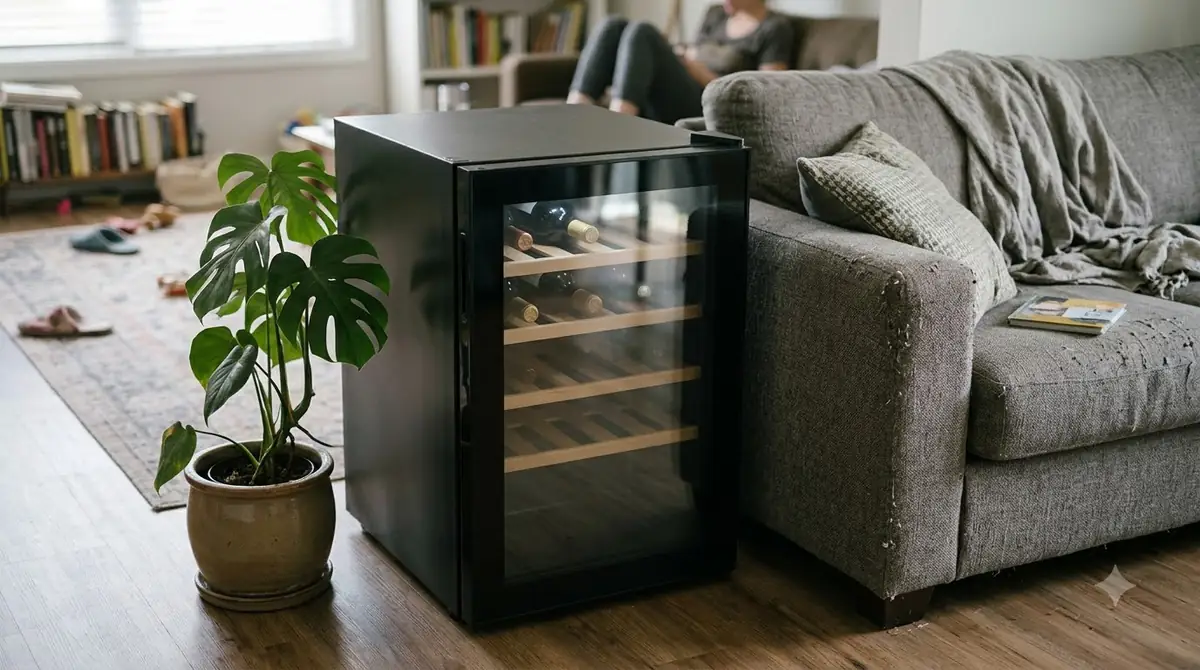
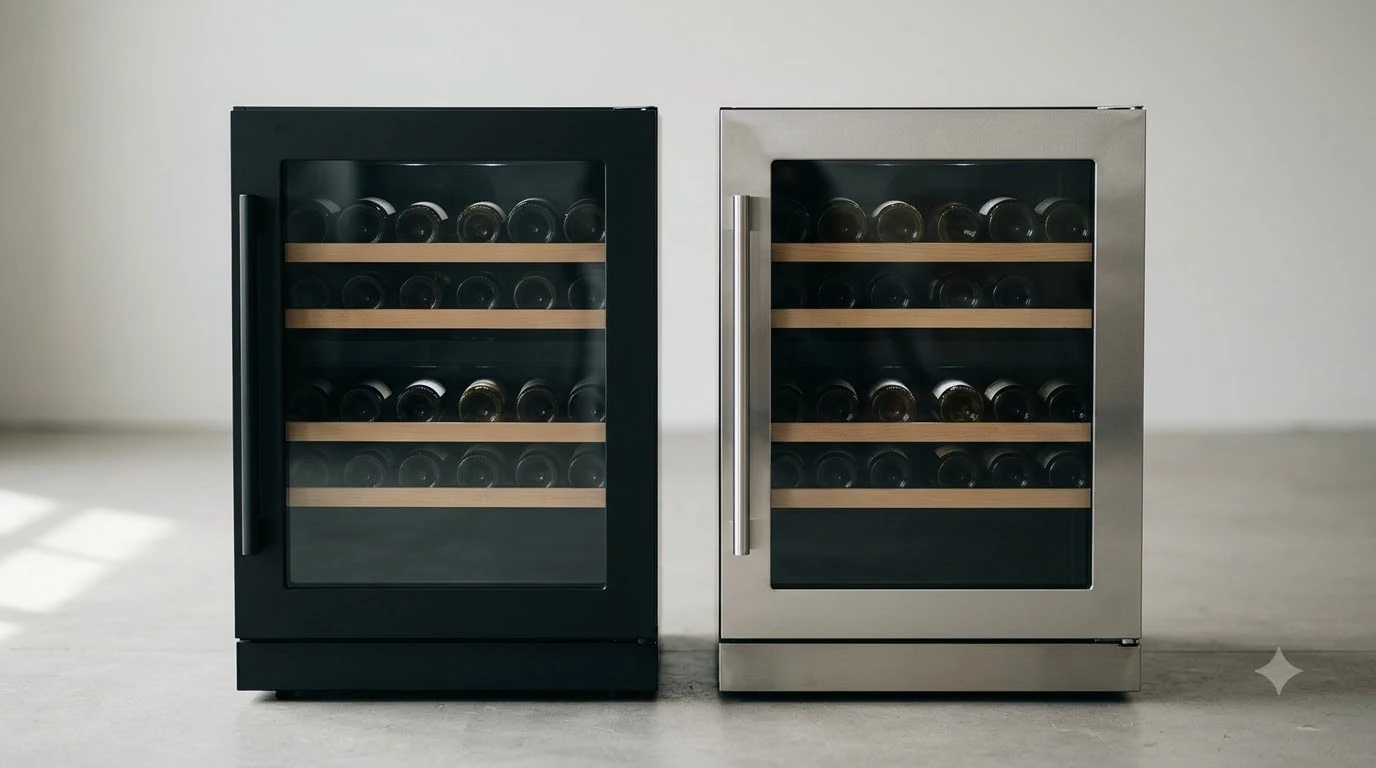
The current Designer Series model is intended for permanent built-in installation. Its 84-inch height gives it the proportions of a tall kitchen column, while the panel-ready front allows the appliance to coordinate with surrounding cabinets. The glass door also offers a view of the collection without requiring the door to remain open.
According to Sub-Zero’s product specifications, the DEC1850W includes 15 racks with stainable fronts, one illuminated display shelf, LED interior lighting, and an inventory tile system. Full-extension racks provide access to standard bottles, half bottles, and magnums. This arrangement is useful for collections containing different wine formats rather than exclusively standard 750 ml bottles.
Two independent temperature zones are another important feature. They allow reds and whites to be maintained at different serving temperatures instead of forcing every bottle into one setting. Sub-Zero states that the zones maintain temperatures within one degree of the setpoint, making temperature consistency a central part of the product’s positioning.
The appliance also includes a UV-resistant glass door. Light exposure is an important consideration for wine storage, particularly for bottles kept in a visible kitchen location. The glass provides a viewing window while offering protection against harmful light exposure.
Connected controls add another layer of convenience. Sub-Zero describes remote temperature adjustment, door-left-ajar notifications, and remote service diagnostics through its Owner’s App. These functions are useful for homeowners who want to monitor a dedicated wine appliance without repeatedly checking its controls.
| Specification | Sub-Zero DEC1850W |
|---|---|
| Product category | Built-in wine storage column |
| Width | 18 inches |
| Height | 84 inches |
| Depth | 24 inches |
| Capacity | 59 bottles |
| Temperature zones | 2 independent zones |
| Wine racks | 15 |
| Display shelf | 1 illuminated shelf |
| Interior lighting | LED |
| Weight | 350 pounds |
| Electrical supply | 115 VAC, 60 Hz |
| Electrical service | Dedicated 15-amp circuit |
| Standard cabinet opening | 18″W x 84″H x 25″D |
| Door configurations | Left hinge or right hinge |
These specifications are particularly important because the DEC1850W is not an undercounter refrigerator. Its 84-inch height and 350-pound weight require advance planning for cabinetry, delivery, electrical service, and final positioning. The required opening depth is also greater than the appliance’s listed exterior depth.
For additional technical information, the official Sub-Zero DEC1850W product information provides the manufacturer’s feature descriptions and configuration details.
One distinction matters when researching this appliance: the current DEC1850W should not be confused with the discontinued IW-18. Both models share an 18-inch width and 59-bottle capacity, but their production histories and individual specifications differ. Buyers looking at used appliances should establish the exact model before comparing features or arranging installation.
What Owners Like
The strongest reasons to consider the Sub-Zero 18-inch column are its cabinetry integration, separate wine zones, and organized bottle access. These features address practical requirements for homeowners who maintain a regular wine collection and want the refrigerator to fit into a coordinated kitchen design.
Integrated kitchen appearance
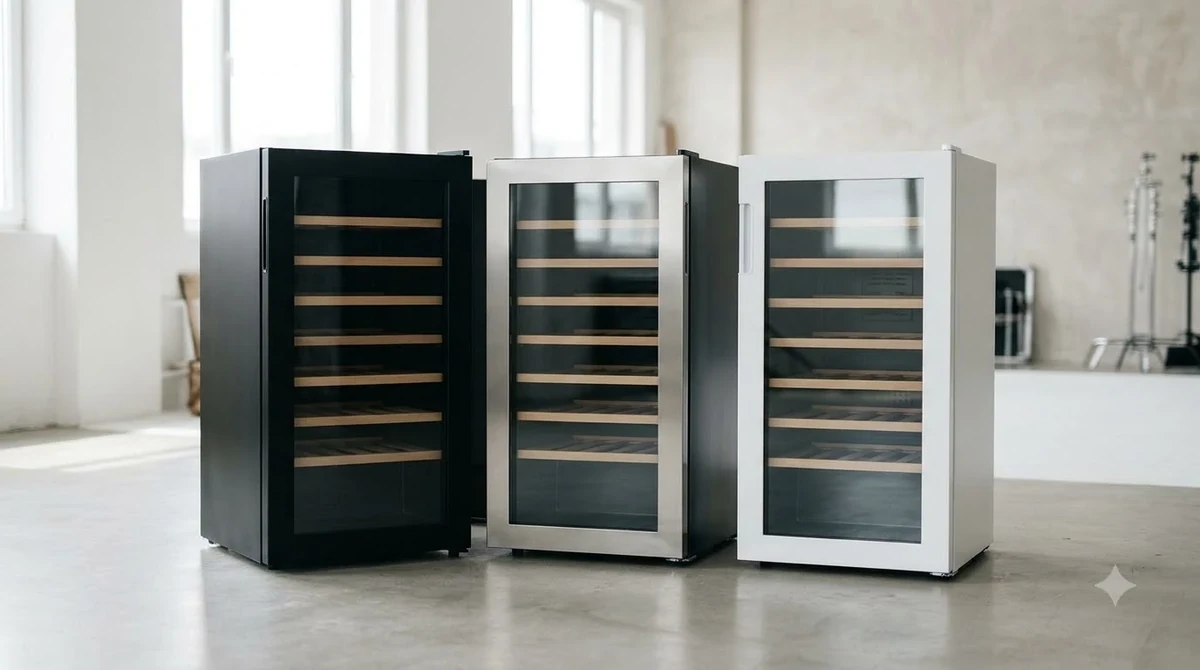
The panel-ready design is a major attraction. Rather than requiring a permanently visible stainless-steel exterior, the DEC1850W can accept a custom cabinet panel that matches the surrounding kitchen. This is particularly appealing in contemporary kitchens where tall appliances, pantry cabinets, and refrigeration columns share a consistent appearance.
Sub-Zero also offers stainless-steel door panel and handle accessories. That gives homeowners another design direction if they prefer a visible appliance finish rather than a concealed cabinet front. The choice can be made alongside the cabinetry and hardware specifications rather than treated as an afterthought.
Separate storage temperatures
Two temperature zones provide more flexibility than a single-temperature wine refrigerator. A collection containing Cabernet Sauvignon, Pinot Noir, Chardonnay, Sauvignon Blanc, and sparkling wines can have different serving requirements. Separate zones allow owners to organize bottles around their intended use rather than selecting one compromise temperature.
For example, light whites and rosé are generally served around 45 to 50 degrees Fahrenheit, while full-bodied reds are usually served around 60 to 65 degrees. Sparkling wines generally benefit from colder serving temperatures of approximately 40 to 50 degrees. The exact settings depend on whether the priority is long-term storage or ready-to-serve temperatures.
For households that entertain frequently, this distinction can make the appliance more useful. Guests can choose between a chilled white and a red without requiring bottles to be transferred between separate refrigerators before serving.
Access to different bottle formats
The full-extension racks are designed to make bottles easier to reach. This is useful in a tall cabinet because bottles at the back of a deep shelf can otherwise become inconvenient to retrieve. Sub-Zero also identifies standard bottles, half bottles, and magnums as compatible formats.
Wine collections rarely remain uniform for long. A homeowner might store everyday Chardonnay alongside larger-format bottles of Champagne or a few special-occasion reds. The ability to accommodate different bottle sizes is a useful advantage when organizing such a collection.
Visibility and collection organization
LED lighting and the illuminated display shelf give the collection a more intentional presentation. The display shelf can make selected bottles easier to identify, while the inventory tile system provides a way to organize individual positions. These details are particularly relevant to collectors who maintain bottles for different occasions or keep track of wines that are approaching their preferred drinking windows.
The UV-resistant glass also makes the visible design more practical. A glass-front appliance can showcase a collection without exposing it to the same direct light conditions as an ordinary display cabinet.
However, these are feature-based advantages rather than a guarantee of universal owner satisfaction. Public retailer listings establish the product specifications, but they do not provide enough consistent, detailed owner feedback to conclude that every buyer has the same experience with noise, reliability, or long-term maintenance.
Common Complaints
The most significant potential drawbacks are the specialized installation, limited capacity relative to the appliance’s overall size, and premium appliance commitment. The DEC1850W is designed for a particular kitchen layout, so its strengths can become disadvantages if the available space or wine collection does not match its intended use.
The 59-bottle capacity has limits
Although 59 bottles is substantial for a narrow wine column, it is not necessarily sufficient for a serious collector. A household that purchases several cases at a time or maintains separate collections for everyday drinking and long-term aging may quickly outgrow this capacity.
Actual capacity also depends on the bottles being stored. The manufacturer’s stated figure is a useful reference, but larger Burgundy bottles, Champagne bottles, and magnums can change how efficiently the available rack positions are used. A collection dominated by wider bottles should not be planned around the assumption that every position will accommodate every format in the same way.
Installation requires careful preparation
The appliance is 350 pounds, making delivery and installation more complicated than positioning a small freestanding cooler. The installer must account for access through doorways, flooring, cabinetry, appliance positioning, and the final electrical connection.
The 25-inch cabinet opening depth is especially important. A cabinet space that appears to accommodate an appliance with a 24-inch exterior depth may still be unsuitable if the required opening and surrounding installation details have not been planned correctly.
The electrical requirements also need attention. The manufacturer specifies 115 VAC at 60 Hz and a dedicated 15-amp circuit. A general-purpose outlet or an incorrectly positioned receptacle should not be assumed to meet the installation requirements.
Custom panels are a separate design consideration
Panel-ready does not automatically mean that a finished decorative cabinet door is included. The custom panel and appropriate handle configuration must be planned with the kitchen designer or authorized dealer. Panel dimensions, thickness, weight, and clearances are important because an unsuitable panel can interfere with door operation.
Buyers who want a ready-to-use stainless-steel appliance should also confirm which door kit and handle configuration are included in their selected package. The base model’s panel-ready description should not be interpreted as confirmation that every finish accessory comes in the box.
Premium ownership requires service planning
A tall built-in wine column is a specialized appliance, so replacement and servicing are more involved than with a basic countertop cooler. Its integrated installation can make access to components more complicated if the surrounding cabinetry has not been designed with appropriate service considerations.
The connected features are useful, but they should not be the sole reason to purchase the unit. Remote controls and notifications depend on compatible connectivity and the supporting app experience. Buyers who primarily want stable wine storage should give more attention to temperature management, installation quality, and available local service support.
There is also a practical distinction between the advertised bottle count and the amount of usable storage a household experiences. Owners who routinely buy large-format bottles should plan for a smaller effective collection size than the nominal 59-bottle figure.
Who Should Buy and Who Should Skip
The DEC1850W makes the most sense for homeowners planning a premium built-in kitchen and maintaining a wine collection of moderate size. It is less suitable for buyers who need inexpensive storage, frequent relocation, or a large capacity without a dedicated full-height cabinet space.
Who should buy it?
Luxury kitchen renovators: The panel-ready front is a strong fit for projects involving integrated refrigeration, coordinated cabinet finishes, and tall appliance columns. If an 18-inch opening is already included in the kitchen plan, the DEC1850W offers a purpose-built way to use that space.
Regular wine drinkers: A 59-bottle collection is enough to maintain a useful selection for many households. Owners who regularly drink both red and white wine can benefit from two temperature zones, particularly if they entertain at home.
Design-conscious collectors: The combination of UV-resistant glass, LED lighting, wood-fronted racks, and a display shelf makes the appliance suitable for people who want their wine collection to be visible without sacrificing integrated kitchen design.
Homeowners who value connected appliance controls: The Owner’s App offers remote temperature adjustments and door notifications. These functions may be useful for people who want additional oversight of their wine storage.
Who should skip it?
Apartment dwellers with limited space: The 84-inch height and built-in installation make this a poor choice for most small kitchens. A freestanding or undercounter wine refrigerator may be more practical.
Large-scale collectors: A 59-bottle capacity can become restrictive for people who purchase wine by the case, maintain extensive vintage collections, or want significant room for magnums and Champagne bottles.
Budget-focused shoppers: This is a premium integrated appliance, not a basic beverage refrigerator. Buyers primarily interested in cooling wine should compare simpler models before committing to a full-height built-in column.
People who expect portability: At 350 pounds, the DEC1850W is intended for a permanent installation. It is not a practical option for renters or homeowners who expect to move the refrigerator frequently.
It is also important to consider how the refrigerator will be used alongside the rest of the kitchen. Someone who regularly serves cocktails may prefer to keep mixers and sparkling wine in a separate beverage center, leaving the wine column dedicated to bottles. For entertaining, an Aperol spritz recipe can complement a chilled sparkling wine selection, but a dedicated wine cabinet should not be expected to replace a complete beverage station.
How It Compares to Alternatives
The DEC1850W is best understood as an integrated wine storage column rather than a direct substitute for every compact wine refrigerator. Its closest comparison is the older Sub-Zero IW-18, while broader alternatives include conventional freestanding and undercounter wine coolers.
Sub-Zero DEC1850W vs. Sub-Zero IW-18
The IW-18 is the predecessor that buyers may encounter in older kitchens, appliance listings, or secondhand markets. According to Sub-Zero’s model timeline, the IW-18 was produced from 2015 through 2021, while the DEC1850W entered production in 2022.
Both models have a stated 59-bottle capacity and share the same 18-by-84-by-24-inch exterior dimensions. However, the IW-18 weighs 340 pounds, compared with the DEC1850W’s listed 350 pounds.
The older model also has documented features such as dual evaporators, textured roller-glide shelves, and a UV-resistant glass door. The newer model includes app-based remote controls, full-extension racks, and a touch control interface. These distinctions make model identification important when purchasing an existing installation or replacement appliance.
Built-in wine column vs. freestanding wine refrigerator
A freestanding wine refrigerator is generally easier to install and relocate. It may also offer more storage capacity for the amount of floor space occupied, depending on the design. However, it usually does not provide the same cabinet-integrated appearance as the Sub-Zero Designer Series.
Buyers should also distinguish between freestanding and built-in ventilation requirements. An appliance designed for freestanding operation may need clearance around its ventilation system, while a built-in unit is engineered for a specified installation arrangement. Substituting one type for the other without checking the manufacturer’s requirements can create problems.
Built-in wine column vs. undercounter cooler
An undercounter cooler is typically shorter and designed to fit beneath a standard kitchen countertop. It can be a useful option for households that want a small wine collection close to their dining or entertaining area.
The Sub-Zero column instead uses the full height of a kitchen cabinet opening. This provides a more substantial collection space without taking up a separate section of floor area. The trade-off is a more demanding installation and a greater commitment to the original kitchen layout.
For anyone considering other premium appliance categories, the Brand x Type appliance reviews section can provide additional context when comparing products by their intended installation and functionality.
Ultimately, the DEC1850W is most compelling when the kitchen design already calls for a tall, narrow wine column. If the installation space is not suitable, a smaller refrigerator may deliver more practical value even if it lacks some of the Sub-Zero’s presentation and organization features.
Frequently Asked Questions
Is the Sub-Zero 18-inch wine refrigerator Energy Star certified?
The DEC1850W is not identified as Energy Star rated in the retailer’s published specifications. Buyers comparing household energy consumption should request the applicable energy information for their exact model configuration. Energy efficiency should be evaluated separately from storage capacity and temperature features.
Does the Sub-Zero DEC1850W have a door alarm?
Yes. Sub-Zero identifies door-left-ajar notifications as one of the connected features available through its Owner’s App. This allows an owner to receive an alert if the door is left open, rather than relying exclusively on visual inspection of the appliance.
Can the Sub-Zero 18-inch wine column store Champagne bottles?
Sub-Zero identifies standard-size bottles, half bottles, and magnums as formats supported by the full-extension racks. Champagne bottles can have wider bodies than standard Bordeaux bottles, so collection capacity may differ depending on bottle dimensions and rack placement. Buyers with many sparkling wine bottles should discuss their collection with the dealer before installation.
Is the DEC1850W available with a high-altitude glass door?
Yes. Sub-Zero lists high-altitude versions with model designations DEC1850WA/L and DEC1850WA/R. These options distinguish the high-altitude configuration from the standard glass-door versions, and the appropriate model should be specified during the appliance-ordering process.
Does the Sub-Zero 18-inch wine fridge have a door lock?
The DEC1850W accessory documentation lists a separate door lock kit. This means buyers interested in restricting access should ask an authorized dealer about the compatible accessory and its installation requirements rather than assume that a lock is included with the standard appliance.
The Sub-Zero DEC1850W is a well-specified wine storage column for homeowners who prioritize integrated kitchen design, dual-zone temperature management, and organized access to a 59-bottle collection. Its substantial installation requirements and specialized format make careful planning essential, but for a suitably designed luxury kitchen, it offers a compelling combination of wine storage and presentation. Before purchasing, confirm the exact model, hinge direction, cabinet opening, electrical supply, panel requirements, and local service arrangements.
More in Model Reviews
 Magic Chef 44 Bottle Wine Cooler Review for Flexible StorageUpdated Nov 21, 2026
 Whynter 164 Bottle Wine Cooler Review: Capacity, Features, and FitUpdated Nov 21, 2026
 Insignia NS WC16BK6 Review: Compact 16-Bottle Wine StorageUpdated Nov 21, 2026
 Wine Enthusiast Electric Blue Omega Review: Opening, Pouring, and Preserving Made EasierUpdated Nov 21, 2026
 Koolatron 20 Bottle Wine Cooler Review: Features, Fit, and PerformanceUpdated Nov 21, 2026
 NewAir AWC 330E Review for Home Wine StorageUpdated Nov 21, 2026