

We may earn a commission when you buy through links on this page, at no extra cost to you. Learn more.
The solaia wine price for a standard 750 ml bottle typically falls around $340 to $450 in the US, depending on vintage, retailer, provenance, and availability. Solaia is a prestigious Tuscan red made by the Antinori family from Cabernet Sauvignon, Cabernet Franc, and Sangiovese. Its limited vintage production, vineyard origins, and extended French oak aging help explain its premium position in the market.
Buying Solaia requires more consideration than simply comparing the price tags on two bottles of Italian red wine. Vintage, bottle condition, storage history, and the reputation of the retailer can all affect whether a particular listing represents a sensible purchase. Understanding the wine’s origins and production also makes it easier to decide whether Solaia suits a special occasion, a developing collection, or a long-term cellar.
Who Should Consider Buying Solaia?
Solaia is particularly suitable for buyers who appreciate structured Cabernet-based reds, collectible Italian wines, and distinctive Tuscan expressions. Its combination of international grape varieties and Sangiovese gives it a character that appeals to drinkers who enjoy both Bordeaux-inspired blends and the savory qualities of central Italian wine.
The wine comes from the Solaia vineyard at Tenuta Tignanello in the heart of Chianti Classico. According to Antinori, the vineyard covers approximately 20 hectares and occupies a southwestern-facing hillside between 350 and 400 meters above sea level. Its soils contain alberese limestone and galestro, a calcareous clay-rich rock. These specific vineyard conditions form an important part of the wine’s identity.
The buyer most likely to appreciate Solaia is someone who enjoys Cabernet Sauvignon’s firm structure but wants more than a conventional Cabernet-dominant wine. Cabernet Sauvignon provides substantial tannin and dark-fruit character, Cabernet Franc contributes aromatic complexity, and Sangiovese brings a recognizable Tuscan dimension. The resulting wine can work well with a carefully prepared dinner or as a centerpiece for a serious wine collection.
It is also worth distinguishing between collectors and occasional wine drinkers. A collector may value the wine’s vintage history, vineyard reputation, and potential for development over several years. Someone purchasing a bottle for one evening may care more about immediate drinkability, food compatibility, and whether the experience justifies the substantial expenditure.
For shoppers who are still exploring Italian producers, the broader Wine Brands category provides a useful starting point for understanding how different producers and regions approach wine production. Solaia occupies a considerably more specialized segment than everyday supermarket bottles, so buyers should approach it with clear expectations.
Those who prefer softer, simpler, fruit-forward wines may find Solaia more structured and serious than their usual preference. Its Cabernet Sauvignon component contributes considerable tannin, and the wine’s concentrated character is better suited to drinkers who appreciate depth and complexity than those seeking a light, uncomplicated red.
Key Factors That Influence Solaia Wine Price
The most useful comparison starts with the vintage and bottle size, followed by condition, provenance, and retailer reputation. Two 750 ml bottles carrying the Solaia name can have different asking prices even when they come from relatively close harvest years.
Vintage is an important consideration because Solaia is not produced in every year. Antinori states that the wine is made only in exceptional vintages and identifies 1980, 1981, 1983, 1984, and 1992 as years when production did not take place. The selective production policy contributes to the wine’s collectible appeal and means that available bottles can vary considerably by age.
US retail observations published by Caveau’s Solaia vintage price comparison illustrate how prices differ between vintages. Its reported ranges for three standard-bottle vintages are shown below. These are observed retail ranges rather than guaranteed selling prices, and prices vary by state and retailer.
| Vintage | Bottle size | Reported US retail range | Comparison point |
|---|---|---|---|
| 2018 | 750 ml | $350–$440 | Older vintage |
| 2019 | 750 ml | $340–$450 | Broad observed range |
| 2020 | 750 ml | $346–$420 | More recent vintage |
Source: Caveau’s published US retail observations for Marchesi Antinori Solaia. Figures represent observed ranges, not fixed recommended retail prices.
The 2019 range is wider than the 2020 range in these observations, illustrating why a single average cannot tell the entire story. A retailer’s inventory, the particular vintage being offered, and the bottle’s condition can all affect the final asking price. These ranges are useful reference points, but they should not be treated as a promise that every vintage will remain within the same boundaries.
Bottle size is another important variable. A standard 750 ml bottle is the most straightforward comparison because most retail listings and vintage discussions use that format. Larger formats, such as magnums, require separate evaluation because their availability and collector demand can differ from standard bottles.
Provenance also matters. A bottle stored in a professionally managed cellar with a documented ownership history is generally more reassuring than an older bottle with an unknown storage background. Proper storage helps preserve the wine’s condition, while poor temperature control can undermine the value of even an otherwise desirable vintage.
For a broader look at the producer and its flagship wine, the Solaia wine overview provides useful background on the wine itself. Keeping the product’s identity separate from the price discussion helps shoppers compare the correct wine rather than confusing Solaia with other Antinori labels.
Step-by-Step: How to Compare Solaia Bottles
A sensible purchase involves checking the wine’s identity, vintage, bottle condition, and seller before comparing the final cost. Following a consistent process reduces the risk of paying a premium for a bottle that does not meet your expectations.
-
Confirm the producer and wine name.
Look for Marchesi Antinori or Antinori and the Solaia designation. Do not assume that every wine from the Tignanello estate is Solaia. Tignanello and Solaia are separate wines, even though both are associated with the same estate.
-
Identify the vintage.
Record the harvest year before comparing listings. A 2018 Solaia and a 2020 Solaia are different vintage releases, with potentially different market availability and drinking characteristics. Historical production gaps also make certain older years unavailable as regular releases.
-
Compare identical bottle sizes.
Use 750 ml bottles as the baseline for ordinary retail comparisons. Do not compare a magnum with a standard bottle without adjusting for the volume difference and considering the separate collectible market for larger formats.
-
Check the seller’s reputation.
Look for established wine merchants with clear business information, transparent fulfillment policies, and appropriate storage practices. A seller that can explain where an older bottle came from offers more reassurance than a listing with little supporting information.
-
Examine the bottle’s physical condition.
Check the capsule, cork area, fill level, label, and any signs of leakage. Older bottles may show normal label wear, but evidence of seepage or a damaged closure deserves additional scrutiny.
-
Compare several independent listings.
Use the same vintage and bottle size when reviewing prices. Comparing a 2018 bottle with a 2023 bottle can create a misleading impression of market value because vintage and availability are different.
-
Review shipping and delivery arrangements.
Temperature exposure during transportation can matter for an expensive wine. Consider the retailer’s shipping method, seasonal weather conditions, insurance, and packaging before placing an order.
This process is particularly useful for buyers considering older vintages. A bottle’s age alone does not guarantee better quality, and an apparently attractive listing can become a poor purchase if its storage history is uncertain.
Tip: Save the vintage, bottle size, seller, listed condition, and purchase documentation for every Solaia bottle you consider. Comparing these five details makes it easier to distinguish a genuinely comparable listing from one that only appears cheaper.
Solaia’s Production and Style Explained
Solaia is a Tuscan red blend built around Cabernet Sauvignon, Cabernet Franc, and Sangiovese. Understanding its grape composition, vineyard setting, and oak treatment explains why the wine has a more substantial profile than many lighter Italian reds.
The original Solaia vintage was produced in 1978, according to Antinori, using 80% Cabernet Sauvignon and 20% Cabernet Franc. Sangiovese entered the blend in subsequent years, and the producer describes the modern wine as combining all three varieties. The precise proportions can vary by vintage, so buyers should avoid assuming that every release follows an identical recipe.
Cabernet Sauvignon is responsible for much of the wine’s structural foundation. This variety typically contributes substantial tannin, dark-fruit flavors, and the capacity to develop additional complexity with bottle age. Cabernet Franc can provide aromatic lift and herbal or floral dimensions, while Sangiovese connects the blend to Tuscany’s traditional grape-growing heritage.
The vineyard itself helps explain the wine’s distinctive identity. Antinori describes the 20-hectare Solaia vineyard as occupying the sunniest part of the Tignanello hillside. Its southwestern exposure and elevation of approximately 350 to 400 meters create a specific growing environment within the larger Chianti Classico estate.
Winemaking is another consideration. Antinori describes careful grape selection, gravity-fed movement into fermentation vessels, and the use of 60-hectoliter truncated-cone fermentation tanks. The individual wine lots are aged separately before blending. The producer’s main description specifies approximately 15 months in new French oak barrels for the wine covered by that page.
The oak treatment contributes to the finished wine’s texture and complexity. French oak can introduce additional layers of spice and toast while supporting the wine’s existing fruit concentration. It is not simply an attempt to make the wine taste woody; the goal is to integrate the oak with the fruit and tannin structure.
What does Solaia taste like?
Antinori’s description of the 2023 vintage highlights blackberry, blueberry, black currant, plum, and fig, accompanied by pepper and licorice. Its tasting description also identifies bitter cocoa and coffee on the finish. These characteristics give buyers a useful indication of the wine’s aromatic and flavor profile without suggesting that every vintage tastes exactly the same.
The wine is generally better understood as a structured, full-bodied red than as a light, delicate Italian table wine. Its Cabernet Sauvignon component can create a firm tannic framework, while fruit concentration and acidity help maintain balance. The result is particularly suitable for meals featuring substantial flavors and rich textures.
For buyers familiar with other Antinori wines, it is useful to distinguish Solaia from Tignanello rather than treating the two names as interchangeable. Both come from the Tignanello estate, but Solaia has its own vineyard identity and Cabernet-led character.
Common Mistakes When Shopping for Solaia
The most frequent shopping mistakes involve comparing different vintages, overlooking storage conditions, and assuming that a higher asking price automatically indicates a better bottle. A careful buyer evaluates the wine’s history and condition alongside its market value.
Confusing Solaia with Tignanello: These are two distinct Antinori wines. Both have strong reputations in Tuscany, but they are not interchangeable products. A shopper should verify the full wine name before comparing listings, particularly when reading retailer descriptions that group multiple wines from the same producer.
Using an unrelated vintage as a price benchmark: A 2018 bottle should not automatically be judged against a 2020 listing without considering the age, condition, and availability differences. Historical vintages may attract collector interest, but that does not mean every older bottle is automatically more valuable.
Ignoring provenance: Storage history is particularly important for wine that may have spent years in a cellar. Exposure to excessive heat, fluctuating temperatures, or unsuitable storage conditions can damage wine. A lower asking price may not compensate for an uncertain bottle history.
Assuming every vintage is produced: Antinori explicitly states that Solaia is made only in exceptional vintages. The documented production gaps in 1980, 1981, 1983, 1984, and 1992 demonstrate why vintage verification matters. A shopper should be cautious about listings that provide incomplete or inconsistent vintage information.
Expecting immediate softness: Cabernet Sauvignon is naturally high in tannin, and Solaia has a structured profile. Someone accustomed to lighter reds may find the wine firm, especially when it is young. Decanting can help a young full-bodied red open up, although it does not guarantee that every vintage will reach its preferred drinking stage immediately.
Buying solely on the reputation of the label: Producer reputation is useful, but it cannot replace an evaluation of the individual bottle. A properly stored older vintage may be a more satisfying purchase than a poorly stored bottle from a more recent release.
There is also a common mistake involving comparison with less expensive Italian wines. A shopper may compare Solaia with an everyday Tuscan red based only on country of origin. That approach overlooks the differences in vineyard selection, grape composition, production choices, and intended market positioning.
Care, Storage, and Serving Tips
Proper storage and serving make a meaningful difference to the experience of an expensive bottle. Keep Solaia away from temperature fluctuations, allow a young bottle time to breathe, and serve it slightly cooler than ordinary room temperature.
For long-term storage, a temperature close to 55 degrees Fahrenheit is a useful target. Bottles with natural cork closures should generally be stored on their sides to keep the cork in contact with the wine. A dark, stable environment with suitable humidity is preferable to a kitchen cabinet or an area exposed to direct sunlight.
Temperature consistency is particularly important. Repeated changes in temperature can place unnecessary stress on the closure and wine. Avoid storing valuable bottles next to ovens, radiators, heating equipment, or other sources of heat. A dedicated wine refrigerator or professionally managed cellar is a more suitable option for a collection containing expensive bottles.
Serving temperature also affects the wine’s presentation. A full-bodied red such as Solaia is generally best served around 60 to 65 degrees Fahrenheit rather than at a warm indoor temperature. Excessive warmth can make alcohol more noticeable, while serving the wine too cold can suppress its aromas and make its tannins seem more pronounced.
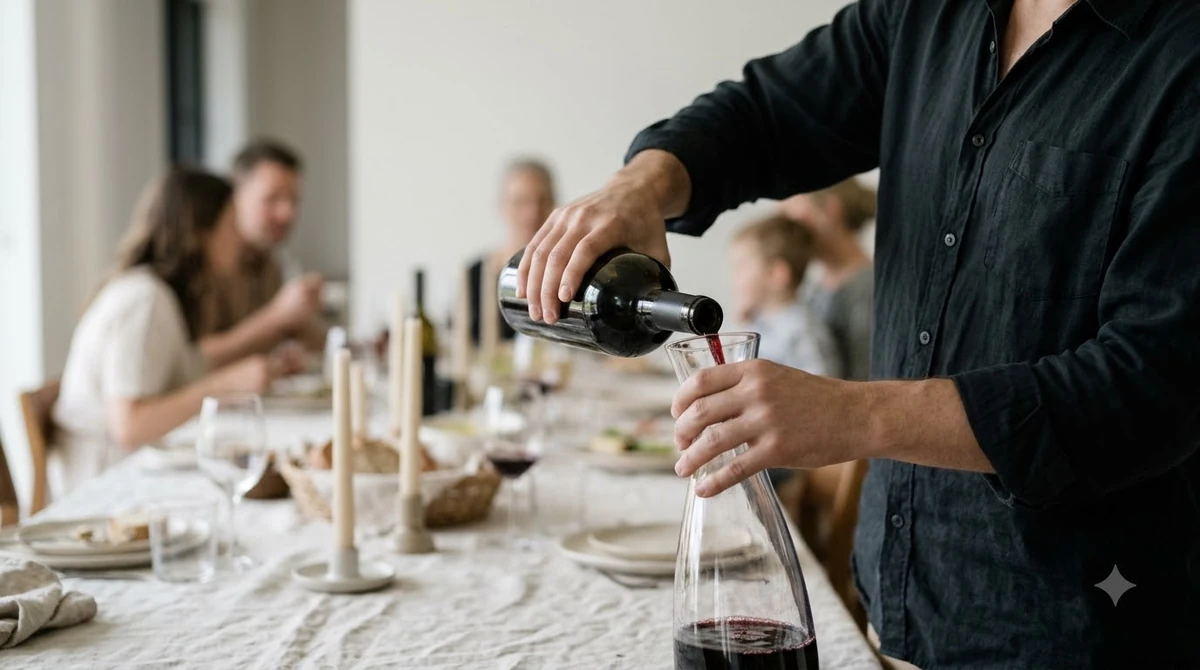
Young, full-bodied reds can benefit from approximately 30 to 60 minutes of decanting. This gives the wine time to interact with air and may help reveal additional aromatic detail. Older bottles require more caution because prolonged aeration can cause delicate aromas to fade. For a mature vintage, opening and evaluating the wine carefully before deciding whether to decant is a sensible approach.
Glassware matters as well. A reasonably large red wine glass gives the aromas space to develop and makes it easier to appreciate the wine’s fruit, spice, and oak characteristics. A standard serving is approximately 5 ounces, which means a 750 ml bottle provides roughly five glasses.
Food pairings for Solaia
Rich, savory dishes are natural partners for a structured Tuscan red. Grilled ribeye, roast beef, lamb, and slow-cooked short ribs all offer enough flavor and texture to complement the wine’s concentrated fruit and tannin. The fat in these dishes can also soften the perception of tannin.
Other suitable options include aged hard cheeses, mushroom-based dishes, and roasted vegetables with herbs. Aged Parmesan, for example, provides savory intensity that can work well alongside Cabernet-based reds. Rosemary, thyme, and black pepper can reinforce the wine’s herbal and spicy dimensions.
For a special dinner, consider pairing Solaia with a simply prepared steak rather than an overly complicated sauce. The aim is to complement the wine instead of overwhelming its aromatic detail. Highly sweet sauces and dishes with intense chili heat are generally less suitable because sweetness and alcohol can make the pairing feel unbalanced.
After opening, refrigerate any remaining still wine and use a suitable closure. A practical general guideline is to consume opened still wines within approximately three to five days, although the condition of the individual bottle and the storage method will influence how well it holds up.
Frequently Asked Questions
What does the name Solaia mean?
Solaia takes its name from the vineyard at Tenuta Tignanello. Antinori describes this hillside as the sunniest part of the estate, giving the name a direct connection to the wine’s place of origin. The vineyard’s southwestern exposure is an important part of that identity.
Who makes Solaia wine?
Solaia is produced by Marchesi Antinori, an Italian wine producer associated with the Tenuta Tignanello estate. The Antinori family first made Solaia in 1978. Its production is linked to the estate’s namesake vineyard rather than being a generic blend sourced from unrelated vineyards.
Is Solaia classified as a Super Tuscan wine?
Solaia is widely recognized as a Super Tuscan, a term commonly used for prestigious Tuscan wines that helped expand the region’s approach to grape varieties and blending. Its use of Cabernet Sauvignon and Cabernet Franc alongside Sangiovese is a defining part of its identity. The category is a style and historical designation rather than a separate grape variety.
Can Solaia bottles be collected as investments?
Some buyers collect Solaia because of its reputation, selective vintage production, and demand among enthusiasts of fine Italian wine. However, wine prices can fluctuate, and there is no guarantee that an individual bottle will appreciate. Storage costs, resale fees, authenticity, and the availability of buyers all influence the financial outcome.
Does Solaia have an official minimum aging requirement?
Antinori’s description focuses on its own winemaking and barrel-aging process rather than establishing a universal minimum cellar-aging period for consumers. The producer’s main description specifies approximately 15 months in new French oak for the wine presented on that page. The appropriate drinking window depends on the individual vintage and the buyer’s preference for youthful fruit or more developed aromas.
Solaia is a distinctive Tuscan red whose price reflects its vineyard origins, selective vintage production, and Cabernet-led winemaking approach. Comparing identical vintages, checking bottle provenance, and understanding the wine’s structure will help buyers make more informed decisions. For anyone considering a purchase, the best approach is to prioritize bottle condition and seller reliability alongside the asking price.
More in Wine Brands
 Underwood Wine Price: Compare Bottles, Cans, and Pack SizesUpdated Nov 21, 2026
 Zenato Wine Price: Compare Styles and Choose the Right BottleUpdated Nov 21, 2026
 Zuccardi Wine Price: Compare Bottles and Find the Right RangeUpdated Nov 21, 2026
 Yellow Tail Moscato Review: Taste, Sweetness and Serving TipsUpdated Nov 21, 2026
 Wolf Blass Yellow Label Review: Choose Your Best StyleUpdated Nov 21, 2026
 Wolffer Estate Rose Review: Choose the Right Bottle for Your TableUpdated Nov 21, 2026