


We may earn a commission when you buy through links on this page, at no extra cost to you. Learn more.
This scarecrow wine review finds that Scarecrow is a premium Rutherford Cabernet Sauvignon worth considering for collectors who appreciate concentrated dark fruit, refined tannins, historic vineyard character, and long-term cellaring potential. Made at the J.J. Cohn Estate in Napa Valley, the flagship wine combines old-vine Cabernet Sauvignon with a distinctive sense of place. Its limited, invitation-based release also makes finding a bottle considerably different from shopping for an everyday supermarket Cabernet.
Scarecrow has developed a strong reputation among Napa Valley Cabernet enthusiasts, but its appeal goes beyond prestigious scores and scarcity. Its vineyard history, winemaking approach, vintage differences, and relationship with other estate wines all matter when deciding whether to seek out a bottle. This guide examines the wine’s character, explains what buyers should compare, and offers practical advice on selecting, serving, and storing it.
Who Should Consider Scarecrow Wine?
Scarecrow is best suited to collectors and serious Cabernet Sauvignon drinkers who enjoy full-bodied red wines with concentrated fruit, substantial structure, and the potential to develop over many years. Its Rutherford origin and old-vine vineyard material make it particularly interesting to people who collect wines by Napa Valley appellation or individual estate.
The producer’s history helps explain why the wine attracts so much attention. The J.J. Cohn Estate was first planted with Cabernet Sauvignon in 1945. Bret Lopez, grandson of J.J. Cohn, purchased the Rutherford property from his family in 2002 and established Scarecrow with Mimi DeBlasio. Winemaker Celia Welch and viticulturist Michael Wolf were part of the original team. The first Scarecrow vintage followed in 2003. The official Scarecrow wine portfolio provides additional background on the estate and its releases.
That history gives the flagship wine a strong connection to a specific vineyard rather than simply to the broader Napa Valley name. The estate has approximately 400 original vines remaining from the 1945 planting, and those vines are an important part of the wine’s identity. The producer’s account also explains that the vineyard’s Cabernet fruit had supplied respected Napa wines for decades before Scarecrow became an independent label.
However, Scarecrow is not an automatic recommendation for every red-wine drinker. Someone who prefers inexpensive, easy-drinking Merlot, fruit-forward supermarket Cabernet, or lighter Pinot Noir may find its intensity excessive. Its availability also requires patience, since the producer describes the flagship release as invitation-based, with an approximately three-year waiting period.
It is particularly appropriate for three kinds of buyers:
- Established collectors: People building a cellar around Napa Cabernet Sauvignon, Rutherford estates, or wines with extended aging potential.
- Special-occasion buyers: People looking for a distinctive bottle for a significant dinner, anniversary, or celebration.
- Vintage enthusiasts: People who enjoy comparing how weather, harvest conditions, and vineyard selection influence different releases.
Casual drinkers can still appreciate Scarecrow, but its limited availability and age-worthy structure make it a more specialized purchase than a typical dinner wine. Someone seeking a more accessible everyday bottle might prefer a familiar option such as Barefoot wine, which occupies a very different part of the wine market. Readers comparing different levels of the American wine market can also explore our guide to Wine Brands for additional producer background and buying context.
Key Factors to Compare Before Choosing a Bottle
Not every Scarecrow vintage delivers precisely the same experience. Buyers should compare vineyard composition, vintage character, tannin structure, drinking window, and bottle condition rather than relying exclusively on a famous name or a critic’s score.

The flagship wine is consistently identified with Cabernet Sauvignon from the J.J. Cohn Estate, but individual growing seasons influence its balance and expression. Professional reviews provide useful examples: the 2021 release emphasizes dark fruit and earthy spice, while the 2022 vintage has been described as more forward and approachable. These differences matter when choosing between bottles for immediate enjoyment and long-term storage.
| Comparison factor | What to look for | Why it matters |
|---|---|---|
| Appellation | Rutherford, Napa Valley | Identifies the estate’s growing area and regional character. |
| Flagship grape | 100% Cabernet Sauvignon | Establishes the wine’s varietal identity. |
| Vineyard history | Original planting in 1945 | Provides important context for the old-vine estate. |
| First vintage | 2003 | Marks the beginning of the independent Scarecrow label. |
| Winemaker | Celia Welch | Provides continuity in the estate’s winemaking approach. |
| 2021 vintage | Black cherry, blackberry, earthy spice | A useful example of concentrated, structured Cabernet. |
| 2022 vintage | Cassis, cherry, pencil shavings | Shows a different balance and expression. |
| 2023 drinking window | 2027–2050, according to Wine Advocate | Helps collectors consider the wine’s potential development. |
| Bottle format | 750 ml standard bottle | Useful for planning portions and cellar purchases. |
Vintage comparisons should be based on the actual bottle rather than assumptions about a particular year. For example, K&L Wine Merchants presents professional reviews of Scarecrow vintages from Wine Advocate, Vinous, and Wine Spectator. Its Scarecrow vintage listings and professional review information offer useful context for comparing tasting descriptions. Wine Spectator highlights boysenberry, blackberry, mulberry, Rutherford earth, and anise in its 2021 review, while Vinous focuses more on herbs, chocolate, and lavender.
The 2022 vintage provides another useful comparison. Decanter highlights redcurrant, blackcurrant, floral character, and structured tannins. Wine Advocate describes cherry, cassis, and pencil shavings, with a full-bodied and silky texture. Those differences illustrate why vintage-specific reviews are more useful than assuming every Scarecrow bottle tastes identical.
Buyers should also distinguish between a critic’s score and their own preferences. A 100-point rating can signal exceptional critical enthusiasm, but it does not guarantee that the wine will suit someone who prefers restrained alcohol, delicate fruit, or soft, low-tannin reds.
How to Choose the Right Scarecrow Bottle
Choosing a Scarecrow bottle becomes easier when the decision follows a few practical steps. Start with the intended drinking date, compare vintage descriptions, verify provenance, and consider whether the bottle will be opened immediately or kept in a cellar.
- Decide when the wine will be opened. If the bottle is intended for a dinner this weekend, prioritize a vintage with a more accessible drinking profile. If the plan is to cellar it for several years, examine professional drinking-window recommendations and the wine’s structural characteristics.
- Identify the exact wine. Confirm whether the bottle is flagship Scarecrow Cabernet Sauvignon, Monsieur Étain, or Toto’s Opium Dream. These are different estate releases, not interchangeable names for the same wine.
- Compare vintage-specific reviews. Read at least two professional assessments when possible. Look for agreement about fruit concentration, tannin firmness, acidity, oak influence, and suggested drinking windows.
- Check bottle provenance. For a collectible wine, ask about the previous owner, storage conditions, purchase history, and transportation. A bottle with uncertain storage history carries more risk than one kept under documented cellar conditions.
- Inspect the physical bottle. Look for signs of leakage, damaged capsules, unusual fill levels, or suspicious labeling. Older bottles deserve particular attention because their condition can influence both drinking quality and collectible value.
- Choose a reliable seller. Established specialist merchants and reputable auction houses can provide more useful information about bottle history and authenticity than an unfamiliar private listing.
- Plan storage and serving. Arrange suitable cellar conditions before purchasing multiple bottles. For an upcoming dinner, prepare enough time for the wine to breathe and reach an appropriate serving temperature.
For a first purchase, the 2021 and 2022 vintages offer useful reference points because professional descriptions provide clear information about their different styles. The 2021 is associated with deep black fruit, earthy spice, and considerable concentration. The 2022 is described as more forward, with silky texture and a slightly different fruit profile.
The 2023 vintage is another interesting option for collectors planning further ahead. Wine Advocate awarded it 100 points and suggested a 2027–2050 drinking window. That recommendation indicates substantial aging potential, although actual development will depend on storage conditions and the evolution of the individual bottle.
Tip: Before purchasing an older Scarecrow vintage, request photographs of the bottle’s fill level, capsule, label, and closure. Ask the seller for storage history as well. These details can be more important than a small difference between professional ratings.
There is also a practical difference between buying a bottle for drinking and acquiring one as a collectible. Someone opening the wine at a celebration should prioritize condition and readiness. A collector purchasing several bottles may place greater importance on consistent provenance, format, and long-term storage.
Scarecrow Wine Styles and Estate Releases Explained
The Scarecrow name is associated with more than one wine, although the flagship Cabernet Sauvignon remains the central release. Understanding the differences between Scarecrow, Monsieur Étain, and Toto’s Opium Dream helps buyers select a bottle that matches their preferences and expectations.
Scarecrow Cabernet Sauvignon
The flagship Scarecrow is a 100% Cabernet Sauvignon made from fruit grown at the J.J. Cohn Estate in Rutherford. The producer’s description emphasizes the importance of the original vineyard plantings, while Wine Advocate identifies the old-vine fruit as the foundation of the flagship blend.
Its typical flavor profile includes black cherry, blackberry, cassis, herbs, earthy notes, and dark spices. Depending on the vintage, additional characteristics can include mocha, licorice, tobacco, graphite, violet, and crushed stone. These flavors are supported by substantial tannins, concentrated fruit, and a full-bodied texture.
Cabernet Sauvignon naturally brings considerable tannin, which is part of the reason this wine can develop over an extended period. Younger bottles may show firm structure and concentrated fruit, while additional bottle age can allow the aromas and textures to become more integrated.
Monsieur Étain
Monsieur Étain is a separate estate wine that originated during the blending of the 2008 Scarecrow vintage. The portion excluded from the flagship blend was considered sufficiently interesting to bottle independently.
Unlike the 100% Cabernet Sauvignon flagship, Monsieur Étain incorporates Cabernet Sauvignon, Merlot, Malbec, and Petit Verdot. The producer describes it as a more Bordeaux-style expression, with a layered and brighter personality. It generally incorporates younger vineyard material and additional Bordeaux varieties.
Its release arrangement is also different. The winery offers Monsieur Étain to its mailing list in fall without the approximate three-year waiting period associated with the flagship Cabernet Sauvignon. Buyers interested in the estate’s winemaking but unable to obtain the flagship may find this release particularly interesting.
Toto’s Opium Dream
Toto’s Opium Dream is a much smaller and more specialized release. The producer introduced it in 2023 as a single-barrel wine made from fruit selected by winemaker Celia Welch as the vineyard’s highest-quality expression.
The original 2016 example came from the Old Men block, a group of Cabernet Sauvignon vines on St. George rootstock planted in 1945 by John Daniel Jr. The winery describes that original release as a 200-bottle micro-lot. It is not a regular substitute for the flagship, and further releases depend on the quality of individual harvests.
These distinctions are important because a bottle bearing the Scarecrow estate identity may not be the flagship Cabernet Sauvignon. Buyers should identify the precise label and release before making comparisons or evaluating a seller’s description.
What Does Scarecrow Cabernet Sauvignon Taste Like?
Scarecrow generally delivers a concentrated, full-bodied Cabernet Sauvignon experience built around dark fruit, structured tannins, and a recognizable Rutherford character. Its exact balance changes with the vintage, but black fruit, savory details, and substantial texture are recurring themes in professional descriptions.
Black cherry, blackberry, and cassis are useful starting points when describing the wine. These fruit notes can be accompanied by plum, mulberry, or darker berry characteristics. The 2021 vintage, for example, was described by Wine Advocate as rich and velvety, with deep black cherry and earthy-spicy notes. Vinous also identified dried herbs, licorice, chocolate, and lavender in its review.
Earthy and savory elements provide another important dimension. Graphite, tobacco, crushed stone, anise, and herbal notes can make the wine feel more complex than a straightforward fruit-forward Cabernet. Oak-related characteristics such as mocha, toast, and spice may also contribute to the aroma and palate.
The tannins are an important part of the experience. Cabernet Sauvignon typically has high tannin, and Scarecrow’s concentration and structure can make younger vintages feel firm. However, high tannin does not automatically mean an unpleasantly harsh wine. The fruit, acidity, and texture help determine how balanced the finished wine feels.
How vintage conditions affect the profile
The 2021 vintage is a particularly useful example of the estate’s ability to produce a powerful but balanced Cabernet. Wine Advocate described its black cherry and earthy-spice character, while Wine Spectator emphasized the freshness of boysenberry, blackberry, and mulberry. These descriptions suggest a wine with considerable concentration and a distinct Rutherford identity.
The 2022 vintage offers a slightly different experience. Its reviews describe cassis, cherry, graphite, floral elements, and velvety tannins. Jeb Dunnuck characterized it as a more forward expression than usual, while Decanter emphasized its mineral character and firm structure. It demonstrates that a challenging growing season does not necessarily prevent an estate from producing an impressive wine.
The 2023 release received particular attention for its black cherry, herbal notes, crushed stone, licorice, mocha, and olive characteristics. Its full-bodied texture is balanced by fine-grained tannins. Wine Advocate’s recommended drinking period begins in 2027, making it a candidate for buyers who are comfortable allowing a young wine to develop.
Body, acidity, and tannin expectations
Scarecrow is not designed to resemble a light-bodied red. Its Cabernet Sauvignon foundation creates a substantial palate, with fruit concentration and tannin playing central roles. Acidity provides freshness and helps prevent the wine from feeling entirely heavy, although its exact level varies between vintages.
People accustomed to delicate Pinot Noir or lighter Italian reds may notice a major difference in weight and texture. By contrast, fans of structured Napa Cabernet, Bordeaux blends, and other concentrated reds are more likely to appreciate its style.
Common Mistakes When Buying or Drinking Scarecrow
The biggest mistakes involve treating every vintage as identical, confusing the estate’s different releases, and purchasing collectible bottles without checking their history. Understanding the wine’s structure and intended drinking conditions also helps avoid disappointment.
Assuming every vintage tastes the same
Even when the vineyard and producer remain consistent, vintage conditions influence the finished wine. The 2021 and 2022 reviews demonstrate this clearly. One vintage may emphasize darker fruit and more pronounced structure, while another may offer a more forward profile and a different balance of oak, fruit, and tannin.
Buying solely because a particular vintage received an impressive score can lead to a mismatch between expectations and personal taste. Read the actual tasting descriptions and determine whether the wine’s style is suitable for the occasion.
Confusing Scarecrow with Monsieur Étain
The flagship is 100% Cabernet Sauvignon, whereas Monsieur Étain uses a Bordeaux-style blend that includes Merlot, Malbec, and Petit Verdot. Their origins are connected, but they have distinct identities and release arrangements.
This distinction matters when comparing professional reviews or discussing a particular bottle with a wine merchant. A review of the flagship should not automatically be applied to Monsieur Étain.
Opening a young bottle without preparation
A young, structured Cabernet can benefit from exposure to air. Opening a bottle and immediately pouring it into glasses may not provide enough time for its aromas and texture to develop.
For a young full-bodied red, a decanting period of approximately 30 to 60 minutes is a useful starting point. Some bottles may need less time, while others benefit from additional aeration. The condition and age of the wine should guide the decision.
Overlooking bottle provenance
Reputation does not protect wine from poor storage. Excessive heat, repeated temperature fluctuations, light exposure, and improper transportation can damage a bottle regardless of its original quality.
This is particularly relevant when buying older vintages through secondary-market sellers. A well-documented bottle from a temperature-controlled cellar is generally a more reassuring purchase than one with an unknown storage history.
Serving the wine too warm
Many people serve full-bodied reds at ordinary room temperature, but warm indoor conditions can make alcohol feel more pronounced and reduce the wine’s freshness. Full-bodied reds are generally best served around 60–65°F.
A slightly cool starting temperature allows the wine to warm gradually in the glass. This approach can help preserve its fruit definition and make the tannin structure feel more balanced.
Serving, Food Pairing, and Storage Tips
Scarecrow is most enjoyable when served at a controlled temperature, paired with food that can handle its tannin, and stored in conditions that protect the wine from premature aging. A few straightforward adjustments can make a meaningful difference to the drinking experience.
Recommended serving temperature
Serve Scarecrow Cabernet Sauvignon at approximately 60–65°F. This range is appropriate for full-bodied red wines and helps balance the wine’s concentrated fruit, alcohol, and tannin. If the bottle has been kept in a warm room, place it in a cooler environment briefly before serving.
Use a large-bowled red wine glass to provide sufficient room for the aromas to develop. A standard 750 ml bottle provides approximately five servings when each pour is 5 oz. For a dinner involving several courses, smaller initial pours leave room for the wine to open and for guests to return to it throughout the meal.
Food pairings that complement Cabernet Sauvignon
Rich meat dishes are natural partners for Scarecrow because their fat and protein can soften the perception of tannin. Grilled ribeye, roasted beef, lamb chops, and slow-cooked short ribs are particularly suitable choices.
For a more detailed dinner pairing, consider these options:
- Grilled ribeye: The marbled fat helps balance the wine’s firm tannins, while the charred exterior complements savory and toasted notes.
- Roasted lamb: Herbs such as rosemary and thyme work well with Cabernet’s dark fruit and earthy character.
- Beef short ribs: Slow cooking produces a rich texture that suits the wine’s body and concentration.
- Beef tenderloin: A simple preparation with black pepper and roasted mushrooms allows the wine to remain the focus.
- Aged hard cheese: Mature cheddar and aged Gouda provide enough richness and flavor intensity to complement the wine.
Some foods are less suitable. Highly spicy dishes can make alcohol and tannin seem more aggressive, while delicate white fish may be overwhelmed by a powerful Cabernet. Oily fish can also clash with tannic red wine. For seafood, a lighter white wine is generally a more reliable choice.
Cellaring and bottle storage
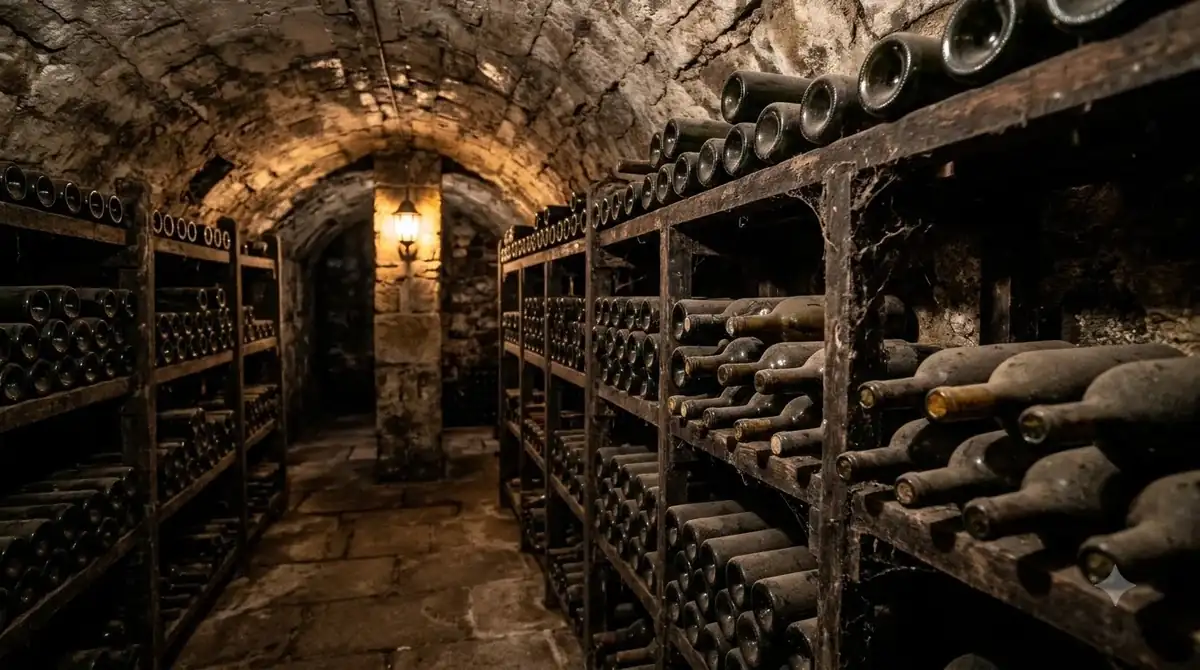
Store unopened Scarecrow bottles on their sides when they use traditional cork closures. A consistent temperature near 55°F is a practical cellar target. Avoid direct sunlight, strong vibration, and locations where temperature changes substantially throughout the day.
Humidity also deserves attention. A moderately humid environment helps prevent corks from drying out, although excessive moisture can damage labels and encourage mold. A dedicated wine refrigerator or professionally managed cellar is a sensible option for buyers without suitable storage space.
For bottles intended for long-term aging, consistency matters more than frequently adjusting the temperature. Repeatedly moving wine between warm and cold environments is not ideal. Keep an inventory showing the vintage, purchase date, storage location, and intended opening period.
Decanting and older bottles
Young Scarecrow Cabernet Sauvignon can benefit from approximately 30–60 minutes in a decanter. This allows the aromas to develop and may soften the initial impression of firm tannins. Begin with a shorter period and assess how the wine changes rather than assuming that longer aeration is always better.
Older bottles require more care. Sediment may develop during bottle aging, particularly in wines bottled without filtration. Stand an older bottle upright before opening so sediment can settle, then pour slowly and stop when the sediment approaches the neck.
Once opened, store remaining still wine in the refrigerator and aim to consume it within approximately three to five days. A good closure and reduced exposure to oxygen help preserve the wine’s character, although its condition will gradually change after opening.
Scarecrow is a wine that rewards thoughtful handling. Proper serving temperature, suitable food, and careful storage help preserve the qualities that make Rutherford Cabernet Sauvignon distinctive. For a different kind of celebration wine, La Marca Prosecco offers a lighter sparkling alternative rather than another full-bodied Cabernet.
Frequently Asked Questions
These answers address additional buying and ownership questions that can help readers understand the Scarecrow estate and its wines.
Who owns the Scarecrow wine estate?
The J.J. Cohn Estate is owned by Bret Lopez, the grandson of J.J. Cohn. Lopez purchased the Rutherford property from his family in 2002. The estate’s history is closely connected to the family’s earlier ownership and the original Cabernet Sauvignon plantings.
Does Scarecrow own a winery building at its Rutherford vineyard?
Wine Advocate’s estate profile explains that Scarecrow does not have a winery building at the vineyard property. Winemaker Celia Welch produces the wines at Laird, where Scarecrow has dedicated tanks and a specialized production arrangement.
How many original Scarecrow vineyard vines remain?
Approximately 400 original vines from the 1945 planting remain on the J.J. Cohn Estate, according to the estate information published with Wine Advocate’s 2023 review. Their fruit is individually assessed by the winemaking team during harvest rather than treated as an undifferentiated vineyard component.
Why is the Scarecrow vineyard called the J.J. Cohn Estate?
The property is named for J.J. Cohn, whose family history is central to the vineyard’s identity. Cohn originally acquired the Rutherford acreage as a family summer retreat, and the historic Cabernet Sauvignon plantings were established through his relationship with neighboring vineyard owner John Daniel Jr.
Can buyers join the Scarecrow mailing list without purchasing the flagship wine?
The winery provides a mailing-list registration option and specifically offers Monsieur Étain to its mailing list without the flagship’s approximate three-year waiting period. Registration does not, by itself, establish a guaranteed allocation of every release. Buyers should contact the winery for current membership and allocation conditions.
Scarecrow stands out through its historic Rutherford vineyard, old-vine Cabernet Sauvignon, and carefully managed estate releases. For collectors seeking a distinctive Napa Valley Cabernet with substantial aging potential, it deserves serious consideration, provided the vintage, provenance, and drinking style match their expectations. Comparing the flagship with Monsieur Étain and examining individual vintage reviews will help make the final buying decision more informed.
More in Wine Brands
 Underwood Wine Price: Compare Bottles, Cans, and Pack SizesUpdated Nov 21, 2026
 Zenato Wine Price: Compare Styles and Choose the Right BottleUpdated Nov 21, 2026
 Zuccardi Wine Price: Compare Bottles and Find the Right RangeUpdated Nov 21, 2026
 Yellow Tail Moscato Review: Taste, Sweetness and Serving TipsUpdated Nov 21, 2026
 Wolf Blass Yellow Label Review: Choose Your Best StyleUpdated Nov 21, 2026
 Wolffer Estate Rose Review: Choose the Right Bottle for Your TableUpdated Nov 21, 2026