

We may earn a commission when you buy through links on this page, at no extra cost to you. Learn more.
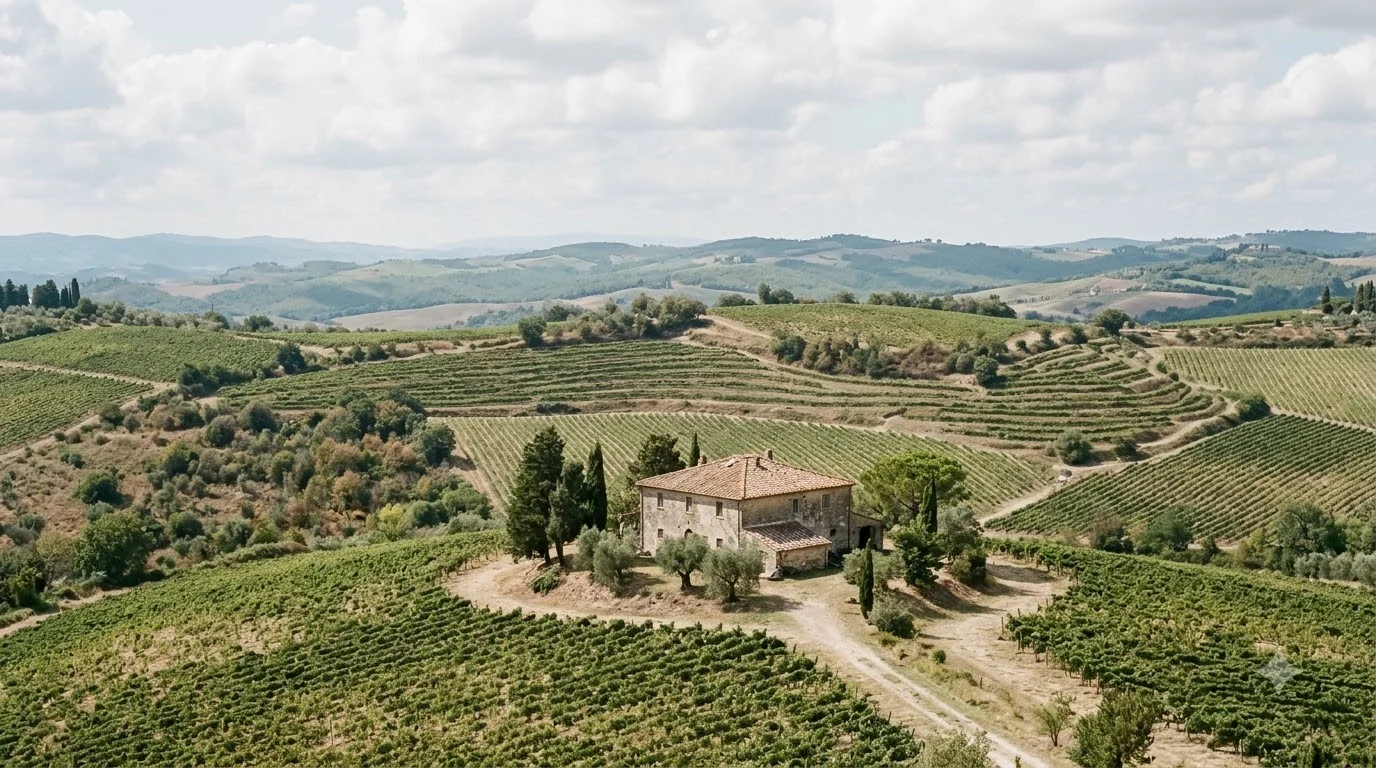
In Burgundy, the santenay wine region is a southern Côte de Beaune appellation best known for structured, aromatic Pinot Noir, with a smaller but distinctive range of Chardonnay. Its vineyards span Santenay and neighboring Remigny, where limestone, marl, and varied slope positions shape differences from one named site to the next. The appellation has 12 Premier Cru climats, giving buyers useful clues about vineyard origin and style.
For Burgundy drinkers, Santenay offers a clear way to explore the Côte de Beaune beyond better-known names such as Pommard, Volnay, and Chassagne-Montrachet. Understanding its geography, grape varieties, and label terms makes it easier to select a bottle for dinner or compare village-level wines with Premier Cru examples.
Location on the Southern Côte de Beaune
Santenay sits at the southern end of the Côte de Beaune in France’s Burgundy region, south of Chassagne-Montrachet and close to the Maranges vineyards. The appellation includes land in both Santenay and Remigny, and the wines can show meaningful differences according to the slope and sector where the grapes grow.
The Côte de Beaune is the southern half of the Côte d’Or’s most celebrated wine corridor. Santenay marks its southern edge, where the vineyard landscape begins to transition toward the Côte Chalonnaise. Its position makes it a useful point of comparison with northern Côte de Beaune villages: it shares the region’s focus on Pinot Noir and Chardonnay, but its own hillside patterns and named climats give it a distinct identity. The nearby village of Remigny is not simply a neighboring address; it is one of the two communes authorized to produce Santenay AOC wine.
The appellation is classified at the Village level, with a further Premier Cru tier for designated vineyard sites. The regional wine body records 12 Premier Cru climats and permits the appellation name to appear with or without the name of the originating climat. This is a helpful distinction for shoppers: a bottle labeled Santenay is not necessarily a Premier Cru, while Santenay Premier Cru signals fruit from land with that higher vineyard classification. The hierarchy is tied to place, not to the size or prestige of an individual producer.
Santenay also makes sense as part of a broader Burgundy study. The regional overview at Wine Regions can help place its Village designation within the French appellation system. It is a different landscape from the nearby Alpine vineyards of the Savoie wine region, even though both illustrate how local topography influences French wine styles.
Limestone Slopes and Vineyard Exposures
Santenay’s character comes from a broken hillside of limestone and marl rather than one uniform soil type. The official regional profile describes greyish limestone on upper ground reaching about 500 meters, with oolitic limestone, white oolite, and marl appearing lower down the slope around the 300-meter level.
These layers matter because vines do not experience the hillside as a single growing environment. Differences in soil depth, stone content, drainage, and exposure influence how quickly a parcel warms and how much water it can retain. The regional profile describes vineyard exposures ranging from east to south, a broad orientation that gives many sites useful morning and midday sunlight. A producer may therefore emphasize freshness and fine structure in one parcel while seeking more ripeness and weight from another.
Oolitic limestone is a limestone formed from small rounded mineral grains; in Santenay it appears alongside marls and other limestone formations. Marl combines clay and carbonate material, so it can behave differently from a stony limestone slope. These geological details do not translate into a fixed flavor such as “minerality” in every glass. They help explain why neighboring vineyard names can deliver different textures, degrees of firmness, and fruit expression even when the grape variety is the same.
Altitude and exposure should be read together. Higher ground can bring a cooler setting, while more southerly-facing slopes can receive stronger sunlight. The effect is not a simple rule that every high parcel tastes lighter or every southern parcel tastes riper; vine age, weather, farming, harvest decisions, and cellar choices also shape the finished wine. That variation is part of the reason Burgundy labels identify specific climats rather than treating every slope as interchangeable.
Pinot Noir, Chardonnay, and Typical Flavors
Pinot Noir is the leading grape in Santenay, while Chardonnay accounts for the smaller white-wine share. The official regional profile describes the reds through black-cherry color, rose, peony, violet, red fruit, a touch of licorice, and a firm but fine-textured structure; its Chardonnay is described as fresh, floral, and mineral, with hazelnut and fern-like notes.
Regional production data published by Bourgogne Wines gives a useful sense of the balance between the two colors. Its 2022 vineyard-area figures and five-year average production figures are shown below; the hectares are planted production area, while hectoliters are average annual output for 2017–2021.
| Wine color | Area in production | Area classified Premier Cru | Average annual production | Premier Cru production |
|---|---|---|---|---|
| Red, Pinot Noir | 258.32 ha | 101.21 ha | 10,198 hl | 3,903 hl |
| White, Chardonnay | 72.40 ha | 22.23 ha | 2,736 hl | 777 hl |
Those figures show that red wine is the clear center of gravity: the area planted to red varieties is more than three times the white area. They also show that Premier Cru production is not limited to Pinot Noir. More than 22 hectares of the white-wine area carry Premier Cru status, so a buyer interested in Chardonnay should not assume that Santenay’s higher-ranked sites are exclusively red.
In the glass, a typical red Santenay can move from fresh cherry, raspberry, and red plum toward darker berry, violet, subtle spice, and earthy or lightly smoky notes. Tannin is often noticeable but should not automatically be treated as harsh; the official profile describes a structure that is firm yet discreet, with a supple body and a persistent finish. Individual bottles vary, and oak treatment can add toast or baking spice without changing the fact that Pinot Noir is the defining grape.
Santenay Chardonnay is less common, but it gives the appellation another expression of its limestone-rich terrain. Expect a profile that may include citrus, orchard fruit, white flowers, hazelnut, and a stony impression, with enough freshness to work at the table. The range of producer and site styles is visible in the Wine Enthusiast Santenay tasting archive, which includes both Premier Cru Pinot Noir and Chardonnay bottlings from named sites.
Premier Cru Climats and Reading the Label
Santenay’s 12 Premier Cru climats include La Comme, Les Gravières, Clos de Tavannes, Beauregard, Beaurepaire, and Clos Rousseau. These are named vineyard sites within the Village appellation, and the Premier Cru designation identifies their recognized status rather than a separate grape variety or winemaking method.
The complete list also includes Clos des Mouches, Clos Faubard, Grand Clos Rousseau, La Maladière, Les Gravières-Clos de Tavannes, and Passetemps. A label might therefore read “Santenay Premier Cru Les Gravières” or “Santenay 1er Cru La Comme.” The French abbreviation “1er Cru” means Premier Cru; both indicate the same classification level. The complete list can be checked in Bourgogne Wines’ official Santenay appellation profile.
For a first bottle, the label offers a practical starting point. A straightforward Santenay gives an introduction to the appellation’s general style, while a Premier Cru name tells you to pay attention to a specific site. It does not mean that every Premier Cru will taste richer or more powerful than every Village wine. Producer choices, vintage conditions, vine age, and the exact position of the parcel all influence the result, so it is useful to compare wines from the same producer or vintage when possible.
Names such as Les Gravières and La Comme are useful anchors for building familiarity, but avoid turning them into rigid flavor codes. One site may be represented by wines from several growers, each with a different approach to extraction, whole-cluster fermentation, oak, and aging. A careful comparison should therefore include both the climat name and the producer, rather than treating the vineyard classification as a complete tasting description on its own.
Food Pairings and Serving Temperatures
Red Santenay works especially well with savory food that can meet its Pinot Noir fruit and moderate structure. Burgundy’s regional guidance specifically recommends braised veal or beef, glazed poultry, homemade hamburgers, and several medium-flavored cheeses; serve the red at about 55–60°F.
Slow-cooked beef, pot roast, roast duck, pork tenderloin, and mushroom dishes are natural options because they bring savory depth without overwhelming the wine. A browned crust, pan juices, or a gentle herb sauce can connect with the wine’s red fruit and earthy notes. For a cheese course, Brie de Meaux, Pont-l’Évêque, Cîteaux, or Reblochon are regional suggestions; the moderate fat and salt in cheese can also soften the impression of tannin.
White Santenay is a good choice for creamy or gently flavored dishes. Try Chardonnay with mushroom risotto, pasta in a light cream sauce, roast chicken with mushrooms, or fish couscous. The regional body recommends serving the white at 11–12°C, which is approximately 52–54°F; that sits comfortably within the 50–55°F range for fuller-bodied whites. Comté, Beaufort, and fresh goat cheese are also suggested pairings.
Think about the sauce as much as the main ingredient. Lemon-heavy preparations need a wine with enough acidity to avoid tasting flat, while a rich cream sauce can make the freshness of Chardonnay especially welcome. For Pinot Noir, avoid pairing a delicate bottle with very hot chili or aggressively sweet glaze: alcohol and tannin can make chili heat seem stronger, and sweetness can make a dry red seem sharper. Oily fish is generally a poor match for tannic red wine, so choose white Santenay for richer fish preparations.
Tip: Chill red Santenay briefly rather than serving it warm: aim for 55–60°F. Serve white Santenay around 50–55°F, and pour a small first glass before deciding whether the bottle needs a few minutes to open up.
Choosing, Serving, and Cellaring a Bottle
Choose Santenay by starting with the occasion, then narrowing by color, classification, and producer. For a versatile dinner red, a Village Pinot Noir is a sensible introduction; for a more site-specific comparison, look for one of the 12 Premier Cru names such as Clos Rousseau or Les Gravières. If the meal centers on fish, creamy poultry, or mushroom risotto, a Chardonnay may be the more useful purchase.
Producer technique can make two wines from the same village taste quite different. As one example rather than a universal recipe, Albert Bichot describes a Santenay red made from handpicked grapes, fermented for 18–21 days in temperature-controlled conical oak vats, then aged for 14–16 months in oak barrels, with 15–20% new oak. This shows how fermentation length and barrel choice can influence texture and spice; other producers may use different vessels, extraction, and maturation periods.
When serving a young, structured Pinot Noir, opening the bottle 30–60 minutes ahead or using a decanter can allow aromas to develop. Older or more delicate bottles may need less air, so start by pouring a small amount and reassessing rather than automatically giving every bottle a long decant. Use a standard 5-ounce pour; a 750-milliliter bottle yields about five glasses. That makes it easy to plan a tasting flight of Village and Premier Cru wines without overpouring.
For storage, keep unopened bottles on their sides in a cool, dark place near 55°F, with steady temperature and limited vibration. Once opened, reseal the bottle and refrigerate it; still wines generally keep for about 3–5 days under refrigeration, although aromas gradually fade. Bring a red bottle back toward 55–60°F before serving, and let a white warm slightly if it has become too cold in the refrigerator.
Ageability depends on the individual wine, vintage, and producer, not simply the word Premier Cru. Many Village Santenay wines are enjoyable for their fresh fruit while young, while more structured examples may develop savory, earthy, and forest-floor notes with time. Follow the producer’s guidance when available, and consider buying two bottles of the same wine to taste one early and keep the other for a later comparison.
Frequently Asked Questions
These additional details clarify the appellation’s history, vineyard terminology, and some lesser-known features of the village.
Does Santenay have a history beyond winemaking?
Yes. The village was known in Gallo-Roman times for hot springs, and the producer Albert Bichot connects its name with the Latin phrase “Santinae aquae,” referring to healing waters. That thermal history sits alongside its long-standing role as a wine-growing center.
What does the word “climat” mean on a Burgundy wine label?
In Burgundy, a climat is a precisely identified vineyard site with a recognized name and boundaries, not a weather description. Its mapped identity distinguishes one parcel from another, even when both are planted to Pinot Noir or Chardonnay.
Can La Comme appear in both vineyard and Premier Cru listings?
Yes. La Comme appears in the official Premier Cru list and also in the regional inventory of Santenay lieux-dits. This illustrates how Burgundy’s named vineyard geography can include closely connected classifications and local place names.
When was Santenay formally recognized as an appellation?
The Bourgogne Wines profile gives December 8, 1936, as the date of appellation creation. Its historical description also identifies 1937 as the year Santenay AOC status was instituted.
What landmark is associated with the village of Santenay?
The Sorine windmill is one of the commune’s recognized historic landmarks. Its presence is a reminder that the village identity includes more than vineyard names, even though Pinot Noir and Chardonnay are the wines most closely associated with the appellation.
Santenay is a rewarding Côte de Beaune appellation to explore because its Pinot Noir-led identity is clear, yet its 12 Premier Cru climats and smaller Chardonnay production offer plenty of variation. Start with a Village bottle, compare it with a named Premier Cru, and let the slope, producer, and food pairing guide the next choice.
More in Wine Regions
 Willcox Wine Trail: Discover Arizona’s High-Elevation Wine CountryUpdated Nov 20, 2026
 Yakima Valley Wine Region: Find the Best Styles to TryUpdated Nov 20, 2026
 Vosne Romanee Wine Tasting: Identify Aromas and Choose Better PairingsUpdated Nov 20, 2026
 Yakima Valley Wine Festival: Find the Best Seasonal Wine EventsUpdated Nov 20, 2026
 Wales Vineyards: Discover Cool-Climate Wines and Where to VisitUpdated Nov 20, 2026
 Yountville Wine Festival: Discover Napa Wines and Local FoodUpdated Nov 20, 2026