

We may earn a commission when you buy through links on this page, at no extra cost to you. Learn more.
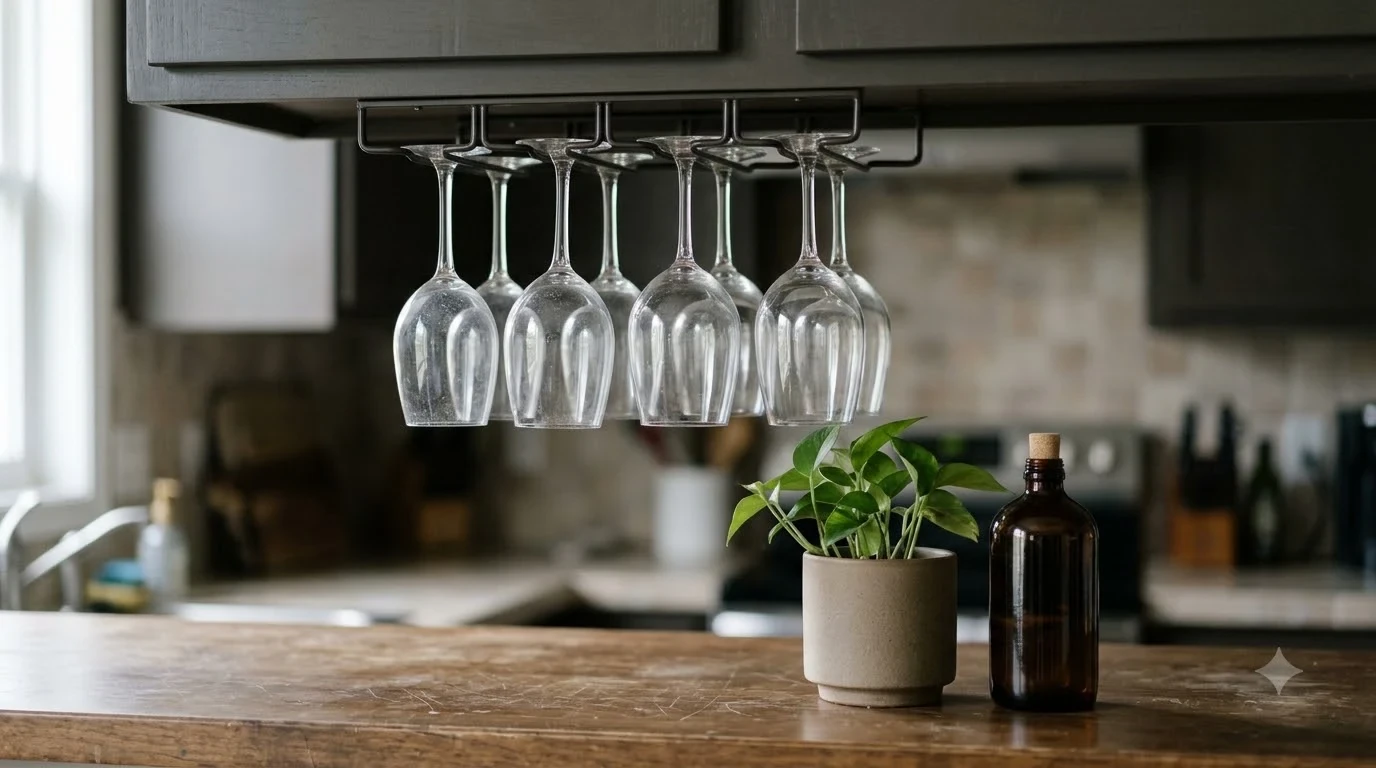
The best rustic wine rack for most homes is a solid wood or reclaimed-wood piece with open bottle cradles, sized to the bottle count you actually keep on hand. Wood is the most common material for racks overall, and its grain and warm color give the rustic look that metal often cannot. Wrought iron and weathered metal add a second layer of character, and simple wood crates work well on a counter or bar cart when space is limited.
Rustic design leans on natural materials, visible texture, and a lived-in finish. A rustic wine rack should look like it belongs in a farmhouse kitchen, a cabin, a pub-style bar, or a cellar room, not like a showroom fixture. The challenge is getting the look without giving up stability, bottle support, or a sensible place to store wine. This guide groups the main rustic styles into five types so you can pick the one that suits your room. For broader comparisons, see our overview of wine racks and the Racks & Storage section.
Quick Comparison
Rustic racks differ mainly by material, weight, and how the bottles are held. Compare the options below before you choose a finish or frame.
| Rack Type | Typical Material | Bottle Capacity | Weight and Stability | Best Use |
|---|---|---|---|---|
| Reclaimed-wood floor rack | Reclaimed hardwood | A case or more | Heavy and very stable | Pantry, cellar corner, or dining room |
| Wrought-iron wall rack | Wrought iron | One to a few bottles | Light on the floor, mounted to the wall | Decorative display in a bar or kitchen |
| Wood countertop crate | Pine, fir, or birch | A few bottles | Light and easy to move | Everyday use on a counter or bar cart |
| Tiered cellar-style bin rack | Wood | Several dozen bottles | Heavy when loaded | Long-term storage in a cool room |
| Metal and wood hybrid | Wood with metal frame | Varies | Medium weight | Mixed-style rooms that need a balance of warm and industrial |
Best for Warm Floor Storage: Reclaimed-Wood Floor Racks
Reclaimed-wood floor racks are the most direct route to a rustic look. The frame is built from solid wood, often with visible knots, saw marks, and weathered grain. Floor-standing designs hold a case or more and sit neatly in a pantry, a corner of the dining room, or a cellar nook. According to the Wikipedia entry on wine racks, wood is the most popular rack material overall, and its natural texture is what gives this style its character.
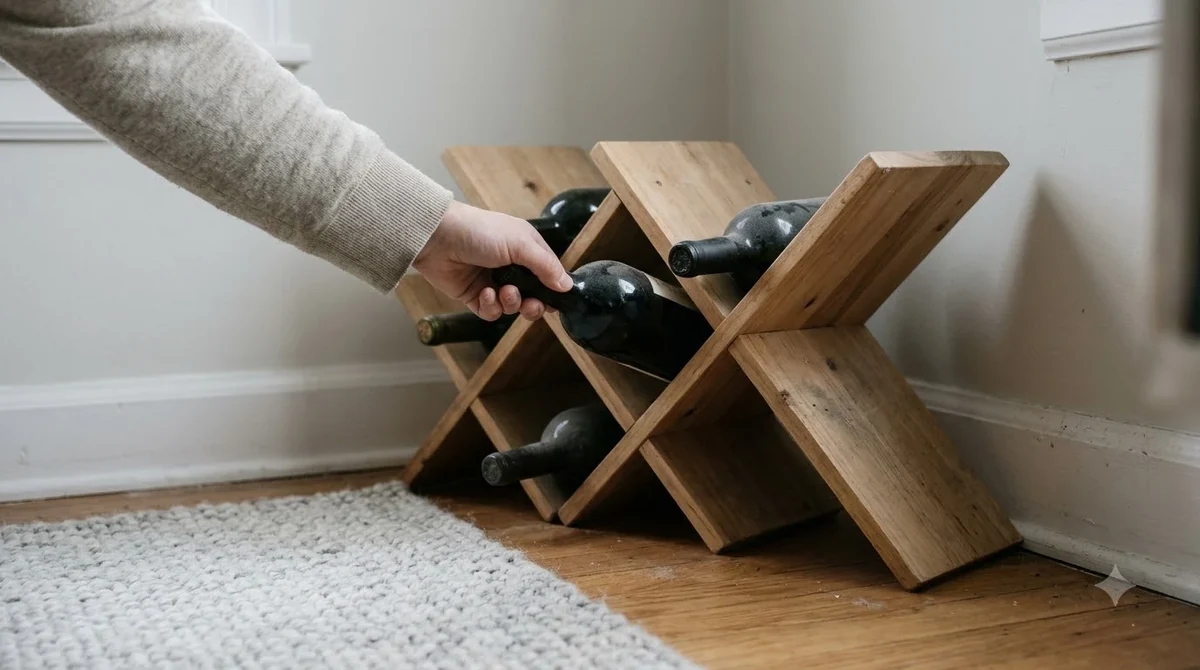
Why it stands out: It is stable, heavy, and holds a steady supply without wobbling. The wood also absorbs some of the room’s ambient humidity, which suits a space that stays cool.
Keep in mind: Check that the wood is sealed or finished, and avoid cedar if you are storing wine for a long time. Cedar has a strong aroma that some sources warn can carry into wine. Solid wood is also heavy, so plan the placement before you load it.
Best for: Homes that buy by the case and want a permanent, floor-standing place for it.
Best for Wall Accents: Wrought-Iron Wall Racks
Wrought-iron wall racks bring a rustic, hand-forged look that suits kitchens, bars, and entryways. Wrought iron is durable and often ornamental, and many designs hold only one bottle at a time. They are usually mounted to the wall and treated as a display piece rather than a storage system.
Why it stands out: It frees the floor and counter completely. The dark iron and visible hammer marks add texture that suits brick, stone, or exposed-beam rooms.
Keep in mind: Mounting needs proper anchors and a wall that can carry the full weight of the bottles. The rack is not built for a large collection.
Best for: Bar corners, kitchen walls, and anyone who wants a rustic focal point with one or two bottles on show.
Best for Everyday Counter Use: Wood Countertop Crates
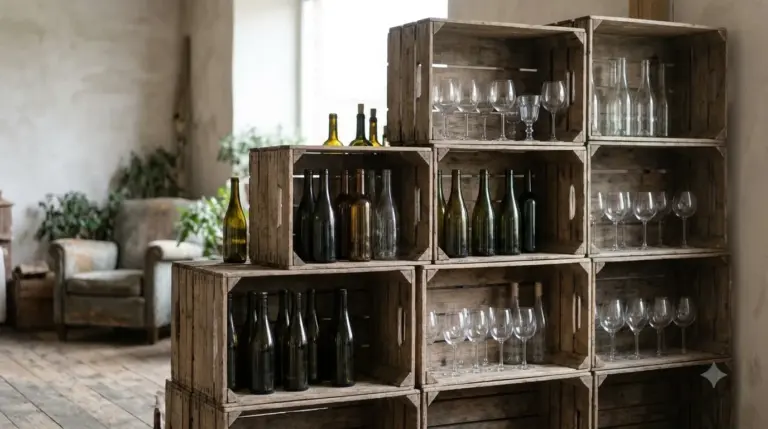
Wood countertop crates are small, simple, and easy to move. Many use pine, fir, or birch, and they hold a few bottles in an open layout. Their shape suits a farmhouse counter, a bar cart, or a kitchen island, and they are often the first rustic piece people buy.
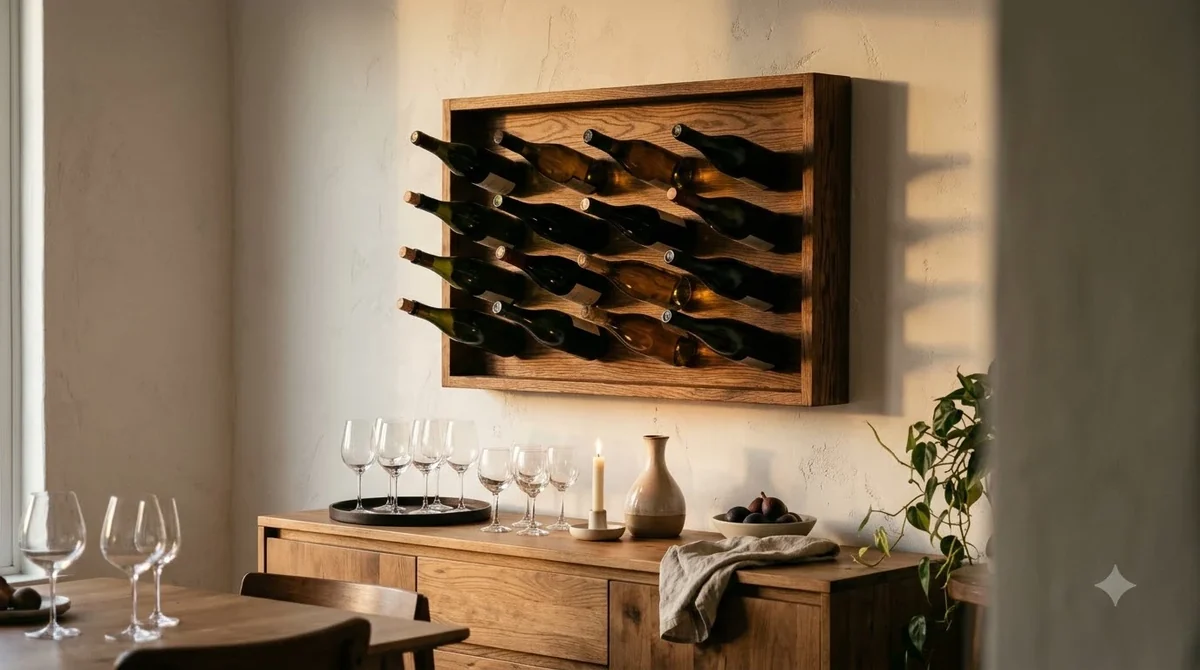
Why it stands out: It is light enough to shift for a dinner party and cheap to replace if you change your style. The open slats make it easy to read labels and grab a bottle.
Keep in mind: Wine on a counter is exposed to light and kitchen heat, so it is best for bottles you open within a few weeks. Pick a crate with sturdy joints, since cheap wood can warp.
Best for: Everyday drinkers who want wine close at hand in a warm, casual setting.
Best for Long-Term Keeping: Tiered Cellar-Style Bin Racks
Tiered bin racks copy the look of a traditional wine cellar. Bottles lie in open wooden bins, stacked in rows that fill a wall or a corner. This style holds several dozen bottles and suits a cool room where wine can rest for years. The Wikipedia article on wine cellars describes 13 °C (55 °F) as ideal for both short-term storage and long-term aging.
Why it stands out: It keeps bottles in a steady position and gives a serious, rustic look. The wood structure supports heavy loads when properly built.
Keep in mind: A bin rack is only as good as the room it sits in. Swings in temperature of 14 degrees or more are said to make wine breathe through the cork and age faster, so choose a room away from the furnace, the dishwasher, and sunlight.
Best for: Collectors and households with a basement, pantry, or cool closet they can dedicate to wine.
Best for Mixed-Style Rooms: Metal and Wood Hybrid Racks
Hybrid racks combine a wood body with a metal frame, shelf, or bottle cradle. They suit rooms that mix rustic and modern elements, such as a wood table with black metal chairs or an industrial kitchen with a reclaimed beam. The metal adds structure and sheen, while the wood keeps the warmth.
Why it stands out: It bridges two styles without looking mismatched. Metal parts can be painted to match hardware or lighting already in the room.
Keep in mind: Mixed materials need careful finishing. Check that the joints are tight, that the metal is coated against rust, and that the wood is sealed.
Best for: Homes with an eclectic style that needs one piece to tie the look together.
How to Choose
Start with the bottle count you keep most of the time, then choose the material that fits the room. The rest of the decision comes down to stability, placement, and how often you reach for the wine.
- Bottle count: A wall or countertop rack fits a few bottles, a floor rack holds a case, and a bin rack holds several dozen. A standard case is 12 bottles, so a rack that holds two cases gives room to grow.
- Material: Wood gives the most traditional rustic look. Wrought iron gives a hand-forged finish. Hybrid racks balance the two.
- Finish: Look for sealed or lightly oiled wood. Avoid strong-smelling woods such as cedar if the rack will hold bottles for a long time.
- Room conditions: Wine keeps best in a cool, steady place. Sources describe 50 to 59 °F (10 to 15 °C) as a comfortable storage range, and dry air can dry out corks, so a damp cellar floor or a humid room helps.
If the rack will sit in a bright kitchen or a warm dining room, treat it as display and rotate bottles often. For storage that lasts months or years, place the rack in a cool, dark area and keep bottles on their sides so the cork stays moist.
Frequently Asked Questions
What is the best wood for a rustic wine rack?
Solid hardwood and reclaimed wood are the most common choices because they are sturdy and have strong grain. Pine and fir are lighter and cheaper. Avoid cedar for long-term storage, since its aroma can affect wine.
Can a rustic wine rack go in the kitchen?
Yes, for bottles you plan to drink within a few weeks. Kitchens get warm and bright, so a counter or wall rack is fine for display, but long-term storage should be somewhere cooler and darker.
How many bottles should a rustic wine rack hold?
Match the rack to how you buy. Countertop and wall racks hold a few bottles, a floor rack holds a case of 12, and a tiered bin rack can hold several dozen. Choose a size that leaves room for your next purchase.
Do wooden racks protect wine from humidity problems?
Wood does not control humidity by itself. Sources note that low humidity can dry out organic corks, and some cellars keep a damp gravel floor to help. A wooden rack in a cool, stable room is a sound setup, but it does not replace a steady environment.
A rustic wine rack can be a warm feature in the room and a practical place for your bottles. Decide on the bottle count and the room first, then pick the material that suits the style you want. For more ideas, explore our wall-mounted wine rack guide.
More in Racks & Storage
 Best Wine Barrel Racks for Distinctive Bottle StorageUpdated Nov 20, 2026
 Best Wine Storage Tower: Sizing, Protection and Room LayoutUpdated Nov 18, 2026
 Best Pyramid Wine Rack: Materials, Sizes and Where It FitsUpdated Nov 18, 2026
 Best Kitchen Cabinet Wine Rack Insert for Built-In Bottle StorageUpdated Nov 18, 2026
 Best 16 Bottle Wine Rack Options for Kitchens, Bars and CellarsUpdated Nov 18, 2026
 Best 48 Bottle Wine Rack Options for Cellars, Kitchens, and Tight SpacesUpdated Nov 18, 2026