

We may earn a commission when you buy through links on this page, at no extra cost to you. Learn more.
Russian River Valley wine comes from a cool, fog-cooled part of Sonoma County, California, and it is best known for Chardonnay and Pinot Noir. The American Viticultural Area was established in 1983 and sits between Sebastopol and Santa Rosa to the south and Forestville and Healdsburg to the north. Morning fog from the Pacific gives the grapes a long, slow ripening period that many winemakers value.
If you are trying to understand why these wines taste the way they do, or you are choosing a bottle to serve with dinner, this guide covers the region’s climate, its main grapes, the styles to look for, and how to serve Russian River Valley wine at home.
Where Russian River Valley is and why the climate matters
The Russian River Valley American Viticultural Area lies in Sonoma County, north of San Francisco. The original 1983 boundary covered about 96,000 acres, and later amendments expanded it to about 141,000 acres. Only around 16,000 of those acres are planted with vines, so the region is smaller than its size on the map suggests.
The climate is the defining feature. Cool air flows in through the Petaluma Gap and brings fog that burns off during the day. Temperatures can fall 35 to 40 degrees Fahrenheit overnight from the daytime high. The central and western parts of the valley are the coolest, while the eastern area near Highway 101 and the Chalk Hill sub-appellation are warmer. Those differences let growers match grape varieties to specific sites.
Vineyards in the valley sit on a mix of valley-floor and hillside ground, and that split matters. Valley-floor vines usually receive more of the morning fog and cooler nights, while hillside vines can get more direct sun and drain faster after rain. Growers often pick varieties that suit each position, so a single estate may grow Chardonnay in one block and a different variety higher up the slope.
Because the grapes ripen slowly, they keep more acidity and develop flavors gradually. Many growers describe this as the main reason the region’s wines feel balanced, with fresh fruit and a clean finish rather than heavy sweetness or power.

Main grapes and wine styles
Chardonnay and Pinot Noir dominate the vineyards. According to the Russian River Valley Winegrowers, about 42 percent of harvested grapes are Chardonnay and about 29 percent are Pinot Noir. Those two varieties define the region’s reputation, and most tasting rooms pour them first.
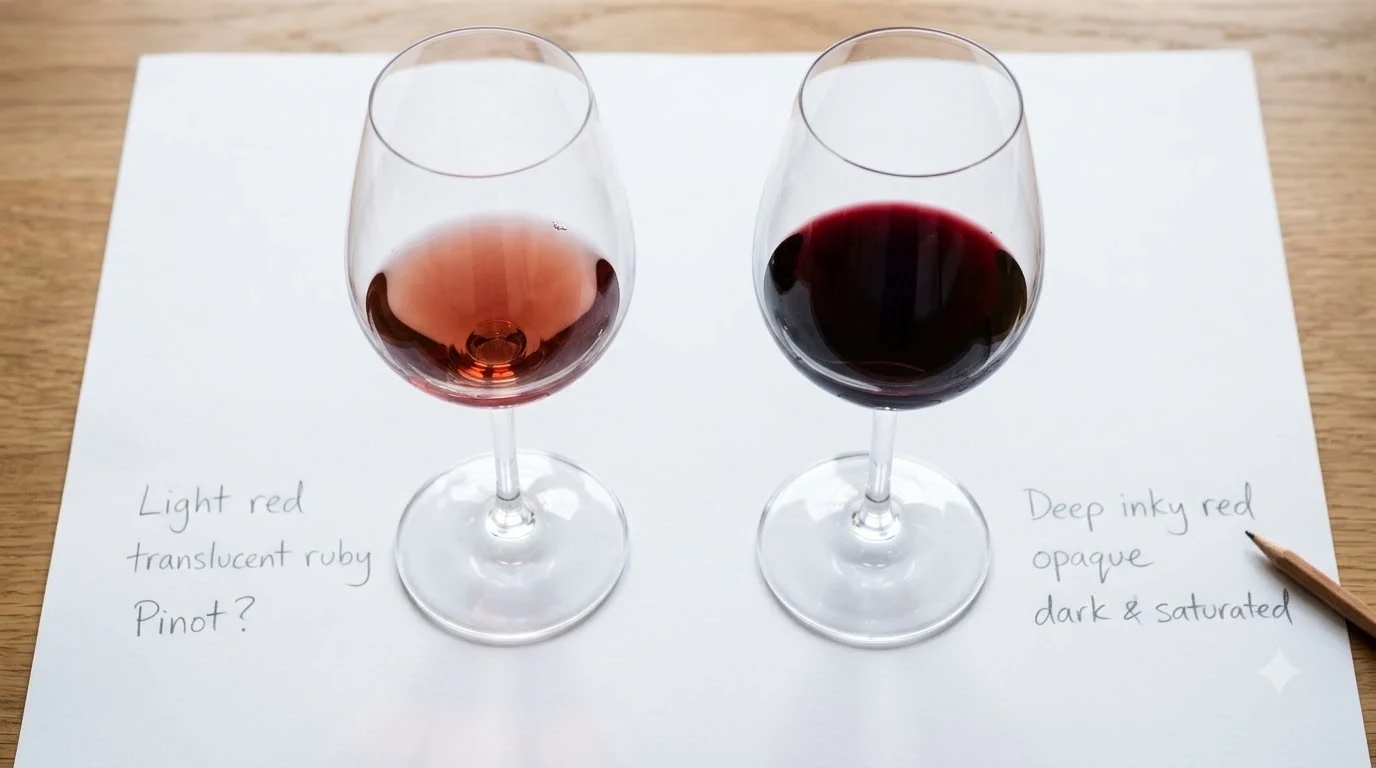
Pinot Noir from cool coastal sites tends to be lighter in color and body, with lower tannins and medium-high acidity. Typical aromas include red fruit such as cherry and raspberry, along with earthy notes. Chardonnay from the valley is often described as crisp and fruit-driven, and many producers use oak in a way that stays in the background.
Hillside sites have also produced good Syrah and Zinfandel, and smaller plantings include Sauvignon Blanc, Gewürztraminer, Petite Sirah, Cabernet Franc, and Merlot. Cabernet Sauvignon is grown mainly in the warmer Chalk Hill area. When you read a label, the variety usually tells you more about the taste than the broader region name does.
Both blended and single-vineyard bottlings appear on store shelves. A single-vineyard label names the site the grapes came from, which makes it easier to connect the flavor to the fog and slope described above. A blend draws from several sites and is often the better everyday choice, since it tends to be consistent from year to year. Neither style is better in general, so it helps to try both and see which one you prefer.
| Variety | Typical character in this region | Good with |
|---|---|---|
| Pinot Noir | Light to medium body, red fruit, earthy notes | Roast chicken, salmon, mushroom dishes |
| Chardonnay | Crisp to rich, fruit-forward, oak used with restraint | Creamy pasta, roast pork, shellfish |
| Syrah or Zinfandel | Fuller body, dark fruit, found on hillside sites | Grilled meats, barbecue, hearty stews |
How to serve Russian River Valley Pinot Noir
Serving temperature changes how a red wine tastes. The guide from Wine Folly’s Pinot Noir profile recommends serving Pinot Noir at 55 to 60 degrees Fahrenheit, which is cooler than many people expect. At that range the fruit stays bright and the acidity feels lively instead of flat.
A few other steps help. Use a wide, aroma-focused glass so the scents can develop. Young bottles can be decanted for about 30 minutes, which softens the first impression. If the wine feels warm after a long dinner, a short stay in the refrigerator brings it back into the right range.
Chardonnay is usually served a little cooler than a fuller red, and it is best opened shortly before the meal starts. Many Russian River Valley whites are made to be drunk within a few years, so check the vintage before you store them.
Pairing becomes simpler when you match weight with weight. A light, bright Pinot Noir suits dishes with herbs, mushrooms, or grilled salmon, because its acidity cuts through rich flavors without overpowering the food. A richer Chardonnay with some oak texture works well with creamy sauces and roasted vegetables. Syrah and Zinfandel from hillside sites have more body, so they pair better with grilled meats and barbecue than with delicate fish.
Tip: If you are unsure which bottle to choose, start with a Pinot Noir from a cool site and compare it with one from a warmer district. The difference in fruit and structure is easy to notice side by side.
Notable producers and how to explore the region
The valley has a long history of growers and large family companies. Producers named in regional sources include Korbel, Martini & Prati, Foppiano, Davis Bynum, DeLoach Vineyards, Martinelli Winery, and Freeman Vineyard & Winery, which was founded in 2001. Larger brands such as Kendall Jackson’s La Crema also source fruit from the area, and E & J Gallo runs estates such as Laguna Ranch and MacMurray Ranch nearby. Mark West Vineyards and Santa Rosa Wine Company are other names that appear in regional histories, which shows how long the valley has been a source of wine for both small and large producers.
When you compare producers, pay attention to where the fruit comes from rather than only the brand. A winery that sources from cooler sites will usually show a different style from one that relies on warmer blocks, even when both make Pinot Noir. Tasting one wine from each side of the valley is one of the clearest ways to learn the region.
For a first visit, pick a short route through the central part of the valley, where the wineries are close together and the tasting rooms are easy to reach. Ask staff which sites the Pinot Noir and Chardonnay come from, since that answers the question of how fog and temperature shaped each bottle. If you enjoy comparing cool-climate regions, our guide to Hunter Valley wine offers a useful contrast in a very different climate.
For a wider look at how climate and soil influence taste, our Wine Regions section explains the main factors that separate one area from another. You can also compare the Loire style in our guide to Loire Valley wine tasting, where cool-climate whites are a central theme.
Frequently Asked Questions
What is Russian River Valley known for?
Russian River Valley is known for cool-climate Chardonnay and Pinot Noir. Morning fog from the Pacific Ocean keeps the growing season cool and slow, which helps the grapes keep fresh acidity and balanced fruit.
Where is the Russian River Valley?
The appellation is in Sonoma County, California, generally between Sebastopol and Santa Rosa to the south and Forestville and Healdsburg to the north. It was established in 1983.
Is Russian River Valley Pinot Noir light or heavy?
Pinot Noir from the region is usually light to medium in body, with lower tannins and bright red fruit. Warmer sites can produce fuller wines, so the label and the producer’s notes are worth checking.
What temperature should I serve Russian River Valley Pinot Noir?
A cool serving temperature of about 55 to 60 degrees Fahrenheit works well for most Pinot Noir. Serving it slightly cool keeps the fruit lively and the acidity balanced.
Russian River Valley wine rewards a little attention to climate and variety. Start with Chardonnay or Pinot Noir, serve the reds slightly cool, and choose a route that includes sites from both the cooler and warmer parts of the valley. Once you know how the fog shapes the grapes, the differences between bottles become much easier to taste.
More in Wine Regions
 Willcox Wine Trail: Discover Arizona’s High-Elevation Wine CountryUpdated Nov 20, 2026
 Yakima Valley Wine Region: Find the Best Styles to TryUpdated Nov 20, 2026
 Vosne Romanee Wine Tasting: Identify Aromas and Choose Better PairingsUpdated Nov 20, 2026
 Yakima Valley Wine Festival: Find the Best Seasonal Wine EventsUpdated Nov 20, 2026
 Wales Vineyards: Discover Cool-Climate Wines and Where to VisitUpdated Nov 20, 2026
 Yountville Wine Festival: Discover Napa Wines and Local FoodUpdated Nov 20, 2026