

We may earn a commission when you buy through links on this page, at no extra cost to you. Learn more.
The repour wine stopper is an oxygen-absorbing wine preserver designed to keep an opened 750 ml bottle fresher for up to two months. Unlike an ordinary cork or vacuum stopper, it contains an internal chemical packet that reacts with oxygen inside the bottle. It is particularly useful for people who drink wine one or two glasses at a time, although its single-bottle capacity, upright storage requirement, and limited suitability for sparkling wine are important considerations. Its strongest advantage is straightforward operation without a pump, gas cartridge, or complicated setup.
Finishing an entire bottle of wine in one evening is not always practical. A bottle opened for dinner might need to last through another meal, a weekend gathering, or several occasional glasses over the following weeks. Ordinary closures slow exposure to the surrounding air but do not actively remove oxygen already trapped inside the bottle. Repour takes a different approach by using an oxygen-absorbing insert inside a stopper. This review examines its operating principle, everyday advantages, limitations, and the situations in which another preservation method makes more sense.
Specs and Key Features
Repour is a reusable-in-place, single-bottle wine-preservation stopper with an internal oxygen-absorbing packet. Its design combines a conventional bottle closure with an active preservation mechanism, making it more involved than a basic stopper but simpler to operate than many gas-based systems.
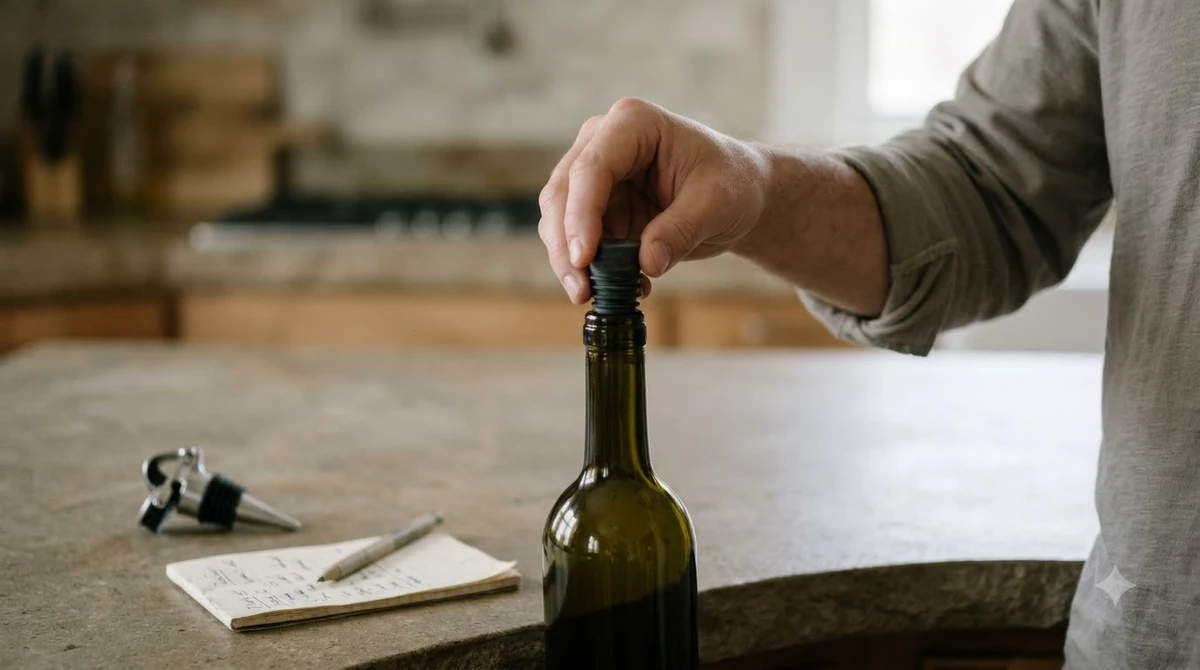
The manufacturer designs each stopper for one standard 750 ml bottle and states that preservation can last up to two months. That figure is a maximum advertised duration rather than a guarantee for every wine, bottle condition, or opening pattern. Repour is intended to remain in the same bottle between pours until the bottle is empty.
| Specification | Repour details |
|---|---|
| Product category | Active wine-preservation stopper |
| Capacity | One 750 ml bottle |
| Advertised preservation period | Up to 2 months |
| Preservation mechanism | Oxygen-reactive internal packet |
| Activation | Remove protective foil tab |
| Multiple openings | Yes, on the same bottle |
| Multiple bottles | Not recommended |
| Required storage position | Upright |
| Unused shelf life | At least 2 years, according to the manufacturer |
| Bottle-neck compatibility | Designed for approximately 99% of bottle-neck diameters |
| Refrigeration | Optional |
| Sparkling wine | Not endorsed because of pressure-related dislodging risk |
The important distinction is that Repour does not simply create a tighter seal. Its internal packet reacts with oxygen, reducing the amount available to contribute to wine oxidation. The manufacturer explains that this reaction is irreversible, so the stopper has a finite oxygen-absorbing capacity. Once that capacity has been used, the device cannot simply be reset for another bottle.
There is also a useful difference between the advertised preservation period and the physical capacity of the stopper. Two months describes the manufacturer’s stated maximum under suitable conditions. It does not mean that every partially filled bottle will remain unchanged regardless of how much air enters during repeated pouring. The actual result depends on following the operating instructions and keeping the stopper in the intended environment.
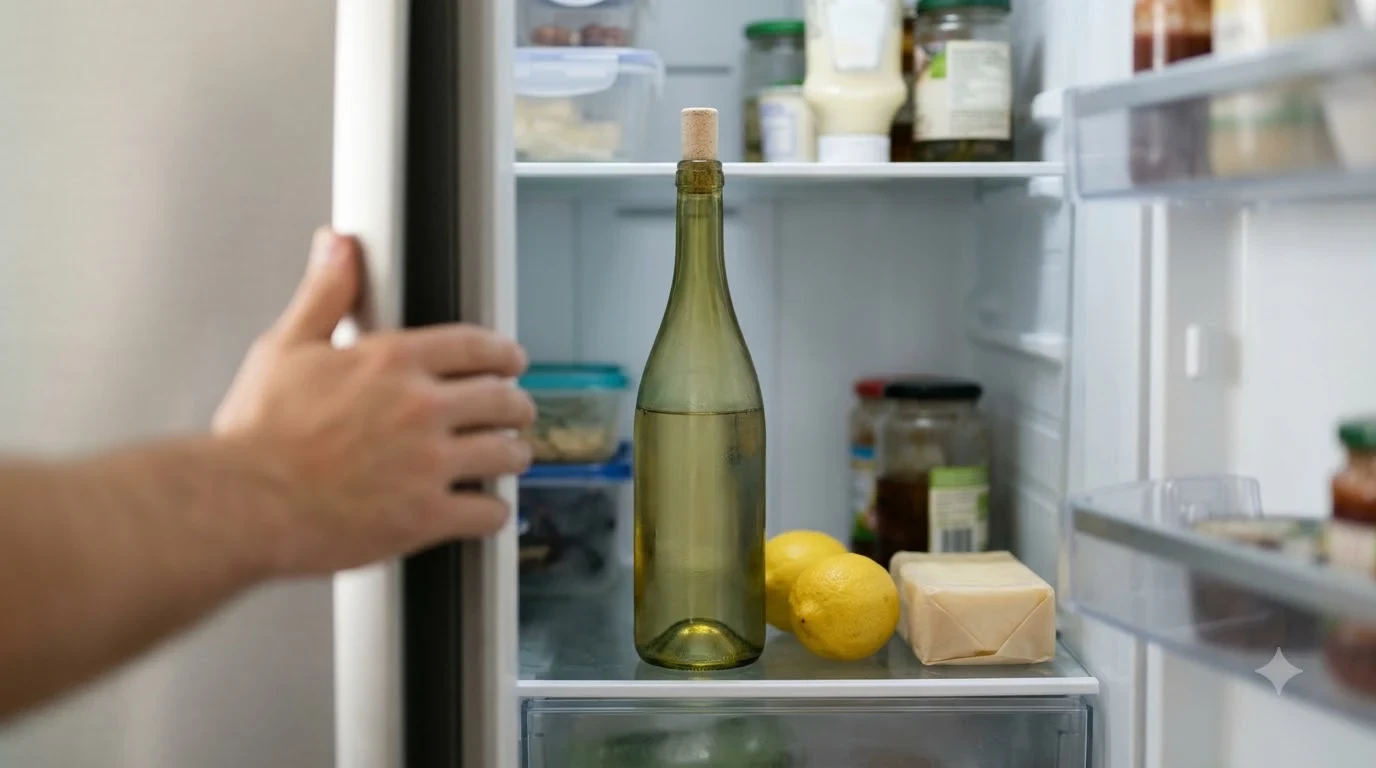
Another important specification is the upright storage requirement. Traditional wine closures often allow bottles to rest horizontally, but Repour’s internal packet needs to remain protected from moisture. That changes how an opened bottle must be stored, particularly in a crowded refrigerator or wine cabinet.
What Owners Like About Repour
Repour’s main appeal is its combination of straightforward operation and active oxygen removal. It gives occasional wine drinkers a way to preserve an unfinished bottle without purchasing a complicated preservation system or remembering to operate a separate pump after every pour.
The activation process is uncomplicated. Remove the protective foil tab, insert the stopper into the bottle, and leave it in place whenever wine is not being poured. There is no manual pumping, gas cartridge installation, tubing, or electrical connection. For a household that opens several different bottles over the course of a month, this simple routine can be particularly convenient.
The Kitchn’s Repour wine saver review highlights convenience as a major advantage. It describes the stopper as easy to activate and reports favorable feedback from sommelier Gregory Stokes, who appreciated its practicality compared with more elaborate preservation systems. The review also discusses using Repour for bottles that are opened occasionally rather than consumed quickly.
Another attractive feature is that the same stopper remains with one bottle through multiple servings. Someone can pour a glass of Cabernet Sauvignon on Friday, another glass on Sunday, and return to the bottle later without replacing the closure after every serving. This is different from products that require a fresh cartridge or more involved preparation each time a bottle is opened.
Useful for different wine styles
Repour is intended for still red, white, and rose wines. The manufacturer reports that evaluations involving these wine categories found no change in taste or aroma attributable to the preservation technology. This makes it a flexible option for households that do not drink just one type of wine.
For example, an opened Pinot Noir might be revisited over several evenings, while an aromatic Sauvignon Blanc might be saved for another meal. A bottle of Chardonnay could also remain available for occasional servings rather than requiring immediate consumption. These examples describe the types of bottles that suit the product’s intended purpose, not a promise that every wine will remain identical to its original condition for two months.
No complicated equipment
Many wine-preservation products depend on a separate mechanism. Vacuum systems use a pump, while certain professional preservation systems introduce inert gas. Repour puts the active component directly inside the stopper, reducing the number of accessories needed.
This is especially helpful for a compact home setup. Someone arranging a bar cart does not need to reserve space for a pump or gas cylinder just to save an unfinished bottle. A few activated or unused stoppers can be stored with other wine accessories, although unused units should remain protected until needed.
The stopper also works with ordinary bottle-opening habits. A bottle can be opened with a standard corkscrew, poured into regular wine glasses, and closed with Repour. There is no need to purchase a special bottle or change the wine itself.
Common Complaints and Limitations
Repour is convenient, but its preservation method introduces limitations that ordinary stoppers do not have. The biggest compromises are its single-bottle capacity, disposable nature, upright storage requirement, and the need to allow certain wines time to open up again.
The first limitation is the one-bottle design. Repour has a defined oxygen-absorbing capacity intended for a single 750 ml bottle. Moving the stopper from one bottle to another can expose its active material to additional oxygen and leave insufficient capacity for the second bottle. The manufacturer explicitly advises against this practice.
That matters for people who open several bottles in quick succession. A household hosting a dinner with three different wines cannot expect one stopper to preserve all three bottles. Each newly opened bottle needs its own Repour. The same applies if a bottle is emptied and another wine is opened immediately afterward.
Another disadvantage is the single-use nature of the oxygen-absorbing material. Although the stopper can be removed and reinserted repeatedly in its original bottle, it cannot be refreshed by washing, drying, or resetting it. Once the bottle is empty, the stopper has completed its intended job.
Oxygen removal can make wine seem closed
One interesting consequence of Repour’s design is that a wine may seem less expressive immediately after reopening. Oxygen exposure can influence how wine aromas develop in a glass, and Repour is specifically designed to reduce oxygen exposure during storage.
The manufacturer recommends allowing the wine a moment to open up again, often with a simple swirl. WIRED’s Repour Wine Saver evaluation provides a more specific observation: the reviewer found some wines tight or astringent after preservation and recommended approximately 15 minutes of breathing time. This is a practical starting point rather than a universal requirement for every bottle.
For someone accustomed to opening a bottle and immediately drinking from it, this extra waiting period can feel inconvenient. However, it is an important part of understanding how an active oxygen-removal system differs from an ordinary cork or stopper.
Storage position is restrictive
Repour bottles must remain upright. The internal packet depends on air moving through its material, and the manufacturer warns that moisture entering the packet can interfere with the oxygen-absorbing process. A bottle stored horizontally could therefore compromise the stopper’s intended operation.
This requirement can be inconvenient in refrigerators designed around horizontal shelves or wine racks. It also means that Repour is not an ideal choice for someone who regularly stores opened bottles on their sides to save space.
There is a separate concern involving sparkling wine. Although Repour can remove oxygen from the bottle environment, the pressure inside sparkling wine bottles may cause the stopper to pop off. The manufacturer does not endorse this use because of the associated risk. A dedicated sparkling-wine closure is a more appropriate choice.
Finally, the manufacturer describes the product as recyclable, but recycling access and acceptance vary between municipalities. A disposable preservation component is less attractive to people who prioritize long-term reusable equipment. The practical environmental impact depends on local waste-processing facilities and how many stoppers a household uses.
Who Should Buy and Who Should Skip Repour
Repour makes the most sense for people who regularly leave wine unfinished and want an uncomplicated preservation method. It is less suitable for people who need to preserve several bottles with one device, store bottles horizontally, or keep sparkling wine under pressure.
Consider a person who opens a bottle of Merlot for a weekend dinner but drinks only one or two glasses. An ordinary cork can close the bottle, but it does not actively remove the air inside. Repour is designed for precisely this situation: a bottle that will be opened repeatedly over an extended period.
The same logic applies to someone who enjoys different wine styles but drinks them occasionally. A bottle of Riesling might be opened for a meal, while a bottle of Pinot Noir is reserved for another evening. The ability to leave the stopper in place makes it easier to maintain a simple routine without buying a more elaborate preservation machine.
Buy Repour if these situations sound familiar
- You generally drink one or two glasses at a time rather than finishing a bottle in one sitting.
- You want active oxygen removal instead of relying only on a conventional cork.
- You mainly drink still red, white, and rose wines.
- You can store opened bottles upright in a refrigerator, cabinet, or pantry.
- You prefer a simple stopper over a pump, gas cartridge, or electronic preservation device.
- You are comfortable using a separate stopper for each newly opened bottle.
Skip Repour if these limitations are deal-breakers
- You frequently need to preserve several bottles using one device.
- You want a permanent, washable, and reusable closure.
- You regularly store opened bottles horizontally.
- You primarily drink sparkling wine and need a secure pressure-resistant closure.
- You prefer a system that allows repeated preservation without consuming a disposable component.
- You want a device with a clear visual indicator showing exactly when its oxygen-absorbing capacity is exhausted.
Repour is also not a replacement for sensible wine handling. It is designed to slow deterioration associated with oxygen exposure, not to repair wine that was already spoiled before the stopper was installed. A bottle that has developed pronounced vinegar-like aromas or other oxidation-related faults should not be expected to return to its original condition simply by adding Repour.
For someone who only opens wine occasionally, a simpler closure may be sufficient. A conventional wine drip stopper serves a different purpose by controlling pouring and drips, while Repour addresses preservation. Choosing between them depends on whether the priority is cleaner serving or extending the useful life of an opened bottle.
How It Compares to Alternative Wine Preservation Methods
Repour occupies a useful middle ground between ordinary bottle closures and more elaborate preservation equipment. Its oxygen-absorbing packet distinguishes it from vacuum pumps, inert-gas systems, and basic silicone stoppers.
Understanding these differences is more useful than treating every wine stopper as interchangeable. A conventional stopper mainly limits additional air exchange, a vacuum pump attempts to remove some air, and an inert-gas system introduces another gas to reduce wine contact with oxygen. Repour instead relies on a chemical reaction that consumes oxygen inside the bottle.
| Preservation method | How it works | Main advantage | Main limitation |
|---|---|---|---|
| Repour | Absorbs oxygen through an internal packet | Simple active preservation | One bottle per stopper |
| Vacuum stopper | Uses a pump to remove some air | Can be reused with compatible bottles | Does not remove all oxygen |
| Argon-based system | Uses inert gas to reduce oxygen contact | Can suit more specialized preservation needs | Requires additional equipment or supplies |
| Basic silicone stopper | Closes the bottle opening | Simple and reusable | Does not actively remove oxygen |
Repour versus vacuum stoppers
A vacuum wine stopper is generally a two-part system consisting of a stopper and a pump. The user inserts the stopper and operates the pump to extract some air from the bottle. This can be convenient for everyday use, especially when the same equipment is used repeatedly.
However, vacuum systems do not remove every molecule of oxygen. Repour’s manufacturer states that its method instead reacts with oxygen, including oxygen in the air above the wine. Its FAQ contrasts this approach with vacuum preservation and claims that vacuum pumps remove approximately 70% of the air.
That figure is the manufacturer’s comparison rather than an independently established result for every vacuum device. Vacuum performance varies by equipment and seal quality. The practical decision is whether a reusable pump-based routine or a single-bottle active absorber better matches the household’s habits.
Repour versus Coravin
Coravin is another named wine-preservation alternative discussed in WIRED and The Kitchn. WIRED describes its argon-based system as a different approach to limiting oxygen exposure, while The Kitchn identifies Coravin as a more elaborate preservation option.
The fundamental difference is the operating process. Repour is installed after a bottle has been opened and wine has been poured. A Coravin system is designed around specialized wine-access equipment and inert-gas technology. Repour therefore appeals to someone who wants to close an opened bottle simply, while a more specialized system may suit someone with different serving and preservation requirements.
Repour versus an ordinary wine stopper
A standard silicone or rubber stopper is inexpensive in terms of equipment complexity and can be washed and reused. It is useful for keeping dust out and limiting additional air exchange through the bottle opening.
Repour does more than close the opening because its internal packet actively absorbs oxygen. That additional function is the reason its capacity is limited to one bottle. Someone who finishes wine quickly may have little reason to choose an active preservation system, whereas someone who routinely stretches a bottle across multiple occasions may appreciate the extra mechanism.
For a broader collection of wine-serving and storage equipment, the Accessory Brands section can help put preservation products alongside other practical wine tools.
How to Use and Store Repour Correctly
Proper installation and storage are essential to getting the intended performance from Repour. The basic routine involves activating the stopper once, keeping it in the original bottle between pours, and storing that bottle upright.
One of the most important details is to avoid leaving the stopper exposed to room air unnecessarily. The internal material reacts with oxygen, so extended exposure outside the bottle can consume some of its remaining capacity before it has finished preserving the wine.
- Open the wine bottle. Remove the original cork or screw cap and pour the amount of wine needed for the occasion.
- Activate the Repour stopper. Remove the protective foil tab from the bottom of the stopper. This exposes the internal oxygen-absorbing packet.
- Insert the stopper firmly. Push it into the bottle opening so that it sits securely. The manufacturer recommends twisting while pushing if a tighter fit is necessary.
- Keep it installed between pours. Do not repeatedly leave the stopper sitting outside the bottle. Its intended working environment is the enclosed bottle.
- Store the bottle upright. Keep the internal packet protected from moisture by avoiding horizontal storage.
- Reopen when needed. Remove Repour to pour another serving, then return it to the same bottle when finished.
- Allow the wine to open up. If the aromas seem muted, swirl the wine or give it some time in the glass before judging its expression.
- Dispose of the stopper after finishing the bottle. Do not transfer the used device to another bottle.
Tip: Store a bottle fitted with Repour upright in the refrigerator when practical, especially for white and rose wines. Refrigeration is optional according to the manufacturer, but keeping the bottle cool provides an additional practical way to slow the changes that occur in opened wine. Remember that the upright position is essential to the stopper’s intended operation.
Pay attention to the amount of wine remaining
Repour’s technical explanation uses five pours of approximately 150 ml from a standard 750 ml bottle. That creates a theoretical total of approximately 1,500 ml of air exposure over the bottle’s use. This is an explanation of the product’s intended capacity, not a recommendation to leave the bottle open while pouring or to expose the stopper to additional air unnecessarily.
Keeping the stopper in place promptly after each serving is a sensible habit. It reduces unnecessary exposure and allows the oxygen-absorbing material to continue operating within the bottle.
What about refrigeration?
The manufacturer says refrigeration is not required for Repour to work, but it is permitted and does not interfere with its intended operation. Refrigeration is especially practical for aromatic whites, rose, and other wines normally served cool.
Red wine can also be refrigerated after opening. Allow it to return toward its appropriate serving temperature before drinking. For example, lighter reds such as Pinot Noir are generally served around 55 to 60 degrees Fahrenheit, while fuller reds such as Cabernet Sauvignon are generally served around 60 to 65 degrees Fahrenheit.
There is no need to treat the advertised two-month period as a reason to postpone drinking indefinitely. The point of preservation is to make an unfinished bottle more convenient to enjoy later, not to remove the need for ordinary attention to aroma, flavor, and overall condition.
Frequently Asked Questions
Can Repour be used with screw-cap wine bottles?
Yes. Repour replaces the original closure rather than depending on whether the bottle originally had a cork. The manufacturer specifically describes removing either a cork or screw cap before inserting the stopper. The important consideration is whether the stopper fits securely in the bottle opening.
Can an unused Repour stopper be kept for future occasions?
Yes. The manufacturer states that unused stoppers have a minimum shelf life of two years without loss of effectiveness. Keeping them in a cool storage area is consistent with its storage recommendations. Leave the protective foil intact until the stopper is needed.
Does Repour create a vacuum inside the bottle?
The oxygen-absorbing reaction can create a partial pressure reduction inside the bottle. WIRED describes a quiet whoosh when reopening a bottle as an indication of this pressure difference. It is not the same operating process as using a manual vacuum pump.
Can Repour be used for fortified wine such as port or vermouth?
Repour’s primary published instructions describe its intended use with wine in a standard 750 ml bottle. WIRED specifically discusses dessert wines and vermouth as possible applications for its preservation approach. However, the manufacturer’s two-month claim should not automatically be treated as a verified preservation period for every fortified wine.
Can Repour prevent cork taint or repair wine that already tastes spoiled?
No. Repour is an oxygen-absorbing preservation device, not a treatment for wine faults. It cannot reverse cork taint, contamination, heat damage, or oxidation that has already affected the wine. Its intended purpose is to help preserve the remaining wine after opening, rather than restore a bottle that has already deteriorated.
Repour is a practical option for wine drinkers who regularly save unfinished bottles and want active oxygen removal without complicated equipment. Its one-bottle capacity, upright storage requirement, and disposable design are genuine compromises, but the simple installation process makes it appealing for everyday home use. Choose it for still wines that will be enjoyed over multiple occasions, and consider a different preservation method if sparkling wine, multiple bottles, or long-term reusable equipment is the priority.
More in Wine Accessories
 Vinglace Wine Tumbler Review: A Glass-Lined Choice for Better SippingUpdated Nov 20, 2026
 ZWILLING Electric Wine Opener Review: Features and DrawbacksUpdated Nov 20, 2026
 Vinturi Electric Wine Opener Review for Easy UncorkingUpdated Nov 20, 2026
 Vinabon Wine Aerator Review for Easier, Cleaner Wine ServingUpdated Nov 20, 2026
 Vacu Vin Electric Wine Opener Review: Easy Cork Removal for Home Wine LoversUpdated Nov 20, 2026
 Rabbit Wine Accessories for Easier Home Wine ServiceUpdated Nov 20, 2026