

We may earn a commission when you buy through links on this page, at no extra cost to you. Learn more.
The red wine sweetness level describes how much residual sugar remains in the bottle after fermentation, and it is measured in grams per litre. The European Union generally caps dry still wines at 4 g/L, while anything above 45 g/L counts as sweet, according to Decanter. Acidity, tannin, alcohol, and fruit aromas all change how sweet a red tastes, so the grams-per-litre number is the starting point rather than the whole story.
Red wine gets described as smooth, bold, dry, or fruity, and those words do not always tell you whether a bottle will taste sweet. Sweetness is a measurable chemical fact, but how it reaches your palate depends on what surrounds it: acidity that keeps the wine lively, tannin that dries the mouth, and aromas that can suggest sugar before you take a sip. This guide explains how the sugar is counted, what the European labels mean, which red wines sit at each end of the scale, and how to serve and pair reds according to their sweetness. If you want to see the full set of styles side by side, the Wine by Type section is a useful companion.
How Residual Sugar Sets the Red Wine Sweetness Level
Residual sugar is the only direct measure of sweetness, and every other sensation in a red sits on top of that number. Understanding it first makes the rest of the scale much easier to read.
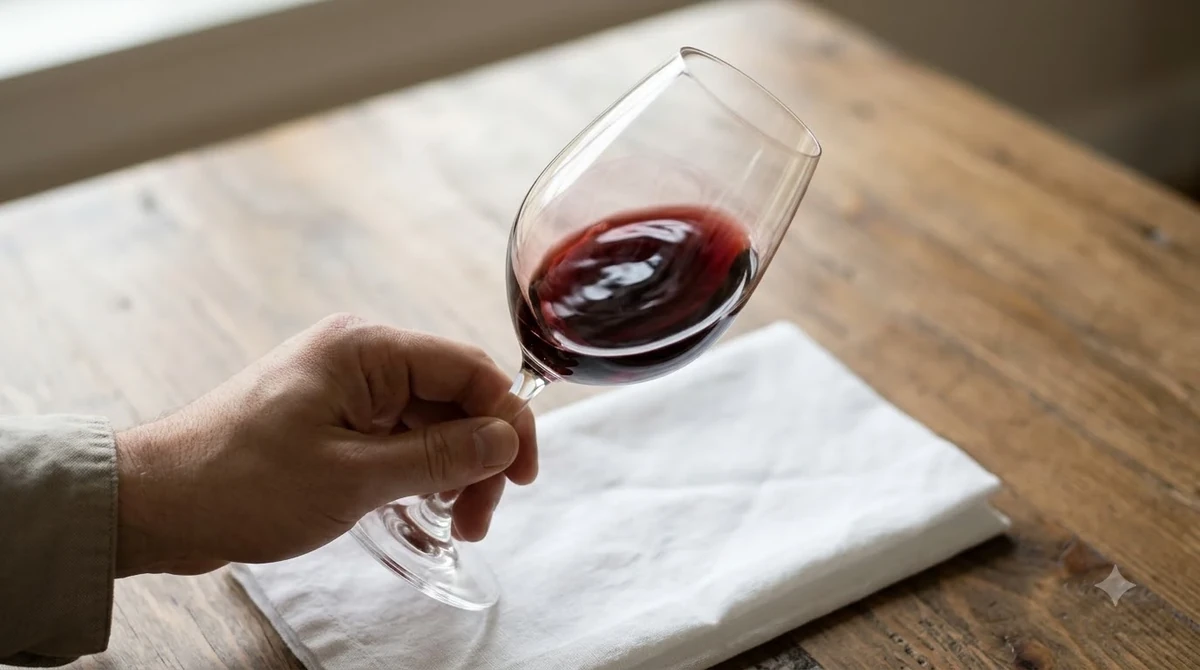
Residual sugar, usually abbreviated RS, is the glucose and fructose from the grape that yeast did not convert into alcohol during fermentation. Wine Folly describes it in exactly those terms and notes that it is most commonly measured in grams per liter. Grapes are naturally high in sugar, so the amount left in the finished bottle depends on how far the winemaker lets fermentation run before the yeast is stopped or runs out of food.
Sugar is rarely added to create sweetness in serious wine. Wine Folly explains that sweetness is almost always derived from leftover natural grape sugars rather than processed sugar. Decanter describes the main routes to a sweeter result: a winemaker can cool the ferment and filter out the yeast, add grape spirit to kill it, or work with grapes so concentrated that the yeast cannot finish the job. Some everyday wines add preserved grape juice before bottling, but that is the exception rather than the standard.
There is also a practical floor. Decanter notes that it is rare for a wine to drop below 1 g/L, because some sugars cannot be consumed by yeast at all. A bone-dry red is therefore still a few grams removed from zero, and the real differences between dry wines are usually a matter of a few grams per litre rather than large jumps.
The EU Labelling Bands for Still Red Wine
The European Union defines the terms that appear on still-wine labels, and those bands give you the clearest grams-per-litre reference for red wine. They are the legal boundaries European labels must respect, which makes them a dependable way to compare reds from different producers.
| Label term | Residual sugar (g/L) | What you typically taste |
|---|---|---|
| Dry (Dry / Sec) | Up to 4 | Savory, firm, little perceptible sweetness |
| Medium dry (Demi-sec) | 4 to 12 | Soft fruit with a faint sugar note |
| Medium | 12 to 45 | Clearly sweet, with a rounder finish |
| Sweet (Doux) | More than 45 | Honeyed and dessert-style |
According to Decanter’s residual sugar explainer, still-wine terms run from Dry or Sec at up to 4 g/L through Medium dry or demi-sec, Medium, and finally Sweet or Doux above 45 g/L. For most reds, the first two bands cover the entire dry range, and the third band is where sugar starts to register clearly on the palate. In practice, the top band is where dessert-style reds such as Port live.
The ceilings are not completely fixed. Decanter notes that the upper limit for dry and medium-dry still wines can rise to 9 g/L and 18 g/L respectively, when the wine has enough acidity to balance the sugar. A red at 8 g/L with firm acidity can therefore carry a dry label while containing noticeably more sugar than a red at 2 g/L, which is why acidity deserves as much attention as the number itself.
European regional rules add another layer. Wine Folly points out that many European wine laws require wines from a given region to stay under 4 g/L in order to be dry. The practical effect is that a dry red from a European region is very unlikely to taste sweet, while the sweetness of a red from elsewhere depends far more on the producer’s own style.
Why Dry Red Wines Can Taste Fruity or Sweet
Many reds that taste sweet are dry on paper, because aroma, acidity, tannin, and alcohol all shape how the sugar is perceived.
Aroma is the most common reason. A glass of ripe red can smell sweet, and that impression tends to carry into the first sip, even when the sugar number is low. As Wine Folly’s dry-to-sweet chart explains, your brain links certain fruit smells with sweet foods, so a red with bold fruit can read as sweet before the wine touches your tongue.
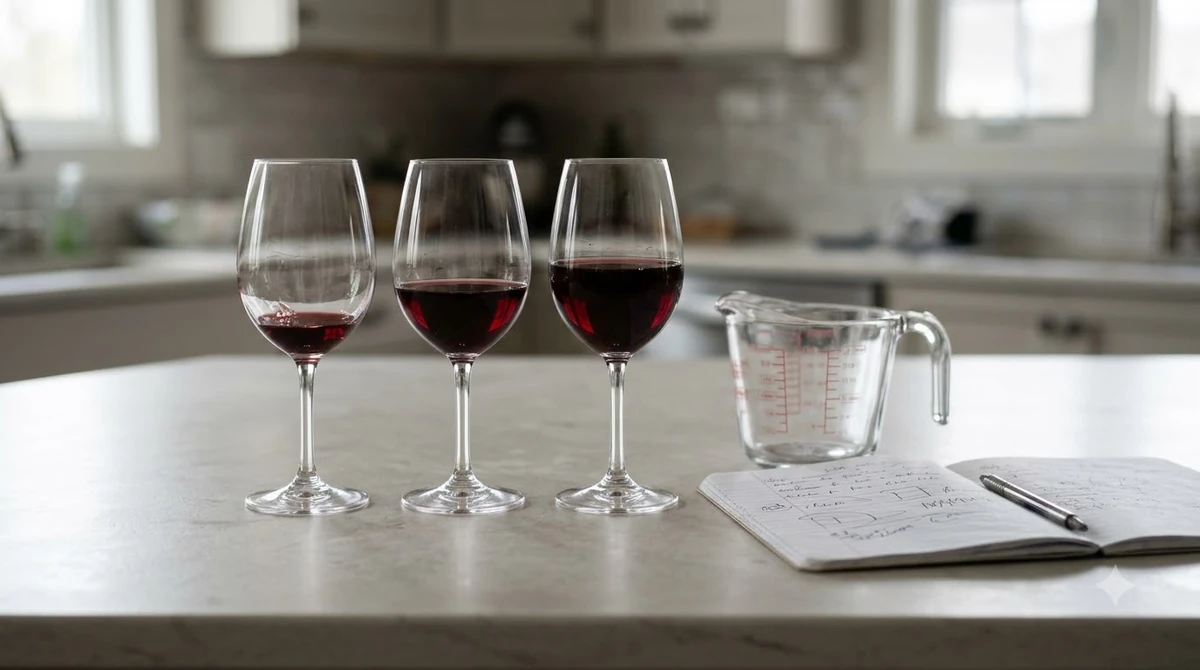
Acidity is the strongest counterweight. Wine wine Folly uses a lemonade comparison to make the point: lemon juice on its own is harsh, but the same juice balanced with sugar tastes tangy and refreshing. The test is simple. Add a little sugar to two glasses of the same wine, squeeze lemon into one, and the glass with more acidity will taste less sweet. Vinovest calls acidity the biggest counterbalance to sugar, which is why high-acid wines can carry more residual sugar before they taste cloying.
Tannin works differently. Total Wine explains that tannins make the mouth feel drier and offset some of the sweetness that residual sugar would otherwise leave behind. It also notes that lower levels of tannin and acidity create a stronger impression of sweetness, so a soft, low-acid red will often taste sweeter than a firm one with the same sugar. Alcohol pushes the other way. Decanter lists alcohol levels, oak, fruit flavours, and serving temperature among the factors that change perceived sweetness, and a warm, high-alcohol red can feel rounder and sweeter than its sugar suggests.
For a dry white that shows the same acidity effect, see the sauvignon blanc sweetness level guide. Across both colors, fruit, acid, and alcohol shape the impression, while grams per litre set the baseline.
Common Red Wines From Driest to Sweetest
Nebbiolo and Cabernet Sauvignon anchor the savory end of the scale, while Port and Recioto della Valpolicella sit at the sweet end.
| Group | Red wines named | What drives the taste |
|---|---|---|
| Dry, savory | Nebbiolo, Bordeaux, Cabernet Sauvignon, Tempranillo, Sangiovese | Firm tannin and savory notes, with little perceived sugar |
| Dry, fruity | Shiraz, Zinfandel, Malbec, Merlot, Pinot Noir | Ripe fruit that can read as soft or sweet |
| Medium sweet | Lambrusco | Noticeable sugar on the palate |
| Sweet | Recioto della Valpolicella, Port, Vin Santo Rosso | High residual sugar from dried grapes or added grape spirit |
Total Wine’s sweet-wine guide ranks the reds from driest to sweetest in this order: Nebbiolo, Cabernet Sauvignon, Merlot, Malbec, Zinfandel, Lambrusco, and Port. The grouping shows that the driest reds are often the most structured, with firm tannin and savory notes, while the fruit-forward group sits in the middle of the dry range. These groupings are a useful shortcut, but they describe typical styles rather than guarantees, because each winemaker decides how far to push fermentation.
Tannin is the clearest structural difference between them. Cabernet Sauvignon is the usual reference point for high tannin, so it reads drier even when its fruit is ripe. Merlot carries medium tannin and a softer finish, which can make it seem slightly sweeter to some drinkers. Pinot Noir has low to medium tannin and high acidity, so its brightness keeps the fruit tasting lively rather than sugary. Syrah carries medium-plus to high tannin, which keeps it structured even when its fruit is generous.
Tip: Taste two reds back to back, one from the savory group and one from the fruity group, and notice how the tannin shifts the overall impression. Your palate will learn the difference faster than any chart can teach it.
Sweet Red Wines: Port, Recioto, and Lambrusco
Port is the best-known sweet red, and according to Vinovest a standard Port falls in the 65 to 120 g/L band on the still-wine sweetness scale.
Port’s sweetness comes from a deliberate decision to stop fermentation early. Decanter describes adding grape spirit to kill the yeast as the method used for Ruby Port and other vin doux naturels, and that is why Port carries both high sugar and high alcohol. Alcohol itself can make a wine taste sweeter, so Port’s warmth and sugar reinforce each other on the palate. Vinovest places a standard Port in the sweet band, far above the sugar in a typical dry red.
Recioto della Valpolicella works from a different starting point. Total Wine places it in the sweet group alongside Port and Vin Santo Rosso, and it is a late-harvest style, meaning the grapes are left on the vine longer to concentrate their sugar. Expect a dense, concentrated sweetness that comes from the fruit itself rather than from added spirit. Because it is a dessert-style wine, it works best with food rich enough to stand up to that concentration.
Lambrusco sits in Total Wine’s medium-sweet group, placed just before Port in the ranking. Its sugar is noticeable without reaching dessert levels, which makes it a useful bridge for drinkers moving from dry reds toward sweeter styles.
Serving and Storage for Each Red Style
Serving temperature and time after opening both change how sweet a red tastes, so match the temperature to the body of the wine and the age of the bottle.
Full reds usually show their best balance at 60 to 65 F, while lighter reds show more fruit and freshness at 55 to 60 F. Warmer reds feel softer and more alcoholic, which can make a sweet red feel heavier, while cooler reds keep acidity and fruit in focus. The table below gives the serving and holding ranges for the two main red styles.
| Red style | Serving temperature | Opened and refrigerated |
|---|---|---|
| Light red | 55 to 60 F | 3 to 5 days |
| Full red | 60 to 65 F | 3 to 5 days |
Young full reds benefit from decanting for 30 to 60 minutes, which lets the wine open up and softens the grip of tannin before the first pour. Pour about 5 oz per glass, which gives a 750 ml bottle roughly five servings. Store bottles on their side at around 55 F, which keeps the cork moist and the wine stable over time.
Fortified sweet reds behave differently after opening. Port keeps for several weeks once refrigerated, so a single bottle can serve several occasions. Still reds should be finished within three to five days, which keeps their fruit and freshness intact. Sparkling styles follow their own rules, and the FAQ below explains how their sweetness is labelled.
Pairing Red Wine by Sweetness Level
A sweet red should be at least as sweet as the dessert it accompanies, while a dry red needs fat, salt, or matching acidity to feel balanced at the table.
The first rule is that wine should be at least as sweet as the food. A dry red served with a sweet dessert will taste thin and sour, while a Port or Recioto will flatter a fruit tart or a dark chocolate dessert. Match the dessert to the wine’s sweetness rather than the other way around, and keep the wine a step sweeter than the dish whenever possible.
Acid matters at the table too. Acidic food, such as a tomato-based sauce or a vinaigrette-dressed salad, needs a wine with equal or higher acidity, or the wine will taste flat next to it. Dry reds with firm tannin pair well with rich, fatty dishes, because fat and salt soften tannin. A Cabernet Sauvignon with a fatty cut of beef or a salty aged cheese shows that softening effect clearly.
Spice and fish need more care. Chili heat is amplified by alcohol and tannin, so a bold, high-alcohol red can make spicy food burn harder, and a softer, fruitier red is usually the safer choice. Oily fish clashes with tannic reds, which is why lower-tannin options such as Pinot Noir are often chosen for richer fish dishes. Consider the sweetness and tannin of the wine before you choose the pairing.
Frequently Asked Questions
These questions cover the points that come up most often when people compare red wines by sweetness.
Can a red wine smell sweet even when it is dry?
Yes. Wine Folly explains that aromas of very ripe fruit, such as blackberry jam or banana yogurt, lead your brain to link the smell with sweet foods, so a wine can seem sweet before you take a sip. Aroma is often the first reason a dry red surprises someone.
Does the US require sweetness on wine labels?
Not for wine. Wine Folly explains that alcohol is not considered a food, so producers do not have to list sweetness, and the US federal code has no requirements or designations for dry wine. Many quality producers publish technical sheets online, and those usually show residual sugar in grams per litre.
How do sparkling wine sweetness labels compare with still reds?
Sparkling wines use a separate set of bands. Decanter lists Brut at up to 12 g/L, Extra Dry at 12 to 17 g/L, Dry at 17 to 32 g/L, and Demi-sec at 32 to 50 g/L, so Extra Dry is sweeter than Brut despite the name. For a closer look at sparkling styles, see the prosecco sweetness level guide.
What makes Recioto different from Port?
Decanter describes Recioto della Valpolicella as a late-harvest wine produced from dried grapes, which concentrates the sugar in the fruit before the wine is made. Port reaches its sweetness differently, because grape spirit is added to stop fermentation before the yeast finishes its work. Both sit in the sweet range, but they get there through different steps in winemaking.
Can leftover sugar cause a still red to re-ferment in the bottle?
Yes, that is the risk. Decanter warns that residual sugar can trigger re-fermentation in the bottle, where microbes feed on the sugar and generate unwanted flavours and gas. Producers prevent this either by removing all fermentable sugar or by filtering out the yeast at bottling.
Sweetness is one of the easiest wine traits to misread, but the grams-per-litre scale gives you a dependable baseline. Use the EU bands as your reference, then let acidity, tannin, and aroma tell you how the wine will actually feel. With that combination, predicting how sweet any red will taste becomes far more reliable.
More in Wine Types & Grapes
 Zinfandel Sugar Content: Dry Red vs. White Zinfandel GramsUpdated Nov 21, 2026
 Best Zinfandel Substitute Options for Sipping and CookingUpdated Nov 21, 2026
 Zweigelt Food Pairing: Best Dishes, Cheeses, and Serving TipsUpdated Nov 21, 2026
 Zinfandel Tannins Explained: How Structure Shapes Every BottleUpdated Nov 21, 2026
 Zinfandel Sweetness Level: Dry Red vs. Sweet White Zin ExplainedUpdated Nov 21, 2026
 Xinomavro Food Pairing: Best Dishes, Styles, and Serving TipsUpdated Nov 21, 2026