

We may earn a commission when you buy through links on this page, at no extra cost to you. Learn more.
rcr champagne flutes are a strong fit for celebratory pours if you want a tall, clear glass with a modern profile and dishwasher-safe convenience. The RCR Aria Flute A36 is the clearest model to assess: RCR lists a 36 cl capacity, a 243 mm height, and a six-piece box. Its Luxion® material is the main selling point, while its narrow flute shape is better suited to showcasing bubbles than to exploring every aroma in a complex Champagne.
RCR makes several styles of stemware, so the collection name and model matter more than the brand name alone. This review focuses on the Aria A36 rather than treating every RCR flute as identical; it also explains where a traditional flute makes sense and where a tulip-shaped glass may serve sparkling wine better.
RCR Aria A36 Specs and Key Features
The Aria A36 is a tall, narrow Champagne flute made from RCR’s patented Luxion® material. Its published dimensions and six-piece packaging make it straightforward to compare with other stemware, although the product page does not give a weight, rim thickness measurement, or a detailed care cycle.
| Specification | RCR Aria Flute A36 |
|---|---|
| Product name | Aria Flute – A36 |
| EAN | 25326020106 |
| Material | Patented Luxion® |
| Capacity | 36 cl |
| Height | 243 mm |
| Diameter | 72 mm |
| Pieces per box | 6 |
| Dishwasher care | Marked dishwasher safe by RCR |
| Listed uses | Champagne, cocktails, gelati, sparkling wine |
RCR describes the A36 as part of the upper end of its collection for high-end table settings. The company says the glass has thin walls but is made highly resistant to impact through the high density of its patented Luxion® material. That is a manufacturer description, not a guarantee that a stem or rim cannot chip; any fine stemware still needs sensible handling around sinks, crowded cabinets, and hard countertops.
The official listing presents the A36 as transparent, resistant, brilliant, dishwasher safe, resonant, and recyclable. Those are useful points for a buyer comparing everyday serving pieces with more delicate crystal-style glassware. The product page does not, however, publish a numerical impact rating, a maximum dishwasher temperature, or the result of a standardized breakage test. A shopper who needs that level of technical detail should request it from RCR or the retailer before ordering.
The stated 36 cl capacity is the glass’s listed volume, not a recommended serving size. For a typical pour, leave room above the wine rather than filling to the rim; the open space helps reduce spills and gives the bubbles a little room to rise. The 243 mm height is also worth measuring against your cabinet shelves and dishwasher rack before buying a full set. RCR lists the diameter as 72 mm, so the bowl itself is relatively narrow compared with a broad white-wine glass.
What Owners Like About the Aria Flute
The A36’s strongest selling points are visible in its design and published specifications: a clean transparent finish, a long stemmed silhouette, the Luxion® material, and a box quantity suited to serving a group. There is not a reliable, attributable owner-review sample in the sources consulted for this review, so the points below describe design strengths a buyer can assess rather than claiming a measured pattern in customer feedback.
First, the shape makes the drink immediately recognizable as a celebratory sparkling-wine pour. A 243 mm-tall flute creates a formal look on a dinner table, at a wedding toast, or beside a brunch setting, while the long bowl makes the upward movement of bubbles easy to see. That visual effect matters to people who choose glassware partly for presentation, not only for tasting performance. Luxion® adds a material story beyond an ordinary clear tumbler: RCR says the patented material contributes natural transparency and brilliance and that its high density supports durability even with thin glass thicknesses. RCR also describes three checks during production, followed by a human inspection before packaging after electronic checks. These are manufacturer statements, but they help explain why the brand positions the material as a central feature rather than a decorative label.
Third, the A36 is not limited to a once-a-year toast. RCR positions it as a multipurpose stemmed glass, an appealing angle for a host who wants one coordinated set to serve more than one role. A narrow bowl still suits smaller, controlled pours better than drinks that need room for lots of ice or elaborate garnishes.
The six-piece box is another practical plus for households that regularly host four to six guests. A set of six creates a consistent table setting without requiring buyers to combine assorted glass shapes. Before ordering, confirm whether a retailer is listing the A36 itself, another Aria stem, or a different RCR flute; collection names can be similar, while capacity and shape can vary between models.
Common Complaints and Practical Trade-Offs
The biggest drawback is not a known manufacturing fault; it is the compromise built into the flute shape. A narrow, tall bowl emphasizes effervescence and the familiar Champagne presentation, but it gives complex sparkling wine less room to open aromatically than a tulip-shaped or white-wine glass.
Wine professionals interviewed by Wine Enthusiast’s Champagne glass guide describe the flute as a useful choice for events and toasts, while noting that its tight bowl can restrict how fully a wine expresses itself. That is an important distinction for buyers: a flute is not a poor glass, but it is a specialized one. For a quick toast, a sparkling cocktail, or a table where the bubbles are part of the show, the shape has clear appeal. For a long comparative tasting of vintage Champagne, it may not be the most revealing vessel.
Height is the other practical compromise. At 243 mm, the Aria A36 is tall enough that cabinet clearance and dishwasher-rack height deserve attention before purchase. The 72 mm diameter is slim, which helps the glass maintain its traditional profile, but it also means a narrow opening for pouring and hand drying. Anyone who prefers a broad bowl that is easy to reach into with a cloth may find a shorter, wider glass more convenient.
Care claims should also be interpreted precisely. RCR marks the A36 as dishwasher safe, which is helpful for routine cleanup, but the product page does not specify an approved wash temperature, cycle length, detergent, or rack position. Dishwasher safe does not mean immune to contact damage. Leave space between stems, avoid stacking glasses, and do not let a glass knock against plates or cookware during loading. If a household dishwasher has a short upper rack, measure first rather than assuming every stem will fit upright. Buyers should also avoid mistaking 36 cl for a suggested pour: the generous bowl volume gives headroom for bubbles and presentation, not a reason to fill near the brim. A smaller pour is more comfortable to hold and reduces sloshing when guests move around a room.
Who Should Buy the Aria A36 and Who Should Skip It
The Aria A36 makes the most sense for buyers who value a coordinated, traditional flute for celebrations, parties, and casual sparkling-wine service. It is particularly suitable for hosts who want six matching glasses, prefer a tall silhouette, and like the reassurance of an explicit dishwasher-safe designation from the manufacturer.
Choose the A36 if sparkling wine is often part of a group occasion rather than a quiet, aroma-focused tasting. The long shape looks at home beside appetizers, a wedding toast, or a New Year’s Eve table, and its narrow bowl keeps the stream of bubbles visually prominent. Its stated cocktail use also gives it a second role for drinks that benefit from a stemmed presentation. As a practical starting point, buyers comparing several champagne flutes should compare capacity, total height, bowl width, and whether the listed dishwasher claim is specific to the exact model.
Skip this particular flute if your first priority is getting the most expressive aroma from an expensive or mature Champagne. The Committee Champagne’s serving guidance favors a fairly tall tulip shape with a rounded lower bowl and a narrower rim: that combination gives bubbles room to develop and helps direct aromas toward the nose. If that tasting goal matters more than the familiar flute silhouette, look at the best champagne glass options that include tulip-shaped designs rather than choosing by brand alone.
The A36 may also be a poor fit for someone with limited cabinet space, a compact dishwasher, or a preference for lower, sturdier-feeling stemware. The 243 mm height is a measurable constraint, not a vague style preference; a coupe is shorter and wider, while a standard white-wine glass is easier to use for swirling and aroma assessment. Buyers who want one set to cover red, white, and sparkling wine should compare broader-purpose wine glasses instead of assuming a flute can replace every stem shape. For a household choosing among Italian glassmakers, RCR’s background may also matter: the company says it was founded in Tuscany in 1967 and operates an integrated production site in Colle di Val d’Elsa, with production methods spanning blown, pressed, and bottle products. That context can be useful when researching Glassware Brands, but it should not override the practical questions of size, shape, and care.
How the Aria Flute Compares to Champagne Glass Alternatives
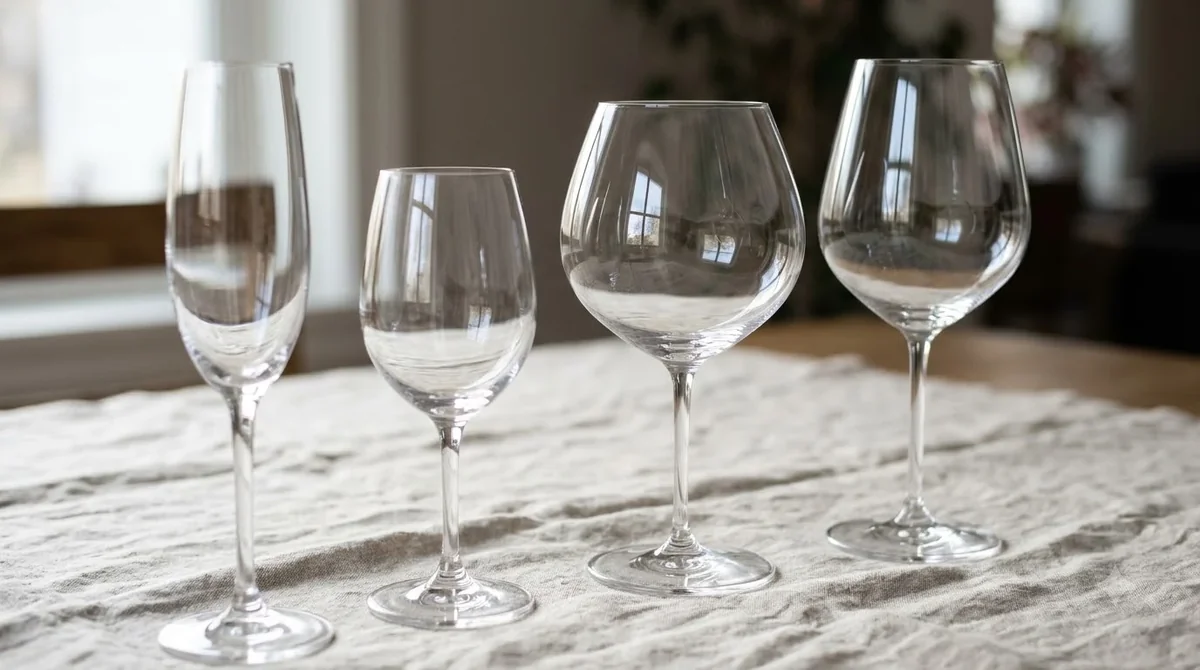
The Aria A36 is a traditional flute, so its closest competition is less about another brand name and more about the shape that best fits the occasion. A flute prioritizes a tall profile and visible bubbles; a tulip glass balances a wider bowl with a narrower rim; a coupe favors a broad, shallow presentation.
For a simple celebration, the flute remains easy to understand and easy to serve. Its narrow bowl places the bubbles in clear view and the stem gives guests a familiar place to hold the glass. That visual focus is useful for group toasts, where a glass has to look festive and be manageable on a tray. The A36’s 36 cl listed capacity is larger than a typical serving, so a moderate pour leaves plenty of headspace and keeps the drink from reaching the rim. A tulip-shaped glass is the stronger alternative for drinkers who care more about aroma. The official Champagne website describes the preferred shape as fairly tall, bulbous at the bottom, and tapered at the top. That design keeps some of the height and bubble display of a flute but gives the wine a wider middle and a rim that gathers aromas. The Champagne FAQ on serving and glass shape explains why this is a useful middle ground for people who want to appreciate both the bead and the bouquet.
A coupe goes in the opposite direction. Its broad, shallow bowl creates a vintage look and gives the wine more exposed surface area, but bubbles and aromas dissipate more quickly than in a taller, narrower vessel. It can suit a cocktail presentation or a decorative Champagne tower, yet it is less practical for keeping a sparkling pour lively through a long conversation. A white-wine glass is often the most versatile option for detailed tasting: its wider bowl leaves room to swirl and exposes more surface area, while a tapered rim can help collect aromas. A WSET study described how bubbles transport aroma and flavor compounds to the surface, and how bowl depth, surface area, and headspace affect their release. The article also reports lower aroma-intensity ratings for the traditional flute than for the other tested shapes in its blindfolded group. That does not make the A36 unsuitable for Champagne; it clarifies what the flute does best and what it gives up.
For a household that entertains often, there is a reasonable case for owning both styles: flutes for formal group service and tulip or white-wine glasses for slower tasting. If there is room for only one set, decide which experience matters more. Choose the Aria A36 for the classic celebratory look and visible effervescence; choose a tulip or wine-glass profile for a more aroma-led experience. RCR’s name and Luxion® material may make the A36 attractive, but the shape should be the deciding factor.
Frequently Asked Questions
The questions below cover practical details that are easy to miss when comparing product listings, from serving yield to the range of RCR’s production methods.
How many servings can one standard bottle of Champagne provide?
The Comité Champagne says a 75 cl bottle serves an average of six flutes poured at 12.5 cl each. That is a serving guide rather than a fixed rule, since glass shape and pour size change the result. For a toast with smaller portions, a bottle may stretch beyond six pours.
Does RCR list the Aria A36 for cocktails as well as Champagne?
Yes. RCR lists Champagne, cocktails, gelati, and sparkling wine as suitable uses for the A36. That wider use description makes it relevant to mixed drinks and dessert service, not only traditional sparkling-wine pours.
What temperature should Champagne be served at?
A practical serving range for sparkling wine is about 40 to 50°F. Chilling the wine before pouring helps keep the glass refreshing, but avoid filling a flute so high that the liquid is close to the rim.
Does RCR publish a specific dishwasher cycle for the A36?
The product page identifies the A36 as dishwasher safe, but it does not provide a maximum temperature or a required cycle. Separate the stems from other items so that the glasses do not strike plates or cookware during the wash.
Does RCR make only stemmed wine glasses?
No. RCR describes three production technologies: blown glass, pressed glass, and bottles. Its catalog therefore extends beyond stemware, and its production site also performs the integrated process from design through finished product.
RCR’s Aria A36 is a well-specified choice for buyers who want a traditional flute, a six-piece set, and a dishwasher-safe designation from the maker. Its main limitation is the same one shared by classic narrow flutes: it favors presentation and bubbles over the fuller aroma experience of a tulip-shaped glass. Choose it for the occasions it is designed to serve, and compare a more open glass if tasting detail is the priority.
More in Wine Glasses
 Zwiesel Glas Champagne Flutes for Durable Everyday Sparkling WineUpdated Nov 20, 2026
 Vera Wang Crystal Wine Glasses: Design, Quality and Buying AdviceUpdated Nov 20, 2026
 West Elm White Wine Glasses: Compare Designs for Better Everyday Wine ServiceUpdated Nov 20, 2026
 Zalto Stemless Wine Glasses: Discover Their Distinctive DesignsUpdated Nov 20, 2026
 Viski Champagne Glasses That Match Your Style and Sparkling WineUpdated Nov 20, 2026
 Vista Alegre Decanter Review: Crystal Style and Wine ServiceUpdated Nov 20, 2026