

We may earn a commission when you buy through links on this page, at no extra cost to you. Learn more.
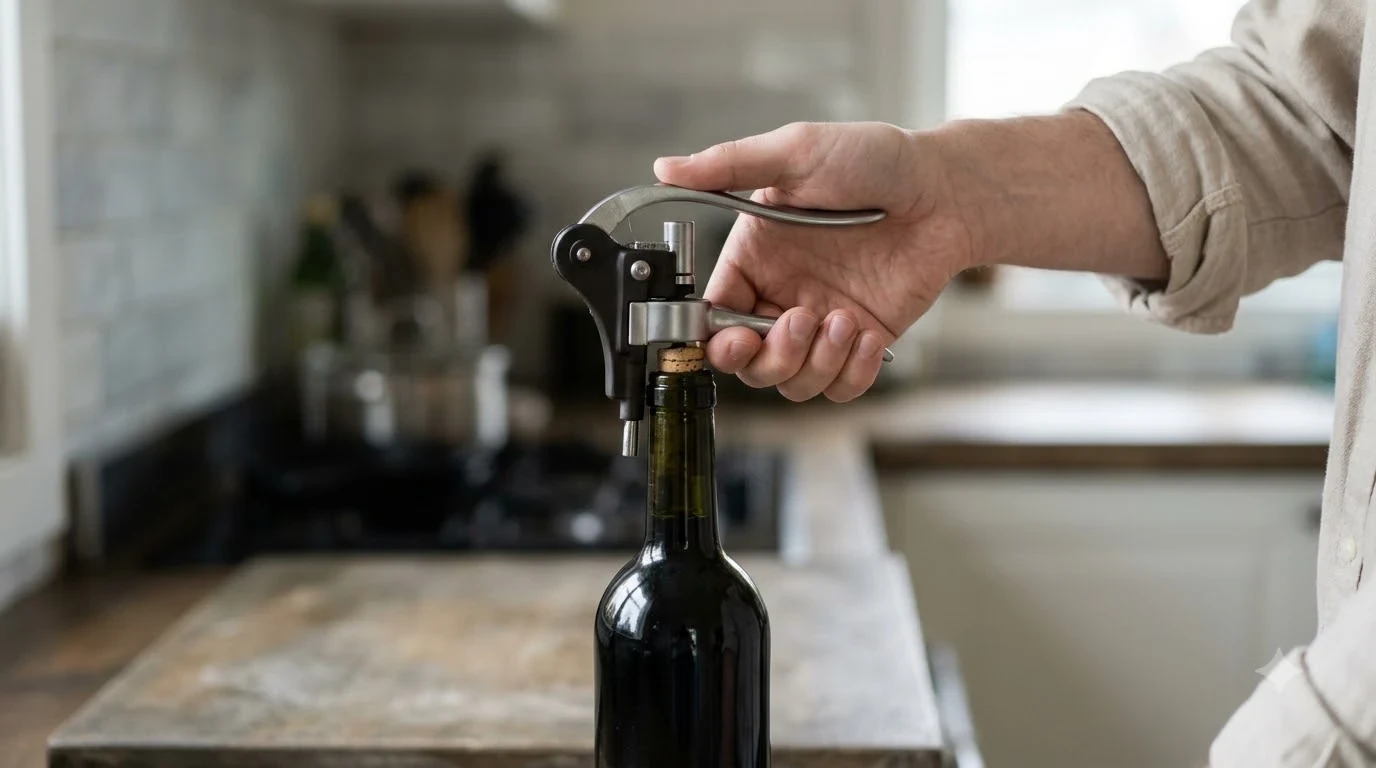
The rabbit corkscrew is a fast, wrist-friendly lever wine opener that pulls natural and synthetic corks in seconds, though its bulky multi-lever frame and strict grip technique create real trade-offs. It excels when opening multiple bottles at a dinner party or sparing sore wrists from repetitive twisting. Buyers who want pocket portability, easy one-handed stability, or compatibility with wax-sealed bottles will prefer a compact waiter’s key or a vertical lever model.
Designed in Seattle by Rabbit Wine under Lifetime Brands, the Rabbit Lever Corkscrew replaced the slow twist-and-tug routine of traditional openers with a clamp-and-pull lever mechanism. Serious Eats named the original lever model its top lever-style wine opener, yet independent evaluations from Food & Wine and verified buyer feedback highlight distinct quirks in bulk, grip pressure, and spiral wear that separate satisfied owners from frustrated ones.
Specs and Key Features
The Rabbit Lever Corkscrew combines a polycarbonate and nylon frame with a solid metal top lever, TPE comfort grips, and a 3-inch non-stick spiral worm backed by a 10-year manufacturer warranty. Independent measurements from Serious Eats put the Rabbit Original Lever Corkscrew at 12.8 ounces with a closed height of 5.5 inches, making it substantially heavier and wider than a pocket wine key.
| Specification | Rabbit Lever Corkscrew Detail | Reported Source |
|---|---|---|
| Style | Horizontal dual-handle lever corkscrew | Rabbit Wine / Serious Eats |
| Weight | 12.8 ounces | Serious Eats |
| Closed Height | 5.5 inches | Serious Eats |
| Lever Dimensions | 5.5-inch side levers; 5.25-inch top lever | Serious Eats |
| Worm Length and Coils | 3 inches long; 8.5 spiral curves; non-stick coating | Serious Eats / Rabbit Wine |
| Frame and Grip Materials | Polycarbonate, nylon, solid metal lever, TPE grip | Serious Eats / Rabbit Wine |
| Included Accessories | Extra non-stick spiral; integrated 4-blade or separate foil cutter | Rabbit Wine / Serious Eats |
| Available Finishes | Black, Silver, White | Rabbit Wine |
| Manufacturer Warranty | 10-year warranty | Rabbit Wine |
Two distinct hardware versions circulate under the Rabbit lever name, which explains occasional confusion in buyer listings. The classic Rabbit Original Lever Corkscrew ships with a separate circular foil cutter and a spare non-stick worm, whereas the updated Rabbit Lever Corkscrew (SKU 5289259) builds a four-blade steel foil cutter directly into the handle assembly. Both versions rely on a threaded top cap that holds the 3-inch spiral in place so owners can unscrew and swap in the replacement worm when the non-stick coating wears thin.
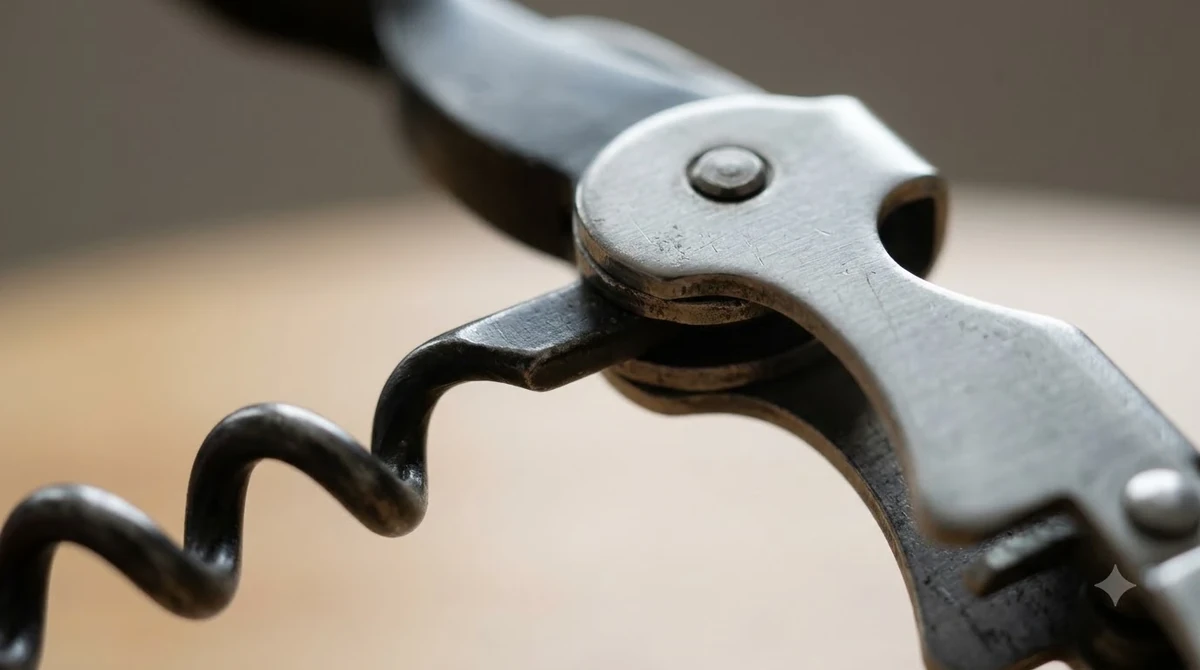
Unlike a waiter’s corkscrew that uses a 2-inch worm with 9 curves and relies on a notched metal boot resting on the glass rim, the Rabbit mechanism uses two spring-loaded side handles that clamp onto the exterior of the bottle neck. When the user squeezes those handles shut and pushes the 5.25-inch top lever down, the worm drives straight down the center of the cork. Pulling that same top lever back up extracts the cork vertically, and cycling the lever down and up a second time after releasing the bottle ejects the cork off the spiral.
Tip: Before opening your first bottle, check the round cap directly above the spiral shaft and twist it clockwise until snug. According to Wine Spectator’s Ask Dr. Vinny column, that cap can work loose over repeated pulls, letting the spiral slide upward instead of biting into the cork.
What Owners Like

Owners consistently praise the rabbit corkscrew for its speed, smooth extraction on stubborn synthetic corks, and freedom from wrist-twisting torque. For households opening three or four bottles during a weekend gathering, the two-stroke lever cycle cuts opening time down to a few seconds per bottle without requiring finger dexterity on a tiny metal handle.
Consistency across different closure types stands out in both kitchen testing and long-term buyer feedback. Natural corks can vary in density from a crisp Sauvignon Blanc to a dense Napa Valley Cabernet Sauvignon, while extruded synthetic stoppers often grip the inside of the glass neck tightly enough to bend thin spirals on cheap openers. Because the Rabbit frame aligns the 3-inch non-stick worm dead center over the bottleneck before entry, the spiral avoids off-center drilling that shreds cork edges or drops crumbs into the wine.
Ergonomics for sensitive wrists represent the second major advantage. Twisting a traditional T-shaped corkscrew or pulling against a short single-hinge wine key concentrates strain on the wrist joint and thumb. With the Rabbit lever design, one hand squeezes the TPE-coated side handles while the other palm presses and lifts a broad 5.25-inch metal lever, shifting effort from small finger joints to stronger forearm and shoulder muscles. Many shoppers adding tools to a home bar cart also appreciate that the box includes both a foil cutter and a spare spiral from day one.
Common Complaints
The most frequent complaints about the rabbit corkscrew involve user grip technique causing empty pulls, bulky storage dimensions, and mechanical wear on newer lightweight plastic assemblies. When owners report that the spiral dives into the cork and comes right back out without budging it, the cause is almost always insufficient squeeze pressure on the side handles rather than a broken gear.
As Wine Spectator explains, the two side handles pivot on spring-loaded hinges that use the glass bottle neck as a fulcrum. If your grip relaxes even slightly while lifting the top lever, the jaws lose friction against the glass and the worm simply unscrews itself out of the cork. New users also stumble over the cork-ejection sequence; Food & Wine testers noted that releasing the extracted cork from the spiral took several attempts to master because you must keep the handles squeezed closed while cycling the lever down and up again.
Hardware durability and footprint draw additional criticism across owner reviews on the Rabbit Wine store:
- Lighter newer build. Longtime owners comparing the integrated-cutter model against early versions report noticeably less heft and occasional failures where side spring pieces pop off the hinge housing under heavy force.
- Awkward drawer storage. At 5.5 inches tall and 5.5 inches across the side levers, the open-jaw silhouette tangles with ladles and tongs in shallow kitchen drawers and cannot fit in a pocket or picnic tote.
- Upper-body pull force still required. While the lever eliminates wrist rotation, lifting a tight, long red-wine cork still demands firm upward arm strength, and uneven pulling can tip an unsteadied bottle on a slick counter.
- No wax-top compatibility. Wax capsules clog the non-stick spiral channels and gum up the lower guide block, forcing tedious hot-water cleaning and premature worm replacement.
Who Should Buy and Who Should Skip
The rabbit corkscrew is the right fit for frequent hosts, people with wrist or thumb discomfort who still have moderate grip and arm strength, and wine drinkers who prefer a fast countertop opener over a pocket tool. Anyone comparing models across rabbit corkscrew reviews will find it performs best on standard 750 ml still wine bottles topped with foil capsules and either natural or synthetic corks.
Buyers who open four or more bottles in an evening gain the clearest return from the lever mechanism. Hosting a dinner where chilled Pinot Grigio (served at 45–50°F) gives way to a full-bodied Syrah (served at 60–65°F) goes faster when every bottle opens in two smooth strokes and the opener sits ready on the counter for the next round. It also works well for anyone who routinely bends cheap winged corkscrews on dense, long corks.
Several groups should skip this style and choose a different opener instead:
- Collectors of aged or fragile corks. Mature Bordeaux, Burgundy, or vintage Port bottles often have soft, crumbling corks that split when pierced by a thick spiral; a two-pronged Ah-So puller or a hybrid Durand opener cradles the sides of the cork without drilling through the center.
- Buyers with severely limited hand or arm strength. Because you must squeeze the side handles tightly with one hand while pulling the lever upward with the other, an automatic electric corkscrew like the Rabbit Automatic Electric Corkscrew or Peugeot Elis Touch removes physical effort far better.
- Minimalist kitchens and travelers. Apartment cooks with tight utensil drawers, campers, and picnic hosts are far better served by a 3.1-ounce double-hinged waiter’s corkscrew that folds flat to under 5 inches.
- Fans of wax-dipped bottles. If your cellar holds California cult reds or artisanal producers sealed in thick wax, a simple waiter’s key avoids clogging a mechanical guide track.
- Strip the foil completely below the lip. Use the integrated four-blade steel cutter or the separate circular cutter to score around the lower glass ridge, lifting off the top foil disc so no metal scraps catch the spiral.
- Open the lever before clamping. Lift the 5.25-inch top lever all the way up so the worm retracts fully inside the guide housing, then slide the open jaws over the bottle neck until the frame rests flush on the rim.
- Squeeze firmly and drive straight down. Clamp the two 5.5-inch side handles tightly around the neck with one hand, and push the top lever down in one smooth arc until it stops against the body.
- Maintain jaw pressure while lifting. Keep squeezing the side handles firmly so the glass neck stays locked as a fulcrum, then pull the top lever straight up until the cork clears the bottle.
- Eject the cork safely. Lift the opener off the bottle while holding the side handles shut, then push the top lever down and pull it back up to spin the cork off the 3-inch spiral.
How It Compares to Alternatives
Compared to vertical lever openers, winged corkscrews, and double-hinged waiter’s keys, the Rabbit Lever Corkscrew sits in the middle on weight and storage size while delivering faster, more uniform straight-line pulls. Choosing between these four designs comes down to counter space, grip comfort, and whether you open bottles at home or on the move.
Vertical lever models such as the OXO Vertical Corkscrew with Removable Foil Cutter invert the motion by pressing a single top handle straight down rather than swinging an arc over the bottleneck. Serious Eats measured the OXO vertical unit at 1 pound 1.2 ounces (17.2 ounces) and 6 inches unextended with a 2 7/8-inch worm containing 8.5 curves, making it 4.4 ounces heavier than the 12.8-ounce Rabbit Original Lever Corkscrew. Both pull synthetic and natural corks cleanly, though the Rabbit’s lower 5.5-inch profile gives a wider stance around the glass neck while the vertical OXO takes slightly less lateral elbow room on a crowded counter.
Traditional winged corkscrews and waiter’s keys trade away lever speed for simplicity and smaller footprints. Food & Wine named the Rabbit Wing Corkscrew its top winged pick, measuring it at 8 by 3.3 inches and 12 ounces with a dishwasher-safe stainless steel and plastic body, though it omits a foil cutter and requires manual twisting to drive the screw down before the side arms lift. By contrast, Food & Wine noted that double-hinged waiter’s corkscrews like the OXO Steel Double Lever Waiters Corkscrew (5 ounces) and Pulltap’s Professional Waiter’s Corkscrew (5.6 ounces) slip easily into an apron pocket or cutlery tray, while Serious Eats found the Rabbit Two-Step Waiter’s Corkscrew offered a grippy rubber handle coating at the expense of a stiff hinge between its fulcrums.
Shoppers weighing other mechanical openers alongside the best rabbit corkscrew options can also compare specialized wine toolmakers across the guide to Accessory Brands before deciding which format belongs on their counter.
Setup, Technique, and Maintenance
Proper technique and basic worm maintenance prevent nearly all empty cork pulls and keep the non-stick spiral gliding smoothly for hundreds of bottles. Taking ten seconds to cut the foil cleanly and lock the side jaws prevents the spiral from slipping or bending against the glass lip.
Routine upkeep centers on the coated spiral and the top locking cap. Wine Spectator’s Ask Dr. Vinny advises wiping the worm with a damp cloth after use and soaking only the metal spiral in hot water if residue builds up, rather than submerging the entire polycarbonate and metal body in a dishwasher. Because the non-stick coating gradually thins after repeated friction against dense corks, owners should unscrew the top cap, slide out the worn worm, and drop in the spare spiral included in the box whenever insertion resistance rises noticeably.
Frequently Asked Questions
Does the Rabbit Lever Corkscrew work on sparkling wine or Champagne bottles?
No, corkscrews are not designed for Champagne, Prosecco, or Cava bottles because internal carbonation pressure can eject the cork unexpectedly once pierced. Sparkling wines use mushroom-shaped corks held by a wire cage that you untwist and ease out by hand while tilting the bottle at a 45-degree angle.
How do you contact Rabbit Wine for warranty replacement parts?
Rabbit Wine backs its lever corkscrew with a 10-year warranty handled through parent company Lifetime Brands, Inc. Owners who need a replacement worm or warranty support can reach customer service by phone at 1-866-843-3905 or by email at [email protected].
Can you put a Rabbit Lever Corkscrew in the dishwasher?
No, the Rabbit Lever Corkscrew should be wiped clean by hand rather than run through a dishwasher cycle. High dishwasher heat and detergents can degrade the TPE grip coating, warp the polycarbonate housing, and strip the non-stick finish off the 3-inch spiral worm.
What finishes does the Rabbit Lever Corkscrew come in?
According to the Rabbit Wine product listing for SKU 5289259, the Rabbit Lever Corkscrew is sold in three finishes: Black, Silver, and White. All three colorways share the same internal metal lever, four-blade integrated foil cutter, and included spare spiral.
Why is a two-pronged Ah-So opener better than a Rabbit corkscrew for old wine?
Aged corks lose elasticity over decades in the cellar and often crumble apart when a thick 3-inch spiral drills through their center. A two-pronged Ah-So opener slides thin spring-steel blades between the glass neck and the outside of the cork, lifting fragile stoppers intact without puncturing them.
The Rabbit Lever Corkscrew remains a dependable workhorse for fast, wrist-friendly wine service whenever you are opening standard still bottles at home. Keep a steady grip on the side handles, reserve fragile vintage bottles or wax-dipped closures for a waiter’s key or Ah-So puller, and the included spare spiral will keep the opener running smoothly for years.
More in Wine Accessories
 Coravin Vs Vacu Vin: Choose the Right Wine Saver for Your BottlesUpdated Nov 21, 2026
 Zwilling Wine Stopper Review: Preserve Open Bottles LongerUpdated Nov 21, 2026
 Wine Enthusiast Wine Preserver Review: Features, Benefits and LimitationsUpdated Nov 21, 2026
 Wine Enthusiast Wine Stopper: An Easier Way to Reseal Open BottlesUpdated Nov 21, 2026
 Vintorio Wine Opener: Two-Step Cork RemovalUpdated Nov 21, 2026
 Zwilling Wine Aerator Review: Aerate, Pour, and Seal With One ToolUpdated Nov 21, 2026