

We may earn a commission when you buy through links on this page, at no extra cost to you. Learn more.
Quinta do Noval wine is a Port, the fortified wine made by one of the Douro Valley’s oldest and most respected estates in northern Portugal. The property has been on record since 1715, and it is best known for its Vintage Port and a rare Nacional bottling made from ungrafted vines. The estate also makes dry Douro wines, but Port is the reason most drinkers seek it out. This guide covers the history, the main bottlings, serving and storage, and how to choose the right bottle.
If you have spotted this name on a restaurant wine list or a holiday gift box, you may wonder what sets it apart from other Port. The word “quinta” simply means estate in Portuguese, and that word matters here. Many Port houses blend grapes bought from growers across the Douro, but this producer is built around a single property above the Pinhão valley. That estate identity shapes how the wines taste and how the house decides when to declare a vintage.
Where the Estate Came From
The estate’s modern identity dates to 1894, when a Porto wine merchant rebuilt its vineyards after phylloxera had devastated them. Later decisions, including a bold vintage declaration in 1931 and a sale to an international group in 1993, shaped the house you see today.
The name Quinta do Noval first appears in land registry records in 1715, when the property was listed under an abbot’s name. Over the following centuries it changed hands several times, passing to José Maria Rebello Valente, a trader known for his export activities in Porto. Phylloxera had already devastated the Douro by the time António José da Silva bought the estate in 1894, and his replanting gave the house the foundation for its later reputation.
In 1931 the estate declared a vintage during an exceptional season, producing both a Vintage Port and a Vintage Nacional. Only three Port houses declared that year, according to Millesima, and the estate went on to build a strong following in the American and English markets. The estate then struggled through the 1970s and 1980s, when several leading shippers underperformed. A fire at the Vila Nova de Gaia cellars destroyed archives and part of the stock, and the estate moved its wine to the Douro. AXA Millésimes bought the estate in 1993, and Christian Seely was appointed managing director. Between 1994 and 1999, about 100 hectares of vineyard were replanted. The table below lists the milestones that matter most to buyers.
| Year | Milestone |
|---|---|
| 1715 | Name first recorded in land registry documents |
| 1894 | António José da Silva buys the estate and replants after phylloxera |
| 1931 | Vintage Port and Vintage Nacional declared; only three Port houses declare that year |
| 1993 | AXA Millésimes acquires the estate |
| 1994 to 1999 | About 100 hectares of vineyard replanted |
Pinhão, the Douro and the Nacional Vineyard
The estate sits near Pinhão, where its vineyards climb a terraced hillside above the river. Its most prized plot is a small block of ungrafted vines that produces the Nacional.
Millesima places the property near Pinhão in the Duriense region of northwestern Portugal. Richard Mayson, writing for Decanter, calls it probably the most famous Port producer in the Douro, noting that its painted terraces are visible from many other estates. The terraces have a history of their own. Luiz Vasconcelos Porto widened the narrow, dry stone terraces so that more of the land could catch sunlight, and the walls are still treated with lime, which gives them their white look.
The estate has also brought its operations into the valley itself. Its timeline records a bottling and export warehouse in Alijó, which brought the estate’s activities together in the Douro rather than across the river in Vila Nova de Gaia.
The Nacional Plot
The Nacional comes from roughly 1.6 hectares of ungrafted vines above the main drive to the house. According to Decanter, these vines show far less vigour than the surrounding vineyard, and their yield is about 15 hectolitres per hectare, roughly half the rest of the estate. Millesima notes that the plot was untouched by phylloxera, and its tiny size and low yield keep production very small.
How the Estate Declares Its Vintages
Noval declares a vintage only when a year produces an outstanding wine, and it behaves like a single-estate producer when it does. That approach means fewer bottlings overall, but each declaration carries a clear sense of place.
According to Decanter, a typical Noval vintage runs between 1,000 and 6,000 cases, and the estate declared a vintage in every year from 2011 to 2016. Between 1994 and 2016 it made 14 vintage declarations, while the Nacional was declared 10 times in the same period. Those numbers show how selective the house is. A declaration is the shipper’s own decision, because there is no rule that forces a fixed pattern of vintages.
Once a shipper decides, the paperwork follows a set timetable. Decanter’s Port style guide explains that a Vintage Port must be submitted to the IVDP for approval, which can happen between 1 January and 30 September in the second year after the harvest. That timetable explains why a vintage from a given harvest reaches the market only after a wait. The Nacional does not always follow the main calendar, because its declarations are tied to outstanding seasons on that one plot rather than to a fixed schedule.
The Main Bottlings and What Sets Them Apart
The estate’s range runs from youthful Vintage Port built for long cellaring to colheita Ports and dry Douro wines. Each style rewards a different occasion.
Vintage Port
Vintage Port is the estate’s flagship. It is bottled young and designed to change over many years. Decanter describes a short, fragrant youth followed by a long, closed stage before the wine opens again, so a young bottle can taste tight and firm in the glass.
The spirit used to fortify the wine has also changed. Decanter notes that since the early 2000s the fortifying spirit has become more vinous, interfering less with young fruit than the coarser, oilier spirit used in earlier decades. That shift helps declared vintages show clear, pure fruit at an early stage, even though the best bottles still reward long cellaring.
Nacional and Colheita
The Nacional Vintage Port is one of the most sought-after Port wines in the world, according to Millesima, and it is declared only in the very best years. The estate’s colheitas take a different path. A colheita is a single-harvest tawny aged in wood for at least seven years before bottling. Decanter notes that the estate’s colheitas, aged in the Douro under temperature control, take on suave and sometimes caramelised notes after long ageing in pipes. The estate’s list includes a 1937 colheita, a reminder of how patiently these wines can be kept.
Dry Douro Wines
Beyond Port, the estate’s timeline records the start of Douro AOC dry wine production under its own label. These table wines let the estate show the valley’s character without the fortifying spirit. They sit in a different category from Port, so if you mainly drink everyday dry reds, a comparison with our campo viejo red wine guide can help you place them against a familiar Spanish benchmark.
Serving Temperatures, Decanting and Pairings
Red Port tastes best when it is cool enough to keep its fruit lively and warm enough to show its depth. Young vintage bottles also benefit from a short decant, while older tawnies are gentler and easier to serve.
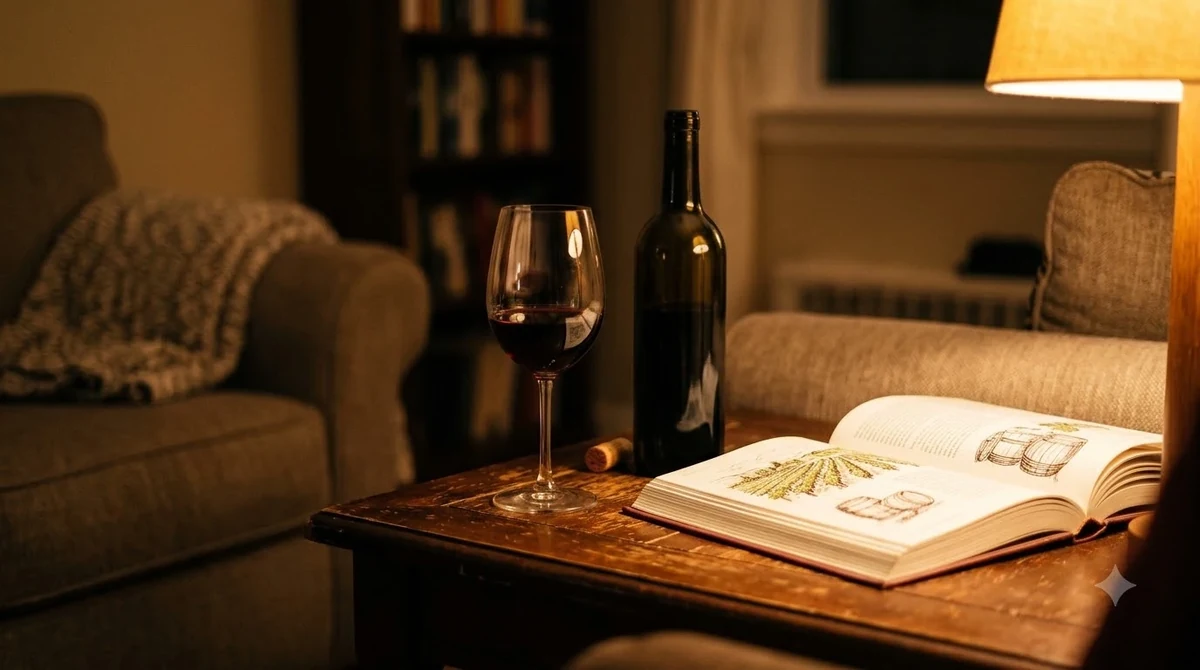
The Port trade body IVDP recommends 12 to 16°C (54 to 61°F) for ruby-style Port and 10 to 14°C (50 to 57°F) for tawny-style Port. Vintage and LBV bottlings are red Ports that sit in the ruby range, so a serving temperature near 60°F (16°C) suits them. Serving them much colder mutes the fruit and spice, while a much warmer glass feels heavy.
Decanting depends on the bottle. A young vintage can be decanted 30 to 60 minutes before serving to let it open up, which is the same window many full-bodied reds need. Older vintage bottles usually throw sediment, so stand them upright for a day, then pour slowly and stop when the sediment reaches the neck. Port is also poured in a smaller glass than a standard wine, so a modest pour is enough for a satisfying sip.
Tip: Decant a young vintage 30 to 60 minutes before dinner, and pour older bottles slowly so the sediment stays behind in the bottle.
Pairing follows the same logic as serving. IVDP suggests a Ruby Reserve or an LBV with cheesecake or a mild, creamy cheese, while a young, fruity LBV or Vintage suits cake and chocolate mousse. Older tawnies work better with strong, hard cheeses and with traditional Portuguese desserts based on egg yolks and sugar. Match the Port’s sweetness to the dessert, so the wine never tastes thin next to a rich course.
Storing Bottles and Keeping Opened Ports Fresh
Store unopened bottles on their side in a cool, dark place, and plan to finish an opened bottle within days for vintage and within weeks for tawny. The table below sums up the typical windows.
Store bottles on their side near 55°F (about 13°C), away from strong light and temperature swings. Lying the bottle down keeps the cork moist and keeps sediment in place, which matters most for older Ports.
Once opened, the clock depends on the style. IVDP’s opened-bottle guidance ranges from one to two days for vintage bottlings to one to four months for aged tawnies. Ruby Ports keep for eight to ten days, while tawnies last three to four weeks. Vintage bottles fade the fastest, so pour a glass and finish the bottle quickly, while an aged tawny gives you months to enjoy it.
| Style | Serving temperature | Once opened |
|---|---|---|
| Vintage | Ruby range, about 60°F (16°C) | 1 to 2 days |
| LBV | Ruby range, about 60°F (16°C) | 4 to 5 days |
| Ruby | 54 to 61°F (12 to 16°C) | 8 to 10 days |
| Tawny | 50 to 57°F (10 to 14°C) | 3 to 4 weeks |
| Aged tawny with an age statement | 50 to 57°F (10 to 14°C) | 1 to 4 months |
Recork the bottle after pouring, keep it out of direct sun, and avoid leaving it on a warm counter overnight.
Choosing the Right Bottle
Choose by drinking window and occasion. A young bottling suits a dinner or a gift, while an aged tawny or colheita suits a slower evening with cheese and conversation.
Start with the label. According to Decanter, a “Quinta do Noval” label means the wine is made from grapes grown on the property, while a plain “Noval” label means at least part of the grapes were bought in. If you want the estate’s own fruit, look for the full name. Check the label once for the year and whether it says Nacional, since those details tell you which style you have.
The drinking window is the next question. A declared vintage needs years in bottle before it shows its best, so it belongs in a cellar or on a special occasion rather than on an ordinary weeknight. Ruby styles suit faster drinking and fit a dinner party with less planning. If you prefer nutty, caramel notes and a lighter, cooler serve, an aged tawny or colheita is the better choice.
If you are comparing producers across categories, our Wine Brands guide places established names side by side and shows how different houses build their ranges.
Frequently Asked Questions
What is the difference between Ruby and Tawny Port?
Ruby is a blend drawn from more than one harvest, aged in bulk for up to three years and bottled young to keep its fresh red fruit. Tawny spends longer in small casks of 600 to 640 litres, where it undergoes controlled oxidation, turns amber, and develops dried fruit and nut flavours.
How long does a vintage Port need before it is ready to drink?
Decanter notes that vintage Port keeps evolving in bottle for at least 15 to 20 years, and many bottles peak between 20 and 40 years of age. Young bottles can still be enjoyable, but patience brings out greater complexity.
Has Noval released its Nacional in years without a regular vintage?
Yes. According to Decanter, the Nacional was released in 1996, 1999 and 2001, years when the estate made no other Vintage Port declaration. Those releases show that the plot follows its own timing rather than the house calendar.
What does the date on a colheita label mean?
A colheita label shows two dates, the harvest year and the bottling year. Decanter says the bottling year matters most, because the wine generally does not improve once it is in bottle. Long ageing in wood keeps it from fading quickly, however, so an older bottling can still be enjoyable.
How is LBV different from Vintage Port?
LBV comes from a single year but is bottled four to six years after the vintage, and it is produced in much larger volumes than vintage bottlings. Mainstream LBVs are fined and filtered before bottling, which prevents a crust from forming, so they do not need decanting. Unfiltered “traditional” LBVs are more structured and can age for five to ten years in bottle.
Quinta do Noval wine rewards readers who match the style to the moment, whether that is a young vintage with dessert or a colheita after a long dinner. Serve each style at its proper temperature, store bottles on their side, and finish opened bottles within the windows above. With those basics in place, you can enjoy this estate’s wines the way its makers intended.
More in Wine Brands
 Underwood Wine Price: Compare Bottles, Cans, and Pack SizesUpdated Nov 21, 2026
 Zenato Wine Price: Compare Styles and Choose the Right BottleUpdated Nov 21, 2026
 Zuccardi Wine Price: Compare Bottles and Find the Right RangeUpdated Nov 21, 2026
 Yellow Tail Moscato Review: Taste, Sweetness and Serving TipsUpdated Nov 21, 2026
 Wolf Blass Yellow Label Review: Choose Your Best StyleUpdated Nov 21, 2026
 Wolffer Estate Rose Review: Choose the Right Bottle for Your TableUpdated Nov 21, 2026