

We may earn a commission when you buy through links on this page, at no extra cost to you. Learn more.
In northeastern Italy, prosecco wineries are concentrated in the Veneto region, where producers make sparkling, semi-sparkling, and still wines from Glera grapes. The broad Prosecco DOC covers nine provinces in Veneto and Friuli Venezia Giulia, while the celebrated Conegliano Valdobbiadene and Asolo DOCG areas offer more tightly defined hillside expressions. To choose a winery well, start with the appellation, then compare vineyard location, fermentation style, sweetness, and the producer’s approach to hospitality.
“Prosecco” is both a protected wine designation and a broad family of wines. A large sparkling-wine estate near Treviso can offer a very different experience from a small family winery among Valdobbiadene’s steep vines.
Where Prosecco Wineries Are Located
Most Prosecco production belongs to northeastern Italy, with the broad DOC stretching across Veneto and Friuli Venezia Giulia. The more focused Conegliano Valdobbiadene Prosecco Superiore DOCG sits in the hills of Treviso province, between Conegliano and Valdobbiadene, while Asolo is another DOCG area in the Treviso hills.
The Prosecco DOC zone includes Belluno, Gorizia, Padua, Pordenone, Treviso, Trieste, Udine, Venice, and Vicenza. It covers plains as well as foothills, unlike the steep vineyards above Valdobbiadene. Established in 2009, the DOC defines where grapes must be grown and the main production steps must take place. “Treviso” on a bottle narrows the origin further: grapes, winemaking, and bottling must all be within Treviso province.
Conegliano Valdobbiadene is a smaller hillside zone spanning 15 communes, about 50 kilometers from Venice and 100 kilometers from the Dolomites, according to its consortium. Recognized as DOC in 1969 and DOCG in 2009, it has steep slopes that often require manual vineyard work. Elevation, exposure, and varied soils encourage producers to bottle wines with specific place names.
Asolo Prosecco Superiore DOCG is another hillside appellation in Treviso province, distinct from Conegliano Valdobbiadene. For broader context on Italian designations, the site’s Wine Regions resource places these names alongside other protected areas.
Glera and the Production Choices That Shape Style
Glera is the central grape behind Prosecco, supplying the fresh acidity and recognizable pear, apple, citrus, and floral character associated with the wine. Standard Prosecco DOC and the two main DOCG areas require at least 85% Glera, with up to 15% drawn from approved varieties under the relevant rules. Sparkling examples commonly contain about 11% to 12% alcohol by volume.
Permitted supporting grapes include Verdiso, Bianchetta Trevigiana, Perera, Glera Lunga, Chardonnay, Pinot Bianco, Pinot Grigio, and Pinot Nero vinified as a white wine. Many producers use only Glera; the allowance does not mean every bottle is a large blend. Prosecco DOC Rosé is different: it requires 85% to 90% Glera and 10% to 15% Pinot Nero vinified red, plus a vintage indication.
Most sparkling Prosecco is made by the tank method, also called Martinotti or Charmat. The base wine undergoes its second fermentation in a sealed pressurized tank; the wine is then filtered and bottled under pressure. This method emphasizes Glera’s fresh fruit and floral aromas. Champagne and Cava instead complete their second fermentation in the bottle, which creates a different texture and flavor profile.
Prosecco also comes as frizzante, or lightly sparkling wine, and less commonly as tranquillo, or still wine. Spumante is fully sparkling, while frizzante has gentler pressure. The official Prosecco DOC production regulations define grape varieties, boundaries, and production methods.
What Sets Premium Hillside Wineries Apart
The clearest step up in geographic detail comes from the hillside denominations, especially Conegliano Valdobbiadene Prosecco Superiore DOCG. Within it, Rive and Cartizze identify even more specific growing areas, where slope, soil, and exposure can give wines a more individual character than a broad regional blend.
Rive is the local term for steep hillsides, and the designation identifies wines from one of 43 named villages or hamlets. Rive bottlings are single-vintage and hand-harvested, so “Rive di” tells you both the origin and the year. Wine Enthusiast reports a maximum yield of 13 tons per hectare for Rive, compared with 13.5 tons for standard Conegliano Valdobbiadene Prosecco Superiore.
Cartizze is a small, amphitheater-like hillside area within Valdobbiadene, covering about 107 hectares according to Decanter. It traditionally produced wines in the “Dry” category, sweeter than Brut and Extra Dry. Some producers now make drier Cartizze bottlings, so the place name alone does not tell you how sweet the wine will taste. Wine Enthusiast reports a lower permitted yield here: 12 tons of grapes per hectare.
Soils and topography can also distinguish the wines. The eastern hills around Conegliano have more clay-rich soils and often yield rounder, fruit-forward wines; western slopes around Valdobbiadene have more sandstone and conglomerate and can produce floral, linear, mineral styles. These are tendencies, not guarantees: exposure, harvest timing, fermentation, and dosage all matter. Vineyard work also differs sharply: Wine Enthusiast cites about 150 labor hours per hectare on the plains, compared with 600 to 800 hours on the Conegliano Valdobbiadene hills, where slopes rise from roughly 164 to 1,640 feet. Asolo DOCG is a separate comparison, often more structured and mineral-driven.
How to Choose a Prosecco Winery
A useful winery shortlist starts with the kind of Prosecco you want to understand. For an introduction to the category, choose a producer with a range of DOC bottlings; for a closer look at vineyard character, seek out an estate pouring Conegliano Valdobbiadene DOCG, Rive, or Cartizze wines.
Match the producer to your tasting goal
Established producers can help visitors compare styles across several labels. Villa Sandi appears in published selections with both Treviso DOC and Conegliano Valdobbiadene or Cartizze wines. Adami and Ruggeri are other names associated with Valdobbiadene bottlings. Treat these as starting points, not a ranking: cuvées differ in sweetness, vintage, and vineyard source. Before booking, ask which wines will be poured, whether the guide can explain the grape source for each cuvée, and whether the session includes a vineyard or cellar visit. A focused tasting with three clearly differentiated wines is often more instructive than a long flight of similar bottlings.
Smaller growers can offer a closer link between a family’s vineyards and its wines. Decanter has highlighted Terre dei Buth and Silvano Follador, while Wine Enthusiast has featured BiancaVigna and Bellenda. Tasting-room hours, available wines, and tour formats change, so confirm visit details with the winery.
Look beyond the name on the bottle
Ask whether the tasting includes a DOC wine, a DOCG wine, and a more specific bottling such as Rive or Cartizze. Compare Brut with Extra Dry to see how residual sugar changes the impression of acidity and fruit. Three 2- to 3-ounce pours, moving from DOC to hillside DOCG to a site-specific wine, make regional differences easy to spot. Notice whether the winery describes its fruit as estate-grown, grower-sourced, or blended from several sites; those distinctions tell you how closely the bottle is tied to one vineyard or local supply network.
Consider how the visit fits into a wider Italian wine itinerary, too. A producer-focused day in Veneto offers a different comparison from exploring Puglia wineries in southern Italy or looking at the Atlantic-influenced wines made by txakoli wineries in Spain. These are different regions and wine styles, but thinking across them helps clarify how climate, grape variety, and local tradition shape a winery’s identity.
How to Read Prosecco Labels and Sweetness Levels
For a quick first read, look for the appellation, the producer, the sweetness term, and whether the wine is spumante or frizzante. A DOCG label naming Conegliano Valdobbiadene or Asolo signals a more restricted hillside origin than a general Prosecco DOC label, while “Rive” and “Cartizze” narrow the source further.
The sweetness terms on sparkling wine labels can be counterintuitive. Brut is drier than Extra Dry, even though “Extra Dry” sounds like it should be the driest. The table below gives common residual-sugar ranges for the main terms encountered on Prosecco labels; ranges can overlap at regulatory boundaries, and the wine’s acidity and serving temperature influence how sweet it seems.
| Label term | Residual sugar | Typical impression |
|---|---|---|
| Brut Nature | 0–3 g/L | Very dry, with little or no dosage |
| Extra Brut | 0–6 g/L | Dry and crisp |
| Brut | Up to 12 g/L | Dry, often balanced by fresh acidity |
| Extra Dry | 12–17 g/L | Noticeably rounder, gently fruity |
| Dry | 17–32 g/L | Sweet-leaning, suitable with fruit or pastry |
| Demi-Sec | 32–50 g/L | Clearly sweet |
For many drinkers, Brut is the most straightforward starting point with appetizers and seafood, while Extra Dry can suit lightly salty snacks or fruit-forward dishes. Dry Prosecco can work with a fruit tart because the wine should be at least as sweet as the dessert. The sweetness scale is especially helpful when comparing Cartizze: a traditional Dry bottling may taste substantially sweeter than a contemporary Brut version from the same hillside. Producers sometimes use “Millesimato” to indicate a vintage wine; for Prosecco DOC Rosé, at least 85% of the grapes must come from the stated harvest year.
“Treviso” is narrower than the full DOC; “Conegliano Valdobbiadene Prosecco Superiore DOCG” names a hillside area, and “Rive di” adds a specific site. Conegliano Valdobbiadene bottles carry a gold government quality label with a unique traceability number. For a deeper breakdown, consult Decanter’s Prosecco buyer’s guide.
Serving, Tasting, and Pairing Prosecco
Serve most Prosecco cold but not numbingly icy, around 40 to 50 degrees Fahrenheit for sparkling wine. A tulip-shaped sparkling glass can preserve the bubbles while giving the wine enough room to show its pear, apple, citrus, and floral aromas.
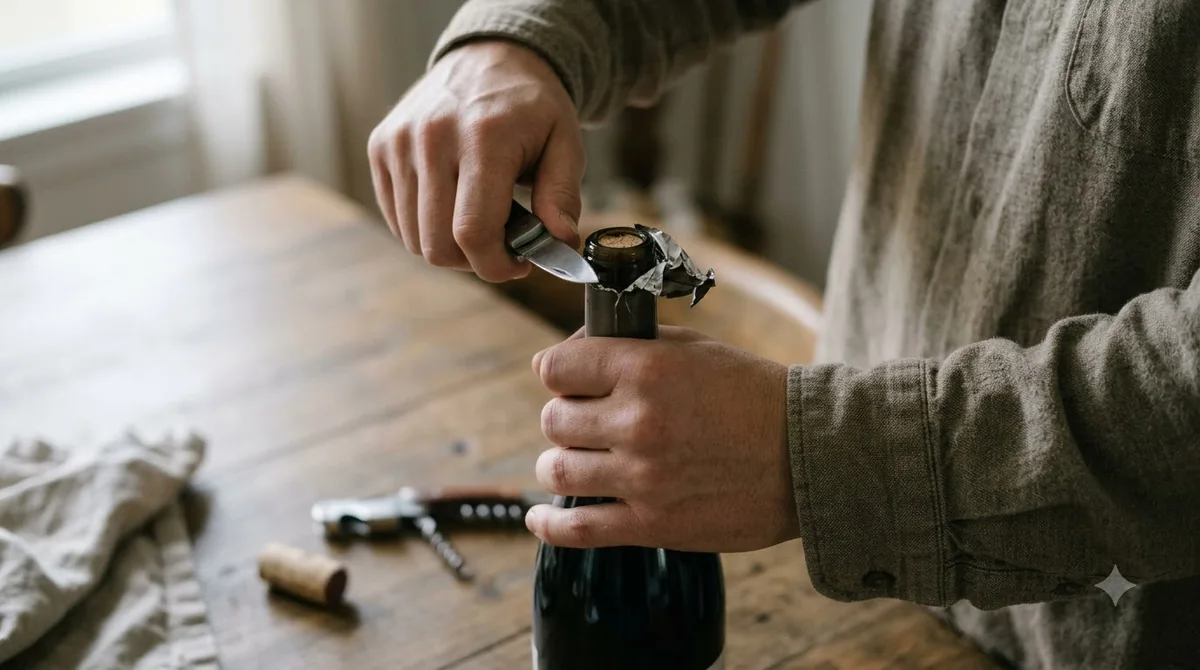
A standard pour is about 5 ounces, so a 750-milliliter bottle yields roughly five glasses. Prosecco is commonly bottled around 11% to 12% alcohol by volume, which helps keep its style relatively light beside many fuller-bodied sparkling wines. Smaller tasting pours let you compare several styles. Open the bottle with the cork pointed away from people and ease it out with a controlled twist of the bottle. Reseal leftovers with a sparkling-wine stopper and refrigerate; the bubbles are usually best within 1 to 3 days.
Pairing depends on sweetness and food intensity. Brut Prosecco works with fried seafood, salty appetizers, fresh cheeses, and vegetables. Its fresh profile suits simply prepared shellfish, while carbonation cuts through richer fried snacks. For strongly acidic dishes such as citrus-dressed salads or pickled vegetables, choose a wine with equal or higher acidity.
Extra Dry has a rounder impression and can pair with mildly spicy dishes, fruit, or savory foods with a touch of sweetness. Dry or Demi-Sec examples suit fruit tarts and lightly sweet desserts when the wine is at least as sweet as the dish. For contrast, Wachau wineries focus on still wines from Austria’s Danube valley, showing how place shapes winery identity.
Tip: For a clear comparison tasting, line up three bottles in this order: a Prosecco DOC Brut, a Conegliano Valdobbiadene DOCG Brut, and a Rive or Cartizze bottling. Serve each at 40–50°F in the same glass, keep the pour size consistent, and note the label’s sweetness term before deciding which wine seems most refreshing or most expressive of its origin.
Frequently Asked Questions
These answers clarify the name’s geographic roots, the protection of the designation, how local growers work with wineries, and two traditional styles shoppers may encounter.
Is Prosecco named after a grape or a place?
Both names have a history, but the modern protected wine designation is tied to a geographic area and the grape variety is Glera. The village of Prosecco lies near Trieste in northeastern Italy, and the name was protected as a denomination after the wine’s production zone and rules were reorganized.
Can Prosecco be made outside Italy?
Wine made elsewhere may use Glera and a similar tank-fermentation method, but it cannot be sold under the protected Prosecco designation unless it meets the Italian appellation rules. The protected DOC and DOCG names are tied to delimited growing areas in northeastern Italy, not simply to a recipe or grape blend.
Does every Prosecco winery own its vineyards?
No. The Conegliano Valdobbiadene area has many small growers who sell grapes to wineries and sparkling-wine firms, so the estate bottling model is only one part of the region’s structure. A producer may make its own wine from purchased local fruit, estate vineyards, or a combination, depending on its business and label.
Is Prosecco always sparkling?
No. The designation includes spumante, which is fully sparkling, and frizzante, which is lightly sparkling; still wine is also permitted under the DOC rules. Spumante is the best-known style, but the production category is broader than the familiar celebratory bottle. Frizzante has a maximum pressure of about 2.5 bars, while spumante is generally above 3 bars.
What does “sui lieviti” mean on a Prosecco label?
“Sui lieviti” means “on the lees” and refers to a traditional bottle-fermented style in which the wine remains in contact with yeast sediment. It can look cloudy if the sediment is left in suspension and often has a more savory, bread-dough character than the clean fruit profile associated with tank-fermented Prosecco.
Prosecco wineries cover a wide range, from large DOC producers making accessible sparkling wines to small hillside specialists bottling Rive and Cartizze. Start with the appellation and sweetness level, then use the winery’s vineyard sources and tasting range to decide how deeply you want to explore the region. That approach makes each bottle more than a generic pour of bubbles: it becomes a clear expression of a place, a grape, and a producer’s choices.
More in Wine Regions
 Willcox Wine Trail: Discover Arizona’s High-Elevation Wine CountryUpdated Nov 20, 2026
 Yakima Valley Wine Region: Find the Best Styles to TryUpdated Nov 20, 2026
 Vosne Romanee Wine Tasting: Identify Aromas and Choose Better PairingsUpdated Nov 20, 2026
 Yakima Valley Wine Festival: Find the Best Seasonal Wine EventsUpdated Nov 20, 2026
 Wales Vineyards: Discover Cool-Climate Wines and Where to VisitUpdated Nov 20, 2026
 Yountville Wine Festival: Discover Napa Wines and Local FoodUpdated Nov 20, 2026