

We may earn a commission when you buy through links on this page, at no extra cost to you. Learn more.
Pinot gris sugar content typically ranges from 1 to 4 grams of residual sugar per liter (g/L) in dry styles, translating to less than 1 gram of sugar in a standard 5-ounce glass. Off-dry commercial expressions often sit between 4 and 12 g/L, while late-harvest dessert bottlings from Alsace can exceed 45 g/L. Most bottles labeled as Pinot Grigio or dry Pinot Gris fall squarely into the dry category, meaning almost all natural grape sugars were converted into alcohol during fermentation.
Because winemakers are not legally required to print nutrition panels or sweetness scales on wine labels in the United States, shoppers frequently struggle to tell whether a bottle of Pinot Gris will taste crisp and bone-dry or noticeably lush. Understanding how residual sugar works, how regional traditions shape the grape, and how to read subtle label clues makes it easy to pick the exact sweetness profile you want.
What Pinot Gris Sugar Content Actually Means
Pinot gris sugar content is measured in grams of residual sugar per liter of wine (g/L), which represents the natural grape sugars—fructose and glucose—left unfermented after yeast finishes converting sugar into alcohol. In most dry white wines, that leftover amount is trace-level and imperceptible as overt sweetness on the palate.
During fermentation, yeast consumes the sugars present in crushed grape juice and produces ethanol and carbon dioxide as byproducts. If the winemaker lets fermentation run until all available sugars are depleted, the resulting wine is considered dry. According to Wine Folly’s sugar in wine chart, dry-tasting wines contain up to 10 grams of residual sugar per bottle, while 10 grams per liter equals 1 percent sweetness and adds roughly 1.8 carbohydrates to a 5-ounce pour. Compared to fortified dessert wines covered in our guide to port sugar content, standard Pinot Gris contains only a tiny fraction of leftover sugar.
Perception of sweetness also depends heavily on acidity and fruit ripeness rather than sugar numbers alone. Pinot Gris naturally carries moderate acidity compared to razor-sharp white varieties like Sauvignon Blanc. When a bottle features ripe stone fruit aromas—such as white peach, baked pear, or melon—alongside softer acidity, your brain can register the wine as slightly sweet even when laboratory analysis confirms it has under 4 g/L of residual sugar.
Flavor and Styles Across the Sweetness Spectrum
Pinot Gris and Pinot Grigio are the exact same pinkish-gray grape variety—a genetic mutation of Pinot Noir—yet the two names signal very different flavor profiles and sugar levels. Bottles labeled Pinot Grigio almost always lean crisp, light, and dry, whereas bottles labeled Pinot Gris often offer riper fruit, fuller body, and occasional off-dry or sweet styles.
In the classic dry style, which accounts for the vast majority of Italian Pinot Grigio and many Oregon bottlings, residual sugar stays between 1 and 4 g/L. These wines emphasize green apple, lemon zest, white pear, and wet stone minerality, finishing clean without any syrupy weight on the tongue. Even mass-market grocery store bottlings that push into the 6 to 12 g/L off-dry range balance that touch of sugar with bright citrus acidity so the wine remains refreshing rather than cloying.
At the richer end of the spectrum, winemakers intentionally stop fermentation early—usually by chilling the tank and filtering out the yeast—to preserve natural grape sweetness. Reviewers at Wine Enthusiast note that top Alsatian producers craft everything from bone-dry, minerally expressions to lush styles layered with ripe orchard fruit, warm baking spice, and hints of brown sugar. In rare late-harvest versions affected by noble rot, concentrated grape sugars push residual sugar well past 45 g/L, turning the grape into a honeyed, cellar-worthy dessert wine.
| Pinot Gris Style | Typical Residual Sugar (g/L) | Sugar per 5-oz Glass | Typical ABV | Taste Profile |
|---|---|---|---|---|
| Bone-Dry / Classic Italian Pinot Grigio | 1 to 4 g/L | Under 0.6 g | 11.5% to 13% | Crisp, lean, lemon zest, green pear, clean finish |
| Dry Oregon / Alsatian Pinot Gris | 2 to 9 g/L | 0.3 to 1.3 g | 13% to 14% | Medium-bodied, ripe peach, melon, subtle spice |
| Off-Dry Commercial / Bistro Style | 6 to 18 g/L | 0.9 to 2.7 g | 11% to 12.5% | Soft, rounded texture, candied citrus, gentle sweetness |
| Late-Harvest (Vendange Tardive) | 45 to 100+ g/L | 6.7 to 15+ g | 12% to 13.5% | Lush, honeyed apricot, ginger, concentrated acidity |
Where It Grows and How Climate Shapes Sugar
Geography and climate play a decisive role in how much sugar accumulates in Pinot Gris grapes on the vine and how much remains in the finished bottle. Cooler growing regions preserve brisk natural acidity and yield drier, lighter wines, while sunny, sheltered regions allow grapes to ripen longer and build higher sugar levels.
Northern Italy—especially Friuli-Venezia Giulia, Alto Adige, and the broader Delle Venezie zone—is famous for harvesting grapes relatively early to lock in high acidity and crisp citrus flavors. Winemakers in these Alpine and Adriatic foothills ferment the juice completely dry in stainless steel tanks, keeping residual sugar minimal and alcohol moderate. Similar dry precision appears in Germany and Austria, where the grape is known as Grauburgunder and frequently labeled Trocken to confirm its dry status.
In northeastern France, the rain-shadow climate of Alsace provides long, sunny autumns that push grape ripeness much higher. Because ripe Alsatian fruit packs abundant natural sugar, winemakers can ferment bottles dry with higher alcohol or leave a touch of residual sugar to frame the wine’s naturally broad, waxy texture. Meanwhile, Oregon’s Willamette Valley bridges the gap between Old World styles, producing dry-to-off-dry Pinot Gris with vibrant Pacific Northwest orchard fruit and balanced acidity.
How to Serve Pinot Gris for Best Balance
Serving temperature directly changes how your palate perceives sweetness, acidity, and alcohol in Pinot Gris. Serving a bottle too warm exaggerates any residual sugar and makes alcohol feel heavy, while serving it ice-cold mutes the delicate aromatics that distinguish quality bottles.
For crisp, dry Italian Pinot Grigio with minimal residual sugar, aim for a refrigerator chill of 45 to 50 degrees Fahrenheit. At this cool temperature, citrus zest and mineral notes stay sharp and invigorating. If you are pouring a richer, fuller-bodied Pinot Gris from Alsace or Oregon—especially one with 6 to 15 g/L of residual sugar—let the bottle warm slightly to 50 to 55 degrees Fahrenheit so its stone fruit, honeyed spice, and creamy midpalate can open up properly. You can find exact chilling timelines and glassware advice in our full guide on how to serve pinot gris.
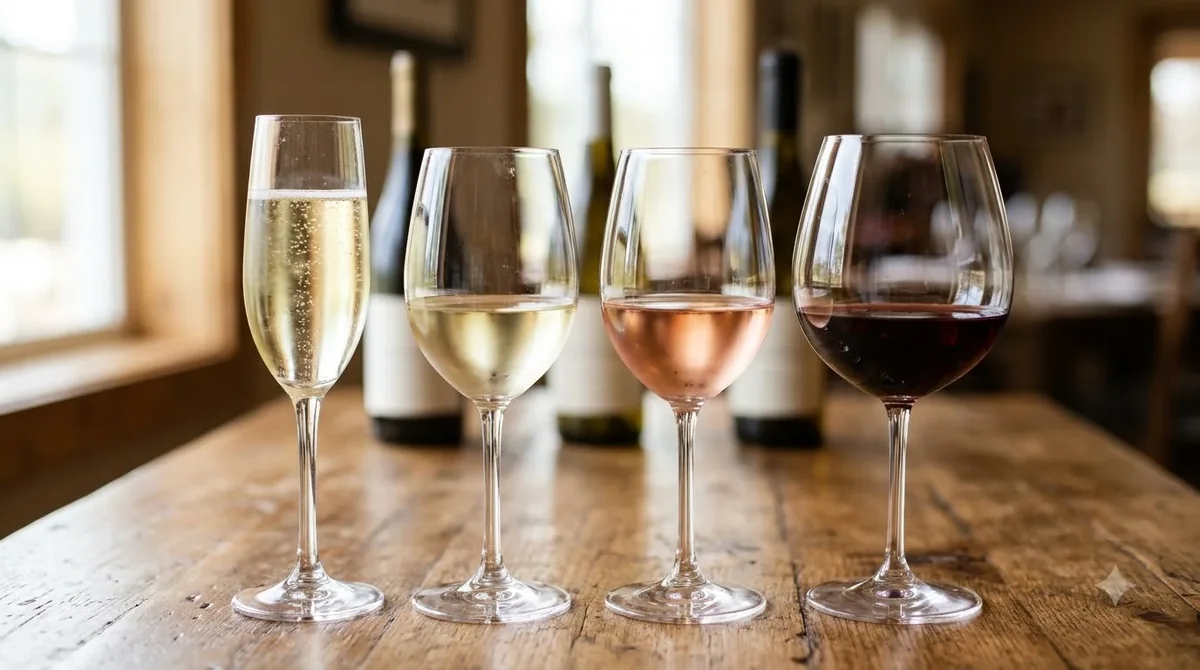
Glassware also influences how sugar and acidity register on your tongue. A standard tulip-shaped white wine glass directs the wine toward the center of the palate, keeping fruit sweetness and crisp acidity in harmony. Avoid wide, oversized bowls meant for oaked Chardonnay unless you are decanting an aged, complex Grand Cru Pinot Gris from Alsace.
Food Pairing by Sweetness Level
Matching Pinot Gris to food works best when you align the dish’s weight, salt, and spice with the bottle’s residual sugar level. Dry styles act as a palate cleanser alongside delicate fare, while off-dry bottles tame heat and complement rich, savory sauces.
Dry Pinot Grigio and bone-dry Pinot Gris pair effortlessly with raw oysters, steamed mussels, grilled white fish, goat cheese salads, and herb-driven pasta dishes. The wine’s crisp acidity cuts through light olive oil and lemon dressings without overpowering subtle seafood flavors. Fuller-bodied dry Pinot Gris from Oregon or Alsace handles richer proteins like roast chicken, pork tenderloin, seared scallops, and mushroom risotto, much like lighter red wines explored in our breakdown of merlot sugar content.
When a bottle carries noticeable residual sugar in the off-dry range, use it as a bridge for spicy or sweet-savory dishes. Thai curries, Szechuan noodles, glazed pork belly, and aged washed-rind cheeses benefit from a touch of grape sweetness, which cools chili heat and balances salty, umami-rich ingredients.
How to Choose a Bottle With the Sugar Level You Want
Even without nutrition facts on the back label, you can predict Pinot Gris sugar content accurately by checking three clues on the bottle: alcohol by volume (ABV), regional origin, and traditional sweetness terms. Together, these indicators tell you whether yeast fermented all the sugar or left some behind.
Start by checking the ABV percentage printed near the bottom of the label. Because yeast converts sugar directly into alcohol, a bottle at 13 to 14 percent ABV has almost certainly converted nearly all of its grape sugars into alcohol, resulting in a dry finish. Conversely, a still Pinot Gris sitting between 10.5 and 12 percent ABV often retains some unfermented residual sugar, particularly if it comes from a warm, sunny vintage.
Tip: Look for the grape name and region first—bottles labeled “Pinot Grigio” from northern Italy or “Trocken” from Germany are reliably dry, while Alsatian bottles labeled “Vendange Tardive” or “Sélection de Grains Nobles” are guaranteed sweet dessert wines.
When shopping for European bottles, regional terminology offers clear legal guardrails. In France, Alsace producers increasingly use an official sweetness scale on the back label ranging from Dry to Sweet, and late-harvest bottles always carry the phrase Vendange Tardive. In Italy, the term Secco indicates a dry wine, whereas Abboccato signals a slightly sweet, off-dry style. If you want complete certainty before buying, search the producer’s name and vintage online for the winery’s technical sheet, which lists exact residual sugar in grams per liter alongside total acidity.
Frequently Asked Questions
Is Pinot Gris a sweet or dry wine?
Pinot Gris is predominantly made as a dry wine, typically containing between 1 and 4 grams of residual sugar per liter. However, winemakers in regions like Alsace and parts of the United States also produce off-dry styles with 6 to 18 g/L and sweet late-harvest dessert bottles that exceed 45 g/L.
How many grams of sugar are in a glass of Pinot Gris?
A standard 5-ounce glass of dry Pinot Gris or Pinot Grigio contains less than 1 gram of sugar, usually around 0.2 to 0.6 grams. An off-dry glass may hold 1 to 2.5 grams of sugar, while a smaller dessert pour of late-harvest Pinot Gris can contain 7 grams or more.
Does Pinot Gris have more sugar than Pinot Grigio?
On average, bottles labeled Pinot Gris carry slightly more residual sugar than bottles labeled Pinot Grigio, though both are made from the exact same grape. Pinot Grigio is almost always fermented completely dry for a crisp, light profile, whereas Pinot Gris is harvested riper and more frequently includes off-dry or late-harvest expressions.
How can I tell if a bottle of Pinot Gris is dry before buying it?
Check the alcohol percentage and origin on the front label. Bottles from northern Italy, Oregon, or Germany (labeled Trocken) with an ABV of 12.5 percent or higher are almost always dry, while bottles under 11.5 percent ABV or marked Vendange Tardive will taste noticeably sweeter.
Whether you prefer a bone-dry Italian Pinot Grigio for warm-weather sipping or a rich, off-dry Alsatian Pinot Gris for spiced dishes, checking the region and ABV gives you reliable control over sweetness. To compare how this grape stacks up against other popular whites and reds across the sweetness spectrum, explore our complete guide to Wine by Type.
More in Wine Types & Grapes
 What Does Mourvèdre Taste Like? Flavor Profile, Regions, and PairingsUpdated Nov 20, 2026
 What Does Marsanne Taste Like? Flavors, Styles, and Food PairingsUpdated Nov 20, 2026
 What Does Malvasia Taste Like? Styles, Flavors, and Food PairingsUpdated Nov 20, 2026
 What Does Grenache Blanc Taste Like? Flavor Profile, Styles, and PairingsUpdated Nov 20, 2026
 What Does Garnacha Taste Like? Key Flavors, Styles, and Pairing TipsUpdated Nov 20, 2026
 What Does Fruit Wine Taste Like? A Complete Flavor and Style BreakdownUpdated Nov 20, 2026